Nepenthes ampullaria
Pitcher-plant Narrow-lidded · Flask-Shaped Pitcher-Plant · Pitcher plant
Description
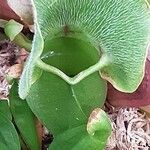
Source: leafsnapNepenthes ampullaria, commonly known as the "bulbous pitcher plant," is a carnivorous plant species native to Southeast Asia. It thrives as a perennial herb in the damp, acidic soils of lowland forests and peat swamps. This plant features distinctive pitcher-shaped leaves that have evolved into traps designed to capture insects and other small prey. Characteristically, the pitchers of Nepenthes ampullaria are bulbous with a wide opening at the top. The rim of the pitcher is slippery, making it difficult for prey to escape once they fall inside. The interior is lined with digestive enzymes that break down the captured prey into nutrients, which are then absorbed by the plant. Nepenthes ampullaria has adapted to its environment by developing two types of pitchers: lower pitchers, which grow on or near the ground, and upper pitchers, which grow on vines or tendrils above ground level. The lower pitchers have wider openings to easily trap crawling insects, while the upper pitchers have narrower openings designed to capture flying insects. The bulbous pitcher plant requires high humidity, bright but indirect sunlight, and consistently moist soil to thrive. While it can be grown as an ornamental houseplant, it demands careful attention due to its specific growing requirements. Beyond its unique appearance as an ornamental plant, Nepenthes ampullaria plays a crucial ecological role. It helps control insect populations in its natural habitat and contributes nutrients to other organisms through the decomposition processes within its traps.
Care Guide
💧 Water Every 7 days
The flask-shaped pitcher plant thrives in humid, tropical rainforests and needs constant hydration, requiring watering twice a week. As an evergreen species, it keeps its leaves throughout the year, which ensures continuous transpiration and helps maintain moisture balance in high humidity conditions.
☀️ Light Partial sun
The flask-shaped pitcher plant is native to habitats with abundant sunlight, such as open bogs and sunny wetlands. It prefers full sun but can also tolerate partial sun.
What are the sunlight requirements for the Flask-shaped pitcher-plant?
The Flask-shaped pitcher-plant, botanically known as Nepenthes ampullaria, thrives best in full sun conditions, which means it requires more than 6 hours of sunlight daily. However, it can also tolerate partial sun, receiving about 3-6 hours of sunlight. It's important to observe the movement of sunlight through your garden to find spots that offer a balance of light and shade, ensuring the plant's optimal growth.
How does artificial lighting support the growth of indoor Flask-shaped pitcher-plants?
When natural sunlight is insufficient, especially during winter or in less sunny spaces, artificial lighting can be a crucial solution for the growth of indoor Flask-shaped pitcher-plants. LED lights are a popular choice as they can be tailored to provide specific wavelengths needed by the plants. Full sun plants require 30-50W/sq ft, partial sun plants need 20-30W/sq ft, and full shade plants benefit from 10-20W/sq ft of artificial light. The light source should be placed 12-36 inches above the plant, mimicking natural sunlight's distance, and plants usually need 8-12 hours of light per day.
What are the signs of light deficiency in Flask-shaped pitcher-plants?
When Flask-shaped pitcher-plants do not receive adequate light, they exhibit various symptoms indicating light deficiency. These include the growth of smaller leaves than usual, leggy or sparse growth as the space between leaves or stems increases, faster leaf drop as the plant conserves resources, slowed or halted growth, leaves developing lighter colors or pale patterns due to a lack of chlorophyll, and conditions like chlorosis where leaves lose their green hue and turn yellow. Sunscald, leaf curling, wilting, and leaf scorching are also symptoms that can manifest under intense sunlight exposure or when light conditions are not met.
What solutions are available for Flask-shaped pitcher-plants with insufficient sunlight?
For plants with insufficient sunlight, a gradual adjustment to brighter conditions is recommended. Indoors, moving plants to a sunnier spot each week until reaching at least 6 hours of direct sunlight daily, or using artificial lighting such as desk lamps or grow lights for 8 hours daily can help. Outdoors, plants should also be moved gradually to sunnier spots to prevent sunburn. If trees block sunlight, pruning can provide better light access. For small plants, transplanting during their dormant period to a sunnier location with good drainage is advised. Although parts of the plant affected by low light may not recover, new growth should be healthy with improved light exposure.
🌡️ Temperature 20–37.8°C
The Flask-shaped pitcher-plant prefers moderate temperatures, about the same range people usually find comfortable. It does best when conditions are not excessively hot or cold. Excessive heat primarily poses a risk of sunburn, so providing some shade in summer helps prevent overheating. When temperatures fall, the Flask-shaped pitcher-plant goes into dormancy. To keep it growing continuously, you must keep winter temperatures higher. Frost can harm the plant and should be avoided.
What are the ideal temperature conditions for growing a Flask-shaped pitcher-plant?
The Flask-shaped pitcher-plant, or Nepenthes ampullaria, flourishes in moderate temperatures, similar to those that humans generally find comfortable. High temperatures pose a risk of sunburn, and during hot summers, providing some shade can help prevent excessive heat exposure. Conversely, low temperatures lead to dormancy in these plants. For continuous growth, especially during the winter, it's important to maintain temperatures above 0°C to avoid frost damage. The plant prefers to be kept from freezing, and protections such as bringing it indoors or using a temporary greenhouse are advisable when temperatures approach -5°C (25°F).
How does the Flask-shaped pitcher-plant react to low temperatures, and what are the best practices for its care in cold conditions?
The Flask-shaped pitcher-plant can tolerate low temperatures to some extent, thriving best between 0°C and 38°C. It should be protected from temperatures falling below -30°C, as lower temperatures can cause the leaves to darken, and below -35°C, it may experience symptoms like water-soaked necrosis, wilting, and drooping, turning the leaves brown. To mitigate frost damage, trim away affected parts and either move the plant indoors to a warmer environment or set up a greenhouse for cold protection. It's beneficial to place the plant near a south-facing window for ample sunlight during indoor care, supplemented by artificial lighting if necessary.
What measures should be taken if a Flask-shaped pitcher-plant is exposed to high temperatures?
During summer, it's crucial to ensure that the Flask-shaped pitcher-plant is not exposed to temperatures above 38°C. High temperatures over 43°C can slow down its growth, lighten the color of its leaves, and make it more susceptible to sunburn. To care for a plant affected by high temperatures, trim away the sunburned and dried parts. Relocate the plant to a shady area, preferably where it can be protected from the afternoon sun. Watering the plant in the morning and evening will help keep the soil moist and further protect the plant from heat stress.
💨 Humidity
🪴 Soil 4-6
🌱 Fertilizer
The flask-shaped pitcher plant obtains nutrients from trapped insects and, under ideal conditions, does not require additional fertilizers. While wild plants thrive without extra nutrients, those grown in pots or underdeveloped seedlings might benefit from a balanced dose of fertilizer.
🪴 Pot & Repot 2-3 years
When repotting a flask-shaped pitcher plant, choose a pot 1–2 inches (2.5–5.1 cm) larger with ample drainage. Use a well-draining potting mix. Repot in spring or fall, ensuring the root ball sits slightly below the rim of the flower pot. Water thoroughly after repotting and place in a warm spot with indirect sunlight.
✂️ Pruning
The flask-shaped pitcher plant is characterized by its distinctive, flask-like pitchers. To promote growth and remove any damaged leaves, it is best to prune the plant from early to late spring. Be careful not to prune too heavily, as this can cause stress to the plant. Consistent maintenance is important for keeping the plant healthy, preventing fungal problems, and ensuring it remains vibrant throughout the growing season.
🌿 Propagating
🐛 Diseases & pets
☠️ Toxicity
Characteristics
- Plant Type
- Herb
- Life Cycle
- Perennial
- Genus
- Nepenthes
- Family
- Nepenthaceae
- Hardiness Zone
- 11-12
- Mature Height
- 91 cm
- Mature Spread
- 49 cm
- Leaf Color
- Green
- Leaf Type
- Evergreen
- Flower Size
- 0.25 cm to 0.51 cm
- Bloom Time
- All year round
- Planting Time
- Spring, Autumn
- Harvest Time
- All year round
- Native Area
- Malaysia, Indonesia, Philippines, Singapore, Thailand