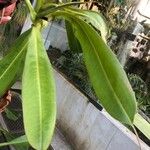
Nepenthes mirabilis
Tropical pitcherplant · Common Swamp Pitcher Plant · Kantung Semar
Description
Source: leafsnapNepenthes mirabilis, commonly known as the "common pitcher plant," is a carnivorous species belonging to the Nepenthaceae family. It is indigenous to Southeast Asia, including countries such as Malaysia, Indonesia, and the Philippines, and can thrive in diverse habitats like forests and swamps. This remarkable plant features pitcher-shaped leaves designed to trap insects for nutrients. The pitchers contain digestive enzymes that break down the captured prey, allowing the plant to absorb the nutrients. The leaves of Nepenthes mirabilis can grow up to 30 cm in length and display a wide array of colors, ranging from greenish-yellow to reddish-brown. Its flowers are small and relatively inconspicuous, typically appearing in shades from greenish-yellow to white. Nepenthes mirabilis is relatively easy to cultivate, requiring high humidity levels and bright, indirect light for optimum growth. It can be grown both indoors and outdoors in warm climates but needs well-draining soil rich in organic matter. In traditional medicine, Nepenthes mirabilis has been used for its antiseptic properties, attributed to the antimicrobial substances found in its digestive enzymes. Overall, this intriguing carnivorous plant not only adds unique beauty to its environment but also plays a crucial ecological role by helping control insect populations in its native habitats.
🌳 Besides their carnivorous behavior, common swamp pitcher plants function as bioindicators, giving insight into the condition of their environment. By examining the condition and distribution of these plants in the wild, scientists can determine the levels of certain pollutants and the nutrient quality of the soil.
Care Guide
💧 Water Every 7 days
The common swamp pitcher plant thrives in environments with high humidity and consistent moisture, but it should not be left waterlogged. Watering it twice a week helps ensure optimal growth. Its waxy leaves help retain water by reducing transpiration, which aids in better moisture conservation.
How should you best water your Common swamp pitcher-plant?
To adequately water your Common swamp pitcher-plant, follow these steps: 1. Use a pot with good drainage holes and place it in a plastic dish or tray that allows about a third to half an inch of water. 2. As the soil dries, the water in the dish will naturally be drawn up to the roots. 3. Avoid letting the dish dry out completely and adjust the amount of water added based on how quickly the plant absorbs it. 4. Avoid using terra cotta pots unless you place the pot inside a larger one to prevent water seepage. Only fill water in the outer pot. 5. Pay attention to the mineral content of the water used for watering. Rainwater is the safest option, but distilled water and water from a reverse osmosis system are also good alternatives. 6. Purified water can be used, but make sure it falls within the range of minerals that the Common swamp pitcher-plant can tolerate. 7. Tap water with less than 50 parts per million of total dissolved solids is safe. Use a meter to measure the dissolved solids. 8. Fill your watering device 24 hours before use to allow the chlorine to dissipate from the water.
What should I do if I give Common swamp pitcher-plant too much or too little water?
Common swamp pitcher-plants that are overwatered can display several symptoms. These include the formation of brown spots on the undersides of leaves, the development of white mold in the soil, and an overall wilted appearance. This wilting occurs because the plant is unable to draw water into its stem. Overwatering can also lead to root rot, which can be identified by a bad smell. If the plant has rotting roots, it is important to remove it from its soil and rinse it with distilled water. Next, any rotted roots and affected leaves should be carefully cut away. After another rinse with distilled water, the plant can be re-planted in fresh soil. On the other hand, an underwatered Common swamp pitcher-plant may have brittle leaves. In this case, it is advisable to remove the affected leaves and ensure that the soil is damp. Additionally, misting the leaves can help. Although gradually resuming watering as soon as possible can help the plant recover, it is important to note that yellow leaves may dry out in the short term due to root damage.
How frequently should I water my Common swamp pitcher-plant?
The tray method is the most common way to water insectivorous plants, like the Common swamp pitcher-plant. First, pot the plant in a container with drainage holes and place it in a tray filled about one-third with water. This allows the plant to draw water naturally as the soil dries. It's important to add water promptly after the water level drops and not let the dish dry out completely. This will help you determine how often to water the plants. Since the Common swamp pitcher-plant is native to a humid environment, you need to find the right balance between watering enough to prevent root rot and allowing the soil to dry out. During the active seasons of spring to autumn, make sure the soil doesn't dry out completely. In these seasons, water the plant 2-3 times per week in spring and fall, and more frequently in summer to keep the soil moist. However, the Common swamp pitcher-plant goes dormant in winter and early spring. If you continue to water it the same way as during its active season, you may end up killing it. So, during this dormant period, reduce the amount of water you give it. Allow some of the soil to dry out, and let the water level in the tray dry out for a few days before adding more water. If you live in a naturally dry area, you might need to mist the plant in addition to regular watering to replicate its natural humid conditions. Misting works best in the morning. It is especially important to spray water in areas with a dry environment.
How much water does my Common swamp pitcher-plant require?
The Common swamp pitcher-plant is a coveted houseplant due to its carnivorous nature. To successfully care for one, you'll need to replicate its natural growing environment, which is high in humidity and low in nutrients. If you live in a naturally humid area, you can grow the plant outdoors in a bog garden, which is a great way to provide the necessary humidity. Alternatively, most people choose to grow it as a houseplant. When selecting a pot, opt for one that retains moisture, such as plastic or a self-watering pot. To replenish water, the tray method works best. Ensure that the water level in the tray covers the small hole at the bottom and add water before the trays dry out. This amount of water is what the plant needs to thrive and prevent the pots from drying out.
If I plant Common swamp pitcher-plant indoors, do I need to water it differently than if I plant it outdoors?
Indoor common swamp pitcher plants need less water when they get less sunlight. The amount of water they need increases with more light. To keep them healthy, it's important to provide sufficient light and water. Additionally, for indoor plants, it is crucial to maintain humidity. Growing them in a terrarium or as part of an aquarium plant display is a good way to achieve this. The enclosed sides of these containers help retain humid air. However, it's important to ensure proper air circulation.
☀️ Light Partial sun
The common swamp pitcher-plant does very well in places with diffused light and can tolerate brighter conditions or even quite low light. Coming from an environment with variable light exposure, it is able to adjust to substantial changes in illumination. Excessive or insufficient light may affect its growth, but it is not fatal.
What are the sunlight requirements for the Common swamp pitcher-plant?
The Common swamp pitcher-plant, scientifically known as Nepenthes mirabilis, thrives in both partial and full sun conditions. Partial sun refers to about 3-6 hours of sunlight, while full sun or full shade means the plant can handle above 6 hours of sunlight daily. It's crucial to observe the movement of sunlight through your garden to find spots that offer a harmonious balance of light and shade, ensuring optimal growth and happiness for your plants.
How can artificial lighting benefit indoor Common swamp pitcher-plants?
Indoor Common swamp pitcher-plants can benefit significantly from artificial lighting, especially when natural sunlight is insufficient, such as during winter or in less sunny indoor spaces. Artificial lights, like LEDs, can be tailored to provide specific wavelengths of light needed by plants, promoting healthier and faster growth. The intensity of light recommended varies by plant type: full sun plants requiring 30-50W/sq ft, partial sun plants 20-30W/sq ft, and full shade plants 10-20W/sq ft. The ideal distance between the plant and the light source is 12-36 inches, with 8-12 hours of light per day mimicking natural daylight conditions.
What symptoms indicate light deficiency in Common swamp pitcher-plants?
Light deficiency in Common swamp pitcher-plants can lead to a range of symptoms, impacting their growth and health. These symptoms include slower or no new growth, leggy or sparse growth, chlorosis or yellowing leaves, sunscald, leaf curling, wilting, and leaf scorching. Each of these symptoms signals that the plant is not receiving adequate light for photosynthesis and may be in survival mode, trying to adapt to the insufficient lighting.
What solutions can address light deficiency issues in Common swamp pitcher-plants?
To address light deficiency in Common swamp pitcher-plants, a gradual adaptation approach is recommended. For indoor plants, transitioning them to sunnier spots each week until they receive 3-6 hours of direct sunlight daily or using artificial lighting like desk or ceiling lamps for at least 8 hours daily can be effective. For outdoor plants, progressively moving them to areas with more sunlight can prevent sunburn while allowing them to adapt to brighter conditions. Additionally, minimizing obstructions such as pruning trees or transplanting to locations with better sunlight and drainage can improve light exposure for ground-planted specimens. Note that parts of the plant that have been deprived of sunlight might not fully recover, but new growth should be healthy once conditions improve.
🌡️ Temperature 20–37.8°C
The common swamp pitcher-plant is native to humid environments with warm temperatures ranging from 20 to 38 ℃ (68 to 100.4 ℉). These plants prosper in hot, sunny conditions like those in tropical areas. In winter, it is recommended to lower the temperature to 16 to 24 ℃ (60.8 to 75.2 ℉) to encourage optimal growth.
What is the native climate for the Common swamp pitcher-plant?
The Common swamp pitcher-plant, scientifically known as Nepenthes mirabilis, thrives in humid climates with warm temperatures. These conditions are typically found in tropical regions, where daytime temperatures range from 20°C to 38°C (68°F to 100.4°F). During winter, it is suggested to lower the ambient temperature to between 16°C and 24°C (60.8°F to 75.2°F) to support optimal growth. The plant prefers warm environments and should be kept above 20°C during winter cultivation, with a strict avoidance of temperatures below freezing to prevent damage.
What are the effects of low temperatures on the Common swamp pitcher-plant and how can you protect it?
The Common swamp pitcher-plant displays moderate tolerance to low temperatures but thrives best when temperatures remain between 20°C and 38°C. Exposure to temperatures below 5°C can cause distress, and when temperatures fall below 1°C, the plant's leaves may darken and show signs of water-soaked necrosis, wilting, and drooping, eventually turning brown in severe cases. To protect the plant from cold damage, it's recommended to trim away frost-damaged parts and move the plant to a warmer indoor location or construct a temporary greenhouse. If placed indoors, positioning the plant near a south-facing window ensures it receives sufficient sunlight; if natural light is inadequate, supplemental lighting may be necessary.
How should you care for a Common swamp pitcher-plant in high temperatures?
During the summer, it's crucial to ensure that the temperature surrounding a Common swamp pitcher-plant does not exceed 38°C. Should temperatures rise above 43°C, the plant may experience slowed growth, a lightening of leaf color, and an increased risk of sunburn. To mitigate these issues, remove any sunburned or dried parts of the plant and relocate it to a spot that avoids direct afternoon sunlight. To keep the soil appropriately moist, water the plant during the cooler parts of the day, such as in the morning and evening.
💨 Humidity
🪴 Soil 4-6
🌱 Fertilizer
The common swamp pitcher plant naturally gets its nutrition from trapped insects and thrives without the need for fertilizers in the wild. However, plants that are confined to pots and young seedlings that are not fully developed might benefit from a balanced fertilizer to achieve optimal growth.
🪴 Pot & Repot 2-3 years
When repotting Common swamp pitcher-plant, select a pot 1–2 inches (2.5–5.1 cm) larger with good drainage. Use a well-draining potting mix. Repot in spring or fall, making sure the root ball sits slightly below the rim of the flower pot. Water thoroughly after repotting and place in a warm spot with indirect sunlight.
✂️ Pruning
To promote vigor and maintain shape, prune the common swamp pitcher plant in early to late spring. Cut back dead leaves and any excess growth using sterilized tools to prevent infection. Regular pruning not only enhances pitcher production and controls the plant's size but also removes potential hiding spots for pests. While pruning, ensure you carefully handle the plant's delicate structure.
🌿 Propagating
🐛 Diseases & pets
☠️ Toxicity
This pitcher plant are safe to both humans and pets and can be planted either in the house or outdoor as they are harmless
Characteristics
- Plant Type
- Herb, Vine
- Life Cycle
- Perennial
- Genus
- Nepenthes
- Family
- Nepenthaceae
- Hardiness Zone
- 10-11
- Mature Height
- 3.05 m
- Mature Spread
- 49 cm
- Leaf Color
- Green, Red
- Leaf Type
- Evergreen
- Flower Color
- Yellow, Green, Red, Brown, Gold
- Flower Size
- 2.03 cm to 3.05 cm
- Bloom Time
- Late spring, Early summer, Mid summer
- Planting Time
- Winter
- Harvest Time
- Summer
- Native Area
- Malaysia, Indonesia, Cambodia, Vietnam, Philippines, Laos, Thailand, China