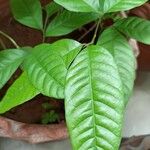
Nephelium lappaceum
Rambutan · Pulasan · Monkey Apple · 红毛丹 (Mandarin)
Description
Source: leafsnapNephelium lappaceum, commonly known as the rambutan, is a tropical fruit tree native to Southeast Asia. It belongs to the Sapindaceae family and is closely related to other popular fruits such as lychee and longan. The rambutan tree can grow up to 20 meters tall and has a dense canopy of leaves that provide shade for its fruit. The rambutan fruit is small, round or oval-shaped, with a red or yellow skin covered in soft spines. The flesh inside is white or pinkish and has a sweet flavor similar to grapes. While the seed inside the fruit is also edible, it has a bitter taste. The rambutan tree thrives in warm, humid climates with well-drained soil. It can be propagated through seeds or grafting techniques for commercial cultivation. Beyond its delicious taste, rambutan offers several health benefits due to its high nutritional content, which includes vitamin C, iron, calcium, and antioxidants. These nutrients help boost immunity and prevent chronic diseases. Overall, the rambutan tree not only serves as an important source of food but also contributes significantly to environmental conservation. It provides shade for other plants and helps maintain soil fertility through nitrogen fixation by its root system.
Care Guide
💧 Water
☀️ Light Full sun
🌡️ Temperature 20–37.8°C
💨 Humidity
🪴 Soil 5-6
🌱 Fertilizer
🪴 Pot & Repot
✂️ Pruning
🌿 Propagating
🐛 Diseases & pets
☠️ Toxicity
Characteristics
- Plant Type
- Tree
- Life Cycle
- Perennial
- Genus
- Nephelium
- Family
- Sapindaceae
- Hardiness Zone
- 10-12
- Mature Height
- 3.66 m to 4.57 m
- Mature Spread
- 9.14 m to 11.89 m
- Leaf Color
- Green, Yellow, White
- Leaf Type
- Evergreen
- Flower Color
- White
- Flower Size
- 2.54 cm to 5.08 cm
- Bloom Time
- Early spring, Winter
- Planting Time
- Spring, Summer
- Harvest Time
- Mid spring, Late spring, Early summer
- Native Area
- Malaysia, Indonesia, Cambodia, Vietnam, Myanmar, Philippines, Singapore, Laos, Brunei, Thailand