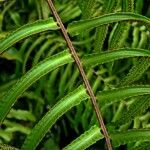
Nephrolepis brownii
Asian sword fern · Asian swordfern
Description
Source: leafsnapNephrolepis brownii, commonly known as the Australian sword fern, is a species of fern native to Australia. It is a popular ornamental plant, admired for its attractive fronds that can reach up to 60 cm in length. The dark green fronds have a glossy texture, adding an elegant touch to any indoor or outdoor space. This plant thrives in bright, indirect light and moist soil conditions. While it can tolerate some direct sunlight, it should be protected from harsh afternoon rays. Nephrolepis brownii requires regular watering, but overwatering should be avoided to prevent root rot. The Australian sword fern is easy to care for and flourishes in both indoor and outdoor environments. It is also noted for its air-purifying properties, making it an excellent choice for improving the air quality in your home or office. Overall, Nephrolepis brownii is an attractive, low-maintenance plant that enhances beauty and freshness wherever it grows.
💡 Nephrolepis exaltata var. bostoniens is a plant known for its cascading foliage. In its early stages, the plant grows upright with graceful elegance. As it matures, the branches begin to droop, making it an ideal candidate for a hanging display.
Care Guide
💧 Water Every 7 days
The Asian sword fern flourishes in humid subtropical environments where it can enjoy consistent moisture levels and benefits greatly from higher indoor humidity. To keep this fern healthy, water it weekly to maintain proper hydration. Its evergreen nature means it has stable water requirements year-round. This makes it an ideal choice for bathrooms or kitchens, which often have higher levels of moisture.
☀️ Light Full sun
The Asian sword fern grows best under an open sky, though it also tolerates dappled light or mostly shaded conditions. Its growth can be hampered by very strong light or by insufficient sunlight because of the light conditions of its native habitat.
What are the sunlight requirements for an Asian sword fern (Nephrolepis brownii)?
Asian sword fern requires specific sunlight conditions to flourish. It thrives best in full sun, which means it needs above 6 hours of sunlight daily. However, it can also tolerate partial sun and full shade, which equates to about 3-6 hours of sunlight per day. It's crucial to watch how sunlight moves through your garden to ensure you're providing the right balance of light and shade for the fern, ensuring its happiness and healthy growth.
How does artificial lighting benefit indoor Asian sword ferns and what are some tips for using it?
Indoor Asian sword ferns may require artificial lighting to grow optimally, especially when natural sunlight is insufficient, like in winter or in less sunny spaces. Artificial lighting, such as LED lights, offers a vital solution by providing the specific wavelengths of light that the plants need. For full sun plants, 30-50W/sq ft of artificial light is recommended, while partial sun plants need 20-30W/sq ft, and full shade plants require 10-20W/sq ft. The artificial light source should be placed 12-36 inches above the plant and turned on for 8-12 hours per day to mimic natural sunlight conditions.
What are some common symptoms of inadequate lighting in Asian sword ferns?
When Asian sword ferns are placed in inadequate lighting conditions, they exhibit several symptoms indicating light deficiency. These include the growth of smaller leaves than previously matured ones, leggy or sparse growth, faster leaf drop, slower or halted new growth, lighter-colored new leaves, and several others like chlorosis, sunscald, leaf curling, wilting, and leaf scorching. These symptoms reflect the plant's struggle with both insufficient and excessive sunlight exposure.
What strategies can be employed to remedy light deficiency in Asian sword ferns?
To address light deficiency in Asian sword ferns, a gradual approach to increase sunlight exposure is key. For indoor plants, moving them to a sunnier location each week until achieving at least 6 hours of direct sunlight daily is recommended, alongside using artificial lighting like desk or ceiling lamps for at least 8 hours daily. Outdoors, adapting plants to sunlight by gradually relocating them to brighter spots helps prevent sunburn. Reducing physical obstructions or transplanting smaller plants to sunnier locations can significantly improve their light intake. Keep in mind that while affected parts may not recover, new growth should be healthy with adequate light exposure.
🌡️ Temperature 20–37.8°C
The Asian sword fern is native to habitats where temperatures remain between 68 and 100 °F (20 to 38 ℃). It prefers steady warmth and does not tolerate sudden temperature drops. In colder climates, seasonal adjustments may be required to keep temperatures at optimal levels.
What is the native environment of the Asian sword fern?
The Asian sword fern, known botanically as Nephrolepis brownii, thrives in environments where temperatures remain between 68 to 100 °F (20 to 38 °C). It is native to regions that offer consistent warmth without sudden drops in temperature. This fern is extremely heat-loving, which makes it imperative to avoid any cold environments to prevent harm to the plant.
How should I care for my Asian sword fern during colder months?
In colder climates, it's crucial to make seasonal adjustments for the Asian sword fern to maintain its optimal temperature. During autumn, it's advised to bring the plant indoors if it was previously outside and to place it near a bright window. However, keep a good distance from heaters to avoid excessively dry air around the fern. Keeping the temperature above 20°C (68°F) during winter benefits the plant's growth, and it's important to ensure that temperatures don't approach 0°C (32°F), as this is detrimental to the fern.
What are the symptoms of low temperature exposure in Asian sword ferns, and how can I address them?
Exposure to low temperatures is harmful to Asian sword ferns. They thrive best above 20°C (68°F) and require temperatures to be kept above 0°C (32°F) during the winter. Exposure to temperatures below -5°C (23°F) can cause the leaves to lighten in color which later turn brown or black with signs of wilting and drooping indicating frost damage. To address these issues, frost-damaged parts should be trimmed off, and the plant should be moved indoors to a warm environment immediately. Placing the plant near a south-facing window ensures ample sunlight, but it should not be placed near heaters or air condition vents to avoid dryness.
How does high temperature affect Asian sword ferns and what are the remedies?
Asian sword ferns should be kept in temperatures below 38°C (100°F) during the summer to avoid stress from the heat. Temperatures exceeding 43°C (109°F) result in lighter leaf colors and increase susceptibility to sunburn. To remedy this, trim away the sunburned and dried-up parts of the plant. Relocate the fern to a spot that provides shade during the midday and afternoon sun. Additionally, watering the plant in the morning and evening helps keep the soil moist, which is crucial for the plant's health in high temperatures.
💨 Humidity
🪴 Soil 5-6
🌱 Fertilizer
The Asian sword fern requires the most fertilizer during its active growth period, which takes place mainly in spring, summer, and early fall. Fertilizing supplies essential nutrients that the soil might lack, supporting healthy root and stem growth and enhancing the attractive foliage that is a defining characteristic of this plant.
🪴 Pot & Repot
✂️ Pruning
The Asian sword fern, known for its lush fronds, thrives with occasional pruning from early to late spring. To promote growth and airflow, trim dead or yellow fronds at the base using clean tools. Be cautious not to over-prune, as this can stress the plant. With consistent care, the fern's vitality and appearance will be well-maintained.
🌿 Propagating
🐛 Diseases & pets
☠️ Toxicity
Characteristics
- Plant Type
- Herb
- Life Cycle
- Perennial
- Genus
- Nephrolepis
- Family
- Polypodiaceae
- Hardiness Zone
- 9-11
- Mature Height
- 61 cm to 91 cm
- Mature Spread
- 49 cm to 91 cm
- Leaf Color
- Green, Light Green
- Leaf Type
- Semi-evergreen
- Planting Time
- Spring, Summer, Autumn
- Native Area
- Sri Lanka, India, Malaysia, Philippines, Bangladesh, Laos, Fiji, New Zealand, China, Indonesia, Cambodia, Vietnam, Myanmar, Japan, Singapore, Thailand