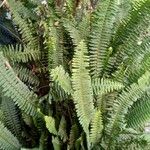
Nephrolepis cordifolia
Boston fern · Narrow sword fern · Narrow swordfern · Tuber ladder fern · Erect sword fern
Description
Source: leafsnapNephrolepis cordifolia, commonly known as the Fishbone Fern or Sword Fern, is a popular houseplant belonging to the fern family. Native to tropical regions of Asia and Africa, it can grow up to 3 feet tall. The plant features long, arching fronds that are dark green and have a distinctive fishbone-like pattern. Nephrolepis cordifolia is easy to care for and thrives in bright, indirect light. While it prefers moist soil, it can tolerate brief periods of drought. The plant also benefits from occasional misting or being placed on a tray with pebbles and water. The Fishbone Fern is an excellent air purifier, removing harmful toxins such as formaldehyde, benzene, xylene, and ammonia from the air. Additionally, it helps increase indoor humidity levels, which can be beneficial for respiratory health. Overall, Nephrolepis cordifolia makes an attractive addition to any indoor space. Its unique foliage pattern and low maintenance requirements make it ideal for beginners or anyone seeking a low-maintenance houseplant.
💡 Nephrolepis exaltata var. bostoniens is a plant known for its cascading foliage. In its early stages, the plant grows upright with graceful elegance. As it matures, the branches begin to droop, making it an ideal candidate for a hanging display.
🌳 Tuberous sword fern isn't only valued for its appearance in gardens; it is also used in phytoremediation, an innovative environmental clean-up technique. Remarkably, tuberous sword fern can take up hazardous heavy metals such as lead and cadmium, helping to detoxify contaminated soils and assist in restoring ecosystem health.
🎭 Captivation, Genuineness, Enchantment
Care Guide
💧 Water Every 7 days
The tuberous sword fern flourishes in humid environments and retains moisture in its fronds. While it is drought-tolerant, it thrives best with consistent humidity and should be watered weekly. Being an evergreen plant, it requires regular moisture throughout the year. This is particularly important during the cooler months when indoor heating reduces humidity levels.
What should I do if I give my Tuberous sword fern too much water or too little water?
The Tuberous sword fern can be overwatered if it sits in a pool of water or if the planter does not have drainage holes. This can prevent the roots from getting nutrients and moisture and may lead to fungal or bacterial diseases. Signs of overwatering include wilted and yellow leaves, drooping or soft stems. However, it's important to rule out other causes for these symptoms. On the other hand, the Tuberous sword fern also requires vigilance to prevent underwatering. If the plant gets too dry, it can quickly turn brown and crispy. In severe cases, it may appear completely dried up, but it may still be possible to save it if some of the roots are healthy. Cut off any dry or dead stems, thoroughly water the plant and return it to its original spot. With proper care, the plant can recover and start growing new fronds, although it may take several months to reach its previous size.
How should I water my Tuberous sword fern correctly?
Your Tuberous sword fern needs consistently moist soil to replicate its native environment. This means you may need to water it every day or every other day. It's crucial to avoid letting the plant dry out. As soon as the top layer of soil starts to feel even slightly dry, it's time to water again. But be sure not to just give it a few droplets of water. Instead, thoroughly saturate the soil until water drains from the bottom of the pot. Afterward, discard any excess water to prevent the pot from sitting in standing water. Following this method will help ensure that the soil remains adequately moist at all times.
What do I need to think about when watering my Tuberous sword fern?
The frequency of watering your Tuberous sword fern depends on the humidity level in the air. Higher humidity means less frequent watering. Avoid placing the plant near heating or cooling vents as it can dry out quickly. Choose a location without drafts. These ferns prefer dappled and indirect sunlight, and temperatures between 55-80 degrees F (13-27 degrees C). Keeping them in a warm and sunny spot like a windowsill can cause dehydration. Rainwater or distilled water is ideal, but tap water usually works fine, although it may cause brown leaf tips due to minerals and chemicals. Using small pots can cause issues as they hold less potting medium and dry out quickly. Give the fern more space in a pot compared to other houseplants. Consider using a self-watering planter, which keeps the soil continuously moist through a wicking system. This eliminates the need for constant watering and provides a constant supply of water beneficial for the roots.
☀️ Light Full shade
The tuberous sword fern grows best with a moderate amount of sunlight. It does well in spots that are protected from intense sun and can tolerate dimmer light. Too much strong sunlight can scar its delicate leaves, while too little light may slow its growth.
What are the sunlight requirements for tuberous sword fern?
Tuberous sword fern requires specific conditions of sunlight to thrive optimally. It does best in environments that aren't exposed to harsh sunlight and can tolerate dimly lit areas. For healthy growth, tuberous sword fern needs about 3-6 hours of sunlight daily, which is considered partial sun. To ensure it doesn't suffer, areas with less than 3 hours of sunlight, known as full shade, can still support this fern, but with caution regarding its growth rate. It's crucial to observe the patterns of sunlight movement in your garden carefully to find spots that offer a harmonious balance of light and shade suitable for your plant.
How important is artificial lighting for tuberous sword ferns, especially indoors?
Artificial lighting plays a crucial role in the growth of tuberous sword ferns, especially in indoor settings where natural sunlight may be insufficient, like during winter or in spaces that receive less sunlight. Adequate artificial lighting promotes faster and healthier growth. LED lights are recommended because they can be customized to provide specific wavelengths needed by plants. The lighting requirements vary based on the type of plant - full sun plants need 30-50W/sq ft, partial sun plants need 20-30W/sq ft, and full shade plants require 10-20W/sq ft. The artificial light source should be placed 12-36 inches above the plant, simulating natural sunlight's distance, and plants typically need 8-12 hours of light per day to mimic natural daylight hours successfully.
What are the symptoms of inadequate lighting for tuberous sword fern?
Inadequate lighting can lead to several symptoms indicating tuberous sword fern's distress. These include slower or no new growth as the plant enters survival mode, leading to halted leaf production. Chlorosis, or the yellowing of leaves, occurs due to the breakdown of chlorophyll, affecting the plant's photosynthesis. Sunscald is noticeable by pale, bleached areas on the plant caused by intense sunlight. Leaf curling is a response to extreme sunlight, where leaves curl to minimize exposure. Wilting, where the plant droops due to loss of water through increased transpiration in high sunlight, and leaf scorching, characterized by brown, dry edges on leaves, are also common symptoms. These symptoms indicate the need for optimal lighting conditions to maintain plant health.
What are the solutions to address lighting issues for tuberous sword fern?
To address lighting issues for tuberous sword fern, consider several solutions catering to different scenarios. For indoor ferns, gradually shifting them to sunnier spots each week until they receive 3-6 hours of direct sunlight daily helps in adaptation. If relocating a large plant is not feasible, using a desk or ceiling lamp for at least 8 hours daily or investing in professional grow lights can provide the necessary light. Outdoors, move your plants gradually to sunnier locations to prevent sunburn caused by sudden changes in light intensity. For ground plants, reducing obstructions like pruning trees that block sunlight and transplanting smaller plants to sunnier spots with good drainage during their dormant period can optimize sunlight exposure. It's crucial to note that affected parts of the plant may not recover, but new growth will be healthy following these adjustments.
🌡️ Temperature 20–37.8°C
The tuberous sword fern does best in warm, humid conditions and needs temperatures of 68 to 100℉ (20 to 38℃). It prefers a bright spot but should be kept out of direct sunlight. In the summer months, a slight boost in humidity can be beneficial. In winter, aim to maintain temperatures around 60 to 70℉ (15.5 to 21℃).
What are the basic care essentials for a Tuberous sword fern?
The Tuberous sword fern, or Nephrolepis cordifolia, flourishes in warm, humid environments, with optimal temperatures ranging between 68 to 100°F (20 to 38°C). It's crucial to provide it with a bright location, yet it should not be exposed to direct sunlight. To support its growth, especially during the summer, an increase in humidity levels can be beneficial. Throughout winter, maintaining temperatures from 60 to 70°F (15.5 to 21°C) is recommended. This plant loves heat, hence, exposure to cold can be harmful. When autumn arrives, it's advised to move outdoor ferns indoors, placing them near a bright window but away from direct heat sources. Keeping temperatures above 20°C during the winter supports its health, while exposure to temperatures near or below 0°C can be detrimental.
How should you care for a Tuberous sword fern in low temperatures?
In low temperatures, the Tuberous sword fern, which thrives above 20°C, shows intolerance to cold. It's vital to keep it above 0°C during winter to avoid damage. Exposure to temperatures below -5°C may cause the leaves to lighten in color, which after frost damage eventually turns brown or black, leading to symptoms like wilting and drooping. The remedy involves trimming off the frost-damaged parts and relocating the plant to a warmer indoor environment. It's best placed near a south-facing window for ample sunlight while ensuring it's not too close to heaters or air conditioning vents, which may cause air dryness.
What should be done if a Tuberous sword fern is exposed to high temperatures?
For a Tuberous sword fern, it's imperative to keep the temperature below 38°C during the summer months. If the temperature climbs above 43°C, the fern's leaves may lighten, and it becomes prone to sunburn. To mitigate this, trim away the sunburned and dried sections, and relocate the plant to a shaded area, particularly shielded from the midday and afternoon sun. Additionally, ensure the soil remains moist by watering the plant in the morning and evening.
💨 Humidity normal (40-60%)
This plant will thrive in moderate humidity, which is probably the level in your home. However, misting it a few times a week can be very beneficial. Make sure the room has good ventilation.
🪴 Soil 6-7
🌱 Fertilizer
To ensure the optimal growth of tuberous sword fern, apply a high-nitrogen fertilizer every 4-6 weeks during the spring and summer. Use a quarter-strength dilution for best results. Be careful not to over-fertilize, as this can cause damage. In the fall and winter, reduce how often you feed the plant. Always water the fern before fertilizing to improve absorption and prevent root burn.
Why is it necessary to add fertilizer to my Tuberous sword fern?
Fertilizing Tuberous sword fern is important for several reasons. Firstly, your plant requires extra nutrients to foster healthy new growth. In addition, these additional nutrients support the overall health of existing growth and aid in defending against diseases and pests.
When should I fertilize my Tuberous sword fern?
The feeding schedule of Tuberous sword fern is determined by its growth location. This plant is not very hungry, but it does need some extra nutrients. Outdoor plants should be fertilized once in the spring, while indoor ones require monthly feeding starting in the spring and continuing through the summer.
When is it not a good idea to fertilize my Tuberous sword fern?
Avoid fertilizing after early autumn as it can result in excessive growth right before winter. Additionally, refrain from fertilizing Tuberous sword fern during hot and dry periods, as dry soil is not as effective in delivering nutrients as moist soil. Fertilizing during this time can also lead to increased growth, requiring more water that may not be accessible. It is advisable to apply fertilizer earlier in the season when temperatures are cooler. Lastly, be cautious about accidentally providing ferns with an extra dose of fertilizer, as they can absorb nutrients from nearby plants or lawns.
What kind of fertilizer does my Tuberous sword fern need?
When selecting a fertilizer for Tuberous sword fern, there are a few options to consider. The choice depends on whether the plant is being grown indoors or in the garden. If it's an outdoor plant, using a layer of mulch or compost will help it thrive. For indoor plants, it's best to use a fertilizer with an N-P-K ratio of 3-1-2. In certain situations, a general-purpose fertilizer with a balanced blend of nutrients can also work well. However, when using a balanced fertilizer, it's important to ensure that the ratio number representing the volume of each nutrient is at 3 or lower.
How can I make my Tuberous sword fern grow better?
Fertilizing Tuberous sword fern is a breeze, but the method depends on where it's planted. For outdoor garden plants, adding a layer of mulch or compost to the soil works wonders. Just make sure the organic material is placed around the base of the plant. On the other hand, indoor plants tend to flourish with a diluted liquid fertilizer applied before watering. Aim for monthly fertilization in the spring and summer seasons.
🪴 Pot & Repot 2-3 years
When repotting Tuberous sword fern, select a pot 1-2 inches (2.5–5.1 cm) larger with ample drainage. Use a well-draining potting mix. Repot in spring or fall, ensuring the root ball sits slightly lower than the rim of the flower pot. Water thoroughly after repotting and place it in a warm spot with indirect sunlight.
✂️ Pruning
The tuberous sword fern is a resilient evergreen plant with tuberous roots and lush fronds. Pruning the fern monthly, particularly in early spring, encourages healthy growth by eliminating yellow or damaged leaves. Regular pruning also improves air circulation and helps reduce pests. To prevent the spread of disease, it's important to use clean, sharp tools when pruning.
🌿 Propagating
🐛 Diseases & pets
☠️ Toxicity
The lemon button fern is claimed to be non-toxic for dogs, cats, and humans according to several resources (Plant shed, and Peas and Bees Co,). However, you might consider using this information at your own risk. Tuberous sword Fern grows aggressively causing the production of heavy tufts which pose a threat to native species and eliminate them. It is listed in the National Plant Pest Accord of New Zealand, and Auckland Regional Pest Strategy.
Characteristics
- Plant Type
- Fern
- Life Cycle
- Perennial
- Genus
- Nephrolepis
- Family
- Polypodiaceae
- Hardiness Zone
- 9-11
- Mature Height
- 61 cm to 91 cm
- Mature Spread
- 61 cm to 91 cm
- Leaf Color
- Green
- Leaf Type
- Evergreen
- Planting Time
- Spring, Summer
- Harvest Time
- All year round
- Native Area
- Sri Lanka, India, Malaysia, Madagascar, Fiji, Indonesia, Cambodia, Equatorial Guinea, Cameroon, South Korea, Nepal, Philippines, Bangladesh, Laos, China, Vietnam, Myanmar, Japan, Bhutan, Thailand