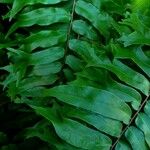
Nephrolepis falcata
Fishtail swordfern · Fishtail fern
Description
Source: leafsnapNephrolepis falcata, commonly known as the sword fern, is a species of fern that belongs to the family Nephrolepidaceae. Native to the tropical regions of Asia and Africa, it is widely cultivated as an ornamental plant around the world. The sword fern features long, arching fronds that can grow up to 1 meter in length and are composed of numerous small leaflets. These fronds are bright green with a glossy texture. The sword fern thrives in moist soil with good drainage and prefers partial shade or filtered sunlight. While it can endure a wide range of temperatures, its ideal temperature range is between 18-24°C (64-75°F). Regular watering is essential, though overwatering should be avoided to prevent root rot. In addition to its decorative appeal, the sword fern is valued for its medicinal properties and culinary uses. It possesses anti-inflammatory qualities and its leaves can be used to add flavor or garnish dishes. Overall, Nephrolepis falcata is an attractive ornamental plant that requires minimal care, making it suitable for both indoor and outdoor settings.
Care Guide
💧 Water Every 7 days
The fishtail swordfern naturally grows in humid environments and thrives in conditions of high humidity and consistent moisture. To promote the best growth possible, water the fishtail swordfern twice a week and mist it regularly to mimic its tropical habitat. While it can tolerate moderate drought, it flourishes with sufficient hydration, especially when grown indoors as an evergreen plant.
How should I water my Fishtail swordfern most effectively?
To properly water the Fishtail swordfern, it is best to use filtered water at room temperature. Tap water may have particles that can harm the plant's health, so filtering is recommended. The water should be at room temperature or slightly warmer to mimic the warm environment the swordfern is accustomed to. Cold water can be a shock to its system. Avoid overhead watering to prevent foliage complications. Instead, gently pour filtered room temperature water onto the soil until it is thoroughly soaked. This method benefits the plant by moisturizing the roots and aiding in their spread through the soil to gather nutrients.
What should I do if I give my Fishtail swordfern too much or too little water?
Overwatering is a common issue for the health of your Fishtail swordfern. It can cause wilting, yellowing leaves, and diseases like root rot, mold, and mildew that can kill the plant. Underwatering is less common, but can still happen. It causes brittle, brown leaves. It's important to notice signs of overwatering early and reduce watering immediately. If the soil doesn't drain well, replace it with a well-draining mix. If your plant is receiving too little water, increase watering until the signs improve.
How frequently should I water my Fishtail swordfern?
If your Fishtail swordfern is in a pot, the most precise way to determine if it needs water is to check the soil moisture by inserting your finger into it. If the top two to three inches of soil feel dry, then it's time to water the plant. For Fishtail swordferns grown outdoors in the ground, you can use a similar method to test the soil moisture. Once the first few inches of soil have dried out, it's time to water the plant. Typically, during spring and early fall, watering once a week is sufficient using this method. However, during extremely hot weather, you might need to increase the frequency to twice or more per week. It's worth noting that mature, well-established Fishtail swordferns demonstrate great resilience and can withstand periods of drought.
How much water does my Fishtail swordfern require?
To properly water your Fishtail swordfern, don't hold back on the amount of water you give. Make sure the top two to three inches of soil are dry, and then give it a good, thorough watering. The water should completely soak the soil, and be enough to cause excess water to flow out of the pot's drainage holes. If you don't see any excess water draining, you may not be giving enough water. However, be careful not to let the water collect inside the soil, as this can harm the plant. If there's no water draining through the pot, it could indicate that the soil is not draining well, which can also be harmful. If the plant is outside, it should receive about 1 inch of rain per week, which is enough.
How do I water my Fishtail swordfern as it grows?
The water needs of the Fishtail swordfern can vary depending on its growth stages. If your Fishtail swordfern is in its early years or has just been transplanted, it will require more water than usual. During these stages, the plant focuses on developing new roots to support future growth, and these roots require extra moisture. As your Fishtail swordfern matures, it will require less water. However, another stage that may require increased watering is the bloom period, as the development of flowers requires a significant amount of moisture.
☀️ Light Partial sun
Fishtail swordfern does well with moderate sunlight yet tolerates low-light conditions. In the wild, it commonly appears in areas where taller vegetation filters the sun. Excessive light can scorch the leaves, while insufficient light may inhibit its growth.
What are the sunlight requirements for Fishtail swordfern?
Fishtail swordfern requires moderate sun exposure to thrive, ideally in conditions where sunlight is filtered through taller plants. It can manage well under partial sun, about 3-6 hours of sunlight a day, and also in full shade, which means less than 3 hours of sunlight. It's crucial to monitor sunlight movement in your garden to ensure your Fishtail swordfern is planted in an area with the perfect balance of light and shade, as overexposure can lead to leaf scorching, while insufficient light might stunt its growth.
How can artificial lighting benefit indoor Fishtail swordfern plants?
Artificial lighting is essential for indoor Fishtail swordfern plants when natural sunlight is inadequate, especially in winter or less sunny spaces. It promotes faster, healthier growth by compensating for the lack of sunlight. LED lights are recommended due to their ability to provide specific wavelengths needed for plant growth. For full sun plants, 30-50W per square foot is ideal; partial sun plants will need 20-30W, and full shade plants require 10-20W. The light source should be placed 12-36 inches above the plant and kept on for 8-12 hours a day to mimic natural daylight hours.
What are the signs of inadequate light for Fishtail swordfern?
Signs of inadequate light for Fishtail swordfern include small leaves, leggy or sparse growth, faster leaf drop, slower or no new growth, and lighter-colored or chlorotic new leaves. Leaf curling, wilting, sunscald, and leaf scorching can also indicate excessive sunlight. These symptoms affect the plant's health, indicating either an excess or deficiency in sunlight exposure.
What solutions can improve the growth of Fishtail swordfern regarding sunlight?
To optimize Fishtail swordfern's growth in regard to sunlight, for indoor plants, gradually shift them to sunnier spots each week until they receive 3-6 hours of direct sunlight daily or use artificial light if the plant is too large to move. Outdoor plants should be moved gradually to sunnier locations to avoid sunburn. If sunlight is obstructed, consider pruning trees or transplanting smaller plants to areas with ample sunlight and good drainage. Remember, parts of the plant damaged by insufficient sunlight may not recover, but new growth will be healthy with improved light conditions.
🌡️ Temperature 20–35°C
Fishtail swordfern is native to warm, temperate regions and prefers temperatures between 68 and 95 °F (20 to 35 ℃). It generally fares better in warmer climates. During colder seasons, temperature adjustments may be needed for its survival and growth.
What is the ideal temperature range for Fishtail swordfern?
Fishtail swordfern, also known botanically as Nephrolepis falcata, is indigenous to warm, temperate regions and thrives best in an ideal temperature range of 68 to 95°F (20 to 35°C). The plant is more suited to warmer climates and may require temperature adjustments during colder seasons to ensure its survival and growth. It possesses some degree of cold tolerance, generally not requiring additional measures when temperatures are above 0°C. However, temporary cold protection measures, such as wrapping the plant with plastic film or fabric, should be considered if temperatures are expected to drop below 0°C. These protective measures should be removed once temperatures rise again.
How does low temperature affect Fishtail swordfern, and what are the solutions?
Fishtail swordfern has a moderate tolerance to low temperatures and prefers conditions above 20°C for optimal growth. During winter, ensuring the plant is kept above 0°C is important. Exposure to temperatures below -5°C can cause the leaves to droop; they may recover in mild conditions, but severe exposure can lead to wilting and leaf drop. To protect against frost damage, trim off the frost-damaged parts, and before low temperatures hit again, wrap the plant with non-woven fabric or cloth and construct a wind barrier to shield it from cold winds.
How does high temperature affect Fishtail swordfern, and what are the solutions?
During the summer, it's crucial to keep Fishtail swordfern below 35°C to prevent stress and damage. Temperatures exceeding 38°C can lead to discoloration of leaves, drying and withering of leaf tips, curling of leaves, and increased susceptibility to sunburn. To address these issues, trim away the sunburned and dried-up parts. Relocate the plant to a shaded location to protect it from midday and afternoon sun, or use a shade cloth. Additionally, maintain soil moisture by watering the plant in the morning and evening.
💨 Humidity
🪴 Soil 5-6
🌱 Fertilizer
Typically, a single fertilizer application in spring is sufficient for a Fishtail swordfern, though multiple feedings can maximize growth. Feed once every month to a month and a half. Fertilizing improves leaf appearance and function, helping maintain consistent color and a healthy texture. It also encourages root growth and increases nutrient absorption for long-term plant health.
Why should I put fertilizer on my Fishtail swordfern?
The main structure of the Fishtail swordfern is made up of its leaves. To keep these leaves looking great and functioning properly, fertilization is important. Proper fertilization can help maintain consistent leaf color and a healthy texture. Fertilization also benefits the root system of the Fishtail swordfern. It helps generate new roots and maintain existing ones, allowing the plant to better absorb soil nutrients now and in the future.
When should I fertilize my Fishtail swordfern?
If you have a Fishtail swordfern that you grow outside each year, it will start growing new leaves in early spring. This is when you should start fertilizing it for the year. Usually, one round of fertilization in the spring is enough for the Fishtail swordfern to thrive. But, if you want it to grow as much as possible, you can fertilize it multiple times throughout the spring and early summer. If you go this route, you can feed your Fishtail swordfern once every month to a month and a half.
When is it not a good idea to put fertilizer on my Fishtail swordfern?
During late fall and winter, your Fishtail swordfern goes into a dormant phase where it stops growing. It's best to avoid fertilizing it during this time. In spring and summer, if you choose to fertilize, start reducing the rate as summer approaches because the growth rate of your Fishtail swordfern also slows down. In general, it's not recommended to fertilize your Fishtail swordfern in extremely hot weather or when the soil is extremely dry since it can cause stress and premature death.
What kind of fertilizer does my Fishtail swordfern require?
Choosing the best fertilizer for a Fishtail swordfern is actually quite simple. These plants do well with a general-purpose garden fertilizer that contains equal parts nitrogen, phosphorus, and potassium, like a 10-10-10 ratio. It's important to steer clear of fertilizers with too much nitrogen. Granular fertilizers that are slow-release are widely recommended for Fishtail swordferns, as they're easy to apply to the soil. Additionally, using organic soil amendments like compost can also be beneficial for feeding your Fishtail swordfern.
How can I give my Fishtail swordfern the nutrients it needs to grow well?
To care for your Fishtail swordfern, wait until its first leaves emerge in early spring. Then, apply a granular slow-release fertilizer to the soil around the base of the plant. You can repeat this process later in the season if desired. When fertilizing, focus on the soil rather than the plant itself. Sometimes, you may need to move leaves aside to reach the soil above the roots. It's also a good idea to water the fern before and after fertilizing.
🪴 Pot & Repot 2-3 years
Repot your fishtail swordfern every 2-3 years, ideally in the spring. Use a larger container to allow for root growth. After repotting, keep the soil consistently moist and place the plant in a location with bright, indirect light. This will help the fern recover and encourage lush foliage.
✂️ Pruning
To maintain the optimal health and appearance of a Fishtail Sword Fern, it's important to prune it regularly, especially from early to late spring. This involves removing dead fronds and trimming any overgrowth, which not only enhances the plant's appearance but also promotes healthy growth and reduces the risk of disease. Be sure to use sharp, sterilized tools to avoid causing damage or introducing infections.
🌿 Propagating
🐛 Diseases & pets
☠️ Toxicity
Characteristics
- Plant Type
- Herb
- Life Cycle
- Perennial
- Genus
- Nephrolepis
- Family
- Polypodiaceae
- Hardiness Zone
- 9
- Mature Height
- 61 cm to 91 cm
- Mature Spread
- 46 cm to 61 cm
- Leaf Color
- Green
- Leaf Type
- Evergreen
- Planting Time
- Spring, Summer, Autumn
- Native Area
- Sri Lanka, Indonesia, Vietnam, Myanmar, Philippines