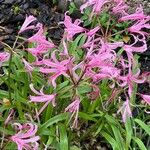
Nerine undulata
Cape flower · Nerine · Crinkled Bloom
Description
Source: leafsnapNerine undulata syn. N. crispa is a species of flowering plant in the subfamily Amaryllidoideae of the family Amaryllidaceae, that is native to the eastern Cape of South Africa. Growing to 45 cm (18 in) tall, it is a bulbous perennial with narrow grasslike leaves that are almost evergreen, and umbels of 8-12 slender, crinkled pale pink or mid-pink flowers 5 cm across in autumn. The Latin specific epithet undulata means “wavy, undulating”, in reference to the crinkled tepals of the flowers.A white-flowered cultivar, N. undulata (Flexuosa Group) ‘Alba’, has been given the Royal Horticultural Society’s Award of Garden Merit. It is hardy in mild or coastal areas of the UK, but requires a sunny, sheltered spot.
Care Guide
💧 Water
☀️ Light Partial sun
Cape flower is native to habitats like forest understories and rocky sites that offer natural shade. It prefers partial sun but will tolerate full sun or full shade, illustrating its versatility and hardiness.
🌡️ Temperature 15–35°C
The Cape flower can tolerate a wide range of temperatures, but its distribution may still be restricted by different combinations of moisture and heat. It does best in warm summer climates with sufficient rainfall or watering. Extended periods of cloudy, rainy weather or prolonged high temperatures can raise the chances of the Cape flower dying. In winter, adequate protection from cold can increase the plant's survival rate.
💨 Humidity
🪴 Soil 6-7
🌱 Fertilizer
For Cape flower, the best time to fertilize is in early spring when the flowers are forming. The appropriate fertilizer promotes better blooms and helps the Cape flower produce attractive flowers. Fertilizing in early spring ensures excellent flowers throughout the season and provides energy for dormant growth phases.
🪴 Pot & Repot
✂️ Pruning
Pruning Cape flowers from early to late spring is beneficial for their growth. By trimming spent flowers and removing damaged leaves, you can encourage new growth, improve air circulation, and reduce the risk of disease. Timely pruning also promotes strong blooms for the following season, ensuring a vibrant display and a neat appearance.
🌿 Propagating
🐛 Diseases & pets
☠️ Toxicity
Characteristics
- Plant Type
- Herb
- Life Cycle
- Perennial
- Genus
- Nerine
- Family
- Amaryllidaceae
- Hardiness Zone
- 8-10
- Mature Height
- 40 cm
- Mature Spread
- 20 cm
- Leaf Color
- Green
- Leaf Type
- Deciduous
- Flower Color
- Pink
- Flower Size
- 5.08 cm to 6.35 cm
- Bloom Time
- Late summer, Early fall, Mid fall
- Planting Time
- Spring, Summer
- Harvest Time
- Late fall, Early winter, Mid winter
- Native Area
- South Africa