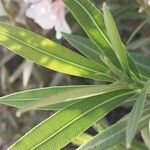
Nerium oleander
خرزهره · دفلى · خرزهرا · کنیر · Oleander
Description
Source: leafsnapNerium oleander is a striking flowering plant that is part of the dogbane family. Originally native to the Mediterranean region and parts of Asia, it has been extensively cultivated across the globe for its ornamental appeal. The plant can reach heights of up to 6 meters and features long, narrow leaves arranged in whorls around its stem. The flowers of Nerium oleander are eye-catching and come in various colors, including white, pink, red, yellow, and purple. They bloom from late spring through summer, attracting bees, butterflies, and hummingbirds with their sweet fragrance. However, despite its beauty, Nerium oleander is highly toxic if ingested by humans or animals, due to the presence of cardiac glycosides in all parts of the plant. Ingestion can cause severe symptoms such as vomiting, diarrhea, or even death if consumed in large quantities. In traditional medicine practices worldwide, including in India where it is known as Kaner, Nerium oleander has been used to treat various ailments such as heart disease. However, such use should only be undertaken with proper medical supervision. Overall, while this plant adds aesthetic value as an ornamental species, caution is necessary when handling it due to its high toxicity. It is particularly unsuitable for households with pets or children, who may accidentally ingest any part of the plant.
🌳 Oleander's less commonly known uses include being employed in pest control. Specifically, its toxic constituents have been used in making rat poisons and insecticides. This use exploits the plant's natural defensive properties, which deter and destroy pests, providing an organic option applicable in certain agricultural or domestic contexts.
🎭 Prudence, Longing, Fate, Love, Allure
Care Guide
💧 Water Every 7 days
Oleander requires balanced watering, typically once every 1-2 weeks. Native to arid regions, it is drought-tolerant. Being an evergreen, oleander keeps its foliage throughout the year, which means it needs a consistent water supply regardless of the season.
When Should I Water My Oleander?
Timely watering is essential for the oleander's health, aiding in nutrient processing, photosynthesis, and structural maintenance. Check the soil's moisture by inserting your finger about an inch deep; if it feels dry, it's time to water. Also, look for signs like wilting or changes in leaf color and texture, such as yellowing or browning, to determine the plant's water needs. Ignoring these signs can lead to health risks like root rot from over-watering or dehydration from under-watering.
How Should I Water My Oleander?
Oleander, being drought-tolerant, should not be overwatered. Use a watering can with a long spout to target the plant's root zone directly, avoiding the foliage to prevent fungal diseases. For potted plants, bottom-watering is effective, and a moisture meter can help in avoiding over or under-watering. Keep an eye out for over-watering signs like yellowing leaves and adjust your watering schedule accordingly.
How Much Water Does Oleander Really Need?
Oleander's water needs vary with factors like pot size, root depth, and environmental conditions. It prefers well-drained soil and should be watered thoroughly, allowing the top 1-2 inches of soil to dry out between waterings. Typically, 1-2 inches of water per week is adequate, but adjust based on soil moisture levels. Proper hydration is indicated by dark, glossy leaves and vibrant flowers, whereas over or under-watering can lead to health problems.
What Kind of Water is Best for Oleander?
Oleander isn't picky about water type and tolerates tap, rain, distilled, or filtered water. It's not highly sensitive to chlorine or fluoride, but if your water is heavily chlorinated or has high salt levels from softening, consider using filtered or rainwater. Room temperature water is ideal. The plant's drought tolerance emphasizes the importance of well-drained soil over water type.
How Do Oleander's Watering Needs Change with the Seasons?
Oleander's watering needs change seasonally. In spring, maintain moist soil to support growth. Summer requires consistent moisture due to higher evaporation rates. Reduce watering in autumn as growth slows and further decrease in winter during dormancy, ensuring the soil doesn't remain waterlogged. Seasonal changes in light and temperature also influence watering frequency and amount.
☀️ Light Full sun
Oleander grows best with abundant light, imitating its original sunny environment. At every growth stage it requires a high level of light for healthy development. If the light is insufficient, the plant may show stunted growth. Although it can tolerate some shade, too little sun can lead to poor blooming.
What are the sun requirements for Oleander?
Oleander requires specific sunlight conditions for optimal growth, including 'Full sun' indicating it needs above 6 hours of sunlight, and 'Partial sun' suggesting about 3-6 hours of sunlight. It's important to monitor sunlight movement through your garden and select spots that provide the ideal balance of light and shade, as this contributes significantly to the health and happiness of your plants.
What are the essential light conditions for growing Oleander?
Oleander thrives under abundant light exposure that mimics its natural, sunny habitat, necessitating a high degree of light throughout its growth stages. Insufficient light may result in stunted growth, whereas oleander can tolerate some shade, too little sun might lead to poor blooming. For indoor plants, adequate lighting is critical, especially when natural sunlight is limited. Using artificial lights such as LED lights tailored to provide specific wavelengths can promote healthier, faster growth. The amount of artificial light required varies depending on the plant’s sunlight needs, ranging from 10-20W/sq ft for full shade plants to 30-50W/sq ft for full sun plants.
What symptoms indicate Oleander is receiving insufficient light?
Symptoms of insufficient light in Oleander include smaller new leaves, leggy or sparse growth, faster drop of older leaves, halted or no new growth, lighter-colored new leaves, chlorosis (yellowing due to chlorophyll breakdown), sunscald on leaves or stems, leaf curling as a defense against excessive sunlight, wilting from water loss through transpiration, and leaf scorching characterized by brown, dry edges. Such symptoms reveal the plant’s struggle under inadequate lighting conditions.
How can you address Oleander's light problems both indoors and outdoors?
To combat light-related issues in Oleander, for indoor settings, gradually move the plant to receive at least 6 hours of sun daily, utilizing south-facing windows. Artificial lighting, such as desk or professional plant grow lights, can supplement natural light for at least 8 hours each day. Outdoors, progressively relocate Oleander to sunnier spots over several weeks to prevent sunburn. If obstructions block sunlight, consider pruning or transplanting the plant during its dormant phase to a location with better sunlight exposure. Note that parts of the plant damaged by insufficient light might not recover, yet new growth should flourish under improved conditions.
🌡️ Temperature 15–37.8°C
Oleander's temperature needs are fairly moderate, with an ideal range of 59 to 100 ℉ (15 to 38 ℃). It originates from regions with hot, dry summers and mild, wet winters, so it can tolerate some temperature variation. In winter, it is important to keep the plant in a location that stays at least 50 ℉ (10 ℃) to prevent damage to the plant.
What are the temperature requirements for Oleander?
Oleander thrives within a temperature range of 59 to 100 °F (15 to 38 °C), making it well-suited to regions that experience hot, dry summers and mild, wet winters. It's essential to keep the plant in an environment that maintains a temperature of at least 50 °F (10 °C) during winter to prevent damage. Oleander possesses some level of cold tolerance and does not usually need extra protection if temperatures stay above a certain minimum threshold. However, should temperatures be expected to drop below this threshold, temporary cold protection measures, such as wrapping the plant with plastic film, fabric, or other materials, should be implemented until warmer conditions return.
How does Oleander respond to low temperatures?
Oleander exhibits a moderate tolerance to low temperatures, preferring conditions above a minimum suitable growth temperature. To prevent damage during the cold months, it is advisable to keep the plant above a specified tolerable growing minimum temperature. Exposure to temperatures below a critical lower limit may cause the leaves to droop; while they might recover in mild cases, severe exposure often leads to wilting and leaf drop. In such events, it's recommended to trim off frost-damaged parts and take preventive actions against future lows, such as wrapping the plant and providing wind protection.
What should be done if Oleander is exposed to high temperatures?
During the hotter parts of the year, it's best to keep Oleander below a maximum suitable growth temperature. High temperatures beyond a tolerable maximum can result in symptoms such as a lightening of leaf color, dry and withered leaf tips, curling leaves, and an increased risk of sunburn. To mitigate these issues, trim away any sunburned or dried parts of the plant. Relocating the plant to a shaded area or using a shade cloth during peak sunlight hours is beneficial. Additionally, watering the plant in the morning and evening to maintain soil moisture can help the plant cope with the stress of high temperatures.
💨 Humidity normal (40-60%)
This plant will thrive in moderate humidity, which is probably the level in your home. However, misting it a few times a week can be very beneficial. Make sure the room has good ventilation.
🪴 Soil 6-7
🌱 Fertilizer
Timing matters when fertilizing Oleander. Apply fertilizer in early spring and repeat monthly through early summer. Fertilizer encourages attractive blooms and supplies energy during both dormant and active growth periods.
Why should I put fertilizer on my Oleander?
Fertilizing your Oleander is important for several reasons. One clear reason is that it helps your plant produce beautiful blooms. To achieve excellent flowers in the spring, it is best to fertilize your Oleander in early spring. Additionally, fertilizer provides your Oleander with energy that it can store in the ground during periods of dormancy. By giving your Oleander extra nutrients during fall planting or late spring, it will have more energy to utilize once active growth starts again.
What time should I fertilize my Oleander?
Timing is crucial for fertilizing Oleander. If you apply fertilizer too early while the Oleander is still dormant, it will not be effective and will be washed away by rainwater, causing waste and pollution. It is best to apply the first round of fertilizer in the early spring and continue applying monthly until early summer.
When is it best not to put fertilizer on my Oleander plants?
To ensure healthy blooming, avoid using fertilizer with excessive nitrogen for Oleander. Instead, opt for fertilizers with lower nitrogen levels compared to other nutrients. Additionally, refrain from fertilizing Oleander after early autumn, as this can prompt excessive growth before winter. Likewise, avoid fertilizing during hot and dry periods, as dry soil is less effective at delivering nutrients and can stimulate growth that requires more water. It is advisable to fertilize Oleander earlier in the season when temperatures are cooler. Lastly, be cautious not to inadvertently provide a double-dose of fertilizer to Oleander due to its ability to absorb nutrients from nearby plants or lawns.
What kind of fertilizer should I use for my Oleander plant?
To ensure optimal growth of your Oleander, it is best to use a fertilizer that contains a balanced mix of the main plant nutrients, with a slightly higher amount of phosphorus. Another option is to improve the soil by incorporating organic materials like compost, worm castings, and manure. When the flower buds start to appear, experienced gardeners recommend supplementing with water-soluble fertilizers that are high in phosphorus. This will promote better flower development, resulting in larger and longer-lasting blooms. There are various types of fertilizers available, and most of them work well for Oleander. However, the top choices for Oleander fertilizers are typically in liquid or powdered form. Regardless of which type you choose, be sure to dilute the fertilizer and apply it while watering your Oleander plant.
How can I add plant food to my Oleander?
To properly fertilize your Oleander, it is essential to follow the specific instructions for the type of fertilizer you are using. It is important to avoid over-fertilizing, so determining the correct amount is crucial. Typically, you can use the age of the tree or the trunk's diameter as a guide. A general rule is to apply one-tenth of a pound of fertilizer per year or per inch of trunk, with a maximum of one pound. When using granular or organic fertilizers like blood meal, sprinkle the substance around the base of the tree, extending all the way to the drip line (the space below the farthest-reaching branches). Ensure that the fertilizer does not come into contact with the trunk. Over time, the granules will break down and seep into the soil, where the roots can absorb them. After fertilizing, spread a one-inch layer of compost around the base of the tree and thoroughly water it.
🪴 Pot & Repot 2-3 years
When repotting Oleander, select a pot 1–2 inches (2.5–5.1 cm) larger with ample drainage. Use a well-draining potting mix. Repot in spring or fall, ensuring the root ball sits slightly lower than the rim of the flower pot. Water thoroughly after repotting and place in a warm spot with indirect sunlight.
✂️ Pruning
Oleander is a flowering shrub that benefits greatly from early spring pruning, which helps manage its size and improve its blooms. Begin by removing any dead branches and thinning out overcrowded areas to promote better air circulation. It's important to use clean, sharp tools during this process to reduce stress on the plant and prevent the spread of disease.
🌿 Propagating
🐛 Diseases & pets
☠️ Toxicity
Characteristics
- Plant Type
- Shrub, Tree
- Life Cycle
- Perennial
- Genus
- Nerium
- Family
- Apocynaceae
- Hardiness Zone
- 8-11
- Mature Height
- 2.13 m to 6.1 m
- Mature Spread
- 1.83 m to 3.05 m
- Leaf Color
- Green, Blue
- Leaf Type
- Evergreen
- Flower Color
- Pink, White, Red
- Flower Size
- 2.54 cm to 5.08 cm
- Bloom Time
- Mid summer
- Planting Time
- Spring, Autumn
- Harvest Time
- Fall, Early winter, Mid winter
- Native Area
- Nepal, Libya, Turkey, Malaysia, India, Tunisia, United Arab Emirates, Cyprus, Pakistan, Greece, Croatia, Morocco, Niger, Lebanon, China, Afghanistan, Iraq, Syria, Jordan, Indonesia, Italy, Spain, Israel, France, Oman, Iran, Ethiopia, Albania, Algeria, Portugal