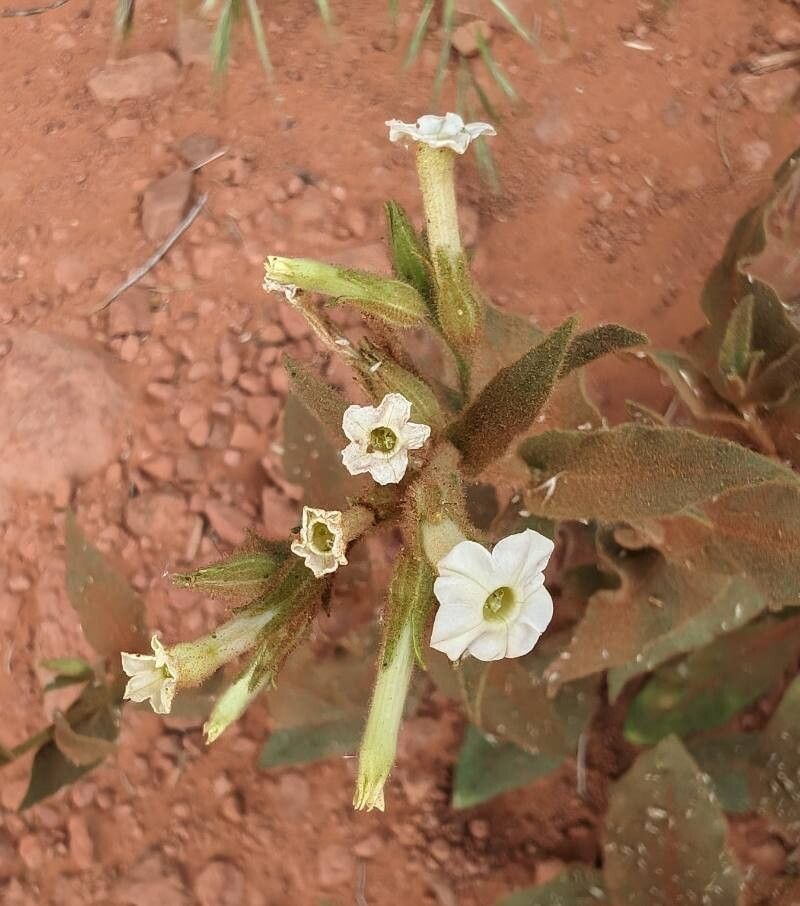
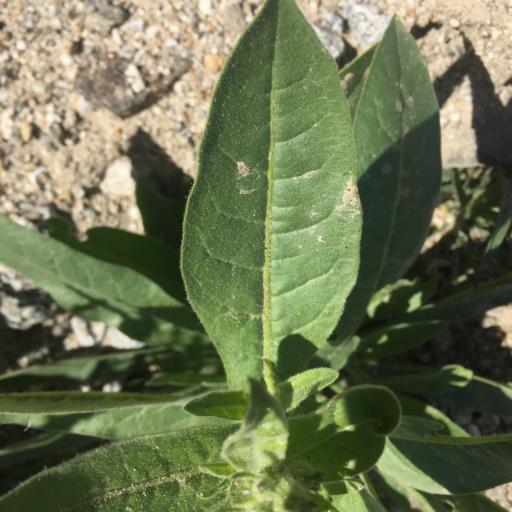
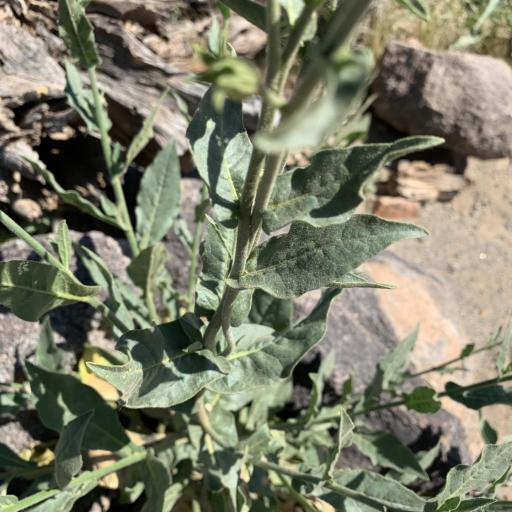
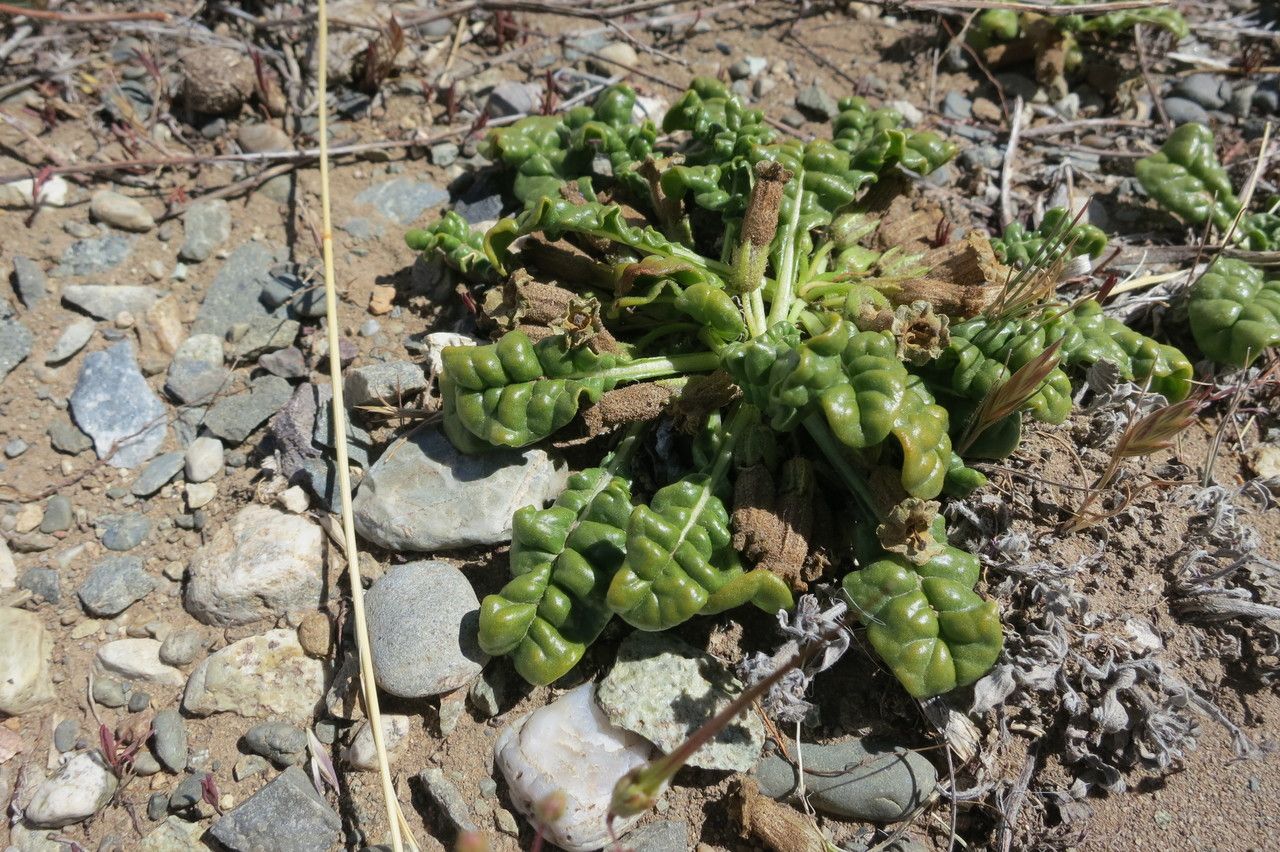
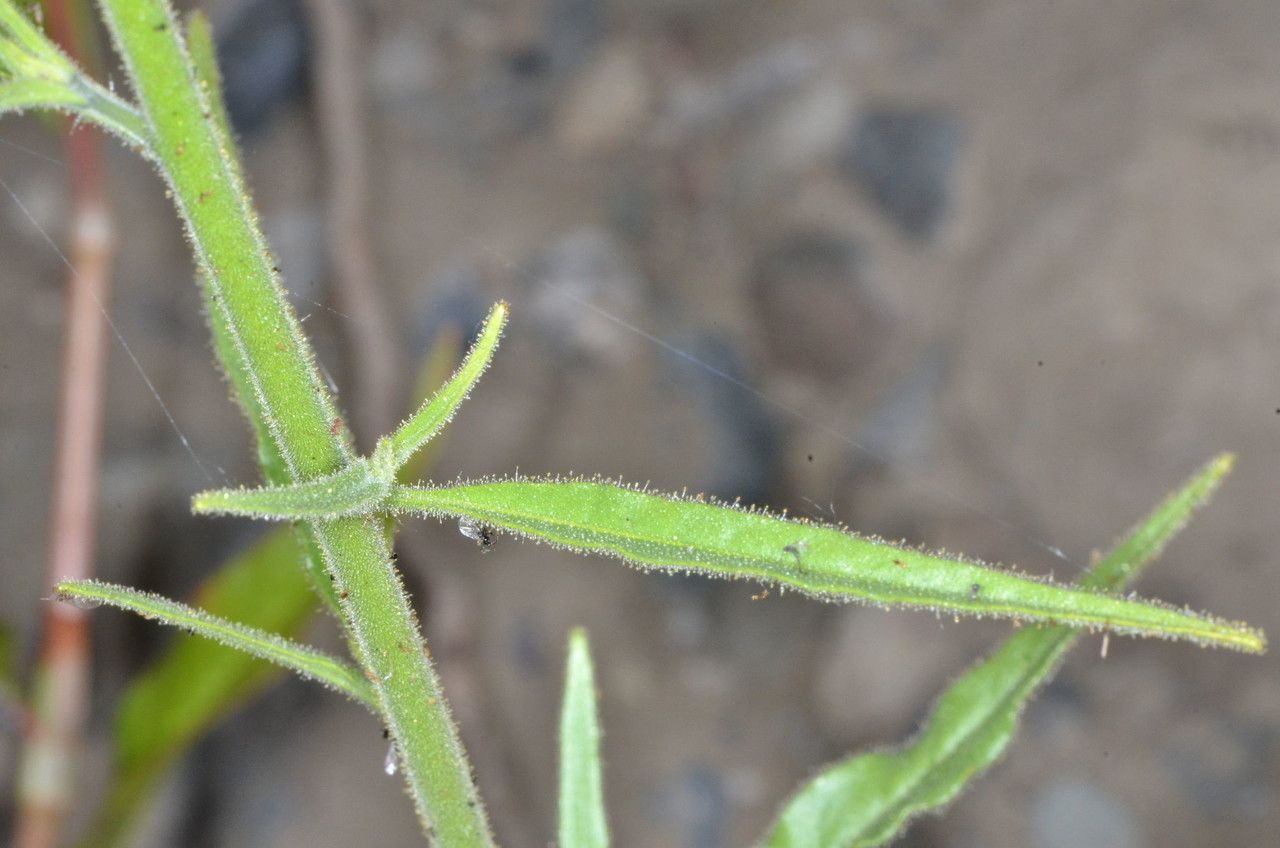
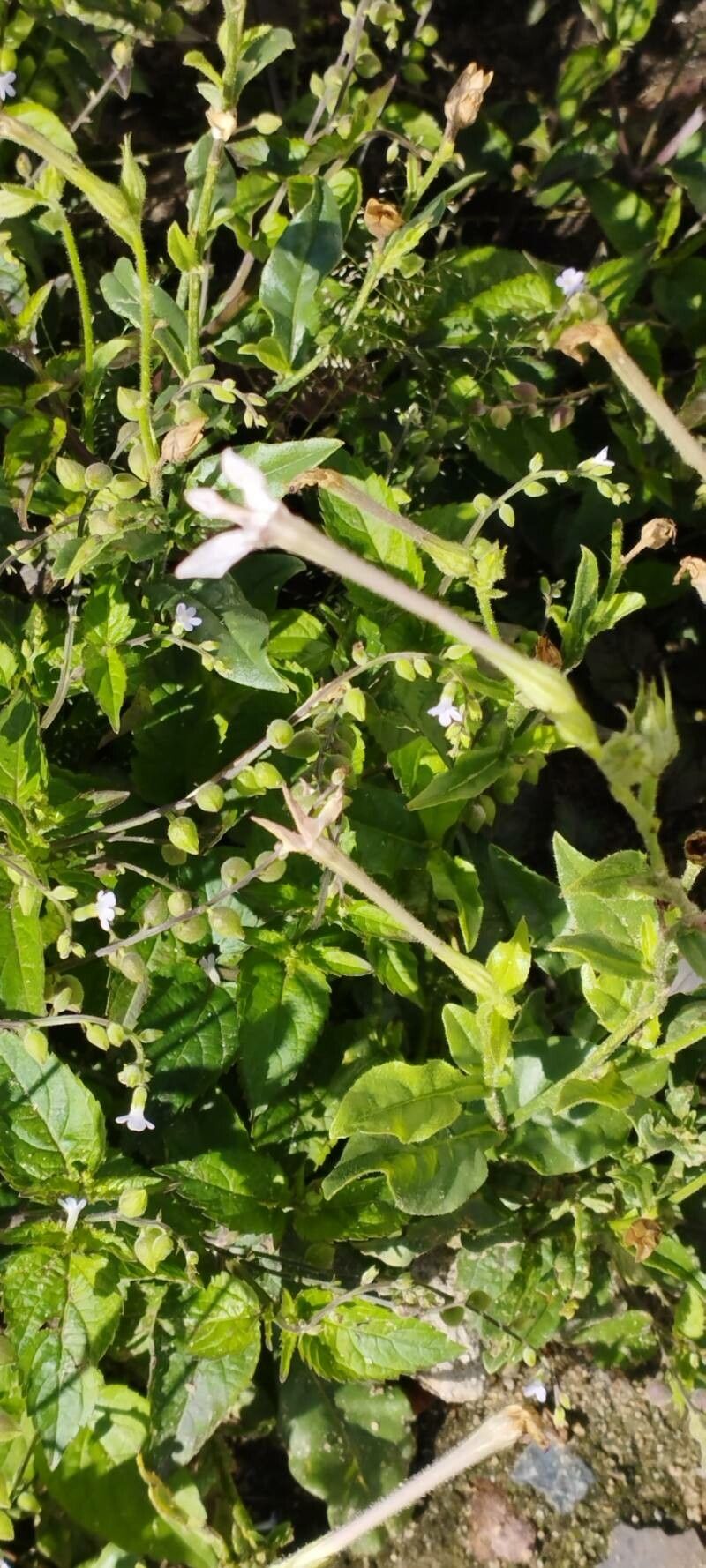
Nicotiana obtusifolia, or desert tobacco, is a plant native to the southwestern United States (from California to Utah to Texas) and Mexico. It is a woody perennial herb growing up to about 80 centimetres (31 in) in maximum height. The leaves have blades up to 10 centimetres (4 in) long, the lower ones borne on short petioles, the upper ones smaller and clasping the stem. The funnel-shaped flower is white or green-tinged, its tubular throat up to 2.6 centimetres (1 in) long.
Desert tobacco is fairly disease-resistant and usually not prone to illnesses. Still, it can be affected by pests and diseases present in its environment. Such infections are typically not severe. For care, this plant requires a moderate amount of maintenance. It should be pruned regularly to keep a good appearance and support healthy growth. Fertilizing can also help encourage flowering. Desert tobacco is suitable for anyone with outdoor space, such as a garden or patio, and does not require extensive care experience. It may need more attention when cultivated indoors.
How to keep Nicotiana Obtusifolia.
Light
Desert tobacco does well in environments with abundant sunlight. Its likelihood of being healthy and vigorous is greatly increased by constant exposure to ample light. Its native habitat is characterized by plentiful illumination. However, both too little and too much light can hinder its growth and overall well-being.
Water
Desert tobacco is well-suited to arid conditions and requires very little moisture to thrive. To care for it, water the plant once a week, making sure the soil has dried out between waterings to prevent root rot. This plant prefers full sunlight and benefits from well-draining soil that emulates its natural desert environment. This type of soil affects how often you need to water the plant and how well it retains moisture.
Temperature
Desert tobacco originates from deserts where temperatures vary dramatically. It grows best in a temperature range of 68 to 95 °F (20 to 35 ℃). Be sure to adjust the temperature to replicate its natural conditions during seasonal changes.
Fertilizer
Desert tobacco responds well to regular, mild applications of fertilizer to encourage healthy leaf development. You should feed Desert tobacco about once per month during the summer. Nitrogen is essential for foliage, and supplying nitrogen-rich sources helps Desert tobacco thrive.
Pruning
Desert tobacco is a hardy plant that flourishes in dry environments, characterized by its broad leaves. Pruning during the early to late spring is essential for removing dead branches and overcrowded stems. This practice promotes healthy growth by improving airflow and allowing more light to reach the plant. Regular pruning also helps maintain its compact shape and enhances its ability to bloom.
Botanical profile.
- Plant Type
- Herb
- Life Cycle
- Annual, Biennial, Perennial
- Genus
- Nicotiana
- Family
- Solanaceae
- Hardiness Zone
- 8-9
- Mature Height
- 76 cm
- Mature Spread
- 20 cm to 76 cm
- Leaf Color
- Light Green, Yellow Green
- Leaf Type
- Deciduous
- Flower Color
- White, Green
- Flower Size
- 2.54 cm to 5.08 cm
- Bloom Time
- Mid spring, Late spring, Summer, Early fall
- Planting Time
- Spring, Summer
- Harvest Time
- Summer, Fall
- Native Area
- Mexico
Other names.