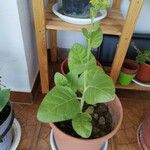
Nicotiana rustica
تنباکو، · Aztec tobacco · Nicotine tobacco · Wild tobacco · Indian tabacco
Description
Source: leafsnapNicotiana rustica, commonly known as Aztec tobacco or wild tobacco, is a tobacco plant species native to South America. This fast-growing annual plant can reach up to 2 meters in height. Its large, hairy leaves have a distinct odor and a bitter taste. For centuries, indigenous people in South America have used Nicotiana rustica for medicinal and ceremonial purposes. The plant contains high levels of nicotine, making it more potent than other tobacco species. In traditional medicine, Nicotiana rustica has been employed to treat various ailments, including toothaches, headaches, and respiratory problems. It has also been used in shamanic rituals for its psychoactive properties. Today, Nicotiana rustica is still cultivated by some indigenous communities in South America. However, it is not widely grown commercially due to its high nicotine content, which makes it unsuitable for smoking or consumption without proper processing. Overall, Nicotiana rustica holds significant cultural importance among many indigenous communities, owing to its traditional medicinal and ceremonial uses.
Care Guide
💧 Water Every 7 days
Aztec tobacco, which comes from warm, semi-arid regions, has moderate drought tolerance. To keep it healthy, it requires weekly watering. While it thrives outdoors and benefits from natural rainfall, it needs additional irrigation during its active growing season. This requirement reflects its adaptation to seasonal changes.
How should I water my Aztec tobacco plant?
When watering Aztec tobacco, you have several options for tools to use. You can use a garden hose with a spray nozzle, a watering can, or any other common watering tool. Aztec tobacco is not picky about the source of water, as it can survive on rainwater, tap water, or filtered water. However, it is best to avoid watering this plant from overhead, as it can harm the leaves and flowers and potentially lead to disease. Setting up a drip irrigation system is often the most effective way to water Aztec tobacco, as it provides even and direct watering to the soil. For container-grown Aztec tobacco, you can follow a similar approach but adjust the tools you use, such as using a cup, watering can, or tap to water the plant directly at the soil.
What should I do if I give my Aztec tobacco too much or too little water?
If you have underwatered your Aztec tobacco plant, the solution is simple: water it more consistently when you notice it is dry. However, overwatering can be a serious problem if not caught early. Overwatered Aztec tobacco plants can become susceptible to diseases that can cause them to decline and die. To prevent this, it's important to choose a suitable location for your plant with plenty of sunlight to help dry the soil and good drainage to ensure excess water does not pool and make the soil waterlogged. If you have overwatered your Aztec tobacco in a pot, it may be necessary to transfer it to a new pot. The previous container may not have had proper soil drainage or enough holes for water to escape. When repotting, use loose soil and a pot that drains efficiently.
How much water does my Aztec tobacco need?
To properly care for your Aztec tobacco plant, it is important to ensure it receives regular water throughout the growing season. In spring, water it once a week. As the season progresses and becomes warmer, you may need to water it two to three times a week. However, be careful not to overwater, as this can harm the plant. It's also important to keep the soil moist but not saturated, regardless of how often you water. Watering Aztec tobacco in a pot requires a slightly different approach. Potted plants tend to dry out faster, so you will need to water them more frequently, typically a few times per week. In contrast, an in-ground plant usually only needs to be watered once a week.
How much water does my Aztec tobacco plant need?
There are a few different ways to determine how much water to give to your Aztec tobacco. Some gardeners choose to feel the soil for moisture and water until the top six inches are moist. Alternatively, you can use a set measurement of about two gallons per week, adjusting based on temperature and soil dryness. However, be careful not to overwater if your plant requires less. When growing in a container, you'll need to use a different method. Ensure all layers of soil are moist by sticking your finger in or watering until there is a slight trickle of excess water from the drainage holes.
How do I know if I'm giving enough water to my Aztec tobacco plant?
Avoiding overwatering your Aztec tobacco can be a bit challenging due to its specific needs. These plants have deep roots, so it's important to keep the soil moist by watering it weekly. However, Aztec tobacco is highly prone to root rot, which can cause browning of the plant. Underwatering is less of a concern as Aztec tobacco can survive without supplemental watering for some time. However, if you neglect to water it for too long, the plant may start to wilt and its leaves may become dry.
☀️ Light Full sun
Aztec tobacco flourishes most when given abundant sunlight. Its native habitat requires the plant to be exposed to plenty of sun for optimal growth. Throughout the various stages of development, that light exposure stays equally important. Too much or too little sunlight can affect its healthy growth, so keeping a consistent level of light is essential.
What are the sunlight requirements for Aztec tobacco?
Aztec tobacco requires a significant amount of sunlight exposure for optimal growth, originating from a habitat that mandates ample sunlight throughout its various stages of development. Full sun exposure is defined as above 6 hours of sunlight daily, while partial sun refers to about 3-6 hours of sunlight. Consistent exposure levels are crucial as both over or underexposure can adversely affect the plant's health. Observing how sunlight moves through your garden and selecting locations that offer a balanced light-shade mix can significantly benefit plant growth.
How can artificial lighting benefit indoor Aztec tobacco plants and what are the guidelines?
For indoor Aztec tobacco plants, artificial lighting serves as an essential supplement to natural sunlight, especially in conditions where sunlight is inadequate, such as during winter or in less sunny spaces. Optimal growth is facilitated by the proper selection and application of artificial lights, like LED lights, which can be customized to meet the specific light wavelength needs of the plant. Guidelines include choosing the right artificial light type where full sun plants require 30-50W/sq ft, partial sun plants need 20-30W/sq ft, and full shade plants need 10-20W/sq ft. Additionally, the light source should be placed 12-36 inches above the plant to simulate natural sunlight effectively and the plants should receive about 8-12 hours of light per day to mimic natural daylight hours.
What symptoms indicate inadequate light exposure in Aztec tobacco?
When Aztec tobacco is cultivated indoors and doesn't receive enough light, several symptoms can arise indicating light deficiency. These include smaller new leaves compared to older ones, leggy or sparse growth leading to a weak and stretched appearance of the plant, faster leaf drop as a means of conserving resources, delayed growth or a complete halt in new leaf production, leaves developing irregular color patterns or appearing pale due to insufficient chlorophyll, chlorosis which leads to the yellowing of leaves, sunscald manifesting as pale or necrotic areas on plant tissue, leaf curling as a defense mechanism against excessive sunlight, wilting due to the loss of turgor pressure, and leaf scorching characterized by dry, crispy leaf edges.
What solutions can improve light exposure for Aztec tobacco?
To enhance light exposure for Aztec tobacco, the following solutions are effective: Indoors, gradually relocate plants to sunnier spots, aiming for at least 6 hours of direct sunlight daily; utilize a south-facing window and open curtains for maximum exposure. If the plant is large or immobile, deploy artificial light by keeping a lamp on for at least 8 hours daily or use professional grow lights. Outdoors, adapt plants to sunlight gradually by moving them week by week to incrementally sunnier spots, avoiding sudden light intensity changes. Additionally, for plants on the ground, reduce obstructions by pruning trees or relocating plants to sunnier locations with ample sunlight and good drainage, especially during the plant's dormant phase.
🌡️ Temperature 15–35°C
Aztec tobacco does best in temperatures from 68 to 95 °F (20 to 35 ℃) and comes from areas with comparable climates. Seasonal temperature changes should match those conditions to achieve optimal growth.
What are the optimal growth conditions for Aztec tobacco?
Aztec tobacco thrives in temperatures ranging from 68 to 95 °F (20 to 35 °C), making it suitable for regions with a similar climate. The plant is native to such climates and prefers seasonal temperature adjustments to reflect these conditions for optimal growth. Despite its strong cold resistance, meaning special frost protection measures are not typically necessary, providing extra protection when temperatures are expected to drop below -15°C is important. This can include covering the plant with soil or straw and ensuring the soil is moist before the first freeze of autumn to help prevent drought and water scarcity during winter and early spring.
How does Aztec tobacco respond to low temperatures, and what can be done?
Aztec tobacco is cold-tolerant, ideally kept above 0°C during winter and thriving best when the temperature stays above 20°C. If temperatures fall below -15°C, there may not be noticeable changes during the winter, but a decrease in sprouting, or a complete lack of sprouting, might occur in spring. In response to this, any parts that have failed to sprout by spring should be removed.
How should you care for Aztec tobacco during high temperatures, and what are the symptoms of heat stress?
During the summer, it's crucial to keep Aztec tobacco's surrounding temperature below 35°C. Exceeding 41°C can cause the leaves to lighten in color, curl, become prone to sunburn, and in severe cases, the plant may wilt and dry out entirely. To care for a plant that's experienced these stress symptoms, trim away sunburned and dried-up parts. Relocate the plant to a shaded area during the midday and afternoon sun, or use a shade cloth for protection. Additionally, watering the plant in the morning and evening helps keep the soil moist, further mitigating heat stress.
💨 Humidity
🪴 Soil 5-7
🌱 Fertilizer
After most of the Aztec tobacco blooms have opened to full size, resume fertilizing. When blooms are at their peak output, apply fertilizer every three to four weeks, as weather permits. Then, when the plant begins producing fewer new blooms, stop fertilizing; there’s no need to feed it if it can no longer produce more blooms.
Why should I put fertilizer on my Aztec tobacco plant?
Plants, including Aztec tobacco, require nutrients to survive. Many gardeners, regardless of their experience, understand this crucial aspect. However, without food, Aztec tobacco plants will not last long after their initial pollination. To ensure the plants thrive and produce beautiful flowers throughout the blooming season, it is important to provide the right nutrients in the right amounts. Using fertilizer is particularly beneficial as it helps Aztec tobacco develop a strong and healthy root system. This is essential because the plant naturally has a thin and fragile root system that is easily damaged. By fertilizing during the planting process, Aztec tobacco is able to establish a sturdy root structure. This not only offers stability to the plant but also sets the stage for an impressive flowering display. Additionally, timing the fertilization correctly can significantly prolong the flowering period of Aztec tobacco.
What is the ideal time to fertilize my Aztec tobacco?
Aztec tobacco grows rapidly after the last frost. It should be fertilized during planting to support its early growth. This is the only time it needs fertilizer until the blooms are fully developed later in the year. When the blooms are at their largest, it is time to start fertilizing again every three to four weeks. As the plant begins to produce fewer new blooms, fertilization can be stopped.
When is the right time to not use fertilizer for my Aztec tobacco?
Regular fertilizing is important for Aztec tobacco, but it is possible to apply it at the wrong time. In certain situations, it is necessary to hold back on fertilizer. These situations are usually related to climate, but can also involve other factors that can be controlled. When there are issues with the plant, soil, or climate, it is best to wait until the situation improves and the plant has recovered. For example, it is not advisable to fertilize when there are severe or unexpected weather changes. If there is a sudden cold spell in the middle of summer, it is better to wait for warmer weather before applying fertilizer. Similarly, if the soil is too dry or compacted to absorb anything, fertilizing can lead to the fertilizer going straight to the roots, which is not beneficial for Aztec tobacco. During the hottest parts of the day when temperatures reach the 90-degree Fahrenheit range, it is also not recommended to apply fertilizer. This is because fertilizer can break down at different speeds depending on temperature, and allowing hot temperatures to break it down too quickly can be detrimental. Additionally, any pests or diseases should be treated and resolved before re-fertilizing.
What kind of fertilizer should I use for my Aztec tobacco?
To ensure the proper growth of different types of Aztec tobacco, it is important to provide a balanced nutrient supply through fertilizer. The ideal fertilizer for these high-yield blooming plants is one that is specifically formulated for such purposes. Opting for a fertilizer with a higher phosphorus content, indicated by a higher P number in its NPK number (e.g., 10-30-10), is recommended. Luckily, there are various fertilizer brands that offer options tailored for blooming plants like Aztec tobacco, making nutrient provision hassle-free. When using a pre-mixed fertilizer, it is crucial to adhere to the instructions provided on the packaging in order to avoid over- or under-fertilization, both of which can negatively impact the growth and overall health of the Aztec tobacco plant.
How can I help you fertilize your Aztec tobacco?
Here are some easier-to-follow instructions for fertilizing Aztec tobacco: 1. Different fertilizers have different instructions, so it's important to check the specific guidelines for your fertilizer type. 2. When planting Aztec tobacco for the first time, mix the recommended amount of fertilizer into the soil and water the plants. 3. For pellet fertilizers, mix them into the top inch of soil around the plant's outer edge, where the roots are. Water them well initially, and then water regularly. 4. Other fertilizers can be mixed into a watering can and applied like regular water. 5. Follow the instructions on the fertilizer packaging for consistency, but fertilizing every three to four weeks is a good general schedule.
🪴 Pot & Repot
✂️ Pruning
Aztec tobacco is a hardy plant known for its aromatic leaves. To promote healthy growth and manage its size, it's best to prune the plant from early to late spring. Be sure to remove dead branches and thin out any crowded stems to improve air circulation. Additionally, clean your tools to prevent infections. Proper pruning not only enhances the plant's vitality but also improves its appearance.
🌿 Propagating
🐛 Diseases & pets
☠️ Toxicity
Characteristics
- Plant Type
- Herb
- Life Cycle
- Annual
- Genus
- Nicotiana
- Family
- Solanaceae
- Hardiness Zone
- 7-10
- Mature Height
- 0.4 m to 1.22 m
- Mature Spread
- 34 cm to 49 cm
- Leaf Color
- Dark Green, Olive Drab
- Leaf Type
- Semi-evergreen
- Flower Color
- Yellow
- Flower Size
- 1.02 cm to 1.52 cm
- Bloom Time
- Late spring, Summer
- Planting Time
- Spring
- Harvest Time
- Mid summer, Late summer, Early fall, Mid fall
- Native Area
- Colombia, Turkey, Ecuador, Peru