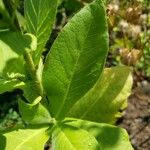
Nicotiana sylvestris
Ornamental Tabacco · South American tobacco · Flowering Tobacco
Description
Source: leafsnapNicotiana sylvestris, commonly known as woodland tobacco, is a species of flowering plant in the nightshade family Solanaceae. Native to South America, it is widely cultivated as an ornamental plant around the world. This plant can grow up to 1 to 2 meters tall and features large, fragrant white flowers that bloom from mid-summer to early autumn. Its leaves are sizable, ovate, and slightly hairy. Nicotiana sylvestris thrives in well-drained soil and full sun exposure but can also tolerate partial shade. It is often grown as an annual or biennial in gardens or containers, prized for its attractive flowers and sweet fragrance, which attract pollinators like bees and butterflies. The leaves of Nicotiana sylvestris contain nicotine, rendering them toxic if ingested by humans or animals. However, indigenous people have used the plant for medicinal purposes for centuries, appreciating its anti-inflammatory properties. Overall, Nicotiana sylvestris is a beautiful ornamental plant that adds elegance to any garden with its tall stature and fragrant white blooms. It also possesses some medicinal properties when used appropriately under expert guidance.
Care Guide
💧 Water Every 7 days
South American tobacco, a plant native to the warm, temperate regions of South America, prefers consistently moist soil and thrives in high humidity. To ensure optimal hydration, water it weekly. Typically grown outdoors, South American tobacco benefits from rainwater during its active growing season, which enhances its growth and meets its water requirements.
How should I water my South American tobacco plant in the best way possible?
To properly water the South American tobacco plant, it is recommended to use filtered water at room temperature. Tap water may contain harmful particles that can be detrimental to its well-being. Since the South American tobacco is native to warm environments, it is important to avoid using cold water as it can shock the plant. Additionally, overhead watering should be avoided to prevent complications with the foliage. Instead, gently apply filtered, room temperature water directly to the soil until it is thoroughly saturated. This method benefits the plant by moistening the roots and facilitating nutrient absorption as they spread through the soil.
What should I do if I give my South American tobacco plants too much or too little water?
Overwatering and underwatering can harm your South American tobacco plant, but overwatering is more common and problematic. When this plant receives too much water, the stems and leaves may wilt and turn yellow. Prolonged overwatering can also lead to diseases like root rot, mold, and mildew, which can be fatal. On the other hand, underwatering is less likely since the plant tolerates drought well. However, it is still possible, and in such cases, the leaves of your South American tobacco may become brittle and brown. To care for your South American tobacco, it is important to promptly notice and address signs of overwatering. Diseases caused by overwatering, such as root rot, may be irreversible if not addressed early. If you observe early signs of overwatering, reduce your watering schedule and check the soil's drainage. If the soil drains poorly, replace it with a loose, well-draining potting mix. Conversely, if you notice signs of underwatering, simply water more regularly until the signs improve.
How often do I need to water my South American tobacco plant?
If your South American tobacco plant is in a pot, you can determine if it needs water by sticking your finger into the soil. If the top two to three inches of soil are dry, it's time to water it. If you're growing your South American tobacco plant outdoors in the ground, you can use a similar method to check the soil. Again, if the top few inches of soil have dried out, it's time to water. During the spring and early fall, you'll likely need to water this plant about once every week using this method. However, during extremely hot weather, you may need to water it about twice or more per week. It's worth noting that mature, well-established South American tobacco plants have a strong ability to withstand drought.
How much water does my South American tobacco plant need?
To water your South American tobacco effectively, you should not hesitate to give it a generous amount of water. Make sure the top few inches of soil are dry before watering thoroughly. It's important to water enough to saturate the soil completely, causing excess water to flow out of the drainage holes at the bottom of the pot. If there is no excess water drainage, you have likely not watered enough, but be careful not to let water accumulate inside the soil, as this can harm the plant. On the other hand, if water does not drain properly through the pot, it may indicate poorly draining soil, which is detrimental to the plant's health and should be avoided. If the plant is located outside, approximately 1 inch of rainfall per week should be sufficient.
How should I water my South American tobacco plant as it grows different stages?
The water needs of South American tobacco can vary depending on its growth stages. In the first few years of its life or when the plant is newly transplanted, it requires more water than usual. During these stages, the plant directs a lot of energy towards developing new roots that will support future growth. These roots perform best when provided with slightly more moisture compared to when the plant is more mature. As the plant ages, its water requirements decrease. Additionally, during the bloom period, when the plant is developing flowers, it may need more water due to increased moisture usage.
☀️ Light Full sun
South american tobacco is a perennial, herbaceous, sun-loving plant native to open habitats and commonly found in meadows and grasslands. It prefers full sun but can also tolerate partial sun conditions.
How much sunlight does South American tobacco require?
South American tobacco thrives best when it receives full sun, defined as more than 6 hours of sunlight a day. However, it can also tolerate partial sun conditions, which means it can grow well with about 3-6 hours of sunlight per day. It is crucial to observe the movement of sunlight through your garden to ensure that you choose locations that provide an optimal balance of light and shade, catering to the needs of your plants and ensuring their growth and happiness.
What are the essentials for growing South American tobacco?
South American tobacco is a sun-loving perennial herbaceous plant native to open habitats, often thriving in meadows and grasslands. It prefers locations with full sun but can tolerate partial sun conditions. For indoor plants that might not receive sufficient natural sunlight, especially during winter or in less sunny spaces, artificial lighting serves as a crucial alternative. LED lights are recommended for indoor plant lighting as they can be tailored to provide the specific wavelengths of light that plants require. The intensity of artificial light needed varies: full sun plants need 30-50W/sq ft, partial sun plants require 20-30W/sq ft, and full shade plants need 10-20W/sq ft. It's also important to adjust the distance (12-36 inches above the plant) and duration (8-12 hours per day) of the artificial light to mimic natural sunlight as closely as possible.
What are the symptoms of inadequate light in South American tobacco?
When South American tobacco does not receive adequate light, several symptoms may appear, such as small leaves, leggy or sparse growth, faster leaf drop, slower or no new growth, lighter-colored new leaves, chlorosis, sunscald, leaf curling, wilting, and leaf scorching. These symptoms vary, with some indicating light deficiency, like smaller leaves and sparse growth, and others, such as chlorosis and sunscald, suggesting potential overexposure. It's vital to monitor your plant's exposure to sunlight and adjust accordingly to maintain its health.
How do you address light-related issues in South American tobacco?
To address light-related issues in South American tobacco, gradual adjustments to light exposure are recommended. For indoor plants, gradually move them to sunnier locations each week until they receive at least 6 hours of direct sunlight daily, utilize a south-facing window, or employ artificial lighting such as plant grow lights for 8 hours daily. For outdoor plants, a similar gradual relocation to sunnier spots is advised to prevent sunburn. It's also beneficial to reduce obstructions that block sunlight, such as pruning trees or moving plants to areas with better light exposure. In some cases, particularly for smaller plants, transplanting during the plant's dormant period to a location with ample sunlight and good drainage is suggested. However, it's important to note that parts of the plant that have suffered from insufficient light may not recover, but new growth should be healthy with improved light conditions.
🌡️ Temperature 15–37.8°C
South american tobacco is capable of tolerating a broad spectrum of temperatures, though its range may still be constrained by different combinations of moisture and heat. It does best in warm summer climates with sufficient rainfall or watering. Long periods of cloudy, rainy weather or sustained high temperatures can increase the probability of South american tobacco dying. In winter, appropriate protection from cold can improve the plant's survival rate.
What is the botanical name of South American tobacco?
The botanical name of South American tobacco is Nicotiana sylvestris. This species is one of the many types of tobacco known around the world.
💨 Humidity
🪴 Soil 6-8
🌱 Fertilizer
The ideal time to fertilize South American tobacco is in early spring, as it comes out of dormancy and begins active growth. Fertilization supplies the key nutrients needed for healthy development. Although South American tobacco has relatively low fertilizer requirements, fertilizing once a year can improve its survival and encourage better, longer-lasting flowers.
Why should I put fertilizer on my South American tobacco plants?
Fertilization plays a crucial role in the growth of South American tobacco and other plants. It provides essential nutrients that support the plant's development both above and below the ground. Although South American tobacco has relatively low fertilization needs and can often survive without it, annual fertilization can greatly benefit the plant by enhancing its overall health and promoting the production of longer-lasting flowers. Therefore, maintaining a regular fertilization schedule is recommended for those who want their South American tobacco to thrive.
When should I put fertilizer on my South American tobacco?
The best time to fertilize a South American tobacco plant is in late winter to early spring when it is transitioning from dormancy to active growth. Fertilizing at this time jumpstarts healthy growth for the season. Although early spring is generally the most favorable, fall is also an acceptable time to fertilize. However, it is not recommended to feed the plant during summer or winter.
When would it not be a good idea to fertilize my South American tobacco?
To properly care for South American tobacco, it is important to fertilize it only during late winter and early spring. Since this plant requires minimal fertilization, one annual feeding is sufficient. Avoid fertilizing during the rest of the year, as it can easily lead to overfertilization and associated complications. The only exception is if you missed fertilizing in spring, in which case it is acceptable to fertilize in fall. Additionally, there is no need to fertilize during winter when the plant is in a dormant phase with no new growth.
What kind of fertilizer should I use for my South American tobacco?
For growing South American tobacco, any general-purpose fertilizer with balanced amounts of the three main plant nutrients is suitable. However, there are certain nutrient blends that can provide even more benefits. Some gardeners believe that higher levels of phosphorus result in stronger roots and better flowers. As South American tobacco is a flowering plant, using a phosphorus-rich fertilizer may be the best approach. It can be in the form of granules or liquid, as long as it contains ample nutrients. In addition to manufactured fertilizers, you can also enhance the soil for your South American tobacco using organic methods. Compost, manure, and similar materials are highly effective in creating a healthy growing medium.
How do I give nutrients to my South American tobacco?
To fertilize South American tobacco, you can use either granular or pellet fertilizer. The best time to do this is when the plant is transitioning from winter dormancy to active growth in early spring. Wait for the plant to start sending out shoots, then apply the fertilizer. If you prefer liquid fertilizer, dilute it with water before applying. Whichever type you choose, it's important to moisten the soil before, during, and after fertilization.
🪴 Pot & Repot
✂️ Pruning
Pruning South American tobacco from early to late spring improves its health and flowering. To maintain size and ensure good air circulation, remove dead stems and excess growth. Regular pruning helps prevent diseases, encourages bushier growth, and enhances both the plant's appearance and productivity.
🌿 Propagating
🐛 Diseases & pets
☠️ Toxicity
Characteristics
- Plant Type
- Herb
- Life Cycle
- Perennial, Annual, Biennial
- Genus
- Nicotiana
- Family
- Solanaceae
- Hardiness Zone
- 8-11
- Mature Height
- 0.91 m to 1.52 m
- Mature Spread
- 61 cm
- Leaf Color
- Green
- Leaf Type
- Deciduous
- Flower Color
- White
- Flower Size
- 6.35 cm to 10.16 cm
- Bloom Time
- Summer, Fall
- Planting Time
- Spring
- Harvest Time
- Late summer, Fall, Early winter
- Native Area
- Bolivia