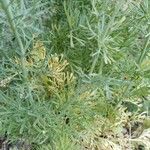
Nigella hispanica
Fennel-flower · Spanish-fennel
Description
Source: leafsnapNigella hispanica, the Spanish fennel flower, is a species of flowering plant in the family Ranunculaceae, native to Portugal, Spain, and France. An annual or biennial reaching 60 cm (2 ft), the Royal Horticultural Society considers it a good plant to attract pollinators.
Care Guide
💧 Water
Spanish fennel, native to the Mediterranean, flourishes in arid environments with little water. It needs watering twice a week and thrives in full sunlight. Its growth cycle hinges on the availability of water, which is crucial for both flowering and seed production.
☀️ Light Full sun
Wild fennel comes from bright, open habitats where it does best in full sun. It can tolerate some shade but prefers direct sunlight for optimal growth. This plant, which may be annual or biennial, is noted for its sun-loving habit.
What are the sunlight requirements for Spanish fennel (Nigella hispanica)?
Spanish fennel (Nigella hispanica) thrives in various sunlight conditions. For full sun exposure, it requires above 6 hours of sunlight daily. If it's in partial sun, about 3-6 hours of sunlight per day is sufficient. It's important to observe your garden closely. Watching how sunlight moves through your space will help you find the perfect spots that offer a harmonious balance of light and shade. This careful placement ensures your Spanish fennel's health and happiness.
🌡️ Temperature 5–35°C
Wild fennel can tolerate a wide range of temperatures, but its presence may still be constrained by different mixes of moisture and heat. It grows best in warm summer climates with sufficient rainfall or watering. Extended spells of cloudy, rainy weather, as well as prolonged high temperatures, can raise the probability of wild fennel dying. In winter, adequate protection from cold can boost the plant's chances of survival.
What is Spanish fennel?
Spanish fennel, known botanically as Nigella hispanica, is a plant species recognized by its distinctive name. Unfortunately, specific details about its characteristics, uses, or any relevant information were not provided in the available data.
💨 Humidity
🪴 Soil 6-8
🌱 Fertilizer
Once Wild fennel has opened most of its flowers to full size, resume fertilizing. When the blooms are at their peak, feed the plant every three to four weeks, as the weather allows. After Wild fennel begins producing fewer new blooms, stop fertilizing; there is no need to feed it when it can no longer form additional flowers.
🪴 Pot & Repot
✂️ Pruning
Spanish fennel features delicate foliage and striking blue flowers. To maintain its shape and encourage growth, engage in selective pruning from early to late spring. Be sure to remove spent blooms and any damaged stems, using clean tools to promote quicker healing. Proper pruning not only enhances airflow and reduces the risk of disease, but also extends the blooming period.
🌿 Propagating
🐛 Diseases & pets
☠️ Toxicity
Characteristics
- Plant Type
- Herb
- Life Cycle
- Annual
- Genus
- Nigella
- Family
- Ranunculaceae
- Hardiness Zone
- 5-9
- Mature Height
- 20 cm to 40 cm
- Mature Spread
- 15 cm to 30 cm
- Leaf Color
- Green
- Leaf Type
- Deciduous
- Flower Color
- White
- Flower Size
- 2.03 cm to 3.05 cm
- Bloom Time
- Summer
- Planting Time
- Spring
- Harvest Time
- Late summer, Early fall, Mid fall
- Native Area
- Egypt, Turkey, Austria, Slovakia, Montenegro, Croatia, Slovenia, Yemen, Belarus, Russia, Iraq, Germany, Romania, Belgium, Portugal, Netherlands, France, Cyprus, Bulgaria, Poland, Armenia, Greece, Ukraine, Lebanon, Serbia, Syria, Italy, Spain, Switzerland, Iran, Albania, Azerbaijan, Hungary