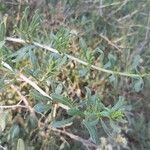
Nitraria schoberi
Nitrebush
Description
Source: wikipedia (CC BY-SA)Nitraria schoberi, the nitrebush, is a species of flowering plant in the family Nitrariaceae. It has an Irano-Turanian distribution. Its fruit, edible and salty-sweet, are collected by local peoples and eaten fresh or preserved. Archeological evidence shows that people have been eating the fruit since Epipalaeolithic times.
Care Guide
💧 Water
☀️ Light Full sun
Nitrebush is a plant native to light-filled habitats like bright meadows and the edges of forests. It flourishes in areas with full sun exposure, but it can also manage in partially sunlit places, demonstrating its adaptability to a range of sunlight intensities.
🌡️ Temperature 5–35°C
Nitrebush is a plant that exhibits excellent capability to adjust to a range of weather conditions, from extremely hot summers to cold winters. Nonetheless, there is a specific temperature spectrum for its best growth. When the temperature rises too high, the plant can suffer from issues related to heat and humidity, and could potentially die. In areas where the climate can reach near its lowest tolerance for cold, ensuring insulation precautions to safeguard the plant becomes crucial.
💨 Humidity
🪴 Soil 6-8
🌱 Fertilizer
For the purpose of encouraging robust development, apply fertilizer to your Nitrebush during the onset of spring. Consistent fertilization boosts the overall wellbeing, eventually leading to sturdy development, durability in harsh circumstances, and heightened resistance to diseases and pests. Adhere to a precise fertilization regime for your Nitrebush to guarantee lively leaves characterized by rich color and a lavish look.
🪴 Pot & Repot
✂️ Pruning
🌿 Propagating
🐛 Diseases & pets
☠️ Toxicity
Characteristics
- Plant Type
- Shrub
- Life Cycle
- Perennial
- Hardiness Zone
- 4-9
- Mature Height
- 0.91 m to 2.13 m
- Mature Spread
- 2.13 m to 3.05 m
- Leaf Color
- Dark Green
- Leaf Type
- Evergreen
- Flower Color
- White
- Flower Size
- 0.51 cm to 0.76 cm
- Bloom Time
- Late spring, Early summer
- Planting Time
- Spring, Summer
- Harvest Time
- Mid summer, Late summer, Early fall
- Native Area
- Russia, Afghanistan, Iraq, Tajikistan, Turkey, Kazakhstan, Iran, Armenia, Pakistan, Romania, Turkmenistan