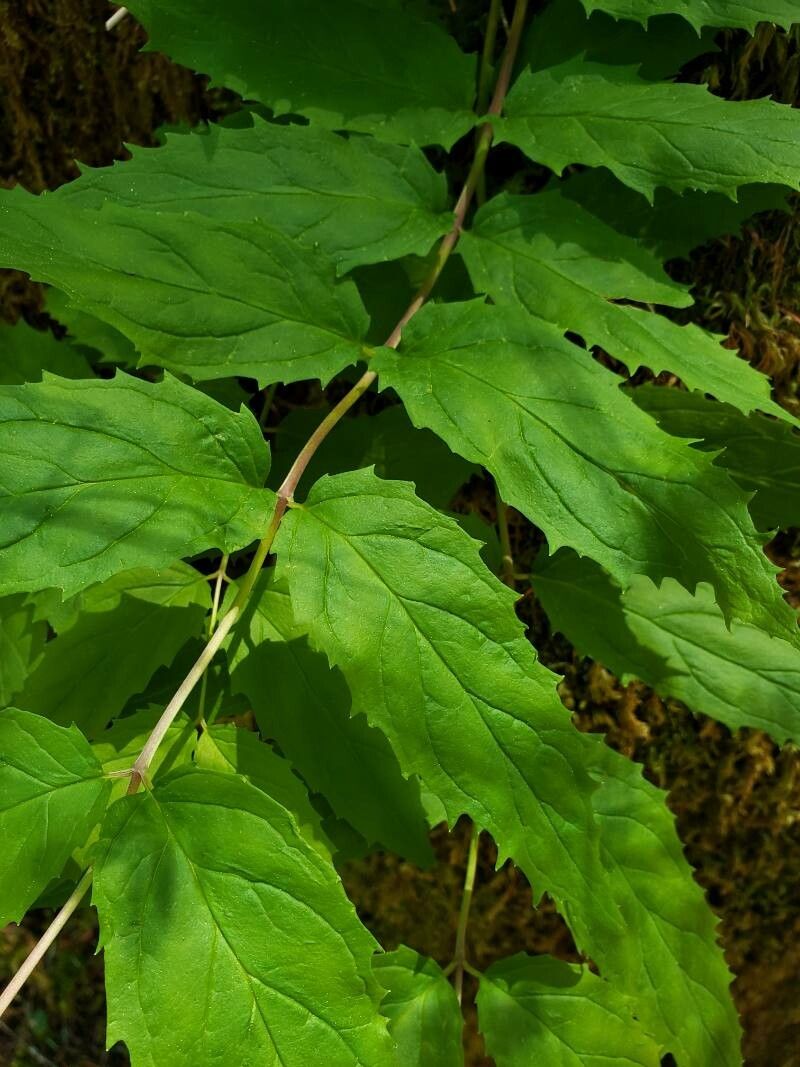
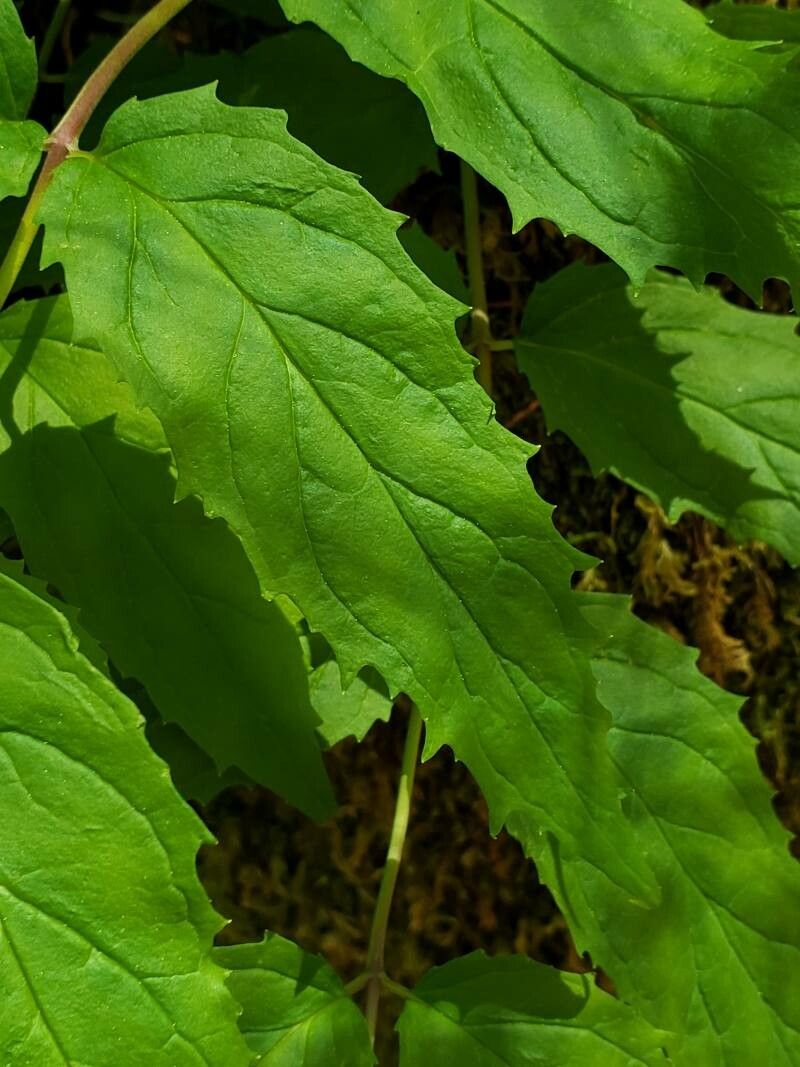
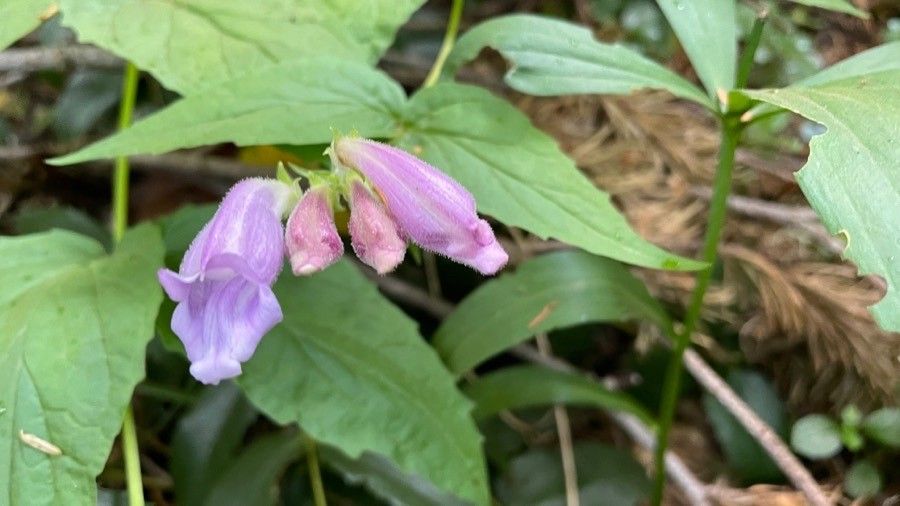
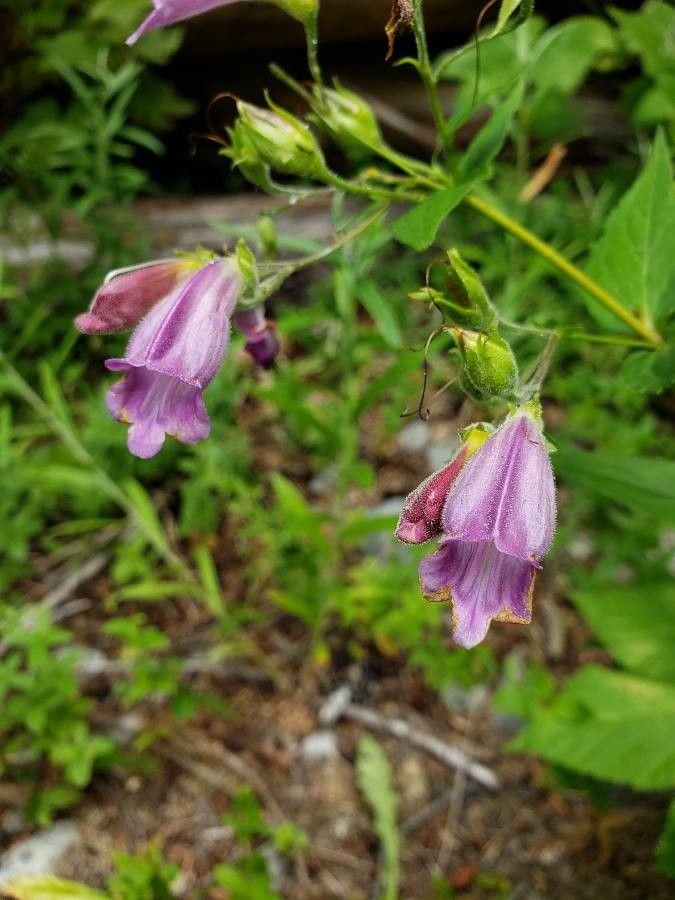
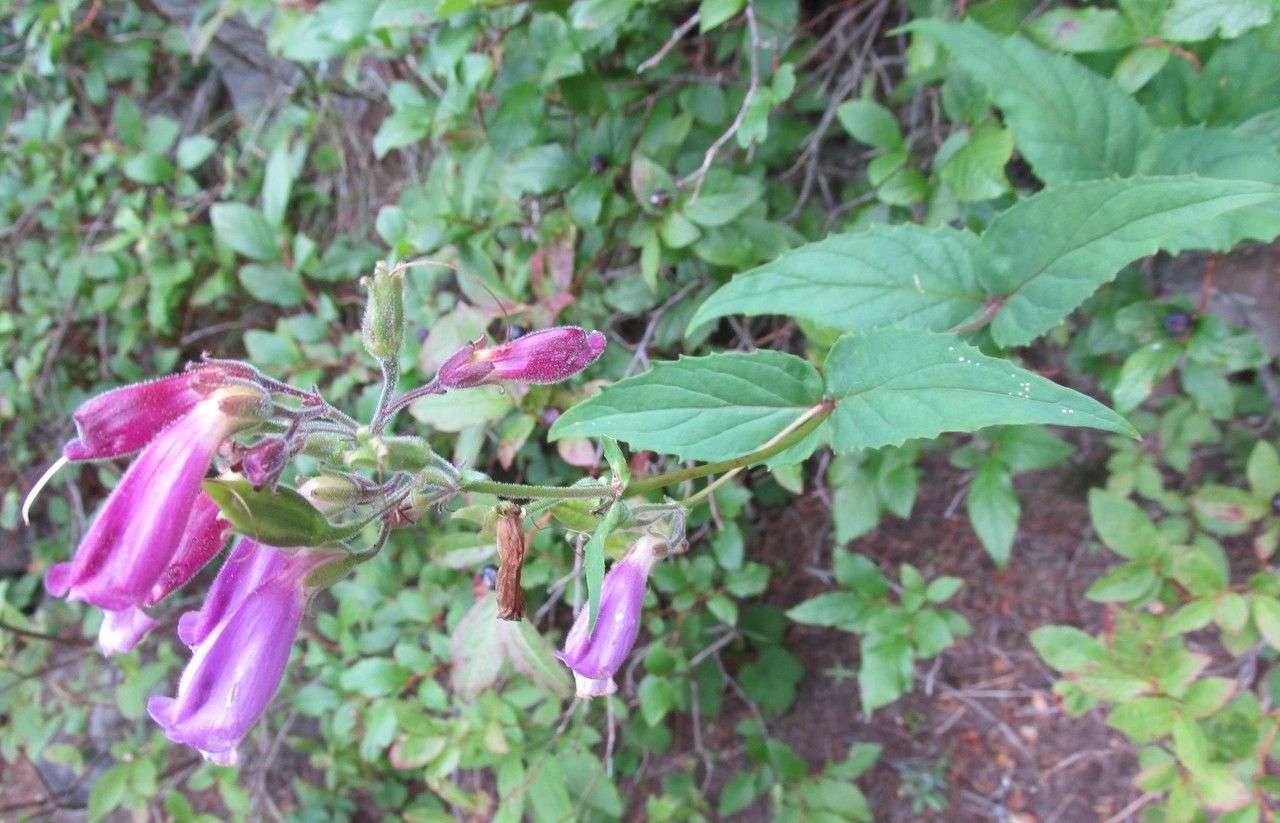
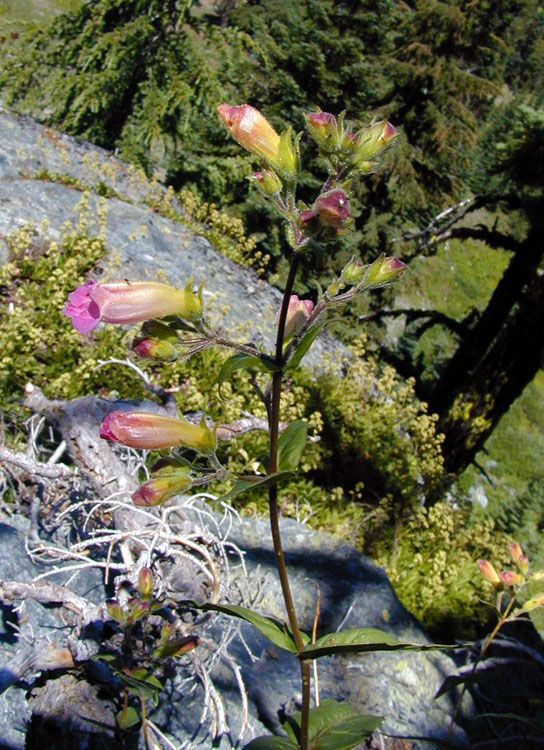
Nothochelone is a monotypic genus of flowering plants in the plantain family containing the single species Nothochelone nemorosa, which is known by the common name woodland beardtongue. Originally described as Penstemon nemorosus, the plant is very similar in appearance to the penstemons, but was separated and placed into its own genus on the basis of slight morphological differences, such as winged seeds.Nothochelone is native to western North America from British Columbia to northern California, where it grows in mountain forests. It is a perennial herb producing an erect, hairy stem up to a meter tall from a caudex. The oppositely arranged leaves are lance-shaped to oval, pointed, toothed, and up to 14 centimeters long. The inflorescence is a panicle of flowers resembling penstemons, widely tubular with two lobed lips and a hairy staminode. The flower may exceed 3 centimeters in length and is light to dark pink in color. The fruit is a capsule containing the small winged seeds.
Woodland beardtongue shows strong resistance to disease and is generally not susceptible to infections. Regarding care, the plant is fairly low-maintenance. When grown outdoors it needs minimal watering, and larger specimens typically do not require pruning. Smaller plants, however, should be pruned after they have finished blooming. Woodland beardtonguet is suitable for anyone with an outdoor space, such as a garden or deck, and does not demand extensive care experience.
How to keep Nothochelone Nemorosa.
Light
Woodland beardtongue thrives in full sun, which encourages healthier growth. It can tolerate moderate sun exposure, though this is less ideal. Native to habitats with abundant sunlight, it may develop growth problems if light is too little or too much.
Water
Woodland beardtongue thrives in well-drained, consistently moist soil. It typically requires watering every 2-3 weeks, ensuring the soil doesn't completely dry out. Although it has moderate drought tolerance, controlling humidity is important for its health. When grown outdoors, applying mulch can help retain moisture and regulate soil temperature, promoting optimal growth without causing waterlogging.
Temperature
Woodland beardtongue is native to areas with a moderate climate and grows best at 59 to 89.6°F (15 to 32 ℃). It favors this temperature range for optimal development. Small temperature adjustments may be necessary depending on seasonal variations.
Fertilizer
Timing matters when fertilizing Woodland beardtongue. Apply fertilizer in early spring and repeat monthly until early summer. Fertilizer promotes lovely blooms and supplies energy during both dormant and active growth phases.
Pruning
To encourage rejuvenation and denser growth of woodland beardtongue, prune the plant in early to late winter by cutting the old flower stems close to the base. Additionally, remove any dead foliage to maintain the plant's health. This practice improves air circulation, reduces the risk of disease, and promotes more vigorous blooms in the next growing season, as recommended by horticultural guides.
Botanical profile.
- Plant Type
- Shrub
- Life Cycle
- Perennial
- Genus
- Nothochelone
- Family
- Plantaginaceae
- Hardiness Zone
- 8
- Mature Height
- 0.3 m to 1.07 m
- Mature Spread
- 0.3 m to 1.07 m
- Leaf Color
- Green, Blue
- Leaf Type
- Evergreen
- Flower Color
- Pink, Purple, Red, Lavender
- Flower Size
- 2.54 cm to 5.08 cm
- Bloom Time
- Summer
- Planting Time
- Spring, Summer
- Harvest Time
- Early fall, Mid fall
Other names.
Reader questions.
What are the sunlight requirements for Woodland Beardtongue?
Woodland Beardtongue flourishes in full sun, requiring above 6 hours of sunlight to promote healthier growth. It can also manage in partial sun conditions, which means about 3-6 hours of sunlight. However, less than ideal sun exposure might not support its best growth. Observing how sunlight moves through your garden and selecting locations that offer a perfect balance of light and shade are crucial for the happiness and health of your plants.
What is the ideal temperature range for Woodland beardtongue?
Woodland beardtongue, scientifically known as Nothochelone nemorosa, thrives best in a moderate climate, with the ideal temperature range being between 59 to 89.6°F (15 to 32°C). This range is optimal for its growth, and depending on seasonal changes, slight temperature adjustments may be necessary to maintain this ideal environment.
What essentials should I know about Woodland Beardtongue and artificial lighting?
Woodland Beardtongue, which thrives under full sun, originates from habitats with ample sunlight and may experience growth issues if the light is either insufficient or excessive. For indoor plants, adequate lighting is critical, especially when natural sunlight is lacking, like in winter or less sunny spaces. Artificial lights, such as LED lights, can serve as a vital solution, providing the specific wavelengths needed for optimal plant growth. The amount of artificial light required varies by plant type: full sun plants need 30-50W/sq ft, partial sun plants need 20-30W/sq ft, and full shade plants require 10-20W/sq ft. The correct placement (12-36 inches above the plant) and duration (8-12 hours per day) of artificial light mimic natural sunlight conditions and support healthy plant growth.
Does Woodland beardtongue need frost protection?
Despite Woodland beardtongue's strong cold resistance, it does not usually require special frost protection measures during winter. However, if winter temperatures are expected to drop below -10°C, it becomes important to protect the plant from cold. Wrapping the trunk and branches with non-woven fabric or cloth can provide effective cold protection. Additionally, watering the plant abundantly before the first freeze in Autumn to keep the soil moist can help prevent drought and water scarcity during the colder months.
What symptoms indicate light-related issues in Woodland Beardtongue?
When exposed to suboptimal lighting, Woodland Beardtongue may show several symptoms. Small or lighter-colored new leaves may indicate inadequate sunlight, while leggy growth, faster leaf drop, or halted new growth signal poor light conditions. Chlorosis, or the yellowing of leaves, sunscald, leaf curling, wilting, and leaf scorching are symptoms of too much direct sunlight. Observing these symptoms early can help adjust your plant’s exposure to sunlight or artificial light to maintain its health.
How does low temperature affect Woodland beardtongue, and what are the solutions?
Woodland beardtongue is cold-tolerant and generally thrives when temperatures are above 15°C. During winter, it should be kept above -5°C to avoid damage. When the temperature falls below -10°C, while there might not be any noticeable changes during winter, you may find the branches becoming brittle and dry by spring, with no new shoots emerging. The recommended solution for this is to prune away any dead branches in spring that have failed to produce new leaves.
How do I address light-related issues for both indoor and outdoor settings of Woodland Beardtongue?
To optimize Woodland Beardtongue's growth indoors, gradually increase sunlight exposure to at least 6 hours daily or use artificial lighting for plants that cannot be moved, ensuring lights are on for at least 8 hours daily. For outdoor plants, move them to sunnier locations gradually to avoid shock. Reducing obstructions like pruning trees can help increase sunlight exposure. When transplanting for more sunlight, do it during the plant's dormant period for minimal stress. Although parts of the plant damaged by insufficient light might not recover, improving light exposure can promote healthy new growth.
How does high temperature affect Woodland beardtongue, and what are the solutions?
During the summer months, it's crucial to keep Woodland beardtongue's temperature below 32°C. When temperatures exceed 35°C, the plant's leaves may lighten in color, the tips can become dry and withered, and it might be more susceptible to sunburn. To mitigate these issues, sunburned and dried-up parts should be trimmed away. Moving the plant to a shaded location or using a shade cloth to protect it from the midday and afternoon sun can also be beneficial. It's also advisable to water the plant in the morning and evening to keep the soil moist and prevent further stress.