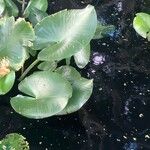
Nuphar advena
Spatter-dock · Yellow Pond-lily · Large Yellow Pond-lily · Broad-leaved Pond-lily · Broadleaf Pond-lily
Description
Source: leafsnapNuphar advena (spatterdock or cow lily or yellow pond-lily) is a species of Nuphar native throughout the eastern United States and in some parts of Canada, such as Nova Scotia. It is similar to the Eurasian species N. lutea, and is treated as a subspecies of it by some botanists, though differing significantly in genetics.It is locally naturalized in Britain.
Care Guide
💧 Water
☀️ Light Full sun
Spatterdock prefers locations that receive ample sunlight throughout the day, yet it can also do well in areas where the light is partly filtered. Too little or too much sun can influence spatterdock's healthy growth, since it is adapted to settings with abundant daylight.
What are the sunlight requirements for Spatterdock?
Spatterdock thrives best when it receives full sun exposure, which amounts to over 6 hours of direct sunlight each day. It can also grow in partial sun conditions, with about 3-6 hours of sunlight. It’s important to observe the movement of sunlight through your garden to choose the best spots that provide a balance of light and shade, ensuring optimal growth conditions for your plants.
How does insufficient or excessive sunlight affect Spatterdock?
Spatterdock appreciates abundant sun exposure but can also manage in partially filtered sunlight. Both a lack and a surplus of sunlight can impact its health. Excessive sunlight can lead to chlorosis, sunscald, leaf curling, wilting, and leaf scorching, while insufficient light might result in symptoms like small leaves, leggy or sparse growth, faster leaf drop, slower or no new growth, and lighter-colored new leaves. It's crucial to find a balance to ensure the plant's healthy growth.
What artificial lighting requirements do indoor Spatterdock plants have?
Indoor Spatterdock plants require adequate lighting, especially when natural sunlight is insufficient. LED lights are recommended because they can be tailored to provide specific light wavelengths needed by plants. Full sun plants need 30-50W/sq ft of light, partial sun plants 20-30W/sq ft, and full shade plants 10-20W/sq ft. The light source should be placed 12-36 inches above the plant, mimicking natural sunlight as closely as possible. Most plants need 8-12 hours of light per day.
What are some symptoms of insufficient light in Spatterdock?
Symptoms of insufficient light in Spatterdock include small leaves, leggy or sparse growth, faster leaf drop, slower or no growth, and lighter-colored new leaves. These symptoms indicate the plant's struggle in low-light conditions, often leading to a reduction in health and vitality.
How can you address sunlight deficiencies for Spatterdock both indoors and outdoors?
To address sunlight deficiencies in Spatterdock, indoors you can gradually move the plant to a sunnier location each week, aiming for at least 6 hours of direct sunlight by using a south-facing window or artificial light, such as desk lamps or professional grow lights, for at least 8 hours daily. Outdoors, gradually moving your plants to sunnier spots each week can help. Additionally, pruning obstructions and transplanting smaller plants during their dormant period to locations with better sunlight and drainage can greatly benefit the plant's health and growth.
🌡️ Temperature 0–32.2°C
Spatterdock is native to areas where temperatures range from 32 to 90 °F (0 to 32 ℃). It performs best in temperate climates. If the temperature drops below 32 °F, consider relocating it to a warmer spot.
What is Spatterdock and where is it naturally found?
Spatterdock, with its botanical name Nuphar advena, is native to environments that experience temperature ranges between 32 to 90 °F (0 to 32 °C). It is best adapted to temperate climates. Spatterdock is highly cold-tolerant, making it suitable for areas within these temperature ranges.
How should Spatterdock be cared for in cold climates?
In cold climates where temperatures fall below 32 °F, it's crucial to ensure Spatterdock is moved to a warmer location to prevent damage. Although it does not require additional frost protection measures, watering the plant generously before the first freeze in autumn is recommended. This practice helps keep the soil moist and ensures the plant enters a frozen state properly, preventing drought and water scarcity during winter and early spring.
What are the important symptoms to watch for with Spatterdock in varying temperatures?
For Spatterdock, extremely cold temperatures below -35°C can prevent sprouting in the spring, even though the plant is highly cold-tolerant. There may be no visible changes during winter, but a decrease in sprouting might occur. At high temperatures above 32°C, Spatterdock's growth will stop, and it becomes more susceptible to rot. To manage these issues, remove non-sprouting parts in spring and trim sunburned or dried parts in high temperatures. Providing shade during the hottest parts of the day and keeping the soil moist can also help in high temperatures.
💨 Humidity
🪴 Soil
🌱 Fertilizer
🪴 Pot & Repot
✂️ Pruning
Spatterdock is characterized by its large, heart-shaped leaves and vibrant yellow flowers. To manage its size and remove any damaged foliage, it is best to prune the plant from early to late spring. Make sure to cut the stems above the waterline to promote healthy growth, improve circulation, and eliminate invasive shoots, helping to maintain an attractive garden space.
🌿 Propagating
🐛 Diseases & pets
☠️ Toxicity
Characteristics
- Plant Type
- Herb
- Life Cycle
- Perennial
- Genus
- Nuphar
- Family
- Nymphaeaceae
- Hardiness Zone
- 3-7
- Mature Height
- 0.91 m to 1.22 m
- Mature Spread
- 0.91 m to 1.52 m
- Leaf Color
- Green, Dark Green
- Leaf Type
- Deciduous
- Flower Color
- Yellow
- Flower Size
- 5.08 cm
- Bloom Time
- Late spring, Summer, Early fall, Mid fall
- Planting Time
- Spring, Summer, Autumn
- Harvest Time
- Mid summer, Late summer, Fall, Early winter