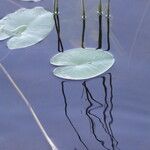
Nuphar pumila
Least-water-lily · Least Water-lily · Least Yellow Water-Lily · Dwarf Dock
Description
Source: leafsnapNuphar pumila, the least water-lily or small yellow pond-lily, is an aquatic perennial plant in the Nymphaeaceae family. It is also known as the dwarf water lily since it looks like a smaller Nuphar lutea. while Nuphar pumila has a star-shaped, or lobed form of the stigma disc and glabrous leaf undersides, Nuphar lutea has a round stigma disc and the undersides of its leaves are occasionally fine-haired on the midribs. Its flowers bloom from July to August and are typically pollinated by flies. The plant is more successful in sunny environments, predominantly in lakes, ponds and slow-flowing parts of rivers from Northern and Central Europe to Northern Asia, with a few noted habitats in North America; Nuphar pumila is considered endangered in France, Switzerland and the United Kingdom.
Care Guide
💧 Water
The least water-lily flourishes in calm freshwater environments, needing constant moisture and plenty of sunlight. Weekly watering helps support its growth. As an aquatic perennial, the least water-lily is often cultivated outdoors, where its floating leaves spread out, enhancing the serene beauty of the surroundings.
How should I water my Least water-lily?
To properly water the Least water-lily, it is recommended to use filtered water at room temperature. Tap water may have harmful particles, so filtered water is better for the plant's health. The water should be at room temperature or slightly warmer since the Least water-lily is accustomed to a warm environment and cold water could be a shock to its system. Avoid watering from overhead to prevent issues with the foliage. Instead, gently pour filtered room temperature water onto the soil until it is completely saturated. This watering technique benefits the plant by providing moisture to the roots and supporting their spread in the soil, enabling the collection of essential nutrients.
What should I do if I give my Least water-lily too much water or too little water?
Overwatering is a common issue for the health of the Least water-lily. If it receives too much water, its stems and leaves may wilt and turn yellow. Overwatering can also cause diseases like root rot, mold, and mildew that can be fatal for the plant. Underwatering is less common because the Least water-lily can tolerate drought. However, if it happens, the leaves may become brittle and brown. It's important to look out for signs of overwatering and take action promptly. Some diseases caused by overwatering, like root rot, may not be fixable if you wait too long. Reduce your watering schedule if you notice early signs of overwatering. Check the soil drainage and replace it with a loose, well-draining potting mix if needed. On the other hand, if you see signs of underwatering, simply water more regularly until the plant recovers.
How frequently do I need to water my Least water-lily plant?
If your Least water-lily is in a pot, you can determine if it needs water by checking the soil. Stick your finger into the soil and if the first two to three inches are dry, it's time to water. If you have the plant planted outside, you can use the same method to check the soil. If the first few inches of soil are dry, it's time to water. Typically, you'll need to water the plant about once a week during spring and early fall. However, during extremely hot weather, you may need to water it twice a week or more. That being said, mature and well-established Least water-lilies can handle drought well.
How much water does my Least water-lily require?
To properly water your Least water-lily, don't be afraid to give it a generous amount of water. When the top two to three inches of soil are dry, it's time to water. Use enough water to fully saturate the soil, allowing any excess to drain through the pot's drainage holes. If you don't see water draining, you may have not given enough water. However, avoid letting water accumulate in the soil, as this can harm the plant. If water doesn't drain properly, it could be due to poorly draining soil, which is not good for the plant's health. If the plant is outdoors, 1 inch of rain per week is usually enough.
How should I water my Least water-lily as it grows?
The water needs of the Least water-lily vary depending on its growth stages. When the plant is in its early years or has just been transplanted, it requires more water. During these stages, the Least water-lily focuses on growing new roots, which need additional moisture for optimal performance. After a few seasons, the plant will need less water. Additionally, during the bloom period, the Least water-lily may require more water as flower development utilizes a significant amount of moisture.
☀️ Light Full sun
Least water-lily is native to habitats with abundant sunlight, such as the shallow edges of ponds and lakes. It prefers full sun but can also tolerate partial sun.
What are the sunlight requirements for the Least water-lily?
The Least water-lily, a sun-loving perennial herbaceous plant, requires full sun, defined as above 6 hours of sunlight per day, to thrive optimally. It can also tolerate partial sun conditions, which means about 3-6 hours of sunlight per day. It's essential to observe how sunlight moves through your garden to ensure plants are placed in spots that offer a balance of light and shade, promoting their health and happiness.
How can artificial lighting be used for indoor plants?
Indoor plants, including the Least water-lily, may require additional lighting, especially in conditions where natural sunlight is insufficient, such as during winter or in less sunny spaces. Artificial lights serve as an important solution to promote faster, healthier growth. LED lights are recommended due to their ability to be customized to the specific wavelengths needed by plants. Full sun plants need 30-50W/sq ft, partial sun plants require 20-30W/sq ft, and full shade plants need 10-20W/sq ft of artificial light. The light source should be placed 12-36 inches above the plant to mimic natural sunlight conditions, and the duration should mimic natural daylight hours, typically 8-12 hours per day.
What are common symptoms of inadequate lighting for Least water-lily?
When the Least water-lily is exposed to inadequate lighting, it may exhibit several symptoms indicating light deficiency. These include smaller new leaves, leggy or sparse growth, faster leaf drop, slower or no new growth, lighter-colored new leaves, chlorosis (leaves turning yellow due to a lack of chlorophyll), sunscald (damage from intense sunlight exposure), leaf curling (a defense mechanism against excessive sunlight), wilting (loss of turgor pressure causing drooping), and leaf scorching (brown, dry edges on leaves due to excessive sunlight). These symptoms stress the importance of providing sufficient light to support healthy plant growth.
What solutions are recommended for dealing with insufficient sunlight for Least water-lily?
To combat insufficient sunlight for the Least water-lily, different approaches are recommended based on the setting. Indoors, gradually move the plant to a sunnier location until it receives at least 6 hours of direct sunlight daily, and consider using artificial light if necessary, ensuring at least 8 hours of light daily. Outdoors, gradually acclimate your plants to sunnier spots to avoid sunburn. For ground-planted species, minimize obstructions like overhanging branches, and if necessary, transplant smaller plants to more sun-exposed locations during their dormant period, typically in late winter or early spring. It's crucial to note that parts of the plant affected by low light may not recover, but new growth should be healthy following these adjustments.
🌡️ Temperature 5–32.2°C
The Least water-lily can tolerate a broad range of temperatures, though its range may still be restricted by particular combinations of moisture and heat. It does best in warm summer climates with sufficient rainfall or watering. Extended periods of cloudy, rainy weather or prolonged high temperatures can raise the chance of the Least water-lily dying. In winter, adequate protection from cold can enhance the plant’s survival rate.
What is the least water-lily?
The least water-lily, known by its botanical name Nuphar pumila, is a species within the water-lily family. Unfortunately, there are no specific details provided about its characteristics, habitat, or any other essentials and symptoms that are typically associated with plant descriptions in the provided data.
💨 Humidity
🪴 Soil
🌱 Fertilizer
🪴 Pot & Repot
✂️ Pruning
The least water-lily is a small aquatic perennial with bright yellow flowers that thrives in calm freshwater environments. To promote healthy blooms, prune the plant between early and late spring. Use sterilized scissors to remove any dead foliage. This process enhances light penetration and water circulation, leading to improved growth.
🌿 Propagating
🐛 Diseases & pets
☠️ Toxicity
Characteristics
- Plant Type
- Herb
- Life Cycle
- Perennial
- Genus
- Nuphar
- Family
- Nymphaeaceae
- Hardiness Zone
- 4-8
- Mature Height
- 49 cm to 91 cm
- Mature Spread
- 1.22 m to 1.52 m
- Leaf Color
- Green, Dark Green
- Leaf Type
- Deciduous
- Flower Color
- Yellow
- Flower Size
- 1.52 cm to 3.05 cm
- Bloom Time
- Summer, Early fall
- Planting Time
- Spring, Summer
- Harvest Time
- Late summer, Fall