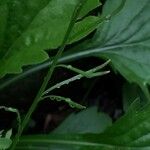
Nuttallanthus canadensis
Blue Toadflax · Canada Toadflax · Old-field Toadflax · Toadflax · Field Toadflax
Description
Source: leafsnapNuttallanthus canadensis, commonly known as Canadian toadflax or blue toadflax, is a herbaceous perennial plant in the family Plantaginaceae. Native to North America, it thrives in various habitats, including meadows, prairies, and open woods. The plant can grow up to 60 cm tall and produces blue-purple flowers that bloom from May through September. Its narrow, lance-shaped leaves have a distinct bluish-green color. Nuttallanthus canadensis serves as a vital source of nectar for bees and butterflies. While it has been used in traditional medicine for its anti-inflammatory properties, caution is advised due to its toxic alkaloid content. Overall, Nuttallanthus canadensis is a beautiful wildflower that enhances natural landscapes with color and diversity, and it also provides ecological benefits by attracting pollinators.
💡 Development in the United States has led to the reduction and degradation of the vast grasslands, commonly known as prairies. There are ongoing efforts to restore some of these areas and replenish them with native grasses and flowers. One such species is Nuttallanthus canadensis. This plant is frequently included in wildflower seed mixes for those who want to cultivate a more natural garden.
🌳 Although it appears delicate, blue toadflax hosts several bee species that depend heavily on its nectar for food. This understated relationship emphasizes blue toadflax's role in supporting pollinators, an aspect often overlooked because of its modest presence in the wild.
🎭 Protection, Hex removal
Care Guide
💧 Water Every 3 days
Blue toadflax thrives in environments with moderate moisture, requiring a careful balance of hydration and drainage. Once established, it can tolerate drought, although it benefits from consistent moisture during its growth phase. Watering the plant once a week usually keeps the soil at an ideal moisture level, but its water needs can vary based on seasonal rainfall rather than a fixed schedule.
☀️ Light Full sun
Blue toadflax thrives with abundant sunlight, which is essential for it to grow and flower well. It can also survive in locations that receive only intermittent sunlight. However, ongoing exposure to insufficient sun can harm its health and development. Because it comes from habitats with plenty of sunlight, it is adapted to those conditions. Excessive shade can result in stunted growth and poor flowering.
What are the sunlight requirements for Blue toadflax?
Blue toadflax thrives best in environments where it can bask in abundant sunlight, which is crucial for its growth and flower production. The plant is suited for full sun to partial sun conditions, meaning it requires more than 6 hours of sunlight daily to flourish properly, although it can also manage with about 3-6 hours of sunlight. Keep in mind that the right balance of light is essential; too little sunlight can impede its growth and flower development, leading to a weakened state. It's important to observe the movement of sunlight through your garden or growing space to select optimal locations for your Blue toadflax that provide the perfect mix of light and shade.
How does inadequate sun exposure affect Blue toadflax and how can artificial lighting help?
Insufficient sunlight exposure can lead to various health issues for Blue toadflax, including stunted growth and poor flowering. Originating from environments rich in sunlight, this plant finds excessive shade detrimental. However, artificial lighting can serve as a beneficial alternative when natural sunlight is lacking, especially during winter or in less sunny locations. LED lights are recommended for their adaptability in providing specific wavelengths needed by the plants. For optimal growth indoors, full sun plants require 30-50W per square foot of artificial light, partial sun plants need 20-30W per square foot, and full shade plants should get 10-20W per square foot. The correct positioning, distance, and duration of light exposure are crucial, with most plants benefiting from 8-12 hours of artificial light per day to mimic natural sunlight conditions.
What are some symptoms of inadequate light in Blue toadflax and how can they be addressed?
When Blue toadflax does not receive enough light, it may display several symptoms indicating light deficiency. These include smaller new leaves, leggy or sparse growth, quicker leaf drop, slower or arrested new growth, leaves developing lighter colors or chlorosis, and physical damage from excessive sunlight like sunscald, leaf curling, wilting, and leaf scorching. To combat these issues, indoors, you should gradually move your plant to sunnier spots, allowing for at least 6 hours of direct sunlight daily or supplement with artificial lighting for at least 8 hours a day. For outdoor plants, also aim for a gradual transition to sunnier locations to prevent sunburn. Additionally, minimize obstructions to sunlight by pruning and consider transplanting smaller plants to sunnier spots during their dormant periods to boost light exposure and encourage healthy new growth.
🌡️ Temperature 5–32.2°C
Blue toadflax originates from areas with mild to warm climates. This plant favors temperatures of 68 to 95 °F (20 to 35 °C). It can endure cooler conditions, but may require protection if temperatures fall substantially below that range.
What is the ideal temperature range for Blue toadflax?
Blue toadflax, known scientifically as Nuttallanthus canadensis, thrives in environments with moderate to warm climates, ideally between 68 to 95 °F (20 to 35 °C). While it has strong cold resistance and typically does not require special frost protection measures, it prefers temperatures to stay above this range for optimal growth. Cold protection might be necessary if winter temperatures are expected to drop below -30°C by covering the plant with soil or straw and ensuring the soil is moist before the first freeze.
How does Blue toadflax respond to low temperatures?
Blue toadflax is cold-tolerant and fares best when the temperature remains above 20°C. Even during winter, it is crucial to maintain temperatures above 0°C for the plant. If temperatures fall below -30°C, there may not be immediate noticeable changes, but the plant could exhibit a decrease in sprouting or fail to sprout at all come spring. The recommended solution for spring is to remove any parts of the plant that have failed to sprout.
What should be done if Blue toadflax experiences high temperatures?
During the summer months, it is important to ensure that Blue toadflax does not stay in environments where temperatures exceed 35°C. Exposure to temperatures above 38°C can lead to the plant's leaves becoming lighter in color, curling, and becoming susceptible to sunburn. In severe cases, Blue toadflax may wilt and dry out completely. To mitigate these effects, trim away sunburned and dried-up parts of the plant, move it to a location with shade during the midday and afternoon sun, or utilize a shade cloth. Additionally, watering the plant in the morning and evening will help keep the soil moist and aid in the plant's recovery and continued health.
💨 Humidity
🪴 Soil 6-7
🌱 Fertilizer
After most Blue toadflax flowers have opened to full size, resume fertilizing. When blooms are at peak production, feed every three to four weeks, as weather permits. Once Blue toadflax begins producing fewer new blooms, stop fertilizing; there’s no need to fertilize when the plant can no longer produce more blooms.
🪴 Pot & Repot
To ensure optimal growth, blue toadflax needs to be planted in pots with excellent drainage. This prevents waterlogging and root rot.
✂️ Pruning
To keep blue toadflax healthy and promote vibrant growth and blooms, it should be pruned regularly, ideally from early to late spring. Deadheading the plant encourages continuous flowering, and trimming any leggy stems improves air circulation and helps reduce the risk of disease. Be sure to use sharp, clean tools for the best results and to encourage new growth.
🌿 Propagating
🐛 Diseases & pets
☠️ Toxicity
Characteristics
- Plant Type
- Herb
- Life Cycle
- Annual, Biennial, Perennial
- Genus
- Nuttallanthus
- Family
- Plantaginaceae
- Hardiness Zone
- 4-8
- Mature Height
- 25 cm to 76 cm
- Mature Spread
- 34 cm
- Leaf Color
- Green
- Leaf Type
- Semi-evergreen
- Flower Color
- Lavender
- Flower Size
- 0.76 cm to 1.27 cm
- Bloom Time
- Late spring, Early summer, Mid summer
- Planting Time
- Spring
- Harvest Time
- Early summer, Mid summer
- Native Area
- Mexico