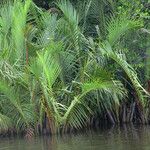
Nypa fruticans
Nipa · Nipa palm · Mangrove palm · Nypa Palm · Swamp palm
Description
Source: leafsnapNypa fruticans, commonly known as the Nipa palm or Mangrove palm, is a species of palm native to the coastal regions of the Indian and Pacific Oceans. This unique plant thrives in brackish water and can tolerate high levels of salinity. The Nipa palm is easily recognizable by its long fronds, which can grow up to 9 meters in length, and its trunk, which can reach heights of up to 30 meters. The Nipa palm has numerous uses for local communities. It serves as a source of food, building materials, and fuel for cooking fires and lighting lamps. Additionally, the sap from the tree is used to make vinegar or can be fermented into an alcoholic beverage. Ecologically, the Nipa palm plays a crucial role in coastal ecosystems by providing habitat for a variety of species, including birds, insects, and fish. Its extensive root system also helps prevent soil erosion by stabilizing shorelines. Despite its ecological and cultural significance, Nypa fruticans faces threats from habitat loss due to human activities such as logging and the conversion of land into agricultural use. Conservation efforts are essential to protect this unique plant species from further decline.
Care Guide
💧 Water Every 7 days
The nipa palm flourishes in coastal and river environments, thriving in high humidity and wet conditions. To replicate its natural habitat, it needs frequent watering, preferably on a daily basis. Best suited for outdoor areas, the nipa palm is a perfect choice for rain gardens or water features, thanks to its preference for abundant rainfall.
☀️ Light Full sun
The nipa palm grows in habitats with plentiful sunlight, which is important for its health. Its different growth stages do not require specific adjustments in sun exposure, yet they still benefit from plenty of light. Too much sun can burn the leaves, while too little can cause underdevelopment.
What are the sunlight requirements for a Nipa Palm?
The Nipa Palm thrives in environments with abundant sunlight, requiring more than 6 hours of direct sunlight daily for optimal health. Although it can tolerate various growth stages without demanding specific changes in sun exposure, too much sunlight can scorch the leaves, and too little can lead to underdevelopment. It's crucial to observe how sunlight moves through your garden, selecting spots that offer a perfect balance of light and shade to ensure the plants' well-being.
How can artificial lighting benefit indoor Nipa Palms?
For indoor Nipa Palms, especially when natural sunlight is scarce during winter or in less sunny spaces, artificial lighting serves as an essential solution for optimal growth. Artificial lights, particularly LEDs, can be customized to provide specific wavelengths needed by the plants. Full sun plants require 30-50W/sq ft, partial sun plants 20-30W/sq ft, and full shade plants need 10-20W/sq ft of artificial light. The light source should be placed 12-36 inches above the plant to mimic natural light, and most plants benefit from 8-12 hours of light per day to promote healthier, faster growth.
What are the signs of insufficient light in a Nipa Palm?
When a Nipa Palm is exposed to insufficient light, it exhibits several easily noticeable symptoms including smaller new leaves, leggy or sparse growth, faster leaf drop, and a halt in new growth, indicating the plant has entered a survival mode. Leaves may also develop lighter colors or irregular patterns, indicating a lack of chlorophyll and essential nutrients. Conditions like chlorosis, sunscald, leaf curling, wilting, and leaf scorching can occur due to improper light exposure, significantly impacting the plant's health.
How can I address light exposure issues for my Nipa Palm?
To optimize your Nipa Palm's growth, gradually increase its exposure to sunlight, aiming for at least 6 hours daily. If indoors and not easily movable, use a south-facing window or consider artificial grow lights for at least 8 hours a day. Outdoors, avoid sudden changes in light to prevent sunburn, moving the plant gradually to sunnier spots. If dealing with ground-planted palms, reduce obstructions by pruning trees or bushes that block sunlight, and consider transplanting smaller plants during their dormant period to sunnier locations with good drainage. Note that parts of the plant damaged by insufficient light may not recover, but new growth will be healthy with improved light conditions.
🌡️ Temperature 20–37.8°C
Native to areas where temperatures range from 68 to 100 °F (20 to 38 °C), nipa palms prefer warmer climates. They adapt to winter by carefully reducing watering and keeping indoor temperatures steady.
What is the ideal temperature range for Nipa Palm?
The Nipa Palm thrives in a native environment where temperatures fluctuate between 68 to 100 °F (20 to 38 °C), preferring warmer climates. It is crucial to maintain temperatures above 20°C during winter to support plant growth. The plant is extremely sensitive to cold, and temperatures approaching 10°C can be detrimental. In areas experiencing seasonal cold, it is advised to bring outdoor-grown Nipa Palms indoors and place them near a bright window, far enough away from heaters to avoid damage.
What should I do if the Nipa Palm is exposed to low temperatures?
The Nipa Palm is not tolerant of low temperatures and requires careful attention during colder months. If exposed to temperatures below 5°C, you may notice the leaves lightening in color, which can eventually turn brown or black with signs of wilting and drooping due to frost damage. In such cases, trim off the frost-damaged parts and move the plant to a warmer indoor environment immediately. Position the plant near a south-facing window to ensure it receives enough sunlight but keep it away from direct heat sources like heaters or air conditioning vents to prevent the air from becoming too dry.
How to care for Nipa Palm during high temperatures?
During the summer, it's essential to monitor the temperature around your Nipa Palm and ensure it remains below 38°C. Exposing the plant to temperatures above 43°C can result in lighter leaf colors and increase the risk of sunburn. In such instances, trim away the sunburned or dried-up parts of the plant. To protect the plant, relocate it to a shade that shields it from the harsh midday and afternoon sun. Watering it in the morning and evening will help keep the soil moist, further mitigating the heat stress on your Nipa Palm.
💨 Humidity
🪴 Soil 6-7
🌱 Fertilizer
Fertilizing is essential for the care of the Nipa palm. Regular feeding throughout the growing season supplies energy for its showy leaves and supports overall growth. Failing to fertilize can lead to unhealthy foliage, reduced ornamental value, and stunted or weak growth that is more likely to break.
🪴 Pot & Repot
✂️ Pruning
The Nipa palm, a distinctive type of mangrove, benefits greatly from selective pruning in the spring. By focusing on removing dead fronds, you can enhance the plant's health and appearance. This practice encourages strong new growth, helps deter pests, and improves air circulation. Be sure to use clean tools and consider wearing gloves, as the fronds are quite tough.
🌿 Propagating
🐛 Diseases & pets
☠️ Toxicity
Characteristics
- Plant Type
- Tree
- Life Cycle
- Perennial
- Genus
- Nypa
- Family
- Arecaceae
- Hardiness Zone
- 11-12
- Mature Height
- 10.06 m
- Mature Spread
- 6.1 m to 7.92 m
- Leaf Color
- Dark Green
- Leaf Type
- Evergreen
- Flower Color
- Yellow
- Flower Size
- 1.02 cm
- Bloom Time
- All year round
- Planting Time
- Spring, Summer, Autumn
- Harvest Time
- All year round
- Native Area
- Sri Lanka, India, Malaysia, Philippines, Bangladesh, Laos, Brunei, China, Indonesia, Cambodia, Vietnam, Myanmar, Japan, Singapore, Thailand