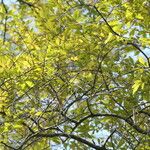
Nyssa aquatica
Swamp tupelo · Tupelo-gum · Water tupelo · Blackgum · Cotton Gum
Description
Source: leafsnapNyssa aquatica, commonly known as the water tupelo or swamp tupelo, is a deciduous tree species native to the southeastern United States. Typically reaching heights of 20-30 meters, this tree features a straight trunk and a broad crown. Its leaves are simple, alternate, elliptical in shape, and have smooth margins. In the fall, the leaves turn bright red or yellow before shedding. Adapted to wetland environments, the water tupelo can tolerate prolonged flooding. It prefers acidic soils rich in organic matter but can also thrive in sandy soils near rivers and streams. In early spring, the tree produces small greenish-white flowers before its leaves emerge. The fruit, an oblong drupe, ripens from green to dark blue-black by late summer or early fall. Nyssa aquatica has several uses. It is valued as an ornamental tree for landscaping due to its striking autumn foliage. Its wood is used in furniture making, its bark has medicinal uses as employed by Native Americans, and it provides habitat for various wildlife species, including birds, squirrels, and beavers. Overall, Nyssa aquatica plays an important ecological role by providing food sources and habitats, while also contributing aesthetically and economically through its various uses. This makes it a significant species worth conserving and protecting from threats such as habitat loss due to human activities like deforestation.
Care Guide
💧 Water Every 7 days
The water tupelo is well-suited to wetland environments due to its high tolerance for moisture. It requires daily watering to stay hydrated. Typically found outdoors, the plant benefits greatly from rainfall. As a deciduous species, its water needs change with the seasons, particularly during leaf shedding and growth cycles, which means careful monitoring is necessary.
☀️ Light Full sun
Water tupelo grows best when it receives full sunlight. Still, it can tolerate locations with only moderate sunlight. However, too much or too little light can limit its growth. Its native environment indicates a preference for abundant sun.
What are the sunlight requirements for Water Tupelo?
Water tupelo requires specific conditions of sunlight for optimal growth. Full sun, defined as more than 6 hours of direct sunlight, is essential for its best development. However, it can also grow in partial sun, which means about 3-6 hours of sunlight. It's crucial to observe the movement of sunlight in your garden to find spots that offer the right balance of light and shade, ensuring the plant's well-being.
How important is sunlight for Water Tupelo's growth?
Sunlight plays a critical role in the growth and health of Water tupelo. This plant thrives best when it receives exhaustive sunlight exposure but can tolerate moderate amounts of sunlight as well. Its growth can be adversely affected by either too much or too little sunlight, hinting at its preference for abundant sun exposure based on its natural habitat. For indoor plants, artificial lighting can supplement natural sunlight, especially in conditions where natural light is insufficient. LED lights are a popular choice, providing the necessary wavelengths of light that Water tupelo needs. Full sun plants require 30-50W/sq ft, partial sun plants need 20-30W/sq ft, and full shade plants need 10-20W/sq ft of artificial light, with the light source placed 12-36 inches above the plant for 8-12 hours per day.
What are the symptoms of insufficient light in Water Tupelo?
Water tupelo may show several symptoms when there's insufficient light, including smaller new leaves, leggy or sparse growth, faster leaf drop, slower or no new growth, lighter-colored new leaves, chlorosis (yellowing of leaves), sunscald, leaf curling, wilting, and leaf scorching. These symptoms indicate that the plant is struggling with the amount of light it's receiving and may require adjustments to its environment to ensure healthier growth.
How can I address the light needs of my indoor and outdoor Water Tupelo plants?
To meet the light needs of Water tupelo, for indoor plants, you can gradually move them to a location where they receive at least 6 hours of direct sunlight every day, ideally near a south-facing window, and consider using artificial light if necessary. For outdoor plants, slowly adjust their position to increasingly sunnier locations each week to prevent sunburn. If light obstructions are an issue, pruning trees or branches that block sunlight or transplanting the plant to a sunnier spot may be beneficial. Remember, while parts of the plant affected by insufficient sunlight may not recover, new growth should be healthy with increased light exposure.
🌡️ Temperature 10–35°C
Water tupelo is native to warm, temperate regions and performs best at temperatures between 50 and 95 °F (10 to 35 ℃). Keep temperatures within this range in summer, and moderate how much they drop in winter.
What is the ideal temperature range for Water Tupelo?
Water tupelo thrives best in temperatures ranging from 50 to 95 °F (10 to 35 °C). During the summer months, it is important to maintain temperatures within this range. Although the plant has strong cold resistance, during winter, efforts should be made to moderate temperature drops to ensure the plant's health.
What measures should be taken to protect Water Tupelo in extremely cold temperatures?
For extremely cold temperatures, especially if winter temperatures are expected to drop below -25°C, it is crucial to protect the Water tupelo. Wrapping the trunk and branches with non-woven fabric or cloth can offer protection. Additionally, watering the plant abundantly before the first freeze in autumn will keep the soil moist and help prevent drought and water scarcity during winter and early spring.
How does Water Tupelo respond to low temperature conditions?
Water tupelo is cold-tolerant and fares best when temperatures remain above 10°C. In conditions colder than -15°C, and especially below -25°C, while there might not be noticeable changes during winter, the plant's branches could become brittle and dry by spring, preventing the emergence of new shoots. In such cases, it's advisable to prune away any dead branches in spring.
How does Water Tupelo react to high temperature conditions?
During summer, it's pivotal to keep Water Tupelo's temperature below 35°C. Exceeding 38°C can cause the leaves to lighten in color, with tips becoming dry and withered, making the plant more susceptible to sunburn. To mitigate these effects, trim away sunburned and dried parts of the plant, relocate it to a shaded area or use a shade cloth for protection, and ensure the soil is kept moist with morning and evening watering.
💨 Humidity
🪴 Soil
🌱 Fertilizer
🪴 Pot & Repot
✂️ Pruning
Water tupelo grows best in swampy areas and requires annual pruning in early spring. Removing dead or diseased branches promotes healthy growth by improving air circulation and allowing more sunlight to reach the tree, which helps reduce pests. Be sure to sterilize your tools to prevent the spread of disease. For advice specific to your region, consult local agricultural resources.
🌿 Propagating
🐛 Diseases & pets
☠️ Toxicity
Characteristics
- Plant Type
- Tree
- Life Cycle
- Perennial
- Genus
- Nyssa
- Family
- Nyssaceae
- Hardiness Zone
- 6-9
- Mature Height
- 18.29 m to 30.48 m
- Mature Spread
- 7.62 m to 14.94 m
- Leaf Color
- Green
- Leaf Type
- Deciduous
- Flower Color
- Green, White
- Flower Size
- 0.25 cm to 0.51 cm
- Bloom Time
- Early spring, Mid spring
- Planting Time
- Summer
- Harvest Time
- Late summer, Early fall, Mid fall