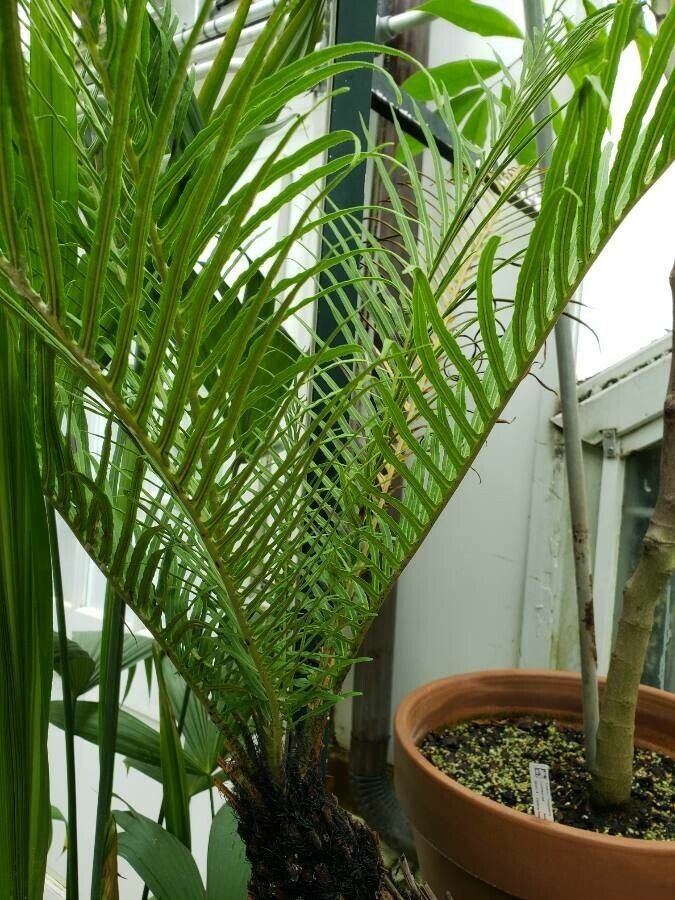
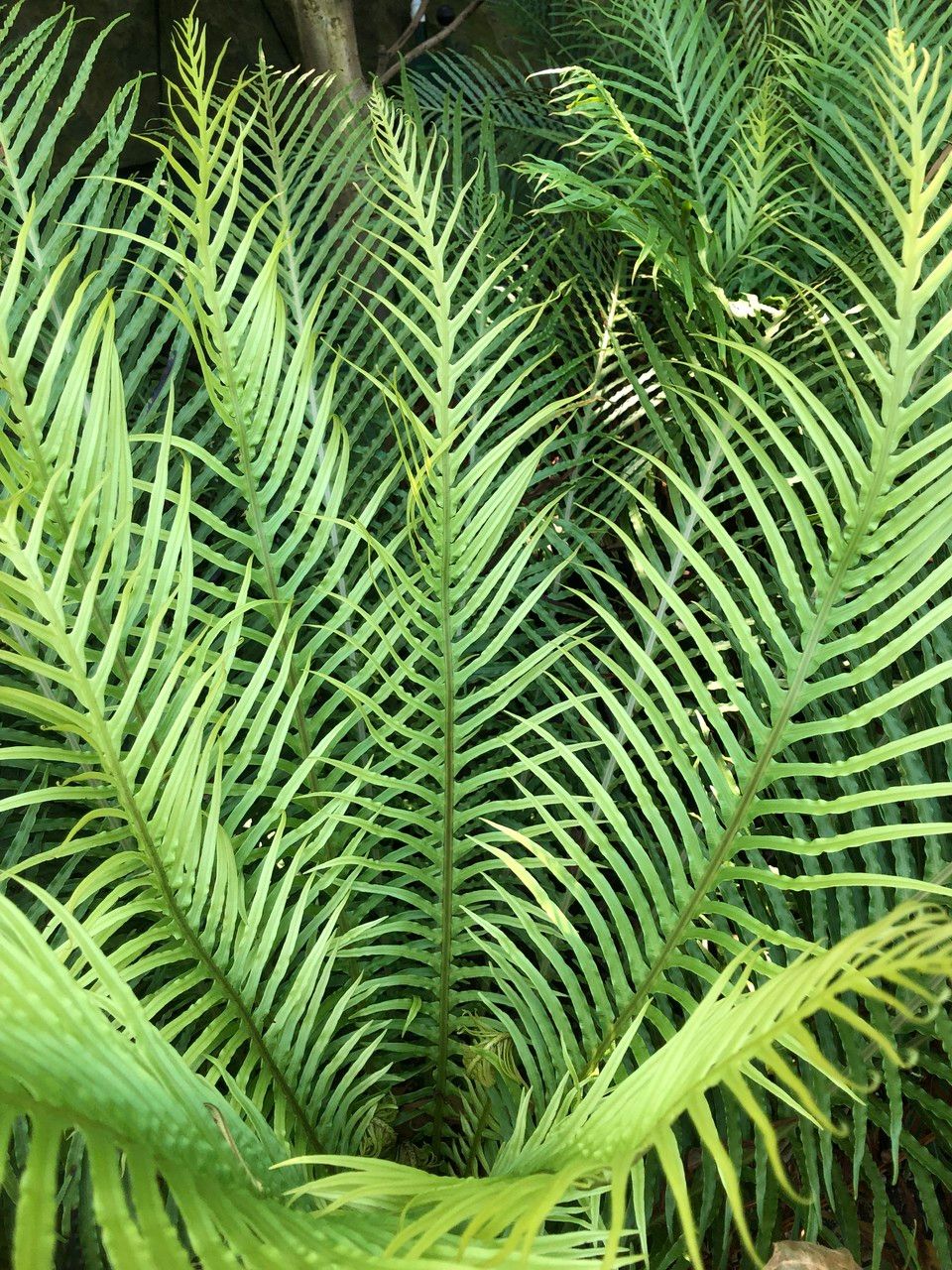
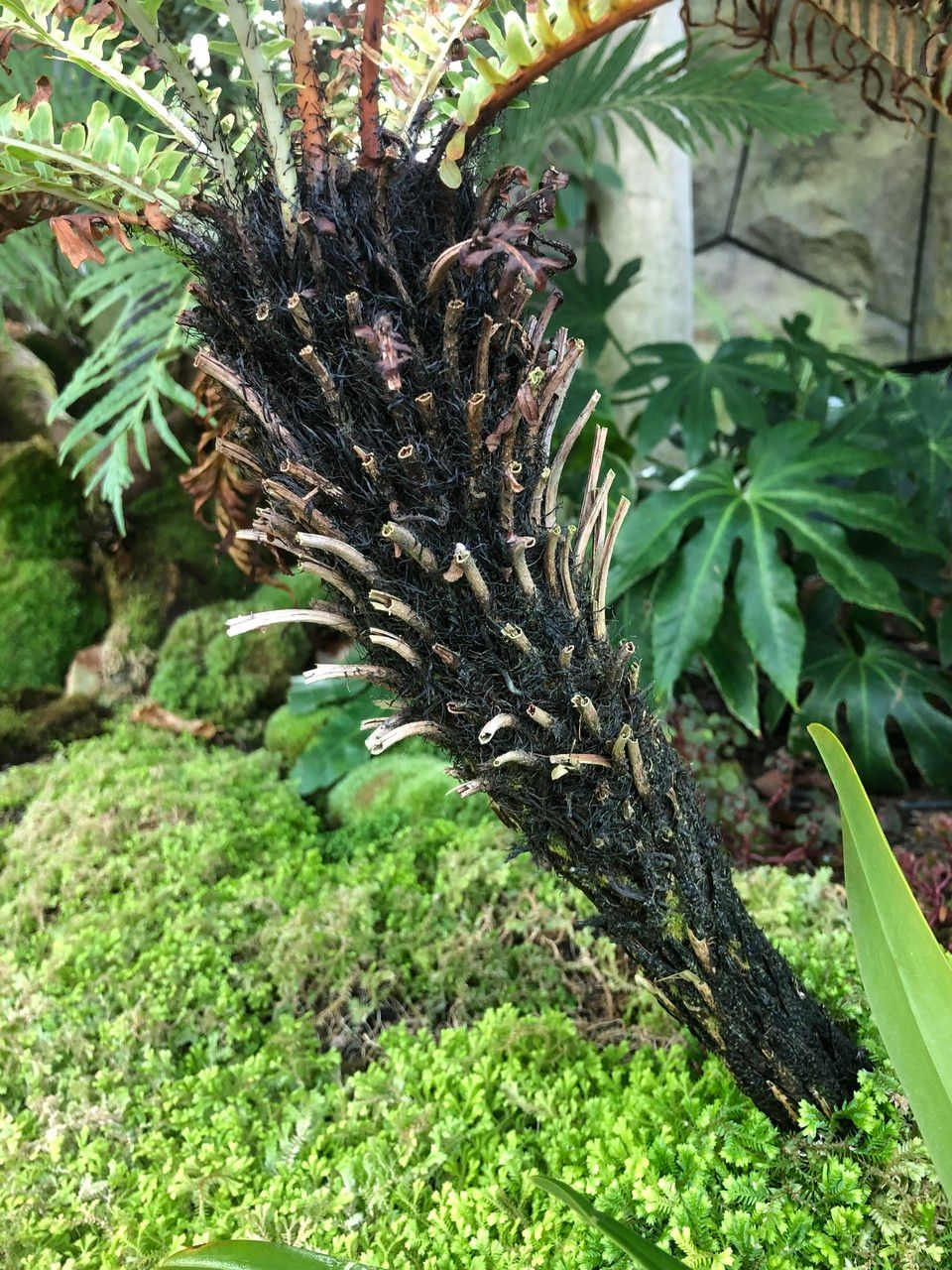
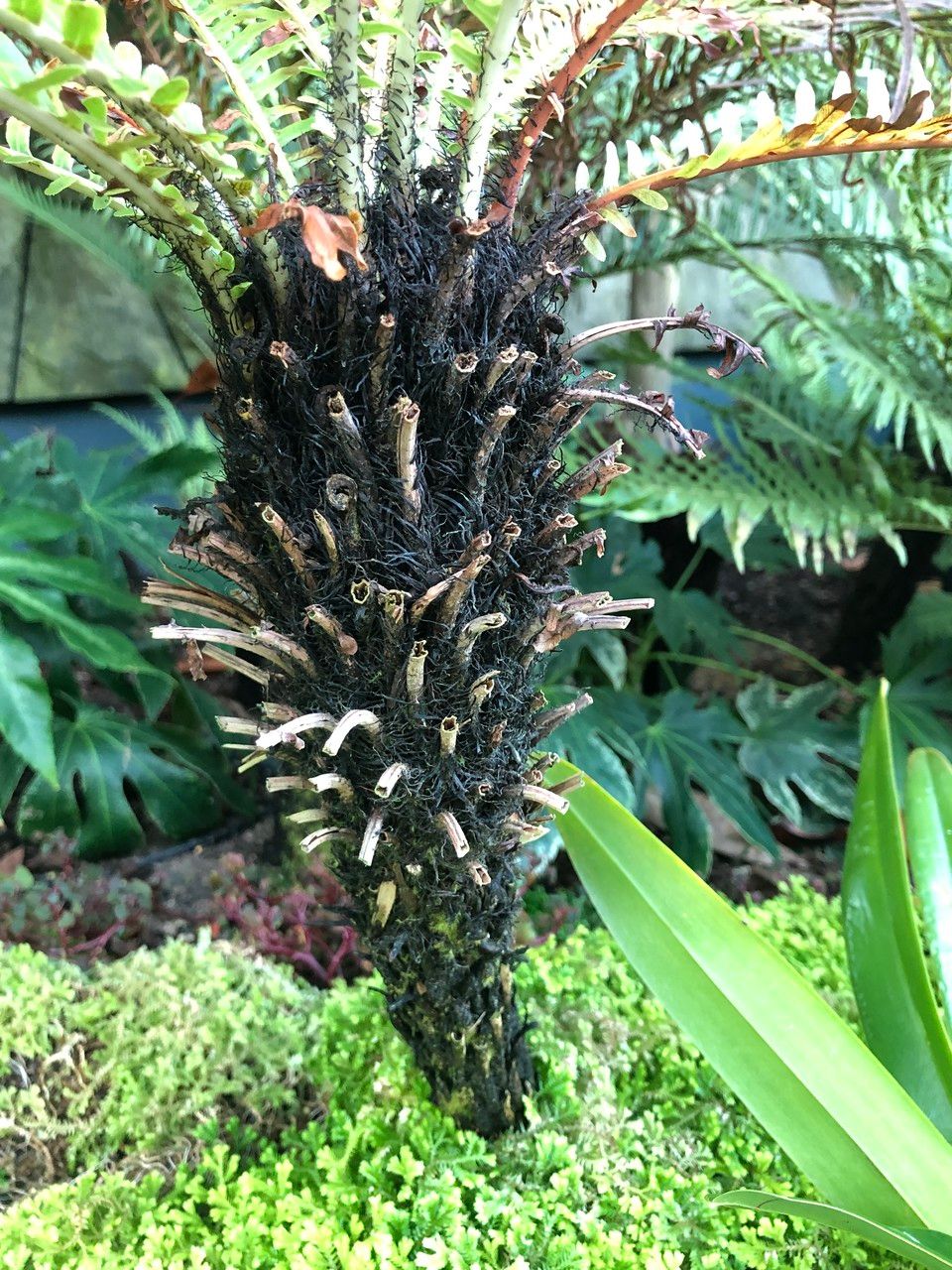
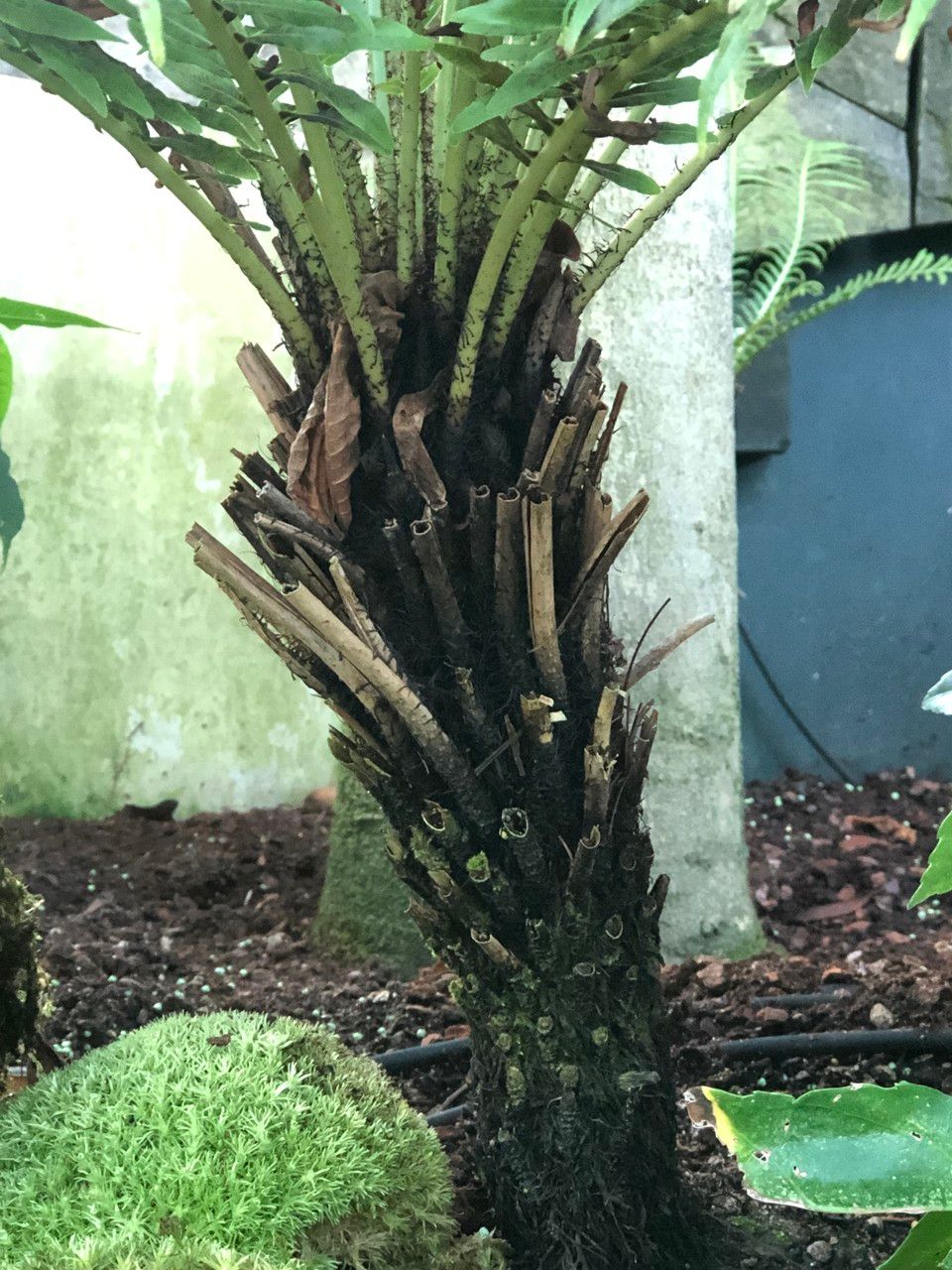
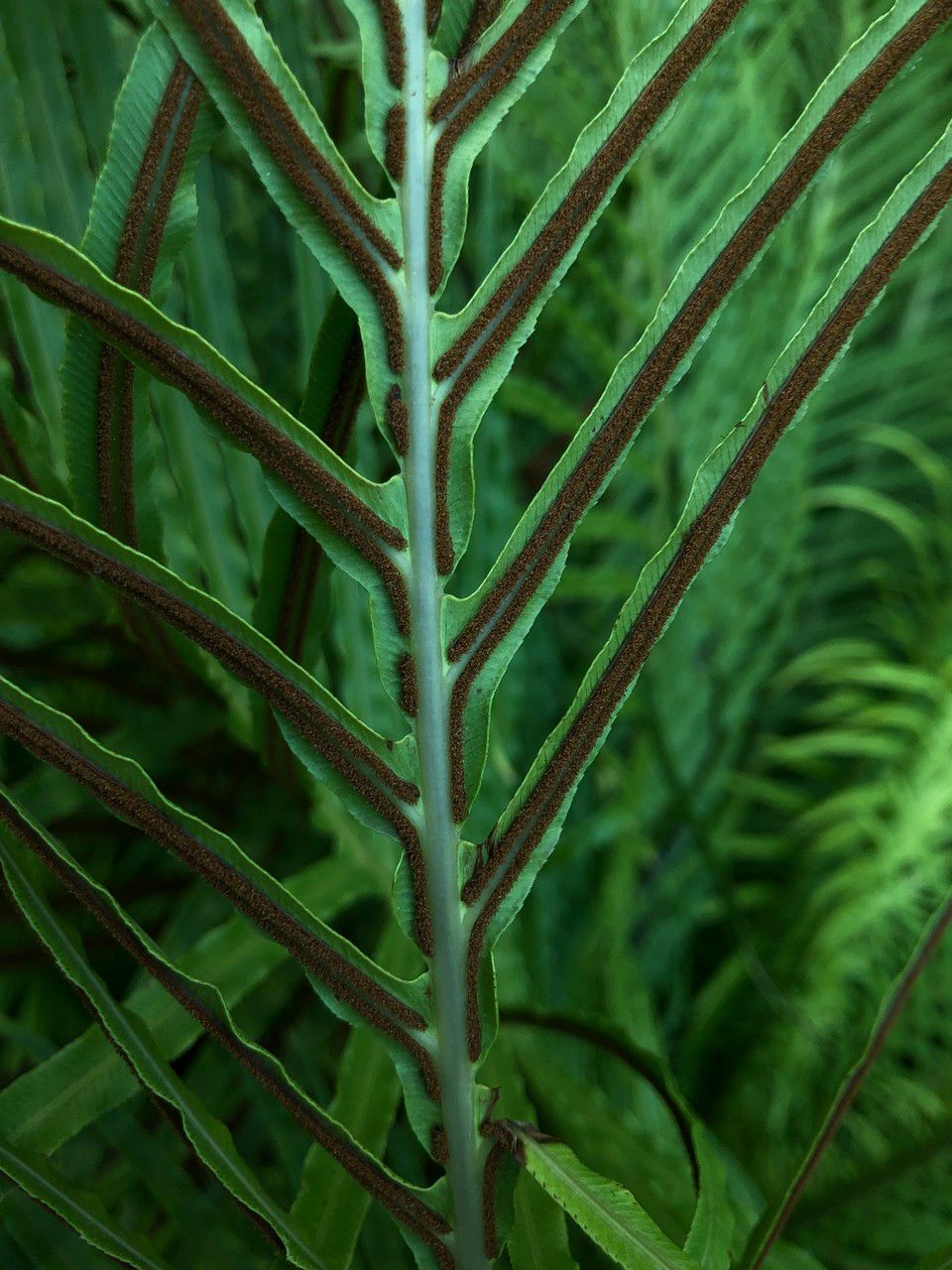
Oceaniopteris gibba, the miniature tree fern (syn. Blechnum gibbum), is a tropical species of fern in the family Blechnaceae, native to New Caledonia and introduced in Fiji. It has received the Royal Horticultural Society's Award of Garden Merit.It grows to 1–2 m (3.3–6.6 ft). With a vertical "trunk" (actually a rhizome), it has bright green fronds. As it does not tolerate temperatures below 15 °C (59 °F), in temperate zones it must be cultivated under glass all year round. It is a suitable subject for a greenhouse or conservatory. It requires an acid soil and a partially shaded position.
Miniature tree fern typically has strong resistance to disease and relatively few insect pests. Its care is considered difficult because it needs a moist environment and frequent watering. However, the roots are susceptible to rot if overwatered or if the surroundings lack good ventilation. Miniature tree fern is appropriate for people with some growing experience, as most individuals can keep it alive for a period of time. Even so, the miniature tree fern may struggle to thrive, and its leaves can dry out and gradually become less healthy.
How to keep Oceaniopteris Gibba.
Light
The miniature tree fern grows best where light is not too strong. Moderate sunlight encourages healthy development. Native to forests with a dense canopy, it can also tolerate lower-light conditions. Both insufficient and excessive light can impede its growth and overall health.
Water
The miniature tree fern flourishes in high humidity and requires consistent moisture, needing to be watered twice a week. For indoor care, it's important to mist the plant regularly, especially during its active growth periods, to mimic the humid forest environment it naturally thrives in. This is essential for the plant's healthy development.
Temperature
The miniature tree fern is native to climates with temperatures between 59 and 100.4 °F (15 to 38 ℃). It does well under these conditions, though adjustments are required when temperatures climb or fall sharply. Cultivators must keep temperatures within this range for optimal growth and health.
Pruning
The miniature tree fern is an elegant plant that resembles a tiny tree, characterized by its feathery fronds. To maintain its health and appearance, it's best to prune it in early spring. During this time, remove any dead or damaged fronds and trim back those that are overgrown. This encourages new growth, promotes overall health, and enhances its visual appeal, keeping your miniature tree fern vibrant and well-managed.
Pot & Repot
Repot the small miniature tree fern every 2-3 years in early spring, using well-draining soil. Choose a pot that is slightly larger to accommodate its delicate roots, and place it in indirect light during the recovery period. To ensure the health of the tree fern after repotting, maintain regular humidity and be careful with watering.
Botanical profile.
- Plant Type
- Fern
- Life Cycle
- Perennial
- Genus
- Oceaniopteris
- Family
- Blechnaceae
- Hardiness Zone
- 8-11
- Mature Height
- 0.91 m to 2.13 m
- Mature Spread
- 30 cm
- Leaf Color
- Green
- Leaf Type
- Evergreen
- Planting Time
- Spring, Summer
- Native Area
- Vanuatu
Other names.
Reader questions.
What are the sunlight requirements for Miniature Tree Fern?
Miniature Tree Fern thrives under certain sunlight conditions that mimic its native forest habitat. For healthy growth, it requires environments where the light is moderate and not too intense, flourishing in partial sun to full shade conditions. Specifically, 'Partial sun' means about 3-6 hours of sunlight, and 'Full shade' is defined as less than 3 hours of sunlight. It's important to observe the movement of sunlight through your garden to ensure plants receive the right balance of light and shade.
What is the ideal temperature range for a Miniature tree fern?
The Miniature tree fern, botanically known as Oceaniopteris gibba, flourishes in climates where temperatures range between 59 to 100.4 °F (15 to 38 °C). It demonstrates a degree of cold tolerance, not requiring additional cold protection measures for temperatures above -5°C. However, for optimum growth and health, ensuring the temperature stays within this specific range is crucial, as both excessively high and low temperatures necessitate adjustments and protective measures.
How can artificial lighting be used for Miniature Tree Fern indoors?
When natural sunlight is insufficient, especially during winter or in less sunny spaces, artificial lighting becomes essential for the growth of indoor plants like the Miniature Tree Fern. Opt for LED lights as they can be customized to provide specific wavelengths of light needed by the plant. The amount of artificial light required varies by sunlight needs: full sun plants need 30-50W/sq ft, partial sun plants need 20-30W/sq ft, and full shade plants need 10-20W/sq ft. Position the light source 12-36 inches above the plant to imitate natural sunlight and maintain the lights for 8-12 hours per day to mimic natural daylight hours.
What should I do if the temperature drops below -5°C?
When temperatures are anticipated to fall below -5°C, it's essential to protect your Miniature tree fern from the cold. You can temporarily shield the plant using materials like plastic film, fabric, or other suitable covers to prevent frost damage. Remember to remove these protective layers once the temperature warms up again, as prolonged coverage might affect the plant's health adversely.
What are the signs of insufficient or excessive light in Miniature Tree Fern?
Symptoms of insufficient light include smaller new leaves, leggy or sparse growth, faster leaf drop, slower or halted new growth, and lighter-colored new leaves. Excessive sunlight can lead to chlorosis, sunscald, leaf curling, wilting, and leaf scorching. Chlorosis is characterized by yellowing leaves due to chlorophyll breakdown, while sunscald appears as pale, bleached areas on plant tissue. Leaf curling is a defense mechanism against excessive sunlight, wilting happens due to increased water loss, and leaf scorching is observed as brown, dry edges on leaves.
How does the Miniature tree fern respond to low temperatures, and what are the solutions?
The Miniature tree fern experiences moderate tolerance to chilly conditions, thriving best above 15°C and requiring protection when the mercury dips below -5°C. Exposure to temperatures below -10°C might cause the leaves to droop; they may recover in mild conditions but could wilt and eventually shed in severe cases. To mitigate frost damage, trim off the frost-damaged parts, wrap the plant with non-woven fabric or cloth to insulate it, and consider setting up a wind barrier for added protection against cold winds.
What solutions are available for addressing light issues in Miniature Tree Fern?
To optimize growth and address light issues, gradually adapt your Miniature Tree Fern to changing light conditions. For indoor plants requiring more light, gradually shift them to sunnier spots or use artificial lighting like desk or ceiling lamps, or professional grow lights for at least 8 hours a day. Outdoors, move plants to sunnier locations gradually to prevent sunburn. If obstructions like trees block sunlight, consider pruning or transplanting the fern to a brighter spot. Note that parts of the plant damaged by poor light may not recover, but new growth should thrive with improved light exposure.
What effects do high temperatures have on Miniature tree fern, and how can they be managed?
During the summer, it's imperative to keep the Miniature tree fern's surrounding temperature below 38°C, as exceeding 43°C can cause discoloration, dry and withered leaf tips, curling leaves, and increased susceptibility to sunburn. Counter high-temperature stress by trimming away sunburned and dried-up foliage, relocating the plant to shaded areas during peak sun hours, or using a shade cloth. Additionally, maintaining soil moisture through watering in the morning and evening can help alleviate heat stress.