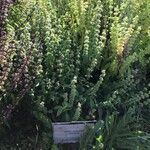
Ocimum americanum
تلسی · نیازبو · ریحان · نازبو · Sweet Basil
Description
Source: leafsnapOcimum americanum, commonly known as American basil or hoary basil, is a species of herbaceous plant in the Lamiaceae family. Native to the Americas, this plant can be found in regions such as Central America, South America, and the Caribbean. Typically growing up to 60 cm tall, it has oval-shaped green leaves with serrated edges that emit a strong aroma reminiscent of cloves or anise. For centuries, indigenous peoples of the Americas have utilized American basil for its medicinal properties. The plant contains essential oils like eugenol, which possess antiseptic qualities. These oils can be used to treat a variety of ailments, including coughs, colds, and fever. Beyond its medicinal uses, American basil is also prized in cooking for its robust flavor. It can be added fresh or dried to dishes such as soups, stews, and salads. Overall, Ocimum americanum is a versatile plant with both medicinal and culinary applications, cherished by indigenous communities for generations.
Care Guide
💧 Water Every 7 days
Wild basil, which comes from tropical regions, thrives when it receives consistent moisture and is watered regularly on a weekly basis. Although it can withstand short periods of dryness, it needs an even level of moisture without becoming waterlogged. When grown outdoors, its watering needs are linked to rainfall, so adjustments may be necessary during dry spells or periods of heavy rain.
How should I water my Wild basil?
To water Wild basil, there are several options you can consider. You can use a garden hose with a spray nozzle, a watering can, or pretty much any common watering tool you have. Wild basil is not very particular about how it gets watered; it can thrive with rainwater, tap water, or even filtered water. It's generally not recommended to water this plant from above because it can harm the leaves and flowers and may cause diseases. Using a drip irrigation system can be the best way to water Wild basil as it provides an even, direct supply of water to the soil. If you have a Wild basil plant in a container, you can follow a similar watering routine but change the tools you use. Instead of a hose or watering can, you can use a cup or your tap to supply water directly to the soil.
If I give my Wild basil too much water or too little water, what should I do?
To remedy underwatering Wild basil, it is simple: water it more regularly when you notice it lacks moisture. On the other hand, overwatering can be a more serious issue, since it can lead to diseases that can cause the plant to decline and die. To prevent this, it is important to choose a suitable location with plenty of sunlight to dry the soil and ensure good drainage to prevent water from pooling and saturating the soil. If you overwater Wild basil in a pot, it may be necessary to transfer it to a new pot with better drainage. When repotting the plant, make sure to use loose soil and a pot that drains efficiently.
How frequently should I give water to my Wild basil plant?
Wild basil requires regular watering throughout the growing season. In the spring, it is recommended to water it once a week. As the season progresses and temperatures rise, you may need to increase watering to two or three times a week, but going beyond this frequency can harm the plant. Regardless of how often you water, it is important to keep the soil moist but not overly wet. Watering potted wild basil is slightly different as the soil in containers can dry out faster. In most cases, watering a potted plant should be done a few times per week compared to once a week for plants in the ground.
How much water does my Wild basil plant need?
To determine how much water to give your Wild basil, there are a few approaches you can take. One option is to feel the soil for moisture and water until the top six inches of soil feel moist. Another method is to use a set measurement, like two gallons per week, adjusting as needed based on the temperature and how quickly the soil dries out. However, be careful not to overwater if your plant needs less than two gallons per week. When growing Wild basil in a container, a different approach is necessary. You should water until all the layers of soil are moist, which you can test by sticking your finger in the soil. Another indicator is when you see a slight trickle of excess water coming out of the drainage holes.
How should I water my Wild basil as it grows?
Throughout the year, wild basil goes through various growth stages, each requiring different amounts of water. To begin, when starting wild basil from a seed, it is important to give it more water than it will need later on. This means watering regularly to keep the soil consistently moist during the germination phase. As the seed germinates and the plant grows above the soil, it will require slightly less water than during the seedling phase. Once the plant reaches maturity, a once-per-week watering schedule should suffice. However, during flower development, it may be necessary to provide slightly more water to support the process.
☀️ Light Full sun
Wild basil is native to bright, open habitats where it flourishes in full sun. It tolerates partial sun but favors direct sunlight for the best growth. This plant, which can be annual or biennial, is recognized for its sun-loving character.
What are the sunlight requirements for wild basil?
Wild basil, known scientifically as Ocimum americanum, thrives in bright, open environments and requires full sun, which means it prefers above 6 hours of direct sunlight each day. It can also tolerate partial sun, about 3-6 hours of sunlight, but for optimal growth, full sun is preferable. It's important to observe how sunlight moves through your garden to find spots that provide a good balance of light and shade, ensuring the plants' happiness and health.
How does artificial lighting support wild basil growth indoors?
When natural sunlight is not sufficient, especially during winter or in less sunny spaces, artificial lighting becomes crucial for the growth of indoor plants, including wild basil. Using the right type of artificial light, such as LED lights, can help provide the specific wavelengths of light that plants need. For wild basil, 30-50W/sq ft of artificial light is recommended for those needing full sun and 20-30W/sq ft for partial sun plants. The light source should be placed 12-36 inches above the plant to mimic natural sunlight conditions, and plants typically require 8-12 hours of light per day to mimic the natural daylight hours.
What are common symptoms of light deficiency in wild basil?
When wild basil does not receive adequate light, it may show several symptoms indicating light deficiency. These include smaller new leaves compared to mature ones, leggy or sparse growth making the plant look thin and weak, faster leaf dropping as the plant tries to conserve resources, slower or halted growth, pale or irregularly colored new leaves indicating a lack of chlorophyll and nutrients, and conditions such as chlorosis, sunscald, leaf curling, wilting, and leaf scorching. These symptoms reflect the plant's struggle to adapt to insufficient light conditions.
What solutions can help improve light conditions for wild basil?
To address light deficiency for wild basil, gradually introduce the plant to more sunlight by moving it to a sunnier location each week, ensuring it receives at least 6 hours of direct sunlight daily. For indoor plants, consider using artificial light, keeping a lamp on for at least 8 hours daily or investing in grow lights. Outdoors, adapt plants gradually to avoid sunburn. If physical obstructions block sunlight, such as trees, pruning may help. For smaller plants, transplanting during their dormant period to a location with ample sunlight and good drainage can promote healthier growth. It's important to note that while parts of the plant affected by insufficient sunlight may not recover, new growth after increasing light exposure will be healthy.
🌡️ Temperature 20–37.8°C
Wild basil is native to tropical areas, where the climate is generally warm and humid. Consequently, it is adapted to high heat and moisture. It does not tolerate abrupt temperature changes and prefers a steady thermal environment, so avoiding indoor temperature swings is important. It typically cannot withstand cold and needs warmer conditions to grow. If temperatures fall too low, the plant may stop growing or even die.
What is the botanical name of Wild basil?
The botanical name of Wild basil is Ocimum americanum. This plant is known for its distinctive characteristics and uses, although the provided information doesn't detail specific essentials, content, or symptoms associated with it.
💨 Humidity normal (40-60%)
This plant will thrive in moderate humidity, which is probably the level in your home. However, misting it a few times a week can be very beneficial. Make sure the room has good ventilation.
🪴 Soil 5-7
🌱 Fertilizer Every 30 days
When most of Wild basil's flowers have fully opened, resume fertilizing. At the time of peak bloom production, fertilize once every three to four weeks, as weather permits. Then, when Wild basil begins producing fewer new blooms, stop fertilizing; there's no need to feed the plant once it can no longer produce more blooms.
Why should I put fertilizer on my Wild basil?
Plants need nutrients to grow, but some can obtain all the nutrients they need without additional fertilizers. Wild basil, like other plants, requires nutrients for growth and internal processes. The main nutrients that plants use are nitrogen, phosphorus, and potassium, each contributing to essential functions. Nitrogen is particularly important for foliage growth. However, Wild basil often struggles to acquire enough nitrogen from the soil, leading many gardeners to provide supplemental nitrogen through fertilizers.
When should I put fertilizer on my Wild basil?
Wild basil generally grows well, and to give it a boost when it's actively growing, you can apply fertilizer about once a month. During the spring and summer months, when Wild basil is the most active, you should fertilize it about once a month. However, during the fall and winter months, when the plant is less active and doesn't require as many nutrients, you should avoid fertilizing. You can determine when to start fertilizing by observing new growth on the plant. Whether you are growing Wild basil outside or in a container indoors, the fertilization schedule remains the same. If your Wild basil is in a container, you may not need to fertilize for the first one to two months. This is because potting soil for container plants already contains ample nutrients. Only begin fertilizing after the plant has been in the same soil for some time.
When should I not put fertilizer on my Wild basil?
If your Wild basil is not healthy, such as if it has a disease or insect pests, avoid fertilizing it. Similarly, do not fertilize a dehydrated plant as it will worsen the problem. Only use fertilizer on healthy plants. When watering, be cautious not to splash fertilizer onto the leaves or stem, as this can cause burned spots. Unless you have a specific fertilizer made for foliage application, avoid direct contact between the plant and the fertilizer.
What kind of fertilizer should I use for my Wild basil?
Fertilizers contain important nutrients like nitrogen, potassium, phosphorus, iron, manganese, and zinc that are necessary for the growth of Wild basil. A balanced fertilizer, like an all-purpose one with a 10-10-10 NPK number, is effective for Wild basil. Natural fertilizers like blood meal or worm castings work well too. If you specifically want to focus on leaf growth, you can choose a fertilizer higher in nitrogen, such as fish fertilizer. It's not necessary to provide a lot of extra supplements for flowers or seeds if that's not your goal for growing the plant.
"How can I feed my Wild basil to help it grow?"
To properly fertilize your Wild basil, follow the instructions on the fertilizer you purchased. It's advisable to start with half-strength fertilizer to prevent over-fertilization, as this plant often gets accidentally over-fertilized. Remember that it's easier to add more fertilizer later than to rescue an over-fertilized plant. Make sure the soil is not dry before applying fertilizer. It should already be somewhat moist. This helps the fertilizer absorb better and prevents fertilizer burn. After applying dry fertilizers, water the soil. Some fertilizers are meant to be mixed into the soil during planting, while others are applied on top and then watered in. For most Wild basil types, a water soluble fertilizer is a convenient choice. Just combine the fertilizer solution with water in your watering can, following the recommended dosage for Wild basil, and water the plant as usual. If you prefer a low-maintenance option, slow-release granules or fertilizer spikes can also be effective. This way, you don't have to remember to fertilize every month.
🪴 Pot & Repot
✂️ Pruning
To improve the shape and encourage bushy growth, prune wild basil regularly from early to late spring. Remove any dead stems to enhance air circulation. When pruning, cut just above the leaf nodes to promote branching, making sure to leave enough foliage for photosynthesis. Consistent pruning boosts the plant's health and productivity.
🌿 Propagating
🐛 Diseases & pets
☠️ Toxicity
Characteristics
- Plant Type
- Herb
- Life Cycle
- Annual, Perennial
- Genus
- Ocimum
- Family
- Lamiaceae
- Hardiness Zone
- 10-11
- Mature Height
- 49.99 m
- Mature Spread
- 35.05 m
- Leaf Color
- Green, Dark Green
- Leaf Type
- Semi-evergreen
- Flower Color
- White
- Flower Size
- 0.51 cm to 0.76 cm
- Bloom Time
- Summer, Early fall, Mid fall
- Planting Time
- Spring, Summer, Autumn
- Harvest Time
- Late summer, Fall, Early winter
- Native Area
- Sri Lanka, Burkina Faso, Somalia, Lesotho, India, Malaysia, Angola, Namibia, Madagascar, Pakistan, Yemen, Kenya, Uganda, Tanzania, Zimbabwe, Benin, Mali, Indonesia, Cameroon, Mozambique, Ethiopia, Botswana, Congo, Nepal, Malawi, Central African Republic, South Africa, Zambia, Sudan, Bangladesh, Guinea, China, Vietnam, Myanmar, Togo, Côte d'Ivoire, Eswatini, Congo (DRC), Thailand, Gabon