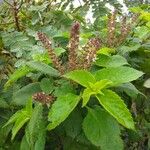
Ocimum gratissimum
African basil · Scent leaf · East Indian basil · Russian basil · Clove basil
Description
Source: leafsnapOcimum gratissimum, commonly known as African basil or clove basil, is a perennial herb belonging to the Lamiaceae family. Native to Africa, this plant thrives in tropical and subtropical regions worldwide. Growing up to 1 meter in height, it exudes a strong aroma reminiscent of cloves. The leaves of Ocimum gratissimum are ovate or elliptical with serrated edges, exhibiting a dark green color on the upper side and a pale green on the underside. The plant produces small white or pink flowers that form clusters at the tops of its stems. For centuries, Ocimum gratissimum has been valued for its medicinal properties. It contains essential oils such as eugenol, thymol, and camphor, which possess antifungal, antibacterial, and antiviral properties, among others. Apart from its medicinal uses, the plant is also a popular culinary herb, known for imparting a robust flavor to dishes like soups and stews. In some cultures, it is revered for its believed spiritual and healing powers. In summary, Ocimum gratissimum serves a variety of purposes, from medicinal to culinary, making it a significant component of many cultures around the world today.
🌳 African basil is useful in a variety of ways beyond standard culinary uses. Essential oils derived from African basil are prized for their scent and antimicrobial traits, making them suitable for use in natural disinfectants and perfumes. The plant’s hardiness enables it to serve as a host for different insects, helping to support biodiversity. Additionally, its ability to signal the presence of certain metals in soil can help guide bioremediation efforts and contribute to environmental monitoring and cleanup.
Care Guide
💧 Water Every 7 days
African basil flourishes in tropical climates, where it enjoys consistent moisture and can withstand short periods of drought. To care for it, water the plant weekly and ensure it is placed outdoors to receive ample sunlight and air circulation, which helps prevent root rot. As an evergreen plant, African basil efficiently retains water, allowing it to maintain its foliage year-round.
How should I water my African basil plant?
To properly water African basil, it is best to use filtered water at room temperature. Tap water may have harmful particles, so filtering is advised. Since African basil originates from warm environments, using cold water can be shocking. It is also recommended to avoid overhead watering, as it can cause issues with the foliage. Instead, gently pour filtered room temperature water onto the soil until it is fully soaked. This helps to moisturize the roots and facilitate their spread throughout the soil, aiding in nutrient absorption.
What do I do if I give my African basil too much water or too little water?
Overwatering is a more common issue that can harm your African basil plant. When the plant receives too much water, the stems and leaves may wilt and turn yellow. Overwatering for a long time can also cause diseases like root rot, mold, and mildew, which can kill the plant. Underwatering is less common, but it can still happen. In this case, the leaves of your African basil will become brittle and brown. It's important to notice signs of overwatering early as some diseases, like root rot, may not be fixable if you wait too long. If you see early signs of overwatering, reduce your watering schedule and check the soil's drainage. If the soil drains poorly, replace it with a loose, well-draining potting mix. If you notice signs of underwatering, water the plant more regularly until the signs go away.
How frequently should I pour water on my African basil?
If your African basil is in a pot, the best way to tell if it needs watering is by sticking your finger into the soil. If the top two to three inches of soil are dry, it's time to water it. The same method can be used if you have your African basil planted in the ground outside. Once again, if the top few inches of soil are dry, it's time to water. Generally, during spring and early fall, watering once a week is enough. However, during extremely hot weather, you may need to water twice a week or even more. It's worth noting that mature, well-established African basil plants can handle drought quite well.
How much water does my African basil plant require?
To properly water your African basil, don't be afraid to give it a good amount of water. Make sure the top few inches of soil are dry before watering, then give it a thorough soak until the soil is completely wet. Water enough so that excess water can flow out of the drainage holes at the bottom of the pot. If you don't see any excess water draining, it means you haven't watered enough, but be careful not to let the water accumulate in the soil, as this can be dangerous for the plant. On the other hand, if water doesn't drain well, it could indicate that the soil is not draining properly, which is not good for the plant's health. If the plant is outside, it will generally need 1 inch of rain per week.
How do I water my African basil as it grows?
The water needs of African basil can vary depending on its growth stages. In the first few years or after transplanting, it requires more water because it is focused on developing new roots for future growth. These roots need extra moisture to perform well. However, as the plant matures, it will need less water. Another stage that requires more water is during blooming, as flower development utilizes significant amounts of moisture.
☀️ Light Full sun
African basil prospers in abundant sunlight. The strength and quantity of these rays are vital to the plant's health, promoting vigorous growth. However, excessive exposure can be harmful and even injure the plant. Native to sun-drenched habitats, it has adapted to absorb a considerable amount of sunlight.
What are the sunlight requirements for African basil?
African basil needs a substantial amount of sunlight to thrive, ideally in full sun conditions, which means it should receive more than 6 hours of sunlight daily. However, it also does well in partial sun, getting about 3-6 hours of sunlight. It's crucial to observe the movement of sunlight through your garden to find spots that offer a balance of light and shade, ensuring the well-being of your plants.
What happens if African basil gets too much sun?
While African basil enjoys the warmth and brightness of the sun, excessive exposure can be harmful. Overexposure to sunlight can cause symptoms such as chlorosis, where leaves lose their green color and turn yellow, sunscald that leads to damaged patches on leaves or stems, leaf curling as a defense mechanism against too much sun, wilting due to increased water loss, and leaf scorching characterized by brown, dry edges on leaves. These conditions can significantly reduce the plant's health and its ability to perform photosynthesis.
Why is artificial lighting important for indoor African basil plants?
Artificial lighting is essential for indoor African basil plants, especially when natural sunlight is inadequate, like during winter or in less sunny spaces. It promotes faster, healthier growth. LED lights, being customizable for specific wavelengths needed by plants, are a popular choice. Full sun plants require 30-50W/sq ft of light, partial sun plants need 20-30W/sq ft, and full shade plants should get 10-20W/sq ft. The light source should be placed 12-36 inches above the plant, mimicking natural sunlight duration, which most plants need for about 8-12 hours per day.
What are the symptoms of inadequate light for indoor African basil?
When African basil is grown indoors with insufficient light, it may exhibit several symptoms indicating light deficiency. These include smaller new leaves, leggy or sparse growth due to longer spaces between leaves or stems, premature leaf drop to conserve resources, slower or halted growth as the plant enters survival mode, lighter-colored new leaves indicating lack of chlorophyll, and various reactions to excessive sunlight like chlorosis, sunscald, leaf curling, wilting, and leaf scorching.
What solutions can help African basil thrive in terms of sunlight exposure?
To ensure African basil receives optimal sunlight, gradually move it to a location where it gets at least 6 hours of direct sunlight daily; a south-facing window is ideal. If the plant is large or not easily movable, use artificial lighting like desk or ceiling lamps for at least 8 hours daily, or invest in professional plant grow lights. Outdoors, avoid sudden changes in sunlight exposure to prevent sunburn, and indoors, minimize obstructions that block sunlight. For smaller plants, consider transplanting during their dormant period to a well-lit location with good drainage. Remember, while you can't recover parts of the plant already affected by insufficient sunlight, new growth will be healthy with improved light conditions.
🌡️ Temperature 20–37.8°C
African basil is indigenous to Africa and prospers in warm climates, requiring temperatures between 68 and 100°F (20 and 38℃). Seasonal temperature variations should mirror those of its native environment to ensure optimal growth.
What is the native environment of African basil?
African basil, scientifically known as Ocimum gratissimum, is native to the African landscape. It thrives in warmer climates, requiring temperatures between 68 to 100°F (20 to 38°C). For optimal growth, seasonal temperature shifts should mimic its natural environment. Being extremely heat-loving, any exposure to cold temperatures can harm the plant.
How should African basil be cared for during colder months?
In autumn, it is advisable to bring outdoor-grown African basil indoors to protect it from the cold. The plant should be placed near a bright window but kept at a distance from heaters to avoid any damage. Maintaining temperatures above 20°C during winter is beneficial for its growth, as temperatures approaching 5°C can be detrimental.
What are the key issues associated with low temperatures for African basil?
African basil prefers warm environments and is not tolerant of low temperatures, thriving best when temperatures are above 20°C. In winter, it is crucial to keep the plant above 5°C. Exposure to temperatures below 1°C can cause the leaves to lighten in color, leading to browning or blackening after frost damage, along with symptoms like wilting and drooping.
What steps should be taken if African basil is affected by cold?
If African basil is damaged by frost, trim off the affected parts and immediately move the plant indoors to a warm environment for protection. Placing the plant near a south-facing window ensures ample sunlight, but avoid positioning it near heaters or air conditioning vents to prevent the air from becoming excessively dry.
How does high temperature affect African basil?
During summer, it is important to keep African basil below 38°C. Temperatures exceeding 43°C can lighten the color of the leaves and increase susceptibility to sunburn.
💨 Humidity normal (40-60%)
This plant will thrive in moderate humidity, which is probably the level in your home. However, misting it a few times a week can be very beneficial. Make sure the room has good ventilation.
🪴 Soil 5-6
🌱 Fertilizer
For maximum yield, African basil responds well to regular applications of a balanced fertilizer, especially one high in nitrogen. Apply fertilizer before planting, at planting, and when seedlings are 2 inches (5.1 cm) tall. Adding compost or manure also supplies nutrients continuously. Insufficient nutrients in the soil lead to underdeveloped leaves and stems, thin stems, inferior flavors, and possibly a bitter taste.
Why do I have to put fertilizer on my African basil?
Fertilizer and soil nutrients are fuel for your African basil, enabling it to grow and stay healthy. Plants, including African basil, use soil nutrients to create new plant material and maintain their existing parts. Fertilization is particularly important for African basil as it enhances the appearance of its flowers, which are the main attraction. Most gardeners strive to ensure the flowers appear at their best, and fertilization is a reliable method to achieve this.
When should I fertilize my African basil?
The African basil goes through two main phases each year. The first phase, called the dormant phase, occurs in winter and involves minimal new growth. The second phase, known as the active growth phase, happens in spring and fall when the plant requires the most fertilization. To ensure optimal growth, it is recommended to start fertilizing your African basil in spring and continue monthly feedings throughout spring and most of summer. As fall approaches, you can gradually reduce the amount of fertilizer used.
When would it be best to not fertilize my African basil?
If you want to help your African basil thrive, be mindful of avoiding root burn. During the active growth period in spring and summer, the plant requires additional nutrients. However, during the fall and winter, when the plant becomes dormant, it's best to refrain from fertilizing.
What kind of fertilizer does my African basil plant need?
For growing African basil, it is recommended to use a fertilizer that has a balanced mix of the three main plant nutrients, with slightly higher amounts of phosphorus. Another option is to improve the soil by adding organic materials like compost, worm castings, and manure. There are different types of fertilizers available, but liquid or powdered forms tend to work best for African basil. No matter which form you choose, remember to dilute the fertilizer and apply it while watering your plants.
How should I help my African basil grow better?
Once you find the right fertilizer and know when to fertilize your African basil, the next step is learning how to apply it. The most reliable method is to mix your liquid fertilizer with water before applying it to the soil. Each fertilizer may come with specific instructions, so it's best to follow the manufacturer's guidance. These instructions will also explain how to dilute the fertilizer properly to avoid overfertilization. Mixing the fertilizer with water is a simple process, and once you're done, just pour the mixture into the soil where your African basil is planted.
🪴 Pot & Repot
✂️ Pruning
African basil thrives with regular pruning, especially from late winter to early spring. For best results, trim up to one-third of the plant, concentrating on removing damaged or overcrowded branches. This helps improve air circulation and increase light penetration. By pruning properly, you can enhance both the plant's health and its aromatic qualities. For advice tailored to your climate, consult horticultural sources.
🌿 Propagating
🐛 Diseases & pets
☠️ Toxicity
Holy Basil is non-toxic and suitable for human and animal consumption. In fact, it has been used historically to treat a variety of ailments and disorders. However, avoid using holy basil if you are allergic or sensitive to it or other Lamiaceae (mint) plants.
Characteristics
- Plant Type
- Herb, Shrub
- Life Cycle
- Perennial, Annual
- Genus
- Ocimum
- Family
- Lamiaceae
- Hardiness Zone
- 10-11
- Mature Height
- 0.91 m to 3.05 m
- Mature Spread
- 49 cm to 91 cm
- Leaf Color
- Green, Dark Green
- Leaf Type
- Evergreen
- Flower Color
- White
- Flower Size
- 5.08 cm to 30.48 cm
- Bloom Time
- Late spring, Summer
- Planting Time
- Spring
- Harvest Time
- Mid summer, Late summer
- Native Area
- Sri Lanka, Djibouti, Somalia, Burkina Faso, India, Malaysia, Angola, Namibia, Madagascar, Rwanda, Eritrea, Nigeria, Yemen, Kenya, Uganda, Tanzania, Zimbabwe, Benin, Sierra Leone, Indonesia, Cambodia, Equatorial Guinea, Liberia, Mozambique, Cameroon, Burundi, Ghana, Ethiopia, Botswana, Congo, Nepal, Malawi, Central African Republic, South Africa, Zambia, Sudan, Bangladesh, Guinea, Vietnam, Togo, Senegal, Eswatini, Côte d'Ivoire, Congo (DRC), Thailand, Gabon