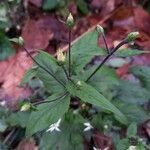
Oclemena acuminata
Mountain aster · Whorled aster · Whorled Nodding-Aster · Whorled wood aster · Sharp-leaved Aster
Description
Source: leafsnapOclemena acuminata, commonly known as the Whorled Wood Aster, is a perennial herbaceous plant belonging to the Asteraceae family. Native to North America, it thrives in various habitats, including woodlands, meadows, and along stream banks. This plant can grow up to 3 feet tall and has a bushy appearance with numerous branches. Its narrow, pointed leaves have toothed edges and are arranged in whorls around the stem. The small flowers, featuring white petals, bloom from August to October. Oclemena acuminata is an important source of nectar for bees and butterflies during its blooming period. It also serves as a food source for various wildlife, such as deer, rabbits, and birds. Traditionally, Native Americans have used this plant for medicinal purposes, such as treating fever and respiratory ailments. Overall, Oclemena acuminata is an attractive native wildflower that provides ecological benefits and has cultural significance in the traditional medicine practices of Native Americans.
🎭 Affection
Care Guide
💧 Water Every 7 days
Whorled wood aster flourishes in woodland environments where the soil is rich in moisture. It prefers consistent soil moisture without becoming waterlogged. To maintain this balance, water it once a week. As an understory plant, it thrives in dappled light and makes efficient use of available moisture, aligning its growth cycle with these natural conditions.
How should I water my Whorled wood aster?
When watering the Whorled wood aster, it is important to use filtered water at room temperature. Tap water may contain harmful particles, so filtered water is preferred. The water should be at room temperature or slightly warmer because the Whorled wood aster is native to warm environments and cold water can be a shock. Avoid overhead watering as it can cause problems with the foliage. Instead, thoroughly saturate the soil with the filtered room temperature water. This helps the roots absorb moisture and spread through the soil to collect necessary nutrients.
What should I do if I give my Whorled wood aster too much or too little water?
Overwatering and underwatering can harm your Whorled wood aster's health, but overwatering is more common. Too much water causes wilting and yellowing of stems and leaves. Overwatering over time can also lead to root rot, mold, and mildew, which can kill your plant. Underwatering is less likely, as the plant tolerates drought well. However, it can still happen, resulting in brittle, brown leaves. It is important to detect signs of overwatering early. Diseases like root rot are harder to fix if left too long. If you see early signs, reduce watering immediately. Check the soil's drainage and replace it with a well-draining mix if needed. If signs of underwatering appear, increase watering until the signs subside.
How frequently do I need to water my Whorled wood aster?
If you have your Whorled wood aster in a pot, the best way to check if it needs water is by sticking your finger into the soil. If the top two to three inches are dry, give it some water. For those who grow their Whorled wood aster outside in the ground, you can use a similar method to test the soil. Again, if the top few inches of soil are dry, it's time to water it. Generally, during spring and early fall, watering once a week will suffice. However, in extremely hot weather, you may need to water it twice a week or more. Keep in mind that mature and well-established Whorled wood asters have a great ability to withstand dry conditions.
How much water does my Whorled wood aster require?
When watering your Whorled wood aster, it's important to be generous with the amount of water you give. Wait until the top two to three inches of soil are dry, then water thoroughly until the soil is completely soaked. Make sure to add enough water so that excess water flows out through the drainage holes at the bottom of the pot. If you don't see any excess water draining out, it means you haven't watered enough. Be careful not to let water accumulate in the soil, as this can harm the plant. On the other hand, if water doesn't drain well through the pot, it could be a sign of poorly draining soil, which is harmful to the plant's health. If the plant is outdoors, about 1 inch of rain per week is enough.
How do I water my Whorled wood aster as it grows?
The water requirements of the Whorled wood aster vary depending on its growth stages. In the first few years of its life or after transplanting, it needs more water to support root growth. These young roots require additional moisture to ensure optimal future growth. As the plant matures, it will require less water. Additionally, during the bloom period, the Whorled wood aster can benefit from extra water to support flower development.
☀️ Light Full sun
Whorled wood aster does best when it gets abundant sunlight all day, though it can tolerate spots where light is broken up during the day. It grows vigorously in its native environment and is adaptable to different light conditions. Too much sun or too little can hinder its growth or cause leaf discoloration.
What are the sunlight requirements for Whorled Wood Aster?
Whorled Wood Aster requires full sun, which is above 6 hours of sunlight per day, but it can also survive in partial sun, receiving about 3-6 hours of sunlight. It's important to watch how sunlight moves through your garden to ensure you find spots that provide the right balance of light and shade, as overexposure or insufficient light might hinder its growth or cause leaf discoloration.
How does artificial lighting affect indoor Whorled Wood Aster plants?
Indoor Whorled Wood Aster plants require adequate lighting for optimal growth. When natural sunlight is insufficient, artificial lights are valuable, promoting healthier growth. LED lights are recommended as they can be tuned to the wavelengths needed by plants. Full sun plants need 30-50W/sq ft, partial sun plants need 20-30W/sq ft, and full shade plants need 10-20W/sq ft of artificial light. The light source should be placed 12-36 inches above the plant for 8-12 hours per day, mimicking natural sunlight.
What are the symptoms of incorrect lighting for Whorled Wood Aster?
Whorled Wood Aster exhibits several symptoms when subjected to incorrect lighting, including smaller new leaves, leggy or sparse growth, faster leaf drop, slower or no new growth, paler new leaves or irregular color patterns, chlorosis, sunscald, leaf curling, wilting, and leaf scorching. These symptoms indicate either too much or too little light, affecting the plant's health.
How can I treat a Whorled Wood Aster with light-related issues?
To treat a Whorled Wood Aster with light-related issues, gradually move it to a sunnier spot each week until the plant receives at least 6 hours of sunlight daily. For indoor plants, use a south-facing window or provide additional light with a desk lamp or grow lights for at least 8 hours daily. Outdoor plants should also be moved gradually to avoid sunburn. If your plant is too large to move or is planted in the ground, consider pruning nearby trees to reduce shade. For those in the ground, choose the plant's dormant period for transplanting to a sunnier location.
🌡️ Temperature 0–32.2°C
Whorled wood aster is native to environments with temperatures ranging from 32 to 89.6 °F (0 to 32 ℃). Its preferred temperature corresponds to the seasonal variations typical of temperate areas. During colder seasons, ensure the whorled wood aster does not encounter temperatures below freezing.
What is the preferred temperature range for Whorled wood aster?
Whorled wood aster (Oclemena acuminata) thrives in environments that offer a temperature range of 32 to 89.6 °F (0 to 32 °C). This range aligns with the seasonal variations typical of temperate areas, indicating that the plant is well-suited to conditions that vary throughout the year. During the colder seasons, it is important to ensure that the Whorled wood aster does not experience temperatures below freezing, although it is highly cold-tolerant and does not require additional frost protection measures. Before the first freeze in autumn, watering the plant generously is recommended to ensure the soil remains moist and enters a frozen state, which helps prevent drought and water scarcity for the plant during the winter and early spring.
How does Whorled wood aster respond to low temperatures?
Whorled wood aster is extremely cold-tolerant, capable of withstanding winters where temperatures remain above -40°C. If temperatures drop below this threshold, there might not be any noticeable changes during the winter. However, there could be a decrease in sprouting or potentially no sprouting at all come springtime. To address this, in spring, it is recommended to remove any parts of the plant that have failed to sprout, encouraging healthier growth for the remaining plant.
What should I do if Whorled wood aster experiences high temperatures?
Whorled wood aster is not tolerant of high temperatures. Growth halts and the plant becomes more susceptible to rot if temperatures exceed 32°C. To mitigate damage from high temperatures, trim away any sunburned and dried-up parts of the plant. Moving the plant to a location that provides shade during the midday and afternoon or using a shade cloth can help protect it from excessive heat. Additionally, watering the plant in the morning and evening will help keep the soil moist and reduce stress from the heat.
💨 Humidity
🪴 Soil 6-7
🌱 Fertilizer
The best time to fertilize a Whorled wood aster is in early spring, as it comes out of dormancy and begins active growth. Fertilizing supplies essential nutrients for healthy development. Although the Whorled wood aster has relatively low fertilizer requirements, yearly feeding can improve its survival and encourage stronger, longer-lasting flowers.
🪴 Pot & Repot
✂️ Pruning
The whorled wood aster is known for its distinctive whorled leaves and daisy-like flowers. Pruning between early and late spring is crucial for maintaining its shape and promoting healthy growth. To encourage blooming and manage the plant’s size, remove dead stems and spent flowers. Light pruning also helps to prevent stress and encourages strong development.
🌿 Propagating
🐛 Diseases & pets
☠️ Toxicity
Characteristics
- Plant Type
- Herb
- Life Cycle
- Perennial
- Genus
- Oclemena
- Family
- Asteraceae
- Hardiness Zone
- 2-7
- Mature Height
- 30 cm to 61 cm
- Mature Spread
- 30 cm to 61 cm
- Leaf Color
- Green
- Leaf Type
- Deciduous
- Flower Color
- White
- Flower Size
- 2.54 cm to 7.62 cm
- Bloom Time
- Summer
- Planting Time
- Spring, Summer
- Harvest Time
- Early fall, Mid fall