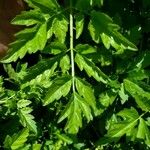
Oenanthe sarmentosa
Water parsley · Pacific water-parsley · American water-parsley · Pacific water-dropwort · Water celery
Description
Source: leafsnapOenanthe sarmentosa, commonly known as water celery or creeping marshwort, is a perennial herbaceous plant belonging to the Apiaceae family. Native to Europe and Asia, it thrives in wetlands, marshes, and along the edges of streams and ponds. This plant exhibits a creeping habit, with long stems that can extend up to 1 meter in length. The stems are hollow and feature nodes at regular intervals. Its leaves are pinnate, with toothed leaflets that are either ovate or lanceolate in shape. From June to August, Oenanthe sarmentosa produces small white flowers arranged in umbels at the ends of long stalks. These flowers eventually develop into small fruits known as schizocarps, which split into two parts when mature. Culinary uses of this plant include its young leaves, which can be eaten raw or cooked like celery, and its roots, which taste sweet and are reminiscent of carrots when cooked. However, caution is advised as some species of Oenanthe contain toxic compounds that can cause severe poisoning if ingested. In traditional medicine, Oenanthe sarmentosa has been valued for its diuretic properties and its efficacy in treating digestive disorders such as indigestion and flatulence. Overall, Oenanthe sarmentosa is a fascinating wetland plant with both culinary and medicinal applications (albeit with necessary caution). It presents a valuable subject for further exploration by botanists and herbalists alike.
🎭 Helpful knowledge
Care Guide
💧 Water Every 7 days
Water Parsley, which originates from wetland habitats, thrives in consistently moist and high-humidity environments. To maintain the necessary soil moisture, it is essential to water the plant weekly. Its growth is influenced by the availability of water, so be prepared to adjust your watering schedule based on rainfall patterns.
How should I water my Water Parsley?
To ensure the health of Water Parsley while watering, it's best to use filtered water at room temperature. Tap water may contain harmful particles that can negatively affect the plant. Since Water Parsley originates from a warm environment, it's important to avoid shocking it with cold water. Therefore, it's recommended to use water that is at room temperature or slightly warmer. In addition, overhead watering should be avoided as it can cause problems with the foliage. Instead, it's best to apply filtered room temperature water directly to the soil until it becomes completely soaked. This method is highly beneficial as it helps to moisten the roots and supports their continued spread through the soil, ensuring the plant receives the necessary nutrients.
What should I do if I give too much or too little water to my Water Parsley?
Both overwatering and underwatering can harm the health of your Water Parsley, but overwatering is a more common issue. When the plant gets too much water, the stems and leaves may wilt and turn yellow. Overwatering for a long time can also lead to diseases like root rot, mold, and mildew, which can be fatal. On the other hand, underwatering is less common because Water Parsley can tolerate drought well. But if it does happen, you may notice that the leaves become brittle and brown. It's important to recognize the signs of overwatering early when caring for your Water Parsley because some diseases, like root rot, may not be fixable if you wait too long. If you see early signs of overwatering, reduce your watering schedule immediately. Also, check the quality of the soil. If it drains poorly, replace it with a loose, well-draining potting mix. If you see signs of underwatering, simply water more regularly until the signs go away.
How frequently should I water my Water Parsley?
If your plant is in a pot, the most precise way to determine if it needs water is by checking the soil. Simply insert your finger into the soil and if the top two to three inches are dry, it's time to water. The same method can be used for Water Parsley grown outdoors in the ground. Once again, if the first few inches of soil have dried out, it needs water. Typically, during spring and early fall, watering once a week is sufficient. However, during very hot weather, you may need to water twice or even more per week. It's worth noting that mature Water Parsley plants have the ability to withstand drought quite well.
How much water does my Water Parsley plant need?
To water your Water Parsley effectively, don't be afraid to give it plenty of water. Make sure that the first two to three inches of soil are dry before watering. It's best to give it a good, thorough watering so that the soil is completely soaked. You should add enough water so that it flows out of the drainage holes at the bottom of the pot. If you don't see any excess water draining, it means you haven't watered enough. However, be careful not to let water accumulate in the soil, as this can harm the plant. On the other hand, if water doesn't drain properly from the pot, it means the soil does not drain well and this is bad for the plant's health. If the plant is outside, it should receive about 1 inch of rain per week, which is enough.
How do I water my Water Parsley as it grows?
The water requirements of Water Parsley can vary depending on its growth stages. In the first few years of its life or after transplanting to a new location, extra watering is necessary. During these stages, the plant focuses on growing new roots to support future growth, and these roots need more moisture. However, as the plant matures, it requires less water. Additionally, during the bloom period, when the plant is developing flowers, it may need additional watering due to the increased moisture demands of flower development.
☀️ Light Full sun
Water Parsley grows best with abundant light, though it can tolerate some shade. Excessive light can scorch its leaves, and too little light can jeopardize its overall health. This hardy plant naturally thrives in areas with ample sunshine, similar to conditions in its native habitat.
What are the sunlight requirements for Water Parsley (Oenanthe sarmentosa)?
Water Parsley thrives best in environments with full sun, which means it requires above 6 hours of direct sunlight per day. However, it can also grow in partial sun, receiving about 3-6 hours of sunlight. It's important to observe how sunlight moves through your garden to choose spots that offer a good balance of light and shade, ensuring the plants' well-being.
What are the essentials for growing Water Parsley effectively?
To grow Water Parsley effectively, it's crucial to provide it with extensive light exposure. While it can handle some shade, too much light may scorch the leaves, and too little can compromise the plant's health. Originating from sunny environments, this robust plant requires ample sunlight. In cases of insufficient natural light, artificial lighting serves as a vital solution, especially for indoor plants. LED lights, recommended for their customizable wavelengths, should cover 30-50W/sq ft for full sun plants, 20-30W/sq ft for partial sun plants, and 10-20W/sq ft for shade plants. Ensuring the correct distance (12-36 inches above the plant) and duration (8-12 hours per day) of light exposure mimics natural sunlight conditions and promotes healthier growth.
What symptoms indicate that Water Parsley is receiving inadequate light?
Symptoms of inadequate light in Water Parsley include smaller new leaves compared to older ones, leggy or sparse growth, faster leaf drop, slower or no new growth, and lighter-colored or yellow leaves. These symptoms indicate that the plant is struggling to photosynthesize properly due to insufficient light. Conditions like chlorosis, sunscald, leaf curling, wilting, and leaf scorching may also occur, reflecting either excessive sunlight exposure causing damage or inadequate light affecting the plant's health.
How can I address light-related issues in Water Parsley?
To address light-related issues in Water Parsley, gradually acclimatize your plants to receive at least 6 hours of direct sunlight daily by moving them to sunnier spots each week. For indoor plants, consider using artificial light for additional illumination, keeping lamps on for at least 8 hours daily or investing in professional grow lights. Outdoors, ensure a gradual transition to sunnier locations to prevent sunburn. Reducing obstructions, such as pruning trees that block light, or transplanting smaller plants to sunnier positions with ample sunlight and good drainage, can greatly improve light exposure. It's important to note that while parts of the plant that suffered from insufficient sunlight might not recover, new growth should be healthy with increased light exposure.
🌡️ Temperature 10–41.1°C
Water Parsley does best in locations that mirror its native habitat, with temperatures from 50 to 105.8 ℉ (10 to 41 ℃). It prefers fairly warm conditions in spring and fall. In winter, move it indoors if temperatures fall below 50 ℉ (10 ℃).
What is the ideal temperature range for growing Water Parsley?
Water Parsley flourishes in environments that mimic its natural habitat, with ideal temperatures ranging from 50 to 105.8°F (10 to 41°C). It prefers ample warmth during the spring and fall seasons. If you are in an area where winter temperatures drop below 50°F (10°C), it's advisable to move the plant indoors to protect it from the cold.
Does Water Parsley require special frost protection during winter?
Water Parsley has a strong resistance to cold and typically does not require special frost protection measures during winter. However, in regions where winter temperatures are anticipated to fall below -25°C, it's important to take steps to protect your plant by covering it with soil or straw. Additionally, it's recommended to water the plant abundantly before the first freeze in autumn, ensuring the soil is moist as it enters a frozen state. This helps prevent the plant from experiencing drought and water scarcity during winter and early spring.
What should I do if the temperature falls below Water Parsley's cold tolerance limit?
Water Parsley is cold-tolerant and best thrives when temperatures are above 10°C. During winter, it's important to keep it above -15°C. If temperatures drop below -25°C, you may not notice immediate changes, but there could be a decrease in sprouting or no sprouting at all come springtime. In such cases, remove any parts of the plant that have failed to sprout in spring as part of your care routine.
How does high temperature affect Water Parsley and what are the solutions?
During summer, it's critical to keep Water Parsley's temperature below 41°C. Exposure to temperatures above 45°C can cause the plant's leaves to become lighter in color, curl, become susceptible to sunburn, and in severe cases, the entire plant may wilt and dry out. To mitigate these issues, trim away any sunburned and dried-up parts. Move the plant to a location that offers shade during the midday and afternoon sun, or utilize a shade cloth. Ensuring the soil remains moist by watering in the morning and evening is also beneficial.
💨 Humidity
🪴 Soil
🌱 Fertilizer
To promote the optimal growth of water parsley, apply a balanced fertilizer once a month during the growing season. Be cautious of over-fertilization, as it can damage the plants and negatively affect waterways. Adjust the feeding schedule based on seasonal changes, using diluted solutions when necessary. Ensure the plants are properly watered to encourage effective nutrient absorption. Regularly monitor the response of your water parsley to create a thriving garden.
🪴 Pot & Repot
✂️ Pruning
Water Parsley flourishes in moist environments and benefits from pruning from early to late spring. Essential techniques include removing dead stems and thinning the plant to improve air circulation, which supports healthy growth and prevents disease. Regular, moderate pruning helps maintain its vigor and shape. For the best results, consult horticultural guides for specific recommendations.
🌿 Propagating
🐛 Diseases & pets
☠️ Toxicity
Characteristics
- Plant Type
- Herb
- Life Cycle
- Perennial
- Genus
- Oenanthe
- Family
- Apiaceae
- Hardiness Zone
- 6-13
- Mature Height
- 1.52 m
- Mature Spread
- 0.61 m to 1.52 m
- Leaf Color
- Green, Blue
- Leaf Type
- Semi-evergreen
- Flower Color
- White
- Flower Size
- 2.54 cm to 5.08 cm
- Bloom Time
- Early summer, Mid summer
- Planting Time
- Spring, Summer, Autumn
- Harvest Time
- Late summer, Early fall