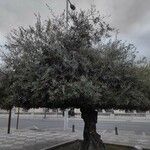
Olea europaea
زیتون · Olive · Oliveleaf · Small-fruit olive · Azmmur
Description
Source: leafsnapOlea europaea, commonly known as the olive tree, is a species of small evergreen tree belonging to the family Oleaceae. Native to the Mediterranean region, it has been cultivated for thousands of years for its fruit and oil. The olive tree can grow up to 15 meters tall with a trunk diameter reaching up to 1 meter. Its leaves are leathery and oblong, with a gray-green color on the top side and silver-white underneath. The fruit of Olea europaea is an oval-shaped drupe that varies in size from small cherries to large plums. It contains a single seed or pit that can be easily removed when ripe. Olives are harvested when they change color from green to black or purple. Olive oil is extracted from the fruits using methods such as pressing, centrifugation, or solvent extraction. This oil has been used in cooking, cosmetics, medicine, and religious rituals since ancient times. The wood of Olea europaea is hard and durable, making it ideal for furniture making as well as for construction purposes like flooring tiles. Beyond its economic importance, Olea europaea also holds cultural significance in many Mediterranean countries, symbolizing peace, wisdom, and longevity due to its long lifespan, which can exceed several centuries under favorable conditions.
🌳 Besides being enjoyed as food and valued for the cosmetic uses of its oil, the olive has long served as a source of light. Olive oil powered ancient lamps, burning cleanly with little smoke or odor and outperforming other oils. Additionally, olive oil production yields olive pomace, a less familiar but powerful organic fertilizer that enriches soil with abundant organic matter.
🎭 Triumph, optimism, boon
Care Guide
💧 Water Every 7 days
Native to the Mediterranean, olive trees thrive in well-draining soil with moderate moisture and can withstand drought-like conditions. It's best to water them every 1-2 weeks, allowing the soil to dry out between waterings. As evergreen plants, olive trees keep their foliage all year long, demonstrating their water efficiency and resilience in various climates.
When Should I Water My Olive?
Identifying the right time to water your olive (Olea europaea) is vital for its health and productivity. Check the soil before watering; if the top 1 to 2 inches are dry, it's time to water. Observing the plant's leaves for signs such as curling, wilting, or a loss of vibrancy can also indicate a need for water. Moreover, slower growth or smaller leaves suggest a lack of water. However, it's important to balance watering as both over-watering and under-watering can harm the plant. Consider the local climate and soil conditions when determining your watering schedule, as they can significantly impact your olive tree's watering needs.
How Should I Water My Olive?
Olive trees thrive with the 'soak and dry' method, which involves watering the plant thoroughly until the water drains out of the pot's bottom, then allowing the soil's top inch to dry out before the next watering. Use a watering can with a detachable rose or spout for a gentle flow, directing water to the root zone and avoiding foliage. Incorporating a moisture meter can be helpful in monitoring soil moisture, ensuring you water your olive properly without over-watering. Remember to discard any standing water from saucers to prevent root rot. The key is to water thoroughly but infrequently, adapting to the plant's needs and environmental conditions.
How Much Water Does Olive Really Need?
The watering needs of an olive tree depend on several factors including its size, pot size, and the environmental conditions. Generally, olive trees are drought-tolerant and require deep watering rather than frequent light watering. For small potted trees, about a liter of water every two weeks might be enough under average temperature conditions (20-25°C). For larger trees in the ground, ensure deep watering to wet the entire root zone less frequently. It's crucial to check the soil around the tree to gauge when watering is needed. Over-watering can lead to yellow leaves, while under-watering can cause wilted, dry leaves and stunt growth. Adjust the watering based on the soil condition, ensuring it's well-drained and not soggy.
What Kind of Water is Best for Olive?
For olives, using rainwater, tap water, or filtered water is generally acceptable. Distilled or filtered water can help prevent mineral build-up and contamination. Though olives are not particularly sensitive to chlorine and fluoride, in areas where tap water is heavily treated, it is beneficial to let the water sit out for 24 hours before watering to de-chlorinate. Be mindful of the olive tree's sensitivity to high levels of sodium and other minerals that can accumulate over time. Periodic heavy watering to leach these minerals out of the soil can be beneficial. Always use room temperature water to avoid shocking the plant's system.
How Do Olive's Watering Needs Change with the Seasons?
Olive trees' watering needs shift with the seasons. During spring, their active growth phase, keep the soil consistently moist. In summer, especially during dormancy, reduce watering and allow the soil to dry slightly between watering sessions. Come autumn, as the tree prepares for dormancy, decrease watering frequency further, aiming to keep the soil lightly moist. In winter, water sparingly, as olive trees require minimal moisture during their dormancy period. Adjust watering based on climate and the specific needs of your plant to avoid over- or under-watering.
☀️ Light Full sun
Because it comes from regions with abundant sunlight, the olive does best when it gets a generous amount of light each day. Although it can tolerate places with reduced light, the olive performs optimally when the sun's rays reach it unimpeded. Excess light is rarely a problem, while insufficient light can stunt growth and damage its health.
What are the sunlight requirements for olive plants?
Olive plants require various amounts of sunlight depending on their specific needs. Full sun, which means the plant should receive more than 6 hours of sunlight daily, is ideal for their optimal growth. However, they can also tolerate partial sun, defined as about 3-6 hours of sunlight. It's important to monitor the progression of sunlight in your garden to ensure your olive plants get the right balance of light and shade, which significantly contributes to their health and happiness.
How essential is sunlight for olive plant growth?
Sunlight is incredibly vital for the growth of olive plants, originating from environments where sunlight is abundant. They perform best when exposed to a generous amount of sunlight, as overexposure is rarely an issue for them. Insufficient light, however, can stunt their growth and impair their health. In cases where natural sunlight is not enough, especially during winter or in less sunny locations, artificial lights are recommended to provide the necessary wavelengths for optimal growth. This can include LED lights and ensuring the correct wattage and distance based on the plant's specific sunlight needs.
What are the symptoms of insufficient light on olive plants?
Olive plants may show a range of symptoms if they don't receive adequate light. These include smaller than usual new leaves, leggy or sparse growth, early dropping of older leaves, and slowed or halted growth. The plants may also exhibit lighter-colored new leaves or chlorosis, where leaves lose their green color and turn yellow due to insufficient light affecting photosynthesis. Other signs of too much light include symptoms like sunscald, leaf curling, wilting, and leaf scorching, which all indicate damage from overexposure to sunlight.
How can one address light-related issues in olive plants?
To optimize growth and address light-related issues in olive plants, gradually increase their exposure to sunlight until they receive the recommended amount of daily direct sunlight. For indoor plants, using artificial light can supplement sunlight exposure. Outdoors, it's essential to acclimate plants to sunnier spots gradually to prevent sunburn. Reducing obstructions that block sunlight, like pruning trees, or transplanting smaller plants to sunnier locations can also help. Remember, parts of the plant affected by insufficient sunlight might not recover, but new growth will be healthy after adjusting light exposure.
🌡️ Temperature 15–35°C
The olive is native to the Mediterranean and grows in climates where temperatures range from 50 to 77 ℉ (10 to 25 ℃), and it prefers a temperature range of 59 to 95 ℉ (15 to 35 ℃). During winter dormancy it can tolerate temperatures as low as 23 to 32 ℉ (-5 to 0 ℃). In summer, providing shading or misting is recommended to prevent heat stress.
What are the ideal growing conditions for an olive tree (Olea europaea)?
The olive tree, or Olea europaea, thrives in its native Mediterranean climate with temperatures ranging from 50 to 77°F (10 to 25°C), favoring a warmer range of 59 to 95°F (15 to 35°C). It enters a period of winter dormancy during which it can withstand colder temperatures as low as 23 to 32°F (-5 to 0°C). To prevent heat stress in the summer, it's beneficial to provide the olive tree with shading or misting. Olive trees have some tolerance to cold and usually don't need special care if the temperature stays above -5°C. For temperatures expected to drop below this point, temporary protection measures like wrapping the tree with plastic film, fabric, or other materials are necessary, which should be removed as temperatures rise again.
How do olive trees react to low temperatures, and what are the solutions?
Olive trees have a moderate tolerance to low temperatures, performing best when the temperature remains above 15°C. During winter, it’s important to ensure that temperatures stay above -5°C to avoid damage. Should the temperature fall below -10°C, the olive tree's leaves may droop, and in severe cases, they might wilt and fall off. To protect an olive tree from frost damage, trim off the parts damaged by frost. Before facing low temperatures again, wrap the tree with protective materials like non-woven fabric or cloth and establish a wind barrier to shield it from cold winds.
What should be done if an olive tree experiences high temperatures?
During the summer, it's crucial to keep an olive tree's surrounding temperature below 35°C. Temperatures exceeding 41°C can lead to lighter leaf coloration, dry and withered leaf tips, leaf curling, and an increased risk of sunburn. To mitigate these issues, trim away the sunburned and dried-up parts of the tree. Relocate the plant to a shaded area or use shade cloth to prevent direct sunlight during the hottest parts of the day. Additionally, watering the tree in the morning and evening helps maintain soil moisture, further protecting the plant from extreme heat.
💨 Humidity normal (40-60%)
This plant will thrive in moderate humidity, which is probably the level in your home. However, misting it a few times a week can be very beneficial. Make sure the room has good ventilation.
🪴 Soil 6-7
🌱 Fertilizer
Fertilize your Olive in early spring to encourage healthy growth. Regular feeding improves its overall health, leading to vigorous growth, greater resilience to harsh conditions, and enhanced resistance to pests and diseases. Keep a consistent fertilization schedule for your Olive to maintain vibrant, deeply colored, and lush foliage.
Why should I add fertilizer to my Olive plant?
To ensure your Olive plant thrives and stays healthy, it's important to regularly fertilize it regardless of its specific type. Adequate nutrient supply promotes strong growth and boosts its ability to withstand difficult environmental conditions, as well as fight off diseases and pests. The foliage of your Olive plant is aesthetically appealing, so it is worth your effort to maintain it. By following a consistent fertilization schedule tailored to your Olive's needs, you can encourage the development of vibrant, lush leaves with rich coloration.
Which fertilizer is best for my Olive plant?
Nitrogen is typically the most crucial nutrient for Olives, but it's important to note that phosphorus and potassium should not be overlooked. Olives generally require a significant amount of all three main nutrients, so a well-balanced fertilizer like a 10-10-10 can be effective. However, for optimal growth, it's often beneficial to use a more nuanced nutrient ratio. Fertilizers with a slightly higher nitrogen content, such as 10-6-4, tend to yield better results. You have the option of using either granular or liquid-based fertilizers when nourishing your Olive.
When should I fertilize my Olive tree?
To help your Olive tree grow healthy, it is recommended to fertilize it in late winter or early spring. This provides the tree with essential nutrients for robust growth once the weather warms up. If you live in a warm climate region, it is beneficial to fertilize again in early fall. This not only adds nutrients for the next growing season but also helps the tree become stronger and better able to survive the cold winter without leaf damage. Fertilizing earlier in the fall ensures that the new branches have sufficient time to develop and withstand the winter cold.
When is it not a good time to fertilize my Olive?
There are a few specific times throughout the year when you should avoid using fertilizers on your Olive plant. The first is during the early and mid-winter months when the plant is dormant and does not require any additional feeding. Additionally, it is not advisable to fertilize the plant during late spring and throughout the summer. These seasons are typically hotter and drier, which can have a negative impact on the Olive if it is given fertilizer during this time. To prevent any issues, it is best to follow a fertilization schedule that only includes feeding in early spring and early fall.
How can I help my Olive plant to grow better?
To fertilize your Olive tree, you have two options: granular fertilizer or liquid fertilizer. If you choose granular fertilizer, simply sprinkle it on the soil during the appropriate time. The slow-release properties of granular fertilizer will slowly release nutrients into the soil. It's generally recommended to lightly water your Olive tree before applying the fertilizer. Alternatively, you can use liquid fertilizer, although this is less common. To do this, mix the fertilizer with water and then pour the mixture onto the soil around the base of your Olive tree. In some cases, it may be helpful to perform a soil test before fertilizing to determine if any pH adjustments are needed.
🪴 Pot & Repot 2-3 years
When repotting Olive, select a pot 1–2 inches (2.5–5.1 cm) larger that has ample drainage. Use a well-draining potting mix. Repot in spring or fall, ensuring the root ball sits slightly lower than the rim of the flower pot. Water thoroughly after repotting and place in a warm spot with indirect sunlight.
✂️ Pruning
The olive tree is an evergreen with silvery-green leaves. To maintain its health and appearance, it should be pruned between early to late winter. Pruning during these months helps shape the tree, remove dead wood, and improve air circulation. Light and regular pruning encourages healthier growth and better fruit production, while also preventing the stress that can result from heavy pruning.
🌿 Propagating
🐛 Diseases & pets
☠️ Toxicity
The fruitless olive tree has no reported toxic effects on people or pets, even at high doses. This trait makes it an ideal shade tree for any lawn or landscape.
Characteristics
- Plant Type
- Tree, Shrub
- Life Cycle
- Perennial
- Genus
- Olea
- Family
- Oleaceae
- Hardiness Zone
- 8-10
- Mature Height
- 3.96 m to 14.94 m
- Mature Spread
- 7.92 m
- Leaf Color
- Green, Silver, Gray
- Leaf Type
- Evergreen
- Flower Color
- White
- Flower Size
- 2.03 cm to 4.06 cm
- Bloom Time
- Late spring, Early summer
- Planting Time
- Spring, Autumn
- Harvest Time
- Mid summer, Late summer, Early fall
- Native Area
- Djibouti, Lesotho, Libya, Angola, Somalia, Turkey, Namibia, Eritrea, Pakistan, Rwanda, Morocco, Yemen, Kenya, Niger, Tanzania, Uganda, Zimbabwe, Burundi, Mozambique, Koppen, Oman, Ethiopia, Botswana, Portugal, Nepal, Saudi Arabia, Tunisia, South Africa, Sudan, Cyprus, Mauritius, Zambia, Greece, China, Afghanistan, Italy, Spain, Albania, Iran, Eswatini, Algeria, Congo (DRC)