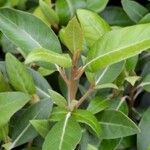
Olearia avicenniifolia
Mangrove-leaf daisybush · Mangrove-leaved Daisy-bush · Mountain akeake
Description
Source: leafsnapOlearia avicenniifolia, commonly known as the Daisy Bush, is a shrub species belonging to the Asteraceae family. Native to Australia, it can be found in various regions, including New South Wales, Victoria, and Tasmania. Typically, the plant grows up to 2 meters in height and features dense foliage with small, oval-shaped green leaves that have serrated edges. During the spring and summer months, the Daisy Bush produces clusters of white or pale pink flowers with yellow centers that attract bees and other pollinators. The plant thrives in well-drained soils and can grow in both full sun and partial shade. While it can tolerate drought conditions, it requires regular watering during prolonged dry spells for optimal growth. Olearia avicenniifolia is a popular choice for landscaping due to its attractive foliage, beautiful flowers, and resilience to harsh environmental conditions. In addition to its ornamental value, the plant has been traditionally used by Indigenous Australians for medicinal purposes. The leaves possess anti-inflammatory properties and have been used to treat skin irritations and infections. Overall, Olearia avicenniifolia is a hardy shrub that not only enhances aesthetic appeal but also holds practical value in traditional medicine, making it an important part of Australia's floral biodiversity.
Care Guide
💧 Water Every 7 days
The Mangrove-leaved daisy-bush is an evergreen plant that thrives in dry conditions with low humidity and infrequent rainfall. It is highly drought-tolerant and only needs to be watered once every two weeks, demonstrating remarkable water conservation abilities throughout the year.
☀️ Light Full sun
Mangrove-leaved daisy-bush is native to open habitats, like sunny meadows and forest margins, where plenty of light is available. It performs best in Full Sun but can also tolerate Partial Sun, adapting well to different light conditions.
What are the sunlight requirements for the Mangrove-leaved daisy-bush?
The Mangrove-leaved daisy-bush, also known as Olearia avicenniifolia, thrives best in Full Sun conditions which means it requires more than 6 hours of sunlight daily. However, it can also tolerate Partial Sun environments, which provide about 3-6 hours of sunlight. It's essential to watch how sunlight moves through your garden to ensure you're providing the right balance of light and shade for your plants, guaranteeing their happiness and growth.
How do indoor plants like the Mangrove-leaved daisy-bush benefit from artificial lighting?
Indoor plants, such as the Mangrove-leaved daisy-bush, require adequate lighting for optimal growth. When natural sunlight is insufficient, artificial lights offer an essential solution. LED lights are a popular choice because they can be customized to provide specific wavelengths that plants need. Full sun plants need 30-50W/sq ft, partial sun plants require 20-30W/sq ft, and full shade plants need 10-20W/sq ft of artificial light. The light source should be placed 12-36 inches above the plant, and most plants need 8-12 hours of light per day to mimic natural daylight hours optimally.
What symptoms indicate the Mangrove-leaved daisy-bush is receiving too little or too much sunlight?
The Mangrove-leaved daisy-bush may show several symptoms if it's receiving suboptimal lighting. Insufficient sunlight can lead to smaller new leaves, leggy or sparse growth, faster leaf drop, and slower or no new growth, with leaves possibly showing lighter colors or patterns indicative of a lack of chlorophyll. Too much sunlight can cause chlorosis, sunscald, leaf curling, wilting, and leaf scorching, negatively impacting the plant's health and ability to photosynthesize effectively.
How can you address light deficiency or excess for Mangrove-leaved daisy-bush?
To address light deficiency issues for indoor Mangrove-leaved daisy-bush, gradually relocate the plant to a sunnier spot until it receives at least 6 hours of direct sunlight daily, using a south-facing window. Artificial light can supplement natural light as needed. For outdoors, move your plants to sunnier spots gradually to avoid sunburn. If physical obstructions block natural light, consider reducing these through strategies like pruning. Transplanting smaller plants during their dormant period to locations with more appropriate sunlight can also help. However, parts of the plant already affected by insufficient light may not recover, though new growth will be healthy with improved light conditions.
🌡️ Temperature 15–35°C
Mangrove-leaved daisy-bush is very adaptable to a range of climate conditions, whether in scorching summers or chilly winters. Nevertheless, it has a preferred temperature range for growth. When temperatures become excessively high, the plant is vulnerable to heat and humidity stress, which can lead to its death. In areas where temperatures approach the lower limit of its cold tolerance, it is important to provide insulation to protect the plant.
What is the botanical name of the Mangrove-leaved daisy-bush?
The botanical name of the Mangrove-leaved daisy-bush is Olearia avicenniifolia. This plant is known for its unique characteristics and belongs to a specific group within the plant kingdom.
💨 Humidity
🪴 Soil 6-7
🌱 Fertilizer
The timing of fertilizing the Mangrove-leaved daisy-bush is important. Start in early spring and continue once a month until early summer. Fertilizer encourages attractive blooms and supplies energy during both dormant periods and active growth.
🪴 Pot & Repot
✂️ Pruning
Prune the mangrove-leaved daisy-bush in early to late winter while it is dormant. Remove any dead wood and thin out crowded branches to improve air circulation and light exposure. Aim for a balanced shape to encourage healthy growth and blooming. Be sure to use clean, sharp tools to make precise cuts, which will enhance the overall health of the plant.
🌿 Propagating
🐛 Diseases & pets
☠️ Toxicity
Characteristics
- Plant Type
- Tree, Shrub
- Life Cycle
- Perennial
- Genus
- Olearia
- Family
- Compositae
- Hardiness Zone
- 7-10
- Mature Height
- 6.1 m
- Mature Spread
- 3.05 m
- Leaf Color
- Olive Drab, Dark Olive Green
- Leaf Type
- Evergreen
- Flower Color
- White
- Flower Size
- 5.08 cm
- Bloom Time
- Winter
- Planting Time
- Spring, Autumn
- Harvest Time
- Late winter, Early spring, Mid spring
- Native Area
- New Zealand