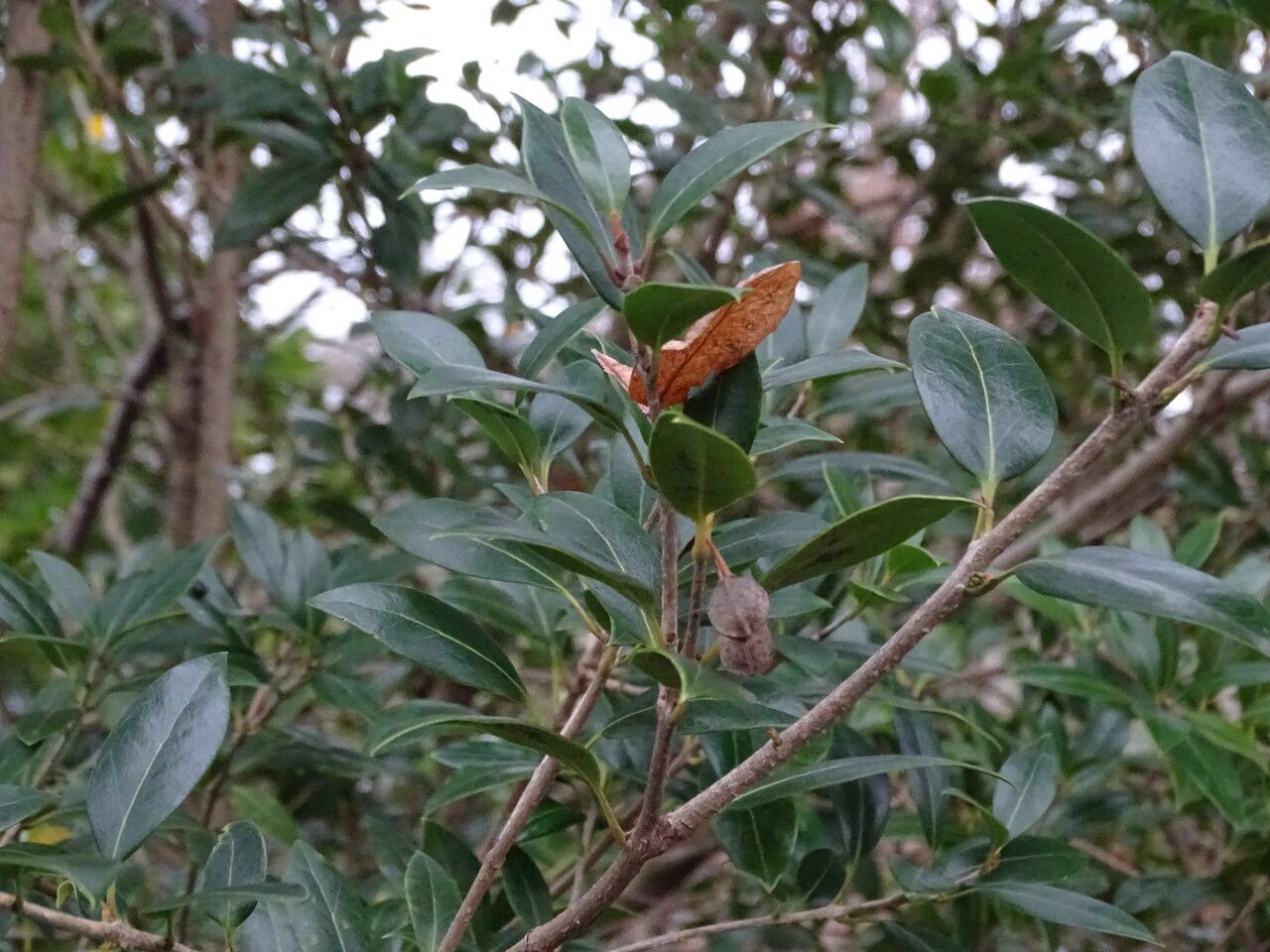
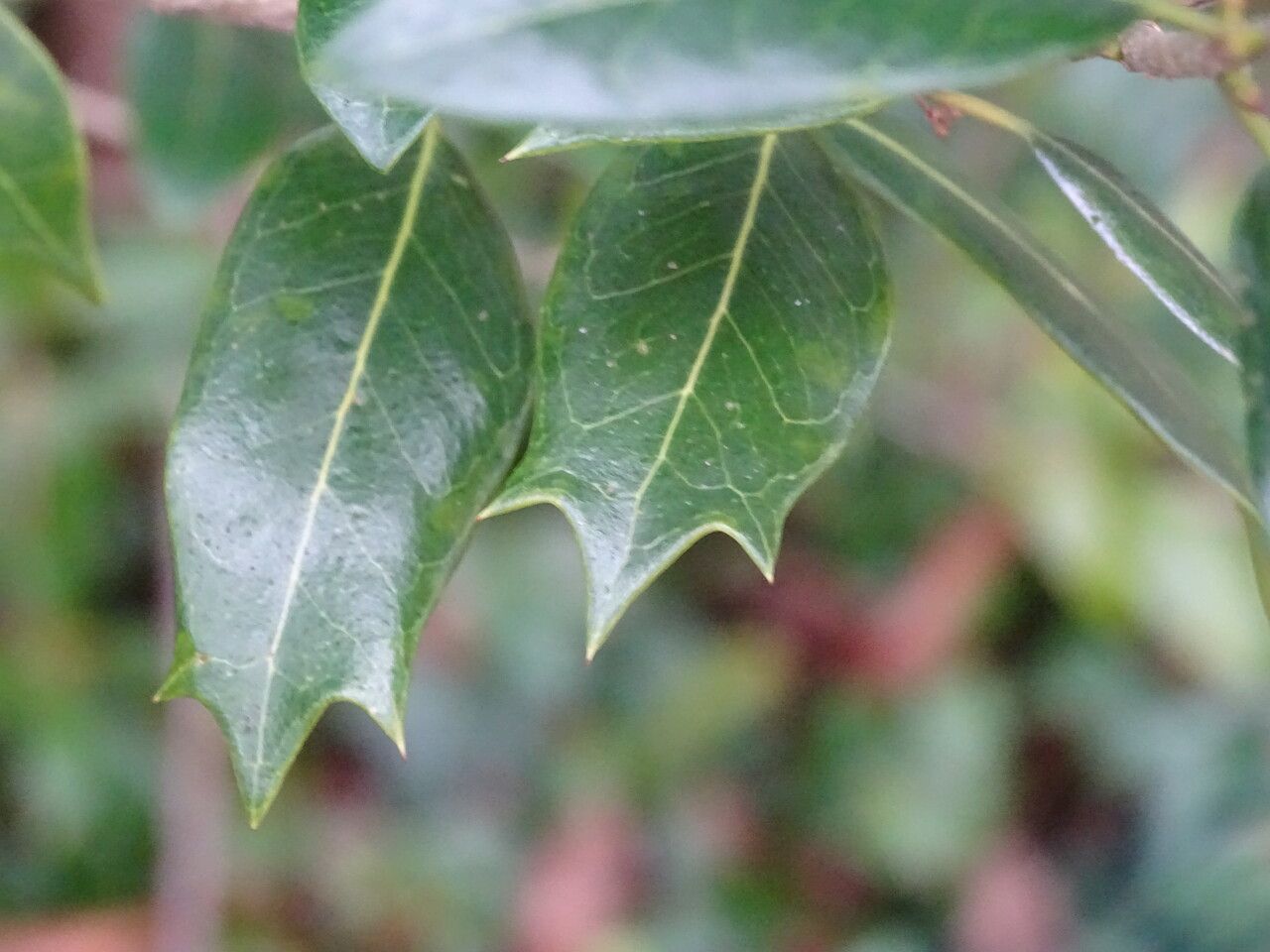
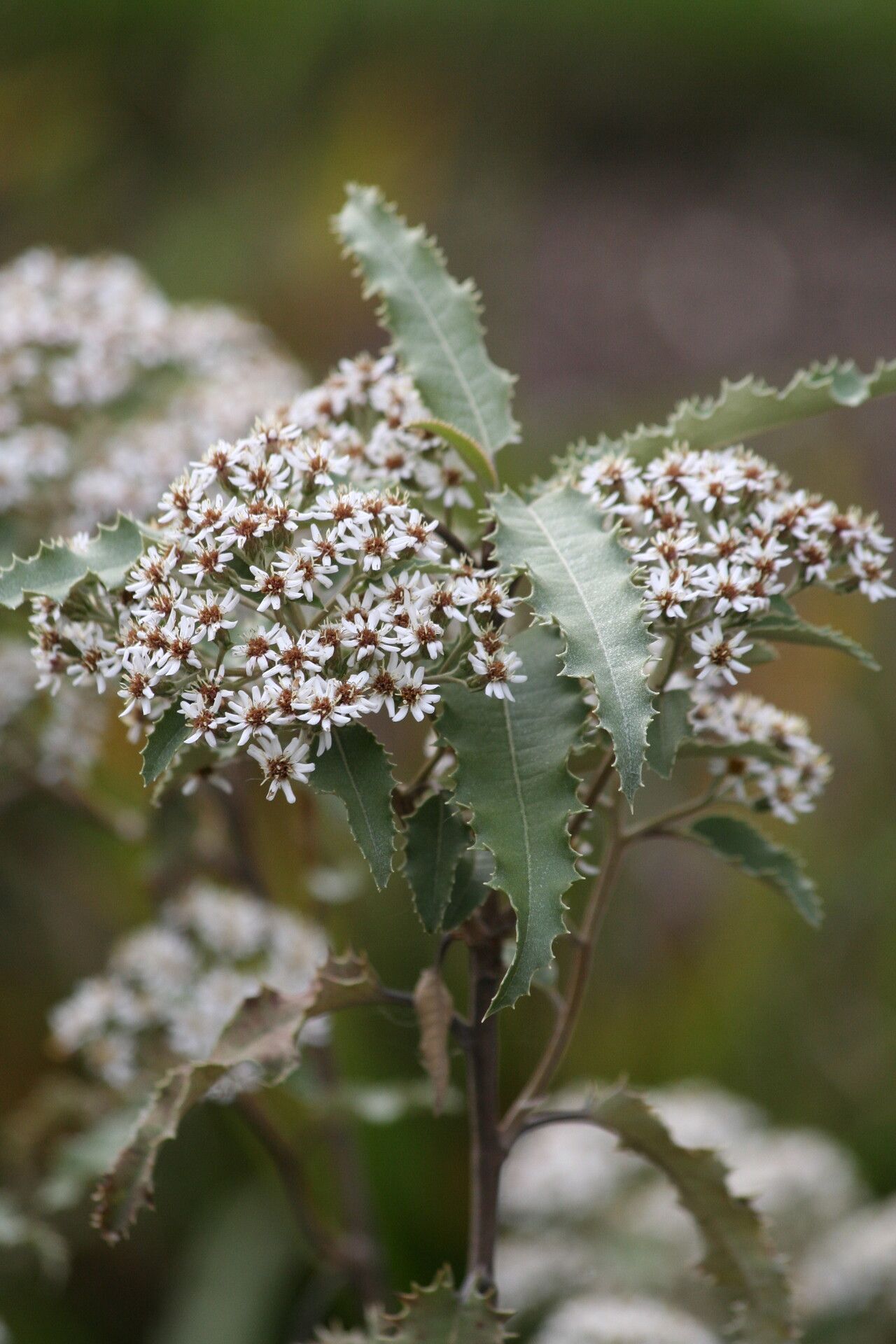
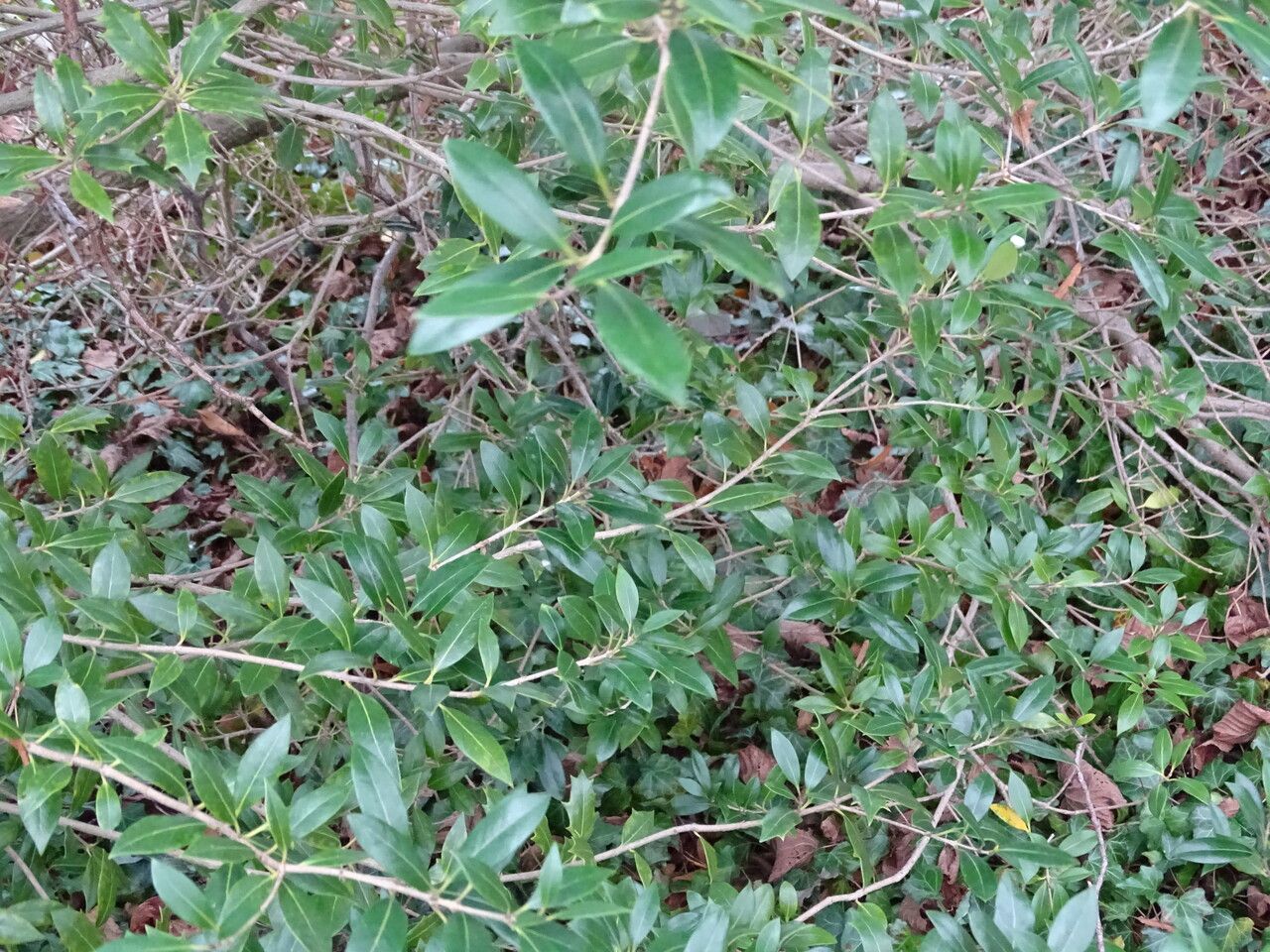
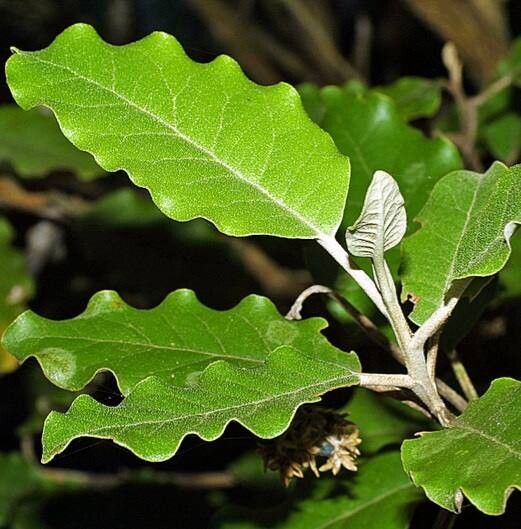
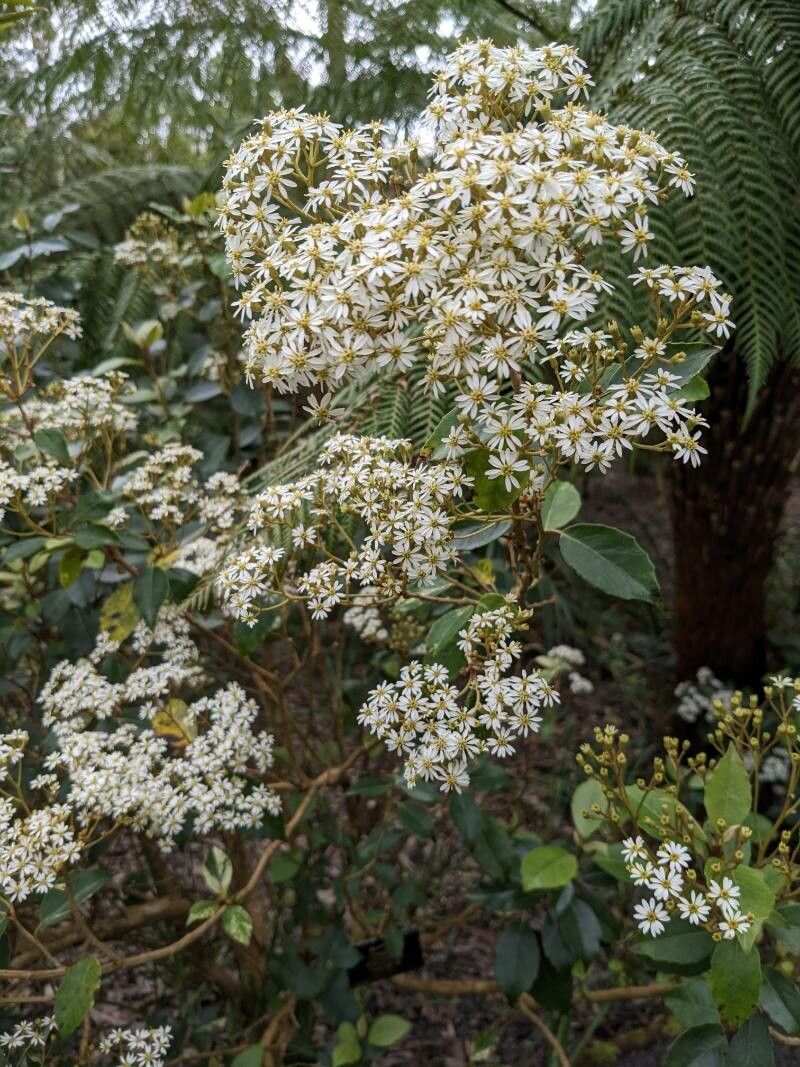
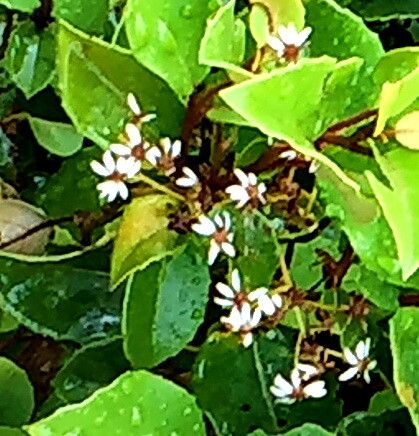
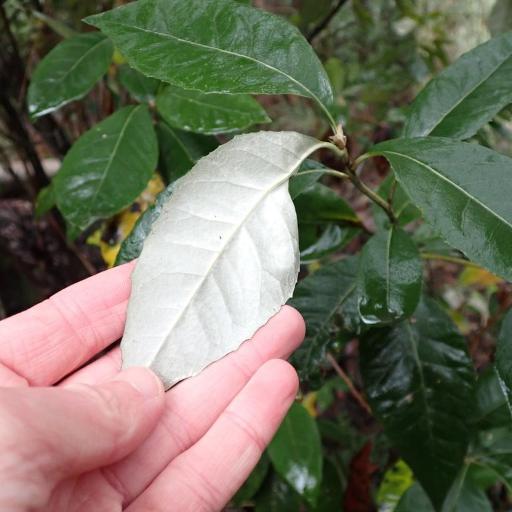
Olearia ilicifolia is a shrub or small tree endemic to New Zealand. Common names include Māori-holly, mountain holly, hakeke or hākēkeke and New Zealand holly. It is a spreading shrub or small tree of the family Asteraceae, and has largely serrated and undulating grey-green leaves. It is closely related to the sub-alpine Olearia macrodonta, with which it shares the names mountain holly and New Zealand holly, however it is much more common than Olearia macrodonta. It is found in lowland and sub-alpine forests from sea level to 1,200 metres (3,900 ft).
Mountain holly resists disease well and is typically not susceptible to illnesses. With respect to care, this plant is fairly low-maintenance. Planted outdoors, it needs little watering, and larger specimens generally do not require pruning. Smaller specimens, however, should be pruned after they finish blooming. Mountain holly is suitable for anyone with an outdoor area, such as a garden or a deck, and does not demand extensive plant-care experience.
How to keep Olearia Ilicifolia.
Light
Mountain holly naturally occurs in habitats like forest understories or rocky sites, where it is exposed to natural shade. It prefers partial sun but can tolerate full sun or full shade, showing its versatile and hardy character.
Water
Mountain holly, native to moderate moisture environments, flourishes with a balanced watering schedule and can withstand short dry periods. It prefers the soil to dry out slightly between waterings, typically requiring watering every 1-2 weeks. Natural rainfall in temperate regions often reduces the need for additional irrigation.
Temperature
Mountain holly is highly adaptable to a variety of climate conditions, whether hot summers or cold winters. Still, it has a preferred temperature range for healthy growth. If temperatures rise too far, the plant is vulnerable to heat and humidity stress, which can cause it to die. In locations where temperatures approach the lower boundary of its cold tolerance, it is necessary to provide insulation to protect the plant.
Fertilizer
Proper timing matters for fertilizing Mountain holly. Apply fertilizer in early spring and continue monthly until early summer. Fertilizer encourages attractive blooms and provides energy during both dormant and active growth stages.
Pruning
Mountain holly, which is native to alpine environments, features holly-like leaves and daisy-like flowers. For optimal growth, it is best to prune the plant from early to late winter. This helps to remove dead branches and shape the plant, supporting healthy regrowth in the spring. Light trimming improves airflow, reduces density, encourages vigorous flowering, and minimizes the risk of disease.
Botanical profile.
- Plant Type
- Tree, Shrub
- Life Cycle
- Perennial
- Genus
- Olearia
- Family
- Asteraceae
- Hardiness Zone
- 7-10
- Mature Height
- 2.13 m to 3.96 m
- Mature Spread
- 1.52 m to 3.05 m
- Leaf Color
- Dark Green, Olive Drab
- Leaf Type
- Evergreen
- Flower Color
- White
- Flower Size
- 2.03 cm to 3.05 cm
- Bloom Time
- Winter
- Planting Time
- Spring, Summer
- Harvest Time
- Late winter, Early spring, Mid spring
- Native Area
- New Zealand
Other names.