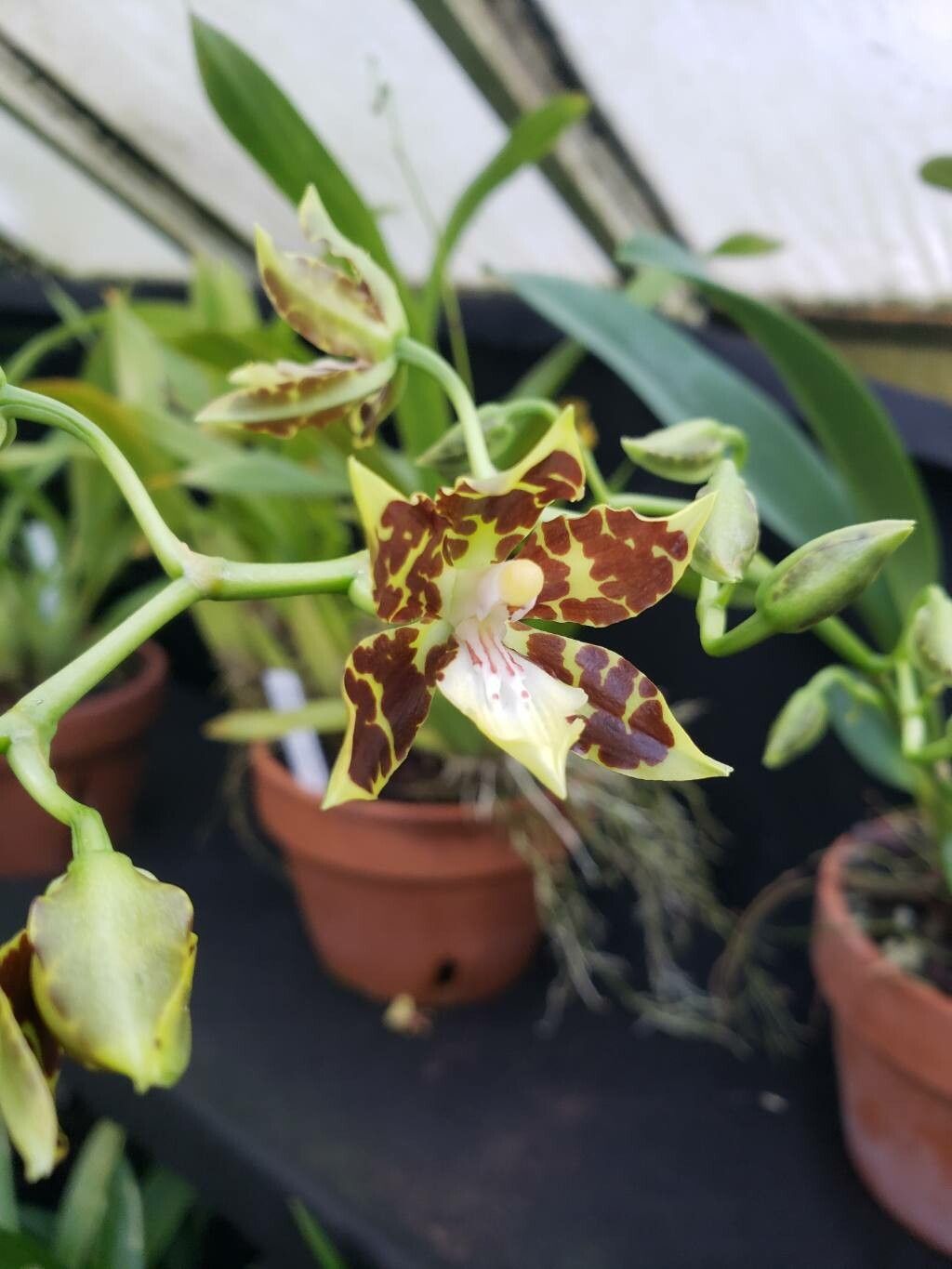
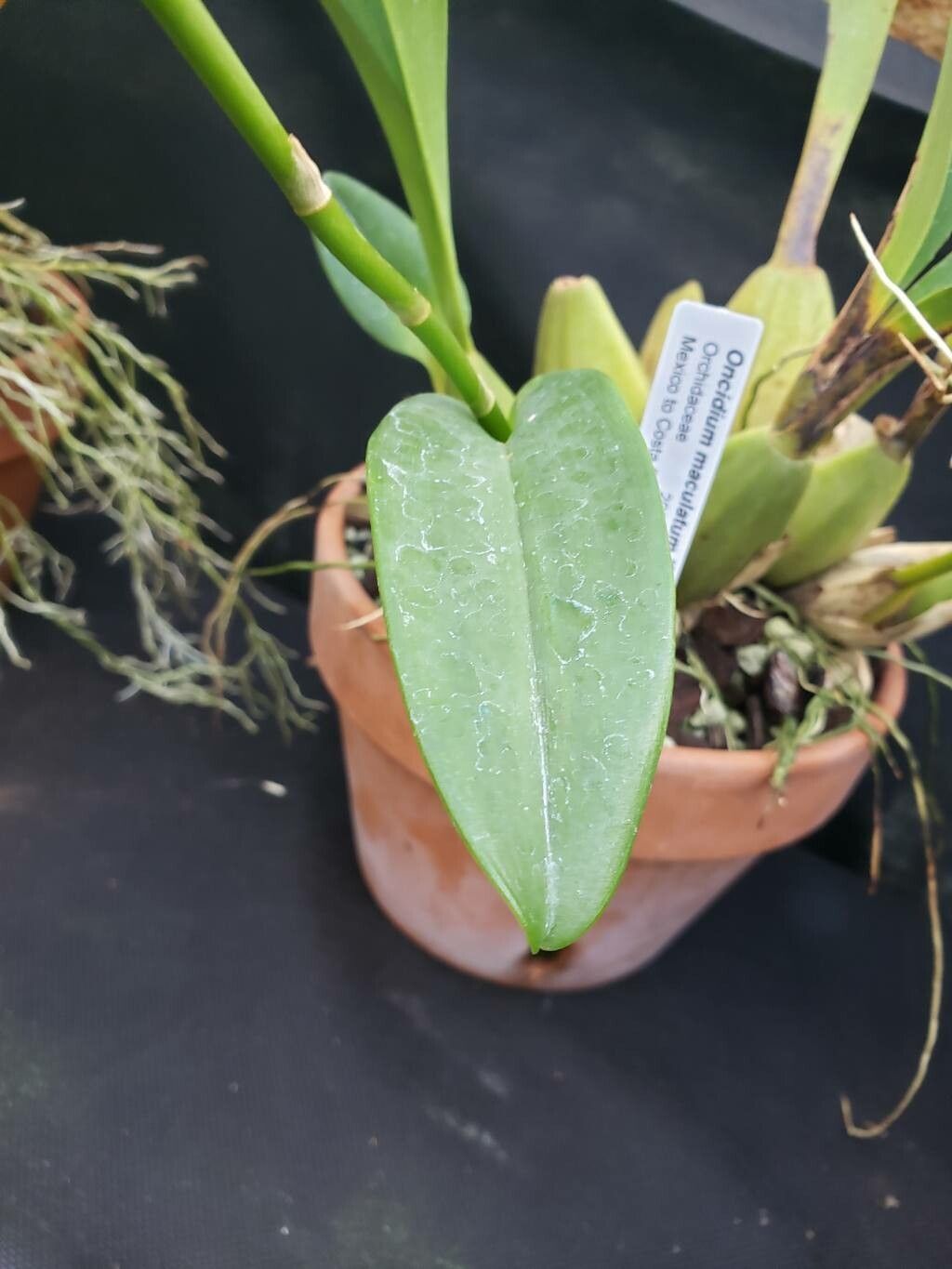
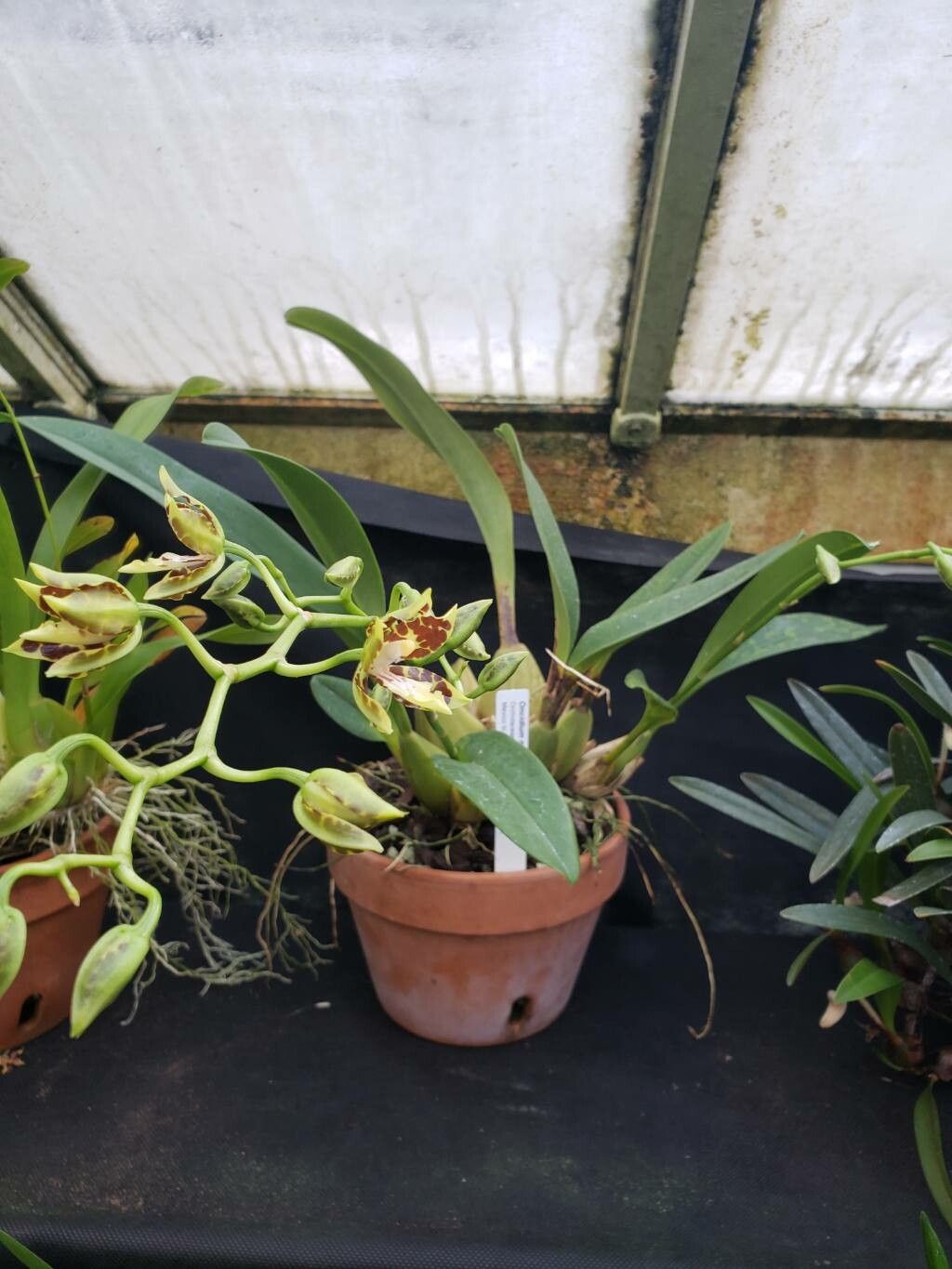
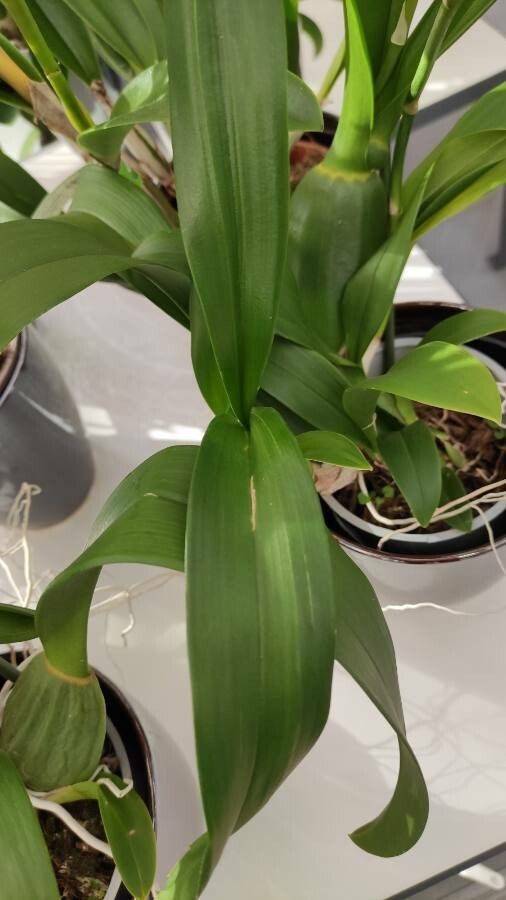
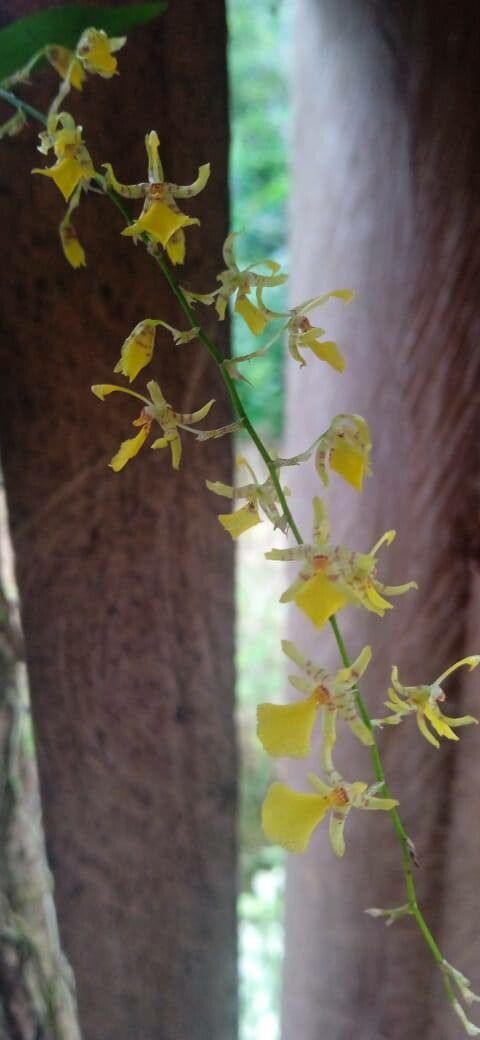
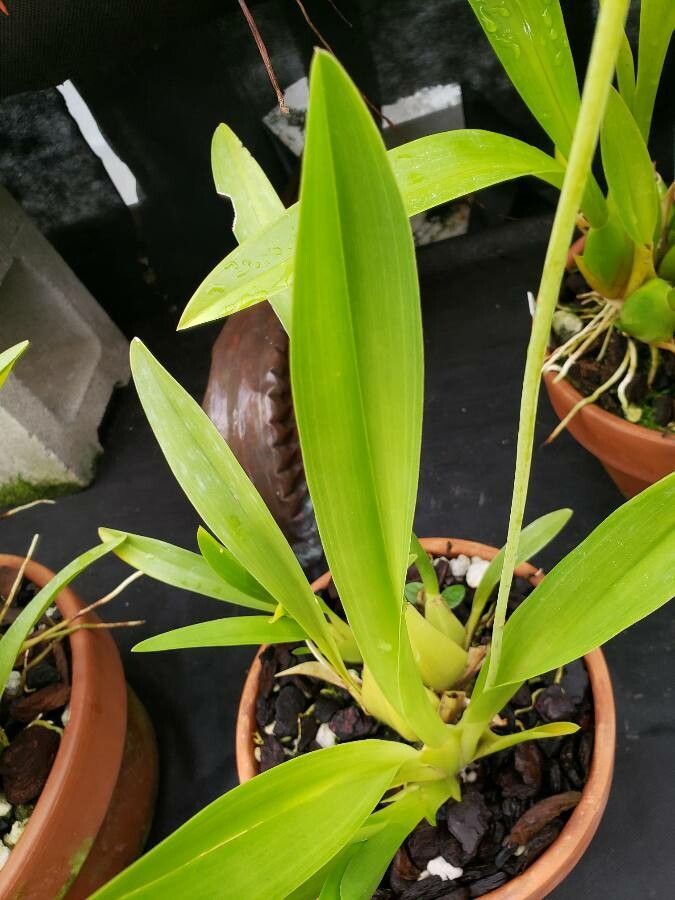
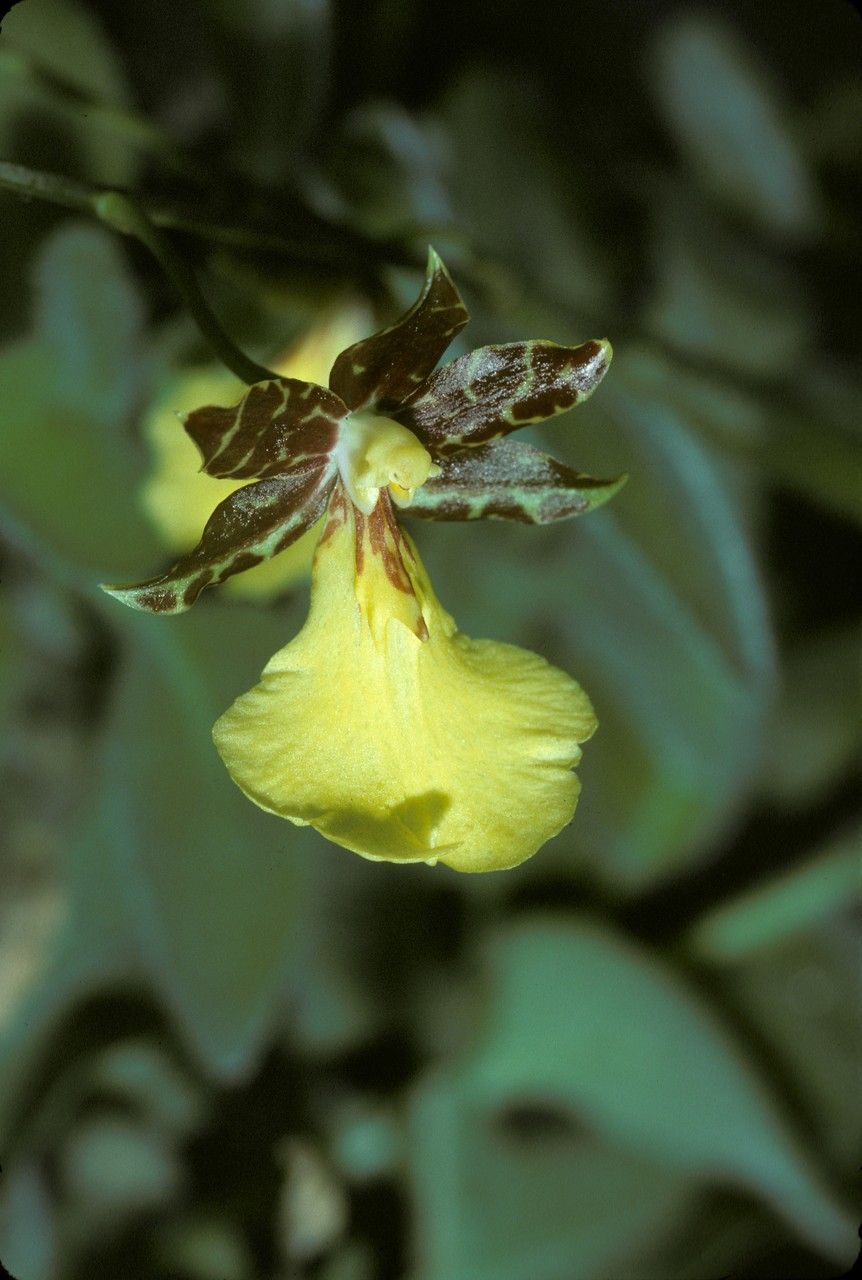
Oncidium maculatum is a species of orchid occurring from Mexico to Central America. The orchid has yellow-green flowers.
Cape sable orchid is generally resistant to disease and is affected by relatively few insect pests. Its care is considered difficult because it requires a high-humidity yet well-ventilated environment with few harmful pathogens. Too much watering can cause root rot. While anyone can grow Cape sable orchid, keeping it healthy and getting it to flower again requires more growing experience.
How to keep Oncidium Maculatum.
Light
The Cape sable orchid naturally occurs in habitats like forest understories and rocky sites where it gets natural shade. It prefers partial sun but can tolerate both full sun and deep shade, showing its adaptable, hardy nature.
Water
Oncidium maculatum thrives with adequate moisture but can tolerate occasional dry spells. To maintain the right moisture levels, water the plant weekly during the summer and every 10 days during the fall and winter. In dry weather, misting can help increase humidity. Use neutral pH water by allowing tap or rainwater to sit for a while, which helps release dissolved substances.
Temperature
The Cape Sable orchid prefers warm conditions. It grows best at moderately high temperatures that are not overly hot or humid. Sunlight helps warm the plant and encourages flowering. However, prolonged direct sun in summer can cause sunburn, so it’s important to limit the amount of sunlight it receives during that season. The plant is generally intolerant of cold, so it needs adequate protection and warmer conditions in winter to avoid freezing.
Fertilizer
Proper fertilization is essential for the health and appearance of the Cape sable orchid. Fertilize the Cape sable orchid in summer, repeating the treatment monthly throughout the season. Nutrients supply the energy for growth and support the plant's parts. Fertilizing improves the Cape sable orchid's flower display, ensuring the best blooms.
Pruning
Oncidium maculatum boasts vibrant flowers with yellow and brown speckles. To keep the plant healthy, it is important to carefully prune it in early spring. This involves removing dead branches and spent flower spikes, which helps improve air circulation, encourages blooming, and prevents disease. Always use sterilized tools to ensure the plant's health, and refer to reliable horticultural sources for detailed care tips.
Pot & Repot
When repotting a Cape sable orchid, select a pot that is slightly larger and has good drainage, ideally a clear orchid pot. Use an orchid-specific, well-draining mix that includes bark or moss. Carefully clean the roots and remove any that are dead or rotting. Repot after the plant has finished flowering, usually in spring or fall, water well, and position it in bright, indirect light. Once repotted, avoid disturbing the roots.
Botanical profile.
- Plant Type
- Herb
- Life Cycle
- Perennial
- Genus
- Oncidium
- Family
- Orchidaceae
- Hardiness Zone
- 10-12
- Mature Height
- 20 cm to 30 cm
- Mature Spread
- 15 cm to 25 cm
- Leaf Color
- Dark Green
- Leaf Type
- Evergreen
- Flower Color
- Yellow, Brown
- Flower Size
- 5.08 cm to 6.35 cm
- Bloom Time
- Summer, Early fall, Mid fall
- Planting Time
- Spring, Summer
- Harvest Time
- Fall, Early winter, Mid winter
- Native Area
- Colombia, Bahamas, Belize, Cuba, Honduras, Mexico, Guatemala, Venezuela, Guyana, Brazil, Ecuador, Jamaica