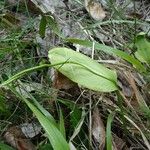
Ophioglossum vulgatum
Adder's-tongue · English adder's-tongue · Southern adder's-tongue · Christ's Spear · Serpent's Tongue
Description
Source: leafsnapOphioglossum vulgatum, commonly known as adder's-tongue, southern adders-tongue or adders-tongue fern, is a species of fern in the family Ophioglossaceae.The adder’s tongue fern is generally believed to have the largest number of chromosomes with 1262, compared to the human’s 46.
Care Guide
💧 Water
The Southern Adder's-tongue thrives in consistently moist environments, preferring soil that remains evenly damp. It struggles in conditions of both drought and waterlogging. To keep it properly hydrated, it requires weekly watering. As an herbaceous perennial, it is important to monitor it closely during dry spells to ensure healthy growth in its outdoor environment.
How should I water my Southern Adder's-tongue?
To ensure proper watering for the Southern Adder's-tongue plant, it is recommended to use filtered water at room temperature. Tap water may contain harmful particles, so filtered water is preferred. The plant is accustomed to a warm environment, so it is important to avoid using cold water, as it may shock the plant. Additionally, overhead watering should be avoided as it can lead to foliage issues. Instead, it is best to water the plant by applying filtered room temperature water directly to the soil until it is fully soaked. This helps moisten the roots and allows them to spread and gather necessary nutrients in the soil.
What should I do if I give too much water or not enough water to my Southern Adder's-tongue?
Both overwatering and underwatering can harm your Southern Adder's-tongue plant, but overwatering is more commonly a problem. If this species gets too much water, its stems and leaves may wilt and turn yellow. Overwatering for a long time may also cause diseases like root rot, mold, and mildew, which can be fatal to your plant. Underwatering is less likely for the Southern Adder's-tongue since it tolerates drought quite well. However, it can still happen, and in that case, the leaves will become brittle and brown. It's important to quickly recognize signs of overwatering while taking care of your Southern Adder's-tongue plant. Some diseases resulting from overwatering, like root rot, may not be reversible if you delay addressing them. If you notice early signs of overwatering, reduce your watering immediately. Additionally, check the quality of the soil the plant grows in. If the soil doesn't drain properly, replace it with a loose, well-draining potting mix. Conversely, if your Southern Adder's-tongue shows signs of not receiving enough water, simply water it more regularly until those signs improve.
How frequently do I need to water my Southern Adder's-tongue plant?
If your Southern Adder's-tongue plant is in a pot, the most accurate way to determine if it needs water is to check the soil by sticking your finger into it. When you notice that the top two to three inches of soil are dry, it is time to water it. If you have planted your Southern Adder's-tongue outdoors in the ground, you can use a similar method to test the soil. Again, if you find that the top few inches of soil have dried out, it is time to water it. During the spring and early fall, following this method would typically mean watering the plant about once a week. However, in extremely hot weather, you may need to increase the watering frequency to about twice a week or even more. It's worth noting that mature and well-established Southern Adder's-tongue plants have an impressive ability to tolerate drought.
How much water does my Southern Adder's-tongue plant need?
To properly water your Southern Adder's-tongue plant, don't be conservative with the amount of water you give. Make sure the top two to three inches of soil are dry before watering, and then give the plant a thorough watering, ensuring that the soil is soaked entirely. The water should be enough to cause excess water to flow out of the drainage holes at the bottom of the pot. If you don't see any excess water draining, you may have underwatered the plant. However, be cautious not to let the water accumulate in the soil, as this can be harmful to the plant. On the other hand, if the water doesn't drain properly from the pot, it may indicate that the soil is not draining well, which is not good for the plant's health. If the plant is outside, it only needs about 1 inch of rain per week.
How do I water my Southern Adder's-tongue as it grows?
The water needs of the Southern Adder's-tongue vary depending on its growth stages. When the plant is in its early years or has been recently transplanted, it requires more water than usual. This is because during these stages, the plant focuses on growing new roots to support future growth. These roots perform best with slightly more moisture. However, as the plant matures over a few seasons, it will require less water. Another growth stage that requires more water is during the bloom period, as flower development relies on a significant amount of moisture.
☀️ Light Full sun
Optimal light conditions for the southern Adder's-tongue consist of direct, unfiltered sunlight for most of the day, which enables it to do well. It can tolerate some shade, but prolonged low-light conditions can inhibit its growth. Excessive light is generally not a problem, since it originates from open habitats.
What are the sunlight requirements for Southern Adder's-tongue?
Southern Adder's-tongue thrives in full sun or partial sun conditions, benefiting significantly from exposure to unfiltered sunlight for the majority of the day. Full sun is classified as above 6 hours of sunlight, while partial sun is about 3-6 hours of sunlight. This plant can tolerate some shade, but its growth might be stunted if it experiences prolonged periods of low light. Although overexposure is not a huge concern for this plant, because it is native to open habitats, ensuring it receives the right amount of sunlight is crucial for its optimal growth.
How can artificial lighting support the growth of indoor Southern Adder's-tongue plants?
Indoor Southern Adder's-tongue plants require sufficient lighting to grow optimally, particularly when natural sunlight is inadequate, such as during winter or within less sunny spaces. Artificial lighting serves as a crucial alternative, promoting healthier and faster growth. LED lights are recommended for their ability to be customized to provide specific wavelengths needed by plants. Full sun plants need 30-50 W/sq ft, partial sun plants 20-30 W/sq ft, and full shade plants 10-20 W/sq ft of artificial light. The light source should be placed 12-36 inches above the plant, mimicking natural sunlight conditions. Also, it's important to provide plants with 8-12 hours of artificial light each day to match their natural light requirements.
What are some common symptoms of light deficiency in Southern Adder's-tongue?
Inadequate lighting can lead to several symptoms in Southern Adder's-tongue, including smaller new leaves, leggy or sparse growth, faster leaf drop, slower or ceased new growth, lighter-colored new leaves, chlorosis, sunscald, leaf curling, wilting, and leaf scorching. These symptoms indicate various stress responses to insufficient light, such as stunted growth, weak structure, early loss of leaves to conserve resources, a reduction in chlorophyll and essential nutrients, damage from intense sunlight exposure, and decreased photosynthetic capacity.
How can I address insufficient sunlight for my Southern Adder's-tongue plants?
To address insufficient sunlight for Southern Adder's-tongue plants, consider gradually moving them to a sunnier location until they receive at least 6 hours of direct sunlight daily. For indoor plants, utilizing a south-facing window and keeping curtains open during the day maximizes sunlight exposure. If the plant is large or not easily movable, using artificial light, such as keeping a desk or ceiling lamp on for at least 8 hours daily, or investing in professional plant grow lights can provide ample light. Outdoor plants should be moved carefully to avoid sunburn. Reducing obstructions, such as trimming branches and leaves of nearby trees, or transplanting smaller plants to areas with ample sunlight and good drainage can also enhance light availability.
🌡️ Temperature 5–32.2°C
Southern Adder's-tongue comes from cooler environments and only marginally tolerates temperatures between 41 and 89.6 °F (5 to 32 ℃). It benefits from a slight temperature drop in winter while receiving adequate warmth during the other seasons.
What is the optimal temperature range for Southern Adder's-tongue?
Southern Adder's-tongue flourishes in cooler environments, with an optimal temperature range between 41°F (5°C) and 89.6°F (32°C). During winter, it benefits from a slight temperature reduction, while maintaining a decent level of warmth in other seasons. Despite its strong cold resistance, temperatures dropping below -30°C require cold protection measures such as covering the plant with soil or straw. To prepare for winter, watering the plant abundantly before the first freeze is recommended to keep the soil moist, aiding in drought prevention during winter and early spring.
How does Southern Adder's-tongue handle low temperatures?
Southern Adder's-tongue is notably cold-tolerant, thriving best when temperatures are kept above 5°C. It should remain above -25°C during the winter months. In events where temperatures fall below -30°C, the plant might not show immediate damage but can experience reduced or absent sprouting in spring. To mitigate this, removing parts that have failed to sprout in spring is advised.
What should be done if Southern Adder's-tongue experiences high temperatures?
During the summer, it's crucial to keep Southern Adder's-tongue below 32°C. Exposure to temperatures above 35°C can lead to the plant's leaves becoming lighter, curling, sunburned, or in severe cases, wilting and drying out entirely. To counteract damage from high temperatures, trim away sunburned and dried parts of the plant. Relocating the plant to a shaded area or using a shade cloth can protect it from direct midday and afternoon sun. Additionally, watering the plant in the morning and evening helps to maintain soil moisture and protect against heat stress.
💨 Humidity normal (40-60%)
This plant will thrive in moderate humidity, which is probably the level in your home. However, misting it a few times a week can be very beneficial. Make sure the room has good ventilation.
🪴 Soil 6-7
🌱 Fertilizer
One fertilizer application in spring is generally enough for Southern Adder's-tongue, though repeated feedings can boost growth. Apply fertilizer about every month to month and a half. Feeding improves the leaves' appearance and function, helping maintain even color and a healthy texture. It also promotes root development and nutrient uptake for the plant's long-term health.
🪴 Pot & Repot
✂️ Pruning
To care for the southern Adder's-tongue, follow these steps for optimal growth. In early to late spring, during its active growing phase, prune any damaged fronds. Use clean, sharp scissors to make precise cuts and be careful not to over-prune. This process improves air circulation, strengthens disease resistance, and encourages vigorous growth, resulting in a healthier garden specimen.
🌿 Propagating
🐛 Diseases & pets
☠️ Toxicity
Characteristics
- Plant Type
- Herb
- Life Cycle
- Perennial
- Genus
- Ophioglossum
- Family
- Ophioglossaceae
- Hardiness Zone
- 4-8
- Mature Height
- 20 cm
- Mature Spread
- 10 cm
- Leaf Color
- Green
- Leaf Type
- Deciduous
- Flower Color
- Yellow, Green
- Planting Time
- Summer, Autumn
- Harvest Time
- Late spring, Summer