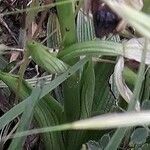
Ophrys bertolonii
Bertoloni's Bee Orchid · Bertoloni's Ophrys
Description
Source: leafsnapOphrys bertolonii, commonly known as Bertoloni's bee orchid, is a species of orchid native to the western and central Mediterranean (Spain, France, Corsica, Sardinia, Sicily, mainland Italy, Albania, and Croatia).
Care Guide
💧 Water
Bertoloni's bee orchid, native to Mediterranean climates, thrives in environments with dry summers and wet winters. It benefits from a weekly watering schedule that allows the soil to dry out between waterings. When grown outdoors, this orchid flourishes with natural rainfall, growing actively during the wetter periods and conserving energy during droughts.
How should I water my Bertoloni's bee orchid?
Depending on whether your Bertoloni's bee orchid is in an active growth phase or not, the way you water it will vary. During active growth, you should water the soil and occasionally water overhead to allow the plant to absorb moisture through its leaves if the weather is warm. However, in winter or cool and wet weather, it is better to stick to watering the soil directly without overhead watering. You can tell if your Bertoloni's bee orchid needs more water by checking if its roots and leaves are dry, thin, or discolored. If the plant receives too much water, it will appear mushy and limp. When growing this orchid, make sure to use a pot with excellent drainage and a suitable potting mix. During the growing season, you will need to water the plant multiple times per week, ensuring that the water drains quickly through the growing medium to avoid standing water. The frequency and amount of water will depend on the size of the pot. Larger pots will require less frequent watering, while smaller pots will need more regular watering. For optimal results, it is recommended to use rainwater or distilled water for your Bertoloni's bee orchid, and it is best to use water that matches the temperature of the air as closely as possible.
What should I do if I give my Bertoloni's bee orchid too much or too little water?
Overwatering your Bertoloni's bee orchid can be a common mistake that leads to its death. While these plants do need regular watering during active growth, they also require well-draining soil. If the plant gets too much water, it will become mushy and develop root rot. In such cases, you can use sterile pruning shears to remove any rotting roots. Afterward, you should repot the orchid in a container that allows for proper drainage and fill it with a fast-draining potting mix. Avoid excessive repotting, as Bertoloni's bee orchids don't respond well to it. It's important to find the right balance in watering. If the orchid is underwatered, it will shrivel and feel dry to the touch. In this case, you should increase the frequency of watering as the soil may be drying out quicker than expected.
How frequently should I water my Bertoloni's bee orchid?
To properly care for your Bertoloni's bee orchid, keep in mind that its active growth stage is in the spring and summer. During this time, it's best to water the orchid once or twice per week. In periods of hot and dry weather, increase the watering frequency to three times per week or more. In the winter, the orchid still requires watering, but not as much as in the warmer months. A frequency of two to three times per month should suffice during the coldest months. However, if you keep the orchid indoors, be aware that indoor locations can cause the soil to dry out faster than usual. This means you may need to increase the number of monthly waterings. To transition from the summer watering schedule to the reduced winter watering, gradually decrease the frequency of watering during the fall season.
What do I need to think about when watering my Bertoloni's bee orchid at different times of the year and when it is growing?
When planning your watering schedule for the Bertoloni's bee orchid, it is important to consider two growth phases. The first phase is the active growth period, which occurs in spring and summer. During this time, the plant should be watered multiple times per week. The second phase is the rest period, which takes place in winter and lasts for about two to three months. During this period, the plant requires less water and fertilization. Watering once or twice per month is sufficient. To transition into winter, gradually reduce watering frequency from multiple times per week in the fall.
What's the best way to water my Bertoloni's bee orchid if I keep it inside?
The Bertoloni's bee orchid prefers a relatively humid environment, which is not typically found indoors. This can lead to faster drying out of the plant and its soil. To prevent this, consider placing a humidifier in the room where you grow the orchid and watering it more often. However, it's important to also provide adequate air circulation to prevent excessive moisture and diseases. Including a fan in the room can help maintain proper air circulation.
☀️ Light Full sun
Bertoloni's bee orchid does best with plentiful light, though it tolerates moderate sun. A sufficient amount of sunshine is vital for its growth, health, and flowering. Its native habitat indicates it can adapt to different levels of sun exposure. Excessive or insufficient sunlight can limit its growth potential and harm its overall well-being.
What are the sunlight requirements for Bertoloni's bee orchid?
Bertoloni's bee orchid requires full sun, meaning it should receive above 6 hours of sunlight daily, but it can also endure partial sun with about 3-6 hours of sunlight. This adaptability suggests that while the orchid thrives with an abundance of light, it can still grow under moderate sun exposure. Its original habitat indicates that it's capable of adapting to varied levels of sunlight, although too much or too little sunlight may negatively impact its growth and well-being. Observing how sunlight moves through your garden and choosing locations that offer a balance of light and shade can significantly contribute to the happiness and health of your plants.
What artificial lighting requirements do indoor Bertoloni's bee orchids have?
Indoor Bertoloni's bee orchids require adequate lighting, which can be provided by artificial lights, especially during winter or in less sunny spaces. LED lights are recommended because they can be customized to provide specific wavelengths needed by plants. Full sun plants need 30-50W/sq ft of artificial light, partial sun plants require 20-30W/sq ft, and full shade plants need 10-20W/sq ft. The light source should be placed 12-36 inches above the plant to mimic natural sunlight, and plants generally require 8-12 hours of light per day. Adjusting these factors ensures optimal growth and health for your orchid.
What are the symptoms of incorrect sunlight exposure in Bertoloni's bee orchid?
Symptoms of incorrect sunlight exposure in Bertoloni's bee orchid include small leaves, leggy or sparse growth, faster leaf drop, slower or no new growth, lighter-colored new leaves, chlorosis, sunscald, leaf curling, wilting, and leaf scorching. These symptoms may indicate too little or too much sunlight. For instance, small leaves and leggy growth can occur in low light conditions, while chlorosis and leaf scorching are more common with excessive sunlight. Monitoring these symptoms helps in adjusting your plant's exposure to sunlight to ensure its health and growth.
How can I address sunlight exposure issues with Bertoloni's bee orchid?
To address sunlight exposure issues with Bertoloni's bee orchid, consider these solutions: For indoor plants, gradually move them to sunnier locations until they receive at least 6 hours of direct sunlight daily. Use a south-facing window for natural light or artificial lighting if the plant is not easily movable. For outdoor plants, also move them gradually to sunnier spots to avoid shock and sunburn. If sunlight is obstructed by trees or buildings, you may need to prune obstructions or transplant the orchid to a sunnier location, particularly during its dormant period for minimal stress. Implementing these measures can help overcome sunlight exposure problems, leading to a healthier plant.
🌡️ Temperature 10–35°C
Bertoloni's bee orchid is native to temperate regions where temperatures range from 50 to 95 °F (10 to 35 °C). The plant's adaptability means specific heat adjustments are seldom required, although extreme temperatures should be avoided.
What is the native climate for Bertoloni's bee orchid?
Bertoloni's bee orchid is native to temperate climates with temperatures ranging from 50 to 95°F (10 to 35°C). This plant is quite versatile and can usually adapt to its environment without the need for specific heat adjustments. However, it is important to avoid exposing the plant to extreme temperatures to ensure its health and growth.
How does Bertoloni's bee orchid handle cold temperatures?
Bertoloni's bee orchid possesses strong cold resistance, making special frost protection measures generally unnecessary during winter. Nonetheless, if temperatures are forecasted to decline below -25°C, it's crucial to protect the plant from the cold. Protection can be provided by covering the orchid with soil or straw. Additionally, it's advisable to water the plant amply before the first autumn freeze, ensuring the soil is moist when it freezes. This proactive step helps prevent the plant from experiencing drought and water scarcity during the winter and early spring.
What should be done if the temperature falls below -25°C?
If temperatures drop below -25°C, Bertoloni's bee orchid may not show immediate signs of distress, but it may result in reduced or even absent sprouting in the spring. To manage this, it's recommended to remove any parts of the plant in spring that have failed to sprout. This will help maintain the health and appearance of your orchid.
How does Bertoloni's bee orchid react to high temperatures?
In the summer, it's essential to ensure the orchid is not exposed to temperatures above 35°C. Temperatures exceeding 38°C can cause the leaves to lighten in color, curl, and become susceptible to sunburn. In severe cases, the plant may wilt and dry out completely. To mitigate these issues, trim away any sunburned or dried parts of the plant, move it to a shaded location away from direct midday and afternoon sunlight, or use a shade cloth. Additionally, watering the orchid in the morning and evening can help keep the soil adequately moist.
💨 Humidity
🪴 Soil 5-6
🌱 Fertilizer
For Bertoloni's bee orchid, the ideal time to fertilize is in early spring while the flowers are developing. The proper fertilizer promotes better blooms and helps Bertoloni's bee orchid produce attractive flowers. Fertilizing in early spring ensures high-quality flowers during the season and supplies energy for dormant growth phases.
🪴 Pot & Repot
✂️ Pruning
The Bertoloni's bee orchid is a unique orchid species known for its bee-like appearance. To maintain its health, it's best to prune the plant from early to late spring after it has finished blooming. During this time, remove any spent flower spikes and dead foliage. Light pruning helps improve air circulation and reduces the risk of fungal infections, promoting healthier growth. Be careful not to over-prune, as the orchid has limited growth points.
🌿 Propagating
🐛 Diseases & pets
☠️ Toxicity
Characteristics
- Plant Type
- Herb
- Life Cycle
- Perennial
- Genus
- Ophrys
- Family
- Orchidaceae
- Hardiness Zone
- 6-9
- Mature Height
- 46 cm
- Mature Spread
- 10 cm to 20 cm
- Leaf Color
- Green, Dark Green
- Leaf Type
- Semi-evergreen
- Flower Color
- Pink
- Flower Size
- 2.54 cm
- Bloom Time
- Mid spring, Late spring
- Planting Time
- Spring, Summer
- Harvest Time
- Early summer, Mid summer
- Native Area
- Italy, Albania, Greece