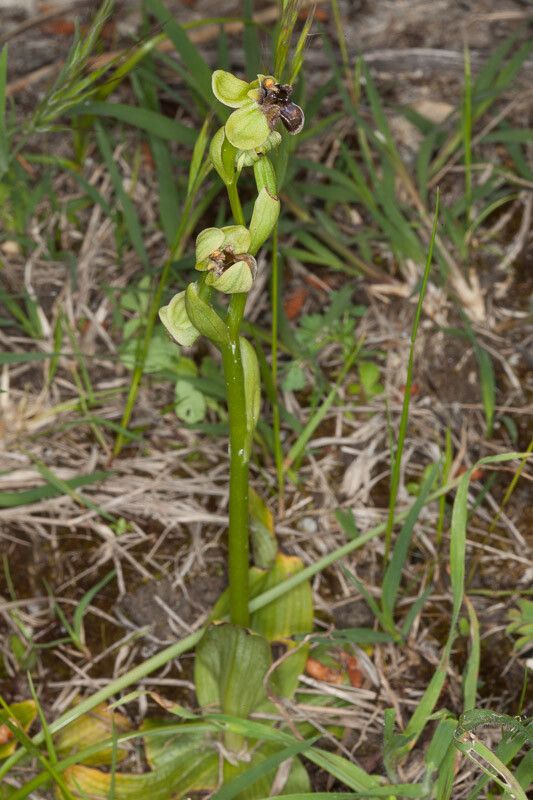
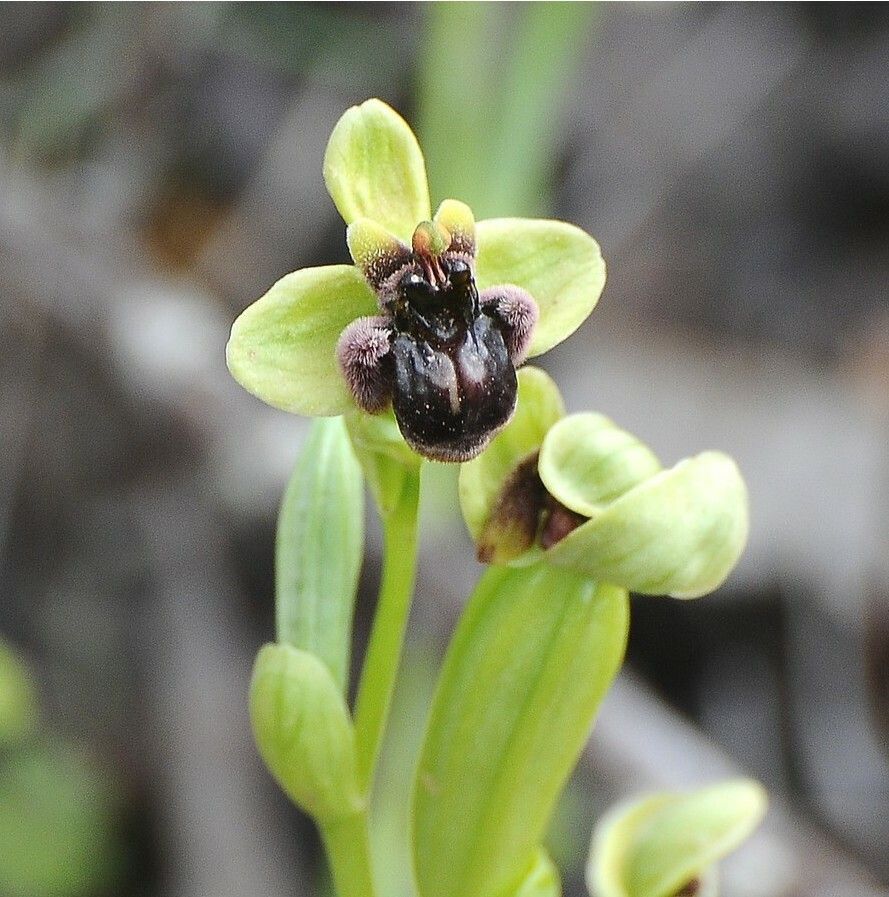
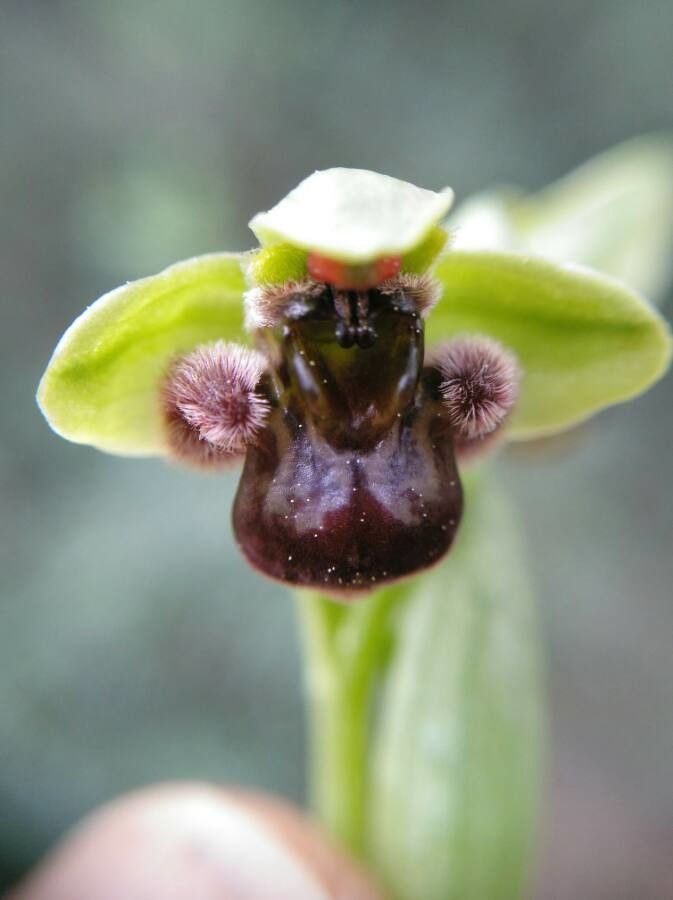
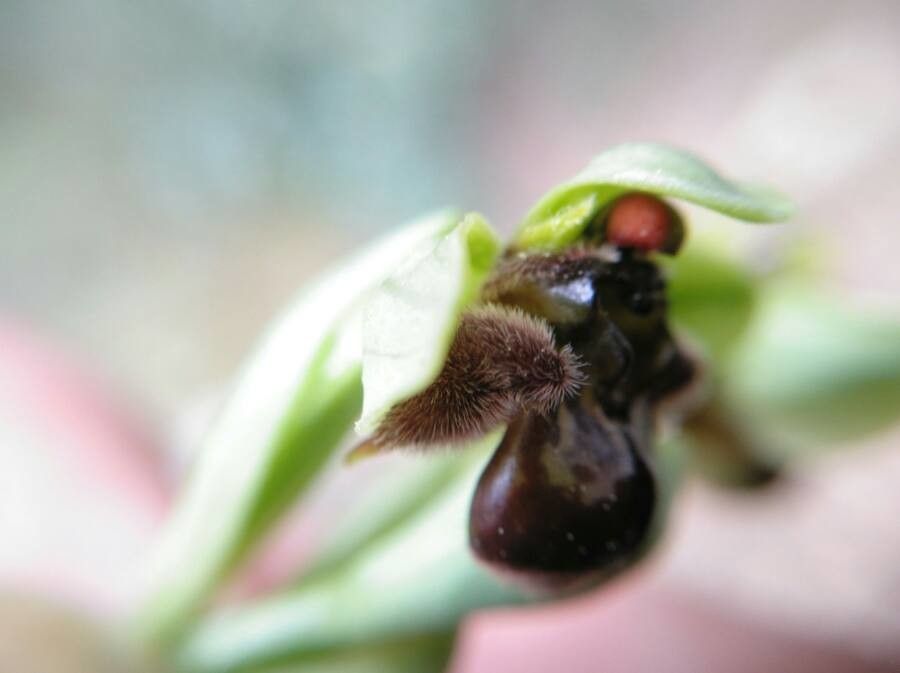
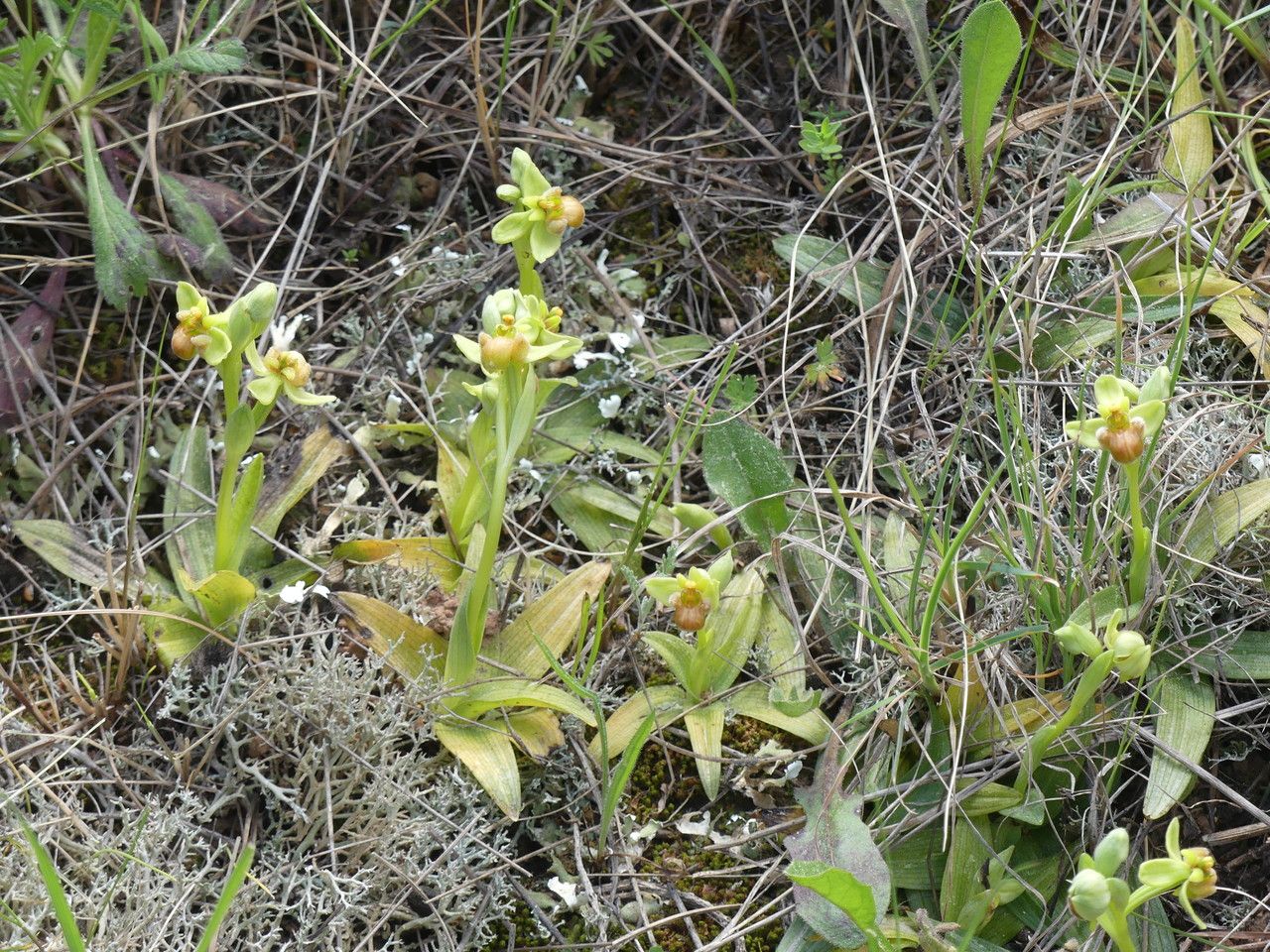
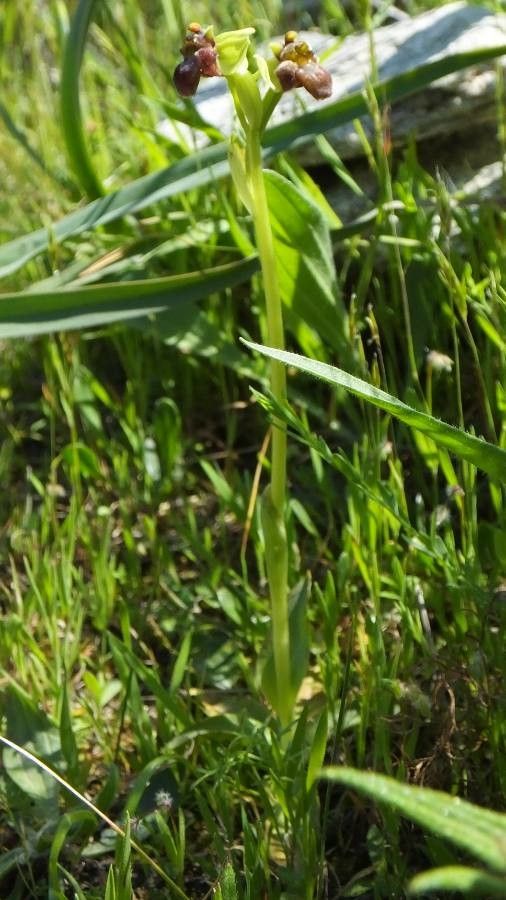
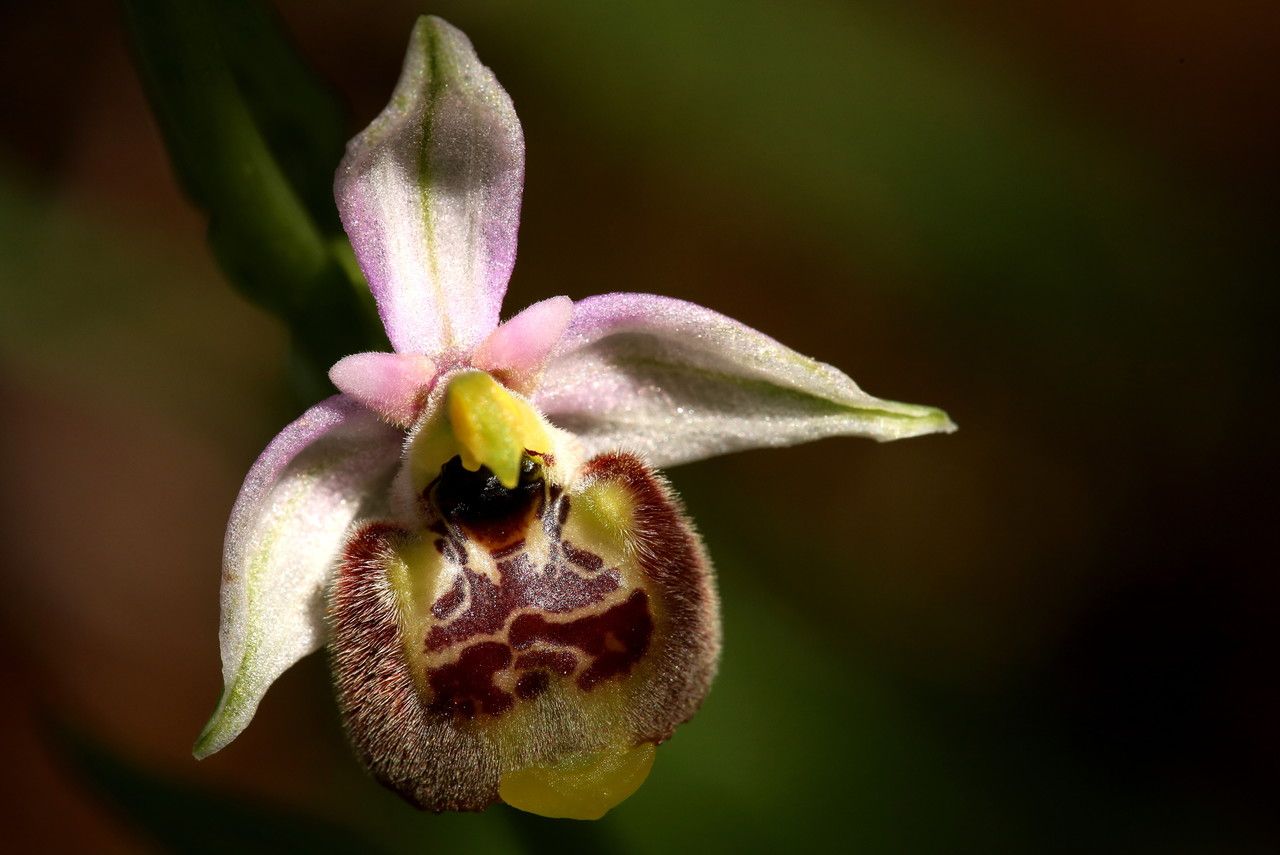
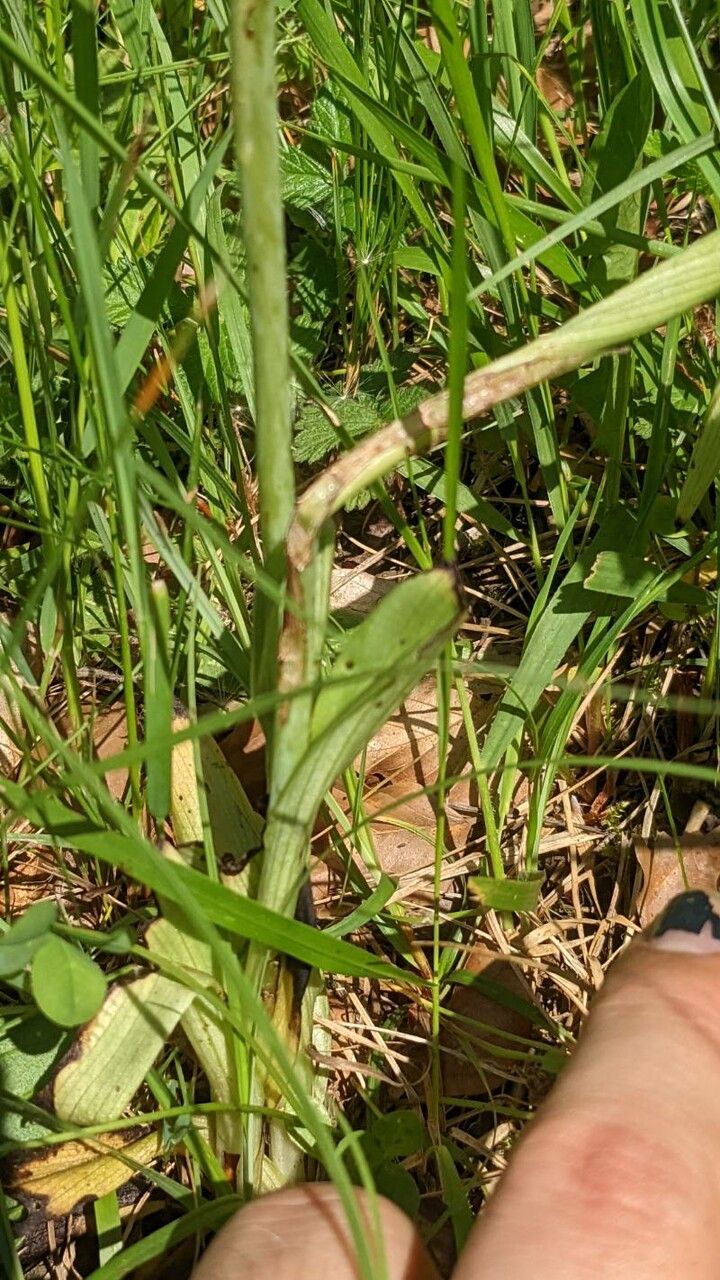
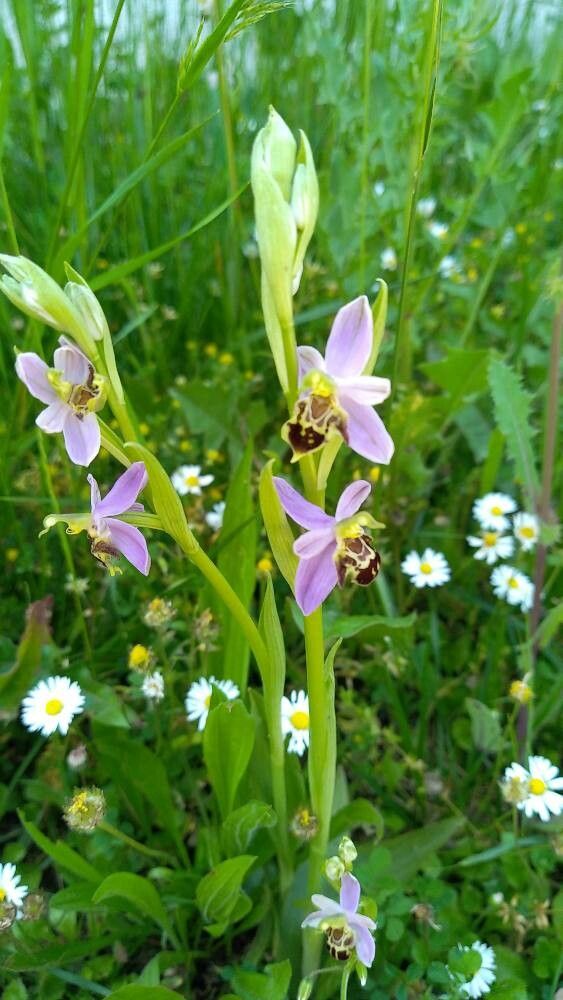
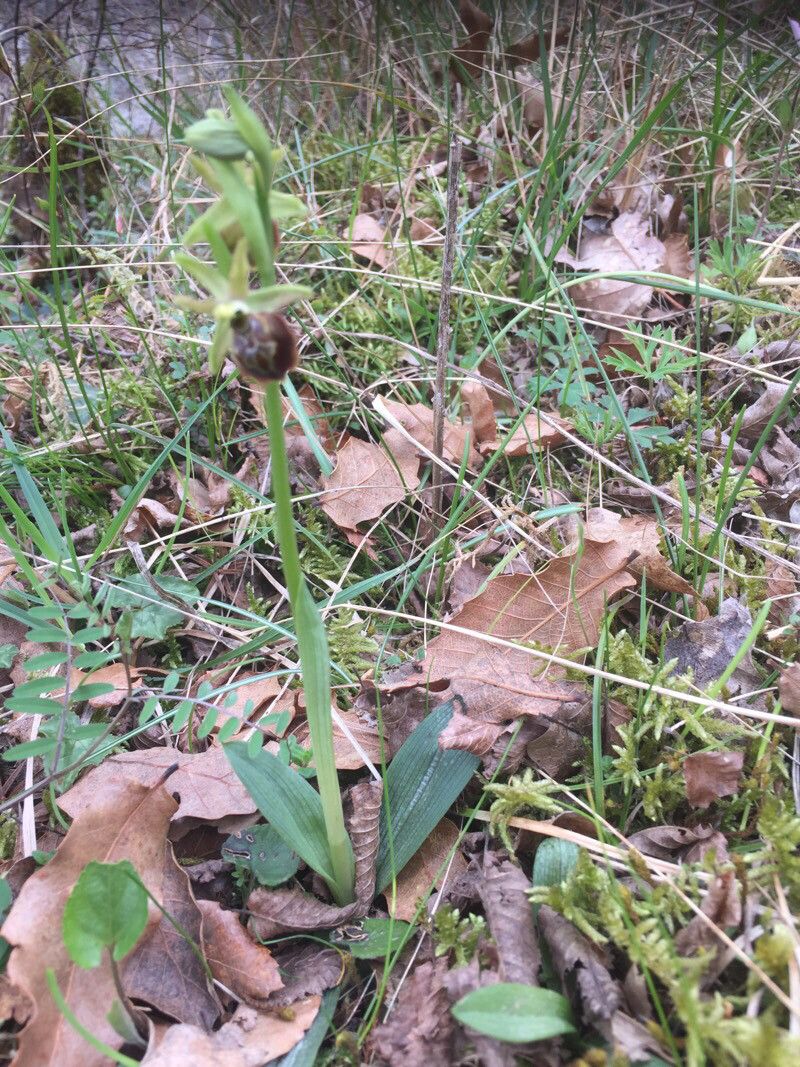
Ophrys bombyliflora, the bumblebee orchid, is a species of Ophrys (bee orchid), native from the Mediterranean region from Portugal and the Canary Islands to Turkey and Lebanon. The genus name Ophrys is from the Greek in reference to the hairy lips of the flowers of this genus; the specific epithet bombyliflora is from the Greek bombylios (bumblebee) in reference to the appearance of the flowers of this species. Ophrys bombyliflora is pollinated by males of solitary bees of the genus Eucera (which are not bumblebees). As with other species of Ophrys, the flowers mimic the females in appearance and scent. Earlier-emerging males attempt to mate with the flowers ("pseudocopulation"), collecting pollinia in the process which they transfer to other flowers of the same species.
Bumble bee orchid typically shows strong disease resistance and encounters relatively few insect pests. Its care is regarded as difficult because it needs high humidity while also having good ventilation and minimal harmful pathogens. Overwatering can cause root rot. Although anyone can cultivate the Bumble bee orchid, keeping it healthy and getting it to bloom again requires more growing experience.
How to keep Ophrys Bombyliflora.
Light
The bumble bee orchid naturally occurs in habitats like forest understories or rocky areas, where it grows in natural shade. It prefers partial sun but can tolerate full sun or full shade, illustrating its hardy and adaptable nature.
Water
The bumble bee orchid thrives in Mediterranean climates, where it requires weekly watering to maintain adequate moisture without becoming waterlogged. It prefers rainwater because of its ideal pH and lack of chemicals, which enhance the orchid's growth and blooming quality. This preference reflects the plant's adaptation to dry summers and wet winters.
Temperature
The bumble bee orchid is native to areas with moderate temperatures and thrives when temperatures range from 59 to 95 °F (15 to 35 ℃). To promote healthy growth year-round, adjust temperatures to match ambient conditions and take care to avoid extremes.
Fertilizer
The optimal time to fertilize a Bumble bee orchid is in early spring, as it emerges from dormancy and begins active growth. Fertilization supplies important nutrients for healthy development. Although the Bumble bee orchid has relatively modest fertilizer needs, applying fertilizer annually can improve its survival and encourage better, longer-lasting blooms.
Pruning
The bumble bee orchid features striking flowers that mimic the appearance of bees. To encourage growth, it's best to prune the plant in early and late spring by removing any dead foliage and spent stems. This practice enhances air circulation and helps prevent diseases. Make sure to use clean, sharp tools when pruning to support healthy development and vibrant blooms.
Botanical profile.
- Plant Type
- Herb
- Life Cycle
- Perennial
- Genus
- Ophrys
- Family
- Orchidaceae
- Hardiness Zone
- 7-10
- Mature Height
- 10 cm to 30 cm
- Mature Spread
- 5 cm to 15 cm
- Leaf Color
- Light Green, Olive Drab
- Leaf Type
- Deciduous
- Flower Color
- Brown, Green
- Flower Size
- 1.02 cm to 1.52 cm
- Bloom Time
- Early spring, Mid spring
- Planting Time
- Spring, Summer
- Harvest Time
- Late spring, Early summer
- Native Area
- Libya, Turkey, Tunisia, Italy, Portugal, Spain, France, Montenegro, Albania, Algeria, Greece, Croatia, Morocco, Serbia
Other names.
Reader questions.
What are the sunlight requirements for a Bumble Bee Orchid (Ophrys bombyliflora)?
The Bumble Bee Orchid (Ophrys bombyliflora) thrives in conditions where it receives partial sun, approximately 3-6 hours of sunlight per day. It is important to observe the movement of sunlight through your garden carefully to identify areas that provide an ideal mix of light and shade. This ensures the plant will grow happily by receiving the perfect balance of sunlight it needs.
What is the indigenous climate for Bumble bee orchid?
The Bumble bee orchid, or Ophrys bombyliflora, is indigenous to climates with moderate temperatures. It flourishes within the temperature range of 59 to 95 °F (15 to 35 °C). To ensure healthy growth throughout the seasons, it is recommended to modulate the temperature in accordance with ambient levels while taking special care to avoid temperature extremes.