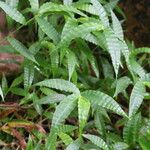
Oplismenus hirtellus
Basketgrass · Bristle Basketgrass · Bristle basket grass · Woods grass · Wood grass
Description
Source: wikipedia (CC BY-SA)Oplismenus hirtellus, commonly known as basket grass, is a species of flowering perennial plant from the family Poaceae that can be found on every continent in the world except Antarctica, growing mostly in coastal tropic and subtropic regions as well as tropical and subtropical islands such as Hawaii, New Zealand, Australia and Madagascar.
🎭 Psychic abilities, protection. It represents food, concealment and resilience.
Care Guide
💧 Water
Basket Grass flourishes in humid environments with consistent moisture, preferring soil that is evenly moist but not waterlogged. It benefits from weekly watering and is often grown outdoors to mimic the dappled light and high humidity of its natural habitat, both of which are essential for meeting its water needs.
☀️ Light Full sun
Basket Grass grows best when it receives full sunlight all day, though it can tolerate reduced light or complete shade. Its preference is shaped by the very bright sun of its native environment. Excessive or insufficient light can interfere with its development, causing changes in leaf color or stunted growth.
What are the sunlight requirements for Basket Grass?
Basket Grass needs full sun, which is above 6 hours of sunlight daily, to thrive best. However, it can adapt to conditions of partial sun or full shade, receiving about 3-6 hours of sunlight. It's vital to observe the movement of sunlight through your garden to find the ideal balance of light and shade for your plants, ensuring they remain happy and healthy.
How does Basket Grass adapt to different lighting conditions?
Originating in intensely sunny environments, Basket Grass is best suited to full sun exposure throughout the day. Despite this, it can adapt to less sunny or completely shaded areas, though such conditions may lead to variations in leaf color or stunted growth. This adaptability allows Basket Grass to manage with either too much or too little light, although optimal growth is seen in full sunlight.
Can artificial lighting be used for Basket Grass and how?
Yes, artificial lighting can be used for Basket Grass, especially when it's grown indoors where natural sunlight may be insufficient, such as during winter or in less sunny spaces. Choosing the right type of artificial light, like LED lights, is crucial as they can be customized to provide specific wavelengths needed for plant growth. For full sun plants, 30-50W/sq ft of artificial light is recommended, for partial sun plants 20-30W/sq ft, and for full shade plants 10-20W/sq ft. The artificial light source should be placed 12-36 inches above the plant and kept on for 8-12 hours per day to mimic natural daylight hours.
What are common symptoms of inappropriate light exposure in Basket Grass?
Symptoms of inappropriate light exposure in Basket Grass include small and lighter-colored new leaves, leggy or sparse growth, faster leaf drop, and slower or halted new growth. Chlorosis, sunscald, leaf curling, wilting, and leaf scorching can also occur, indicating either too much sunlight or not enough. These signs reflect the plant's struggle to adapt to its lighting conditions, affecting its overall health and development.
What solutions are available for Basket Grass facing light exposure issues?
For indoor Basket Grass plants, gradually moving them to sunnier spots to receive at least 6 hours of direct sunlight daily or using artificial light, such as desk or professional plant grow lights for at least 8 hours a day, can help. For outdoor plants, a gradual transition to more sunlight is recommended to avoid sunburn. If sunlight is obstructed, consider pruning trees or transplanting smaller plants to sunnier locations. Please note that while parts of the plant affected by insufficient sunlight may not recover, new growth should be healthy with improved light exposure.
🌡️ Temperature 20–37.8°C
Basket Grass is native to habitats where temperatures range from 68 to 100 °F (20 to 38 °C). During seasonal changes, it may need temperature adjustments to stay within that range for sufficient growth.
What is the ideal temperature range for Basket Grass?
Basket Grass flourishes in environments where temperatures range between 68 to 100°F (20 to 38°C). To ensure optimal growth, it's crucial to adjust the plant's environment across varying seasons to remain within this temperature spectrum. Basket Grass thrives in heat and suffers from cold temperatures. As autumn approaches, it is recommended to bring Basket Grass grown outdoors inside, placing it near a window that receives ample sunlight, yet keeping it from direct heat sources like heaters. Keeping the temperature above 20°C during the winter aids in the plant's development, while temperatures nearing 0°C can be harmful.
How does Basket Grass react to low temperatures and what are the solutions?
Basket Grass has a high preference for warm climates and doesn't tolerate low temperatures well. It is most vigorous when temperatures are consistently above 20°C. To protect it during the colder winter months, it is important to ensure temperatures do not drop below 0°C. Exposure to temperatures below -5°C may result in the leaves lightening in color, followed by a change to brown or black after frost damage. This is also accompanied by wilting and drooping of the plant. The recommended solution for frost damage includes trimming off the affected parts of the plant and moving it to a warm indoor environment immediately for protection from the cold. Placing the plant near a south-facing window ensures it receives enough sunlight, but it should be kept away from heaters or air conditioning vents to prevent air dryness.
What should be done if Basket Grass is exposed to high temperatures?
During the warm summer months, it is imperative to ensure that Basket Grass is not subjected to temperatures exceeding 38°C. Exposure to temperatures above 43°C can lead to lightening of the leaves and increase the risk of sunburn. To mitigate the effects of high temperature, trim away the parts of the plant that are sunburned or dried-up. Relocating the plant to a shaded area, particularly away from the harsh midday and afternoon sun, can prevent further damage. Furthermore, watering the plant during the cooler parts of the day, such as in the morning or evening, helps keep the soil adequately moist, supporting the plant's health in high temperatures.
💨 Humidity
🪴 Soil 5-6
🌱 Fertilizer
Basket Grass needs the most fertilizer during its active growth period, which mainly occurs in spring, summer, and early fall. Applying fertilizer supplies essential nutrients the soil may lack, encouraging healthy root and stem development and the attractive foliage that is a characteristic of this plant.
🪴 Pot & Repot Every 12 months
✂️ Pruning
To maintain the vigor and shape of Basket Grass, it's important to prune it annually in early spring. Trim away any overgrown, damaged, or dead stems to encourage denser growth, enhance air circulation, and improve its appearance. Regular pruning also helps control the plant's aggressive tendency to spread.
🌿 Propagating
🐛 Diseases & pets
☠️ Toxicity
Characteristics
- Plant Type
- Herb
- Life Cycle
- Perennial
- Genus
- Oplismenus
- Family
- Poaceae
- Hardiness Zone
- 9-11
- Mature Height
- 91 cm
- Mature Spread
- 61 cm
- Leaf Color
- Light Green, Forest Green
- Leaf Type
- Semi-evergreen
- Flower Color
- Yellow, Red, Brown
- Flower Size
- 3.05 cm to 10.16 cm
- Bloom Time
- Late spring, Summer
- Planting Time
- Spring, Summer, Autumn
- Harvest Time
- Mid summer, Late summer, Early fall
- Native Area
- Fiji