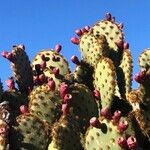
Opuntia aciculata
Chenille prickly-pear · Cowboy's-red-whiskers · Chenille pricklypear · Lindheimer's prickly pear · Cowboy's red whiskers
Description
Source: leafsnapOpuntia aciculata, commonly known as the prickly pear cactus, is a species of cactus native to North America. It is a low-growing plant, typically reaching heights of 1 to 2 feet and spreading outward to form dense clusters. The plant features flat, oval-shaped pads covered in spines and small hairs. In the spring and summer months, Opuntia aciculata produces bright yellow flowers, which are followed by edible fruits known as prickly pears. The fruit is oval-shaped, has a thick skin covered in spines, and contains small seeds inside. This cactus is well-adapted to arid environments with low rainfall and high temperatures. It can tolerate drought conditions for extended periods by storing water in its pads. Indigenous peoples have used Opuntia aciculata for centuries for food, medicine, and building materials. Today, it continues to be an important food source for many cultures around the world. Overall, Opuntia aciculata is a fascinating species of cactus with unique physical characteristics that enable it to thrive in harsh desert environments while also providing valuable resources for human use.
Care Guide
💧 Water Every 7 days
☀️ Light Full sun
Native to dry regions, the Chenille prickly pear does best in full sun, as its natural habitat features intense sunlight and very little shade. It will also tolerate partial sun, allowing some flexibility in its growth.
🌡️ Temperature 15–37.8°C
Chenille prickly pear performs best in warm conditions and needs relatively high temperatures during the growing season to support growth and metabolic processes. It prefers abundant sunlight, suitable moisture levels, and good air circulation. However, very low temperatures and excessive watering can cause harm. It’s also important to maintain balance and avoid both extreme heat and overly dry conditions.
💨 Humidity
🪴 Soil 0-0
🌱 Fertilizer
For Chenille prickly pear, light applications of fertilizer once or twice a year during the growing season are sufficient. Avoid fertilizing in winter and in summer when it is dormant. Reduce fertilizer for repotted plants and wait a couple of months after repotting before applying fertilizer. Fertilizing supports healthy growth and encourages blooms.
🪴 Pot & Repot
✂️ Pruning
🌿 Propagating
🐛 Diseases & pets
☠️ Toxicity
Characteristics
- Plant Type
- Succulent
- Life Cycle
- Perennial
- Genus
- Opuntia
- Family
- Cactaceae
- Hardiness Zone
- 8-11
- Mature Height
- 91 cm
- Mature Spread
- 1.22 m
- Leaf Color
- Green
- Leaf Type
- Evergreen
- Flower Color
- Yellow, Orange
- Flower Size
- 5.08 cm to 6.35 cm
- Bloom Time
- Late spring, Early summer, Mid summer
- Planting Time
- Summer, Autumn
- Harvest Time
- Late summer, Early fall, Mid fall
- Native Area
- Mexico