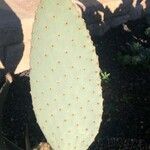
Opuntia basilaris
Bakersfield beaver-tail cactus · Kern beaver-tail cactus · Woodbury beaver-tail cactus · Beaver-tail cactus · Beaver-tail prickly-pear
Description
Source: leafsnapOpuntia basilaris, commonly known as the beavertail cactus, is a species native to the southwestern United States and northern Mexico. This low-growing, spineless cactus typically grows in clusters, forming dense mats. Its flat, paddle-shaped stems are bluish-green and covered with small tufts of white or yellow spines. In the spring, Opuntia basilaris produces vibrant pink or magenta flowers that bloom at the tips of its stems. These flowers are followed by edible fruit, which is usually red or purple. Well adapted to arid environments, this plant can survive long periods without water by storing it in its thick stem pads. It prefers well-drained soils with full sun exposure but can also tolerate partial shade. Opuntia basilaris has been used for centuries by Native American tribes for medicinal purposes, such as treating wounds and digestive issues. Today, it remains a popular ornamental plant due to its unique appearance and low maintenance requirements.
🎭 ability to keep going through tough, tiring situations
Care Guide
💧 Water Every 7 days
The Beavertail cactus thrives in dry climates, thanks to its natural drought resistance inherited from its desert origins. It stores moisture in its thick, fleshy pads and requires watering only once every three weeks. The cactus's growth is closely linked to water availability, with longer periods of dormancy occurring during especially arid seasons.
☀️ Light Full sun
Beavertail cactus prefers abundant sunlight in conditions that resemble its native hot, arid environment. From young to mature it does better with generous light throughout its development. Insufficient light hampers growth, while excessive light can risk scorching its surface.
What are the sunlight requirements for Beavertail Cactus (Opuntia basilaris)?
Beavertail Cactus requires a significant amount of sunlight to thrive, reflecting its natural habitat's conditions. It needs full sun, which is above 6 hours of sunlight daily, to prosper. However, it can also tolerate partial sun, meaning about 3-6 hours of sunlight. The placement of your Beavertail Cactus should consider the movement of sunlight through your garden to ensure a balance of light and shade, optimal for the plant's growth and happiness.
How can artificial lighting benefit Beavertail Cactus indoors?
When natural sunlight is insufficient for your Beavertail Cactus, especially in less sunny spaces or during winter, artificial lighting becomes a viable solution to provide the necessary light conditions. Suitable artificial lighting can promote faster and healthier growth for indoor plants. LED lights are recommended as they provide specific wavelengths needed by plants. For full sun plants like the Beavertail Cactus, 30-50W/sq ft of artificial light is ideal. The light source should be placed 12-36 inches above the plant, mimicking natural sunlight conditions, for 8-12 hours per day.
What symptoms indicate poor lighting conditions for Beavertail Cactus?
Symptoms of insufficient lighting in Beavertail Cactus include smaller new leaves, leggy or sparse growth, faster leaf drop, slower or no new growth, and lighter-colored or chlorotic leaves. Excessive sunlight can cause symptoms such as sunscald, leaf curling, wilting, and leaf scorching. These indicators suggest the plant is not receiving the ideal light conditions, impacting its health and growth.
What solutions can address light-related issues in Beavertail Cactus?
To combat light-related issues in Beavertail Cactus, gradually increase sunlight exposure until the plant receives at least 6 hours of direct sunlight daily. For indoor plants, consider using artificial light if moving the plant is not feasible, ensuring at least 8 hours of light daily. Outdoors, move plants gradually to sunnier spots to avoid sunburn. If light obstructions are an issue, prune trees or transplant smaller plants to sunnier locations. Note that while parts of the plant affected by insufficient light may not recover, new growth should be healthy with improved light conditions.
🌡️ Temperature 5–25°C
Beavertail cactus naturally grows in temperatures of 41 to 77°F (5 to 25 ℃). Coming from a temperate area, it performs best in cooler conditions. Adjusting temperatures seasonally can support its healthy development.
What are the ideal growing conditions for Beavertail cactus?
Beavertail cactus, or Opuntia basilaris, thrives in a temperate range of temperatures, ideally between 41 to 77°F (5 to 25°C). It is accustomed to cooler weather conditions of its natural habitat and demonstrates healthy development with seasonal temperature adjustments. This heat-loving plant enters a dormant state in winter and requires special care when temperatures fall. During winter, it's essential to monitor the temperature closely; if it drops below -25°C, the cactus should be moved indoors. An ideal indoor spot is near a south-facing window to maximize sunlight exposure, and supplemental lighting can be used if natural light is insufficient. When temperatures fall below 5°C, it's necessary to reduce or stop watering to prevent root rot. For outdoor plants, water should be entirely withheld in low temperatures, and considering a temporary greenhouse or wrapping the plant with insulating materials could provide extra protection against the cold.
How should you care for Beavertail cactus in low temperatures?
In low temperatures, particularly when it drops below 5°C, Beavertail cactus requires careful management to prevent damage. If the temperature plunges below -25°C, the cactus should be promptly moved to a warmer indoor environment. It's critical to position it near a south-facing window to ensure it receives plenty of sunlight. Should natural light be inadequate, supplementing with artificial lighting is advised. In the unfortunate event of frost damage, indicated by wilting or weakening of the plant after a mild frost without immediate symptoms, it's necessary to trim off frostbitten areas. Check the roots for rot—rotted roots must be cut off, and the plant can be propagated through cuttings to encourage recovery. Reducing or halting watering during these cold periods is crucial to avoid root rot.
What steps should be taken if Beavertail cactus experiences high temperatures?
During the summer, when temperatures can rise above 25°C, special care is needed to prevent damage from excessive heat. If the Beavertail cactus is exposed to temperatures exceeding 25°C, its growth halts; it may suffer water loss, wilting, and sunburn. To aid recovery, first remove any sunburned or rotten parts of the plant. It's important to protect the cactus from direct afternoon sunlight until it shows signs of recovery and renewed growth. If the cactus has suffered from root rot, cease watering completely until healthy, new roots begin to form, signaling that the plant is overcoming the stress and damage inflicted by high temperatures.
💨 Humidity
🪴 Soil 6-7
🌱 Fertilizer
Light applications of fertilizer one to two times a year during the growing season are sufficient for Beavertail cactus. Avoid fertilizing in winter and summer, when it is dormant. Use less fertilizer for repotted plants and wait a couple of months after repotting before applying fertilizer. Fertilizing supports healthy growth and encourages blooms.
🪴 Pot & Repot 2-3 years
Repot beavertail cactus in the spring every 2 to 3 years when it is actively growing. Choose shallow, wide pots that are 1 to 2 inches larger in diameter than the previous pot, and fill them with a well-draining cactus mix. After repotting, wait one week before watering to prevent root rot. This will help ensure a healthy transition for the beavertail cactus.
✂️ Pruning
The beavertail cactus requires minimal pruning. It is important to remove any withered flowers and branches so that the plant can redirect nutrients toward healthy growth.
🌿 Propagating
🐛 Diseases & pets
☠️ Toxicity
Characteristics
- Plant Type
- Tree, Shrub
- Life Cycle
- Perennial
- Genus
- Opuntia
- Family
- Cactaceae
- Hardiness Zone
- 4
- Mature Height
- 30 cm
- Mature Spread
- 1.83 m
- Leaf Color
- Green Yellow, Olive
- Leaf Type
- Deciduous
- Flower Color
- Pink
- Flower Size
- 5.08 cm to 7.62 cm
- Bloom Time
- Mid spring, Late spring, Early summer
- Planting Time
- Spring, Summer, Autumn
- Harvest Time
- Mid summer, Late summer, Early fall
- Native Area
- Mexico