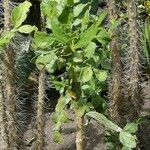
Opuntia brasiliensis
Brazilian pricklypear
Description
Source: leafsnapBrasiliopuntia is a genus in the cactus family, Cactaceae. It contains only one species, Brasiliopuntia brasiliensis. It is found in Brazil, Paraguay, eastern Bolivia, Peru and northern Argentina, and has become naturalized in Florida among other places.
🌳 Brazilian prickly pear is more than a spiny desert decoration; it’s a plant with numerous unexpected abilities. Unknown to many, this tough species reaches beyond its native surroundings as a striking option for xeriscape plantings; it tolerates drought and needs very little maintenance, making it an eco-friendly choice for gardeners who want beauty without wasting water. Moreover, it’s not only visually appealing — brazilian prickly pear's fruit, known as
Care Guide
💧 Water
☀️ Light Full sun
To flourish healthily, Brazilian prickly pear needs abundant sunlight exposure. Its native habitat is inherently bright, further emphasizing its need for ample sunlight. It has the capacity to survive in environments with reduced light; however, any insufficiency can negatively affect its vitality. Likewise, an excessive fluctuation in light conditions can cause strain on the plant.
🌡️ Temperature 20–37.8°C
Brazilian prickly pear originates from habitats where temperatures range from 68 to 100 °F (20 to 38 ℃). These plants do best in warm climates. Adjusting temperatures during seasonal shifts is typically unnecessary unless conditions move beyond this optimal range.
💨 Humidity
🪴 Soil 6-7
🌱 Fertilizer
The Brazilian prickly pear only requires small quantities of fertiliser 1-2 times annually in its growing season. Fertilizing should be avoided in the dormant summer and winter periods. After repotting, the quantity of fertilizer should be decreased and fertilizing should be postponed for a few months. Fertilizing aids in maintaining vigorous growth and promoting flowering.
🪴 Pot & Repot
✂️ Pruning
🌿 Propagating
🐛 Diseases & pets
☠️ Toxicity
Characteristics
- Plant Type
- Tree
- Life Cycle
- Perennial
- Genus
- Opuntia
- Family
- Cactaceae
- Hardiness Zone
- 10-11
- Mature Height
- 20.12 m
- Mature Spread
- 30 cm
- Leaf Color
- Green
- Leaf Type
- Deciduous
- Flower Color
- Yellow, Orange
- Flower Size
- 4.06 cm
- Bloom Time
- Late spring, Early summer, Mid summer
- Planting Time
- Spring, Autumn
- Harvest Time
- Mid summer
- Native Area
- Brazil to E. Peru and N. Argentina