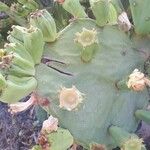
Opuntia dillenii
Flat hand dildo · Jumbie prickle · Prickly pear · Seaside tuna · Sour prickle
Description
Source: leafsnapOpuntia dillenii is a species of prickly pear native to the tropical and subtropical Americas. It is naturalized in many other parts of the world. It differs from O. stricta by having more spines per areole (usually more than 3).
🌳 Because erect Prickly Pear is sturdy and covered in spines, it has become an effective natural barrier in many regions. Its dense growth and strong spines deter animals from entering farmlands and gardens. In addition to offering protection, it provides habitats for various insects and small wildlife, representing an environmentally friendly approach to land management and pest control.
🎭 Hardiness
Care Guide
💧 Water Every 3 weeks
The erect prickly pear is a resilient plant that thrives in arid conditions, thanks to its high tolerance for drought. It requires minimal water and should be watered only every three weeks. This cactus prefers full sun and can maintain hydration during the summer through its specialized tissues, allowing it to endure where many other plants cannot.
What should I do if I give my Erect prickly pear plant too much water or too little water?
Erect prickly pear and other succulents can withstand long periods without water, making it rare to see them suffering from underwatering. However, if you forget to water your Erect prickly pear for a month or more, it may appear thirsty or damaged due to lack of watering. Signs of underwatering include a lacklustre and wrinkled appearance, complete drying up, turning brown and crispy, or dropping off the plant. To rehydrate the plant, water it thoroughly by submerging the pot in water for 5-10 minutes until the soil feels moist. Overwatering is harmful to Erect prickly pear and can be fatal if not addressed. Excessive moisture leads to root rot, preventing the roots from absorbing nutrients and water. Root rot occurs when fungi and bacteria thrive in wet soil and attack the roots. Symptoms of overwatering include yellow, swollen, and translucent organs that may burst open, eventually turning brown or black and falling off the plant. To address overwatering, improve air ventilation, adjust water frequency, and check the soil for moisture levels. Saving an overwatered plant can be challenging but not impossible. Early detection is important to minimize damage. If root rot is present, it is necessary to remove the plant from its pot and examine the roots and soil. Clean the roots in room-temperature water to remove any fungus and assess their health. Dark brown or black, soft, mushy, or slimy roots indicate root rot. If most of the roots are affected, saving the plant may not be possible. In such cases, propagate a new Erect prickly pear from healthy stems. However, if only some roots are affected, remove the unhealthy roots, dip the remaining ones in fungicide, and repot the plant in fresh, well-draining soil. While this approach does not guarantee success, there is a good chance of recovery and new growth in the next growing season.
How often do I need to water my Erect prickly pear?
Determining how often to water Erect prickly pear is not an exact science. The best approach is to assess the soil and only water when it is completely dry. To do this, you can either insert your finger into the pot or use a moisture meter to examine the soil beneath the surface. If you have planted the prickly pear in a deep pot, you can use a stick or chopstick instead. If the soil feels even slightly moist, wait a few days and check again. In general, most people will need to water Erect prickly pear approximately every two weeks during summer and once a month in winter. However, there are factors that can affect watering frequency. The next section will provide more information on these considerations to help you determine how often to water.
What do I need to think about when watering my Erect prickly pear?
To properly water your Erect prickly pear, there are several environmental factors you need to consider. These include the size of the container, type of soil, temperature, and humidity. When it comes to container and soil selection, it's important to choose a container with good drainage holes to prevent excess water from pooling. Smaller containers hold less soil and moisture, so they require more frequent watering. On the other hand, larger pots retain moisture for longer periods and need less frequent watering. Avoid using oversized pots as they can lead to overwatering. When repotting, move to a container just one size larger than the current one, and opt for shallow containers to accommodate the plant's shallow root system. The watering frequency also varies based on the season. In winter, when growth slows down and water loss through evaporation is reduced, watering should be less frequent. In contrast, during the active growing seasons of spring and autumn, more frequent watering is necessary. The climate of your location plays a role as well. In humid areas with abundant rainfall, watering needs will be lower compared to dry and arid regions. Remember that even within the same geographic location, conditions can fluctuate depending on the season and indoor heating or air conditioning usage. If your Erect prickly pear is planted in the ground, it typically relies on natural precipitation and dew for water. However, during prolonged dry periods, occasional watering may be required. If the plant is grown in a container, it can be moved outdoors in spring and summer when the temperature is suitable, but it will need more water due to increased exposure to sunlight, even on a shaded porch.
How should I water the Erect prickly pear?
To water Erect prickly pear effectively, follow these steps. First, thoroughly soak the plant and allow it to dry out before watering again. This plant can tolerate drought, so it's okay to let it get quite dry between waterings. It's better to underwater than to overwater this type of plant. When watering, make sure the soil in the entire pot is thoroughly soaked. Instead of pouring water in only one spot, water around the rim of the planter to ensure all sides of the plant get wet. The amount of water needed depends on the container size and soil absorption. Ensure that water drains out from the drainage holes and let it sit in the saucer for 20-30 minutes to absorb into dry pockets of soil. Discard any excess water in the saucer to avoid waterlogging the soil. Bottom-watering is also a great method for Erect prickly pear. Place the pot in a saucer of water and let the soil absorb moisture through the drainage holes. The soil has absorbed enough water when the top layer is moist. Bottom-watering provides an even distribution of water throughout the pot but takes more time compared to top-watering. In its natural habitat, Erect prickly pear experiences infrequent heavy rain, thoroughly moistening the soil. To mimic this, bottom-water your plant when the soil is completely dry. Deep soil bathing is preferred over frequent light watering for Erect prickly pear.
☀️ Light Full sun
The Erect Prickly Pear thrives in full, direct sunlight, reflecting the conditions of its native habitat. Those native areas are characterized by constant exposure to the sun. Insufficient light can limit its growth, and excessive light may cause scorching, but the plant is fairly tolerant of changing light levels.
What are the sunlight requirements for Erect prickly pear (Opuntia dillenii)?
Erect prickly pear, or Opuntia dillenii, thrives in full sun conditions with more than 6 hours of sunlight daily. It's important to observe how sunlight moves through your garden to choose the best spots that offer a balance of light and shade, ensuring the plants' well-being. Originating from environments with substantial sun exposure, this plant grows healthy and strong when it receives plentiful sunlight but can suffer from too much or too little light.
How does artificial lighting support indoor plants, especially during less sunny conditions?
Indoor Erect prickly pear plants require adequate lighting for optimal growth, which can be achieved through artificial light, especially in winter or less sunny spaces. LED lights are a popular choice because they can provide specific wavelengths needed by the plants. Full sun plants need 30-50W/sq ft, partial sun plants need 20-30W/sq ft, and full shade plants need 10-20W/sq ft of artificial light. The light source should be placed 12-36 inches above the plant for 8-12 hours per day to mimic natural sunlight conditions effectively.
What are the symptoms of light deficiency in Erect prickly pear?
When exposed to suboptimal lighting, Erect prickly pear may show several symptoms of light deficiency. These include smaller new leaves, leggy or sparse growth, faster leaf drop, slower or no new growth, and lighter-colored or pale new leaves indicating a lack of chlorophyll. Additionally, chlorosis can cause leaves to turn yellow, while sunscald, leaf curling, wilting, and leaf scorching indicate damage from excessive sunlight exposure.
What solutions can improve the light conditions for Erect prickly pear?
To enhance light conditions for Erect prickly pear, gradually move the plant to sunnier spots, ensuring at least 6 hours of direct sunlight daily, especially if using a south-facing window. For larger or immovable plants, consider artificial lighting, keeping lamps on for at least 8 hours daily. When moving plants outdoors, do it gradually to prevent sunburn. Minimize obstructions by trimming branches or leaves blocking sunlight, and consider transplanting smaller plants to sunnier locations with good drainage during their dormant period.
🌡️ Temperature 20–37.8°C
Erect Prickly Pear does best in warm conditions and needs relatively high temperatures during the growing season to support growth and metabolic processes. It prefers plenty of sunlight, suitable moisture levels, and good air circulation. However, it can be damaged by very low temperatures and by overwatering. It is also important to keep conditions balanced and avoid temperatures that are too high or environments that are too dry.
What is the ideal temperature range for growing Erect prickly pear?
Erect prickly pear (Opuntia dillenii) flourishes in warmer environments, with an ideal temperature range between 68 to 100 °F (20 to 38 °C). To ensure the health and growth of the plant, year-round temperature regulation within this range is essential, taking into account any necessary slight adjustments for seasonal variances. This heat-loving plant enters a dormant state in winter, requiring careful temperature management.
What should I do with my Erect prickly pear when the temperature drops?
When outdoor temperatures fall below 5°C, Erect prickly pear should be moved indoors to protect it from the cold. Inside, place the plant near a south-facing window to maximize sunlight exposure. If natural light is insufficient, supplemental lighting can be utilized. Additionally, when temperatures drop below 20°C, it's crucial to reduce or halt watering to prevent root rot. For those grown outdoors in colder climates, consider halting watering completely during low temperatures and employing insulation techniques such as wrapping the plant with plastic film or fabric, or setting up a temporary greenhouse if possible.
How does low temperature affect Erect prickly pear, and what are the solutions?
Erect prickly pear is highly sensitive to low temperatures and thrives best when the temperature remains above 20°C. Exposure to temperatures below 5°C can weaken the plant, leading to wilting and increased susceptibility to root rot. Following mild frost damage, symptoms like gradual wilting might not appear immediately but can manifest after a week. To combat frost damage, trim off the frostbitten areas and check for root rot, which requires cutting off the rotted roots before propagating through cuttings. It's crucial to then move the plant to a warmer environment and ensure it receives ample sunlight by placing it near a south-facing window or using supplemental lighting if needed.
How does high temperature affect Erect prickly pear, and what are the solutions?
During the summer, it's important to prevent Erect prickly pear from being exposed to temperatures above 38°C. Exposure to temperatures exceeding 43°C results in halted growth, water loss, wilting, and an increased risk of sunburn for the plant. To address these issues, remove any sunburned or rotten parts of the plant and provide shade during the particularly intense afternoon sunlight until recovery and growth resume. In cases of root rot, cease watering until new roots form.
💨 Humidity
🪴 Soil 6-7
🌱 Fertilizer
For Erect Prickly Pear, give light amounts of fertilizer once or twice a year during the growing season. Avoid fertilizing in winter and summer when the plant is dormant. Reduce feeding for repotted plants and wait a couple of months after repotting before applying fertilizer. Fertilizing helps support healthy growth and encourages blooms.
Why should I use fertilizer for my Erect prickly pear?
When fertilizing Erect prickly pear, nutrients are added to the growing medium. Although it already stores water and nutrients, applying plant food during the growing season promotes healthy growth. Additionally, fertilizing can stimulate mature specimens to produce blooms.
When should I fertilize my Erect prickly pear?
Erect prickly pear plants thrive with some added nutrients, but they only require a small amount of fertilizer during the growing season. It is best to fertilize them 1-2 times a year, specifically in the spring and autumn when they are most active. However, avoid fertilizing them in the dormant periods of winter and summer. If you are repotting these plants, be cautious with the amount of fertilizer you apply, as it should be reduced. It is also wise to wait a couple of months after repotting before introducing any fertilizer.
When is the best time to not use fertilizer on my erect prickly pear?
Erect prickly pear, like other plants, goes into a dormancy period where it stops growing. During this time, it is important to avoid applying fertilizer. This dormancy occurs in the summer and winter seasons. Additionally, it is advisable to wait a few months after repotting in the spring before resuming fertilizer applications.
What kind of plant food does my prickly pear cactus need?
To fertilize Erect prickly pear, it is recommended to use a liquid plant food that is specifically formulated for succulents and cacti. Make sure to dilute the fertilizer with water to half-strength in order to prevent buildup in the soil. Apply the fertilizer to the base of the plant and water it thoroughly, ensuring any excess moisture drains away.
How should I fertilize my Erect prickly pear plant?
When fertilizing Erect prickly pear, using liquid plant food is easier, but you can also use granules. Follow the directions on the packaging and dilute liquid fertilizers to half-strength. Apply either granules or liquid plant food to the soil and cover granules with a thin layer of soil. Water the plants regardless of the type of plant food you use.
🪴 Pot & Repot 2-3 years
Repot erect prickly pears every 2-3 years during spring, using a pot that is slightly larger than the current one. After repotting, make sure to provide plenty of sunlight and limit watering to aid in the plant's recovery. This desert native thrives with minimal care, making it a rewarding plant to nurture.
✂️ Pruning
The erect prickly pear cactus needs very little pruning. Focus on removing any withered flowers and branches to redirect nutrients toward healthy growth. This will help the plant thrive and maintain its vigor.
🌿 Propagating
🐛 Diseases & pets
☠️ Toxicity
Characteristics
- Plant Type
- Succulent
- Life Cycle
- Perennial
- Genus
- Opuntia
- Family
- Cactaceae
- Hardiness Zone
- 9-11
- Mature Height
- 1.52 m to 3.05 m
- Mature Spread
- 49 cm to 76 cm
- Leaf Color
- Medium Sea Green
- Leaf Type
- Evergreen
- Flower Color
- Yellow
- Flower Size
- 5.08 cm to 6.35 cm
- Bloom Time
- Late spring, Early summer, Mid summer
- Planting Time
- Spring, Summer, Autumn
- Harvest Time
- Mid summer
- Native Area
- Colombia, Bahamas, Cuba, Mexico, Venezuela, Ecuador, Dominican Republic, Jamaica