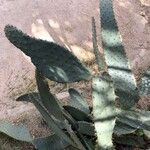
Opuntia engelmannii
Engelmann's prickly-pear · Cowtongue cactus · Cowtongue prickly-pear · Desert prickly-pear · Discus prickly-pear
Description
Source: leafsnapOpuntia engelmannii is a prickly pear common across the south-central and Southwestern United States and northern Mexico. It goes by a variety of common names, including desert prickly pear, discus prickly pear, Engelmann's prickly pear in the US, and nopal, abrojo, joconostle, and vela de coyote in Mexico. The nomenclatural history of this species is somewhat complicated due to the varieties, as well as its habit of hybridizing with Opuntia phaeacantha. It differs from Opuntia phaeacantha by being green year round instead of turning reddish purple during winter or dry seasons, as well as having yellow flowers with red centers.
🌳 Although widely recognized for its edibility, prickly pear has also been a source of purple dye, historically obtained from its fruit by Native Americans. The mucilaginous material in its pads is likewise used as a natural water purifier. Furthermore, dried prickly pear pads function as a sustainable fuel and as building material for items such as fences and homes, utilizing their strong, fibrous nature. Prickly pear also possesses notable potential in bioremediation, aiding the removal of heavy metals from contaminated soils.
🎭 Hopefulness
Care Guide
💧 Water Every 7 days
Prickly pear cacti thrive in arid environments, displaying remarkable drought tolerance by storing moisture in their fleshy pads. To care for them, water sparingly—about once every three weeks—and use a well-draining soil mix to prevent root rot. This setup mimics their natural sandy habitat, ensuring their health and vitality.
☀️ Light Full sun
Prickly pear needs ample light to thrive, similar to full-sun conditions. It can, however, tolerate settings with less than full daylight. Naturally found in open, bright habitats, it depends on abundant sunshine for healthy growth. Excessive exposure can cause a sunburn-like reaction, while insufficient light limits its growth and development.
What are the sunlight requirements for a prickly pear?
Prickly pear requires significant light exposure to thrive, ideally conditions akin to full daylight. It prefers environments where it can receive abundant sunshine, crucial for its healthy growth. However, it can tolerate less than full-day light exposure. Full sun conditions mean the plant should receive above 6 hours of sunlight a day, whereas partial sun refers to about 3-6 hours of sunlight. It's important to observe how sunlight moves through your garden, ensuring that you select spots providing a good balance of light and shade.
How does artificial lighting support plant growth indoors?
When natural sunlight is insufficient, especially during winter or in less sunny spaces, artificial lighting becomes an indispensable aid for plant growth. Indoor plants benefit from adequate lighting, which promotes faster, healthier growth. LED lights, in particular, are a popular choice because they can be customized to provide specific wavelengths your plants need. For different sunlight requirements: full sun plants need 30-50W/sq ft of artificial light, partial sun plants need 20-30W/sq ft, and full shade plants need 10-20W/sq ft. The correct distance is 12-36 inches above the plant to mimic natural sunlight, and most plants benefit from 8-12 hours of light per day.
What are the symptoms of light deficiency in prickly pears?
Prickly pear may show several symptoms when exposed to suboptimal lighting, including smaller new leaves, leggy or sparse growth, faster leaf drop, slower or halted new growth, lighter-colored new leaves, and symptoms of chlorosis such as leaves turning yellow due to a lack of chlorophyll. Other light-related issues include sunscald, resulting from intense sunlight exposure leading to pale or necrotic areas on the plant, leaf curling as a defense mechanism against excessive sunlight, wilting due to increased water loss, and leaf scorching characterized by brown, dry edges on leaves.
What solutions can alleviate light deficiency symptoms in prickly pears?
To combat light deficiency in prickly pears, gradually moving plants to sunnier locations to receive at least 6 hours of direct sunlight daily is advisable. Use south-facing windows and keep curtains open during the day for plants indoors. Additionally, if your plant is large or not easily movable, consider using artificial light, keeping a desk or ceiling lamp on for at least 8 hours a day or investing in professional plant grow lights. Outdoor plants should be moved to sunnier spots gradually to avoid sunburn. Minimizing obstructions like pruning trees that block sunlight and considering transplanting smaller plants during their dormant period are also effective solutions. Note that parts of the plant already affected by insufficient light may not recover, but new growth should be healthy with improved light exposure.
🌡️ Temperature 15–32.2°C
Prickly pear comes from environments where temperatures are usually between 59 and 90 °F (15 to 32 ℃). The plant prefers moderate climates, so it should be adjusted accordingly during extreme seasonal changes.
What is the ideal temperature range for Prickly pear cultivation?
Prickly pear, scientifically known as Opuntia engelmannii, thrives in environments where temperatures typically range from 59 to 90 °F (15 to 32 °C). This plant prefers moderate climates and requires adjustments during extreme seasonal changes. It loves heat and enters a dormant state when winter comes, ceasing to grow. To prevent damage from low temperatures, especially when they drop below -10°C, it's advisable to move the plant indoors, near a south-facing window for maximum sunlight. Supplemental lighting can be used if natural light is insufficient. Additionally, during cool temperatures below 15°C, the plant's growth slows, necessitating a reduction or cessation of watering to avoid root rot. Outdoor Prickly pear plants need watering to be halted during cold spells, with temporary greenhouses or protective wraps as viable options for insulation.
How should I care for a Prickly pear plant during low temperatures?
Prickly pear does not tolerate low temperatures well, performing best above 15°C and ideally kept above -10°C to prevent becoming weak, wilting, or prone to root rot. Severe cold below -15°C can cause significant damage. In the event of frostbite, trim off frostbitten areas, checking for and removing any rotted roots, then propagate the plant through cuttings if necessary. Moving the plant to a warmer indoor space near a south-facing window can ensure it gets enough sunlight during colder periods. If natural light is insufficient, consider using supplemental lighting to mimic sunnier conditions.
What steps should I take if my Prickly pear experiences high temperatures?
During the hotter summer months, maintaining a temperature below 32°C is crucial for Prickly pear's well-being. Temperatures exceeding 35°C halt its growth, leading to water loss, wilting, and an increased risk of sunburn. If your plant suffers from these conditions, remove any sunburned or rotten parts immediately. Protect the plant from direct afternoon sun until it shows signs of recovery and new growth. In cases of root rot, ceasing watering until new roots form can help the plant recover efficiently.
💨 Humidity dry (<40%)
This plant prefers dry conditions, so don't mist it. However, watering it less often can also thrive in higher humidity.
🪴 Soil 6-7
🌱 Fertilizer
Prickly pear only needs light fertilizer applications once or twice a year during the growing season. Avoid fertilizing in winter and in summer when it is dormant. Cut back on fertilizer for plants that have been repotted and wait a couple of months after repotting before applying fertilizer. Fertilizing helps maintain healthy growth and encourages blooms.
🪴 Pot & Repot 2-3 years
To support the growth of your prickly pear cactus, repot it every 2-3 years during the spring. This robust cactus thrives in dry conditions and requires a pot larger than its root ball. Use well-draining soil and water sparingly after repotting. This practice encourages healthy root development and helps prevent rot, ensuring your cactus receives the best care.
✂️ Pruning
Pruning a prickly pear cactus is minimal and primarily involves removing withered flowers and branches. This practice helps the plant direct nutrients more efficiently to support healthy growth.
🌿 Propagating
🐛 Diseases & pets
☠️ Toxicity
Characteristics
- Plant Type
- Succulent
- Life Cycle
- Perennial
- Genus
- Opuntia
- Family
- Cactaceae
- Hardiness Zone
- 7
- Mature Height
- 3.35 m
- Mature Spread
- 3.05 m to 4.57 m
- Leaf Color
- Green, Blue
- Leaf Type
- Evergreen
- Flower Color
- Yellow
- Flower Size
- 5.08 cm to 7.62 cm
- Bloom Time
- Late spring, Early summer, Mid summer
- Planting Time
- Spring
- Harvest Time
- Mid summer
- Native Area
- Mexico