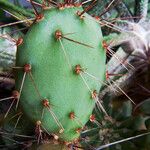
Opuntia oricola
Chaparral Prickly-pear Cactus · Chaparral pricklypear · Chaparral Prickly-pear
Description
Source: leafsnapOpuntia oricola, commonly known as the Orocopia prickly pear, is a cactus species native to the southwestern United States and northern Mexico. Belonging to the family Cactaceae, it is recognizable by its flat, paddle-shaped stems covered in spines. This plant can reach up to 2 meters in height and 1 meter in width. In late spring or early summer, Opuntia oricola produces bright yellow flowers, which are followed by edible fruits known as prickly pears. These oval-shaped fruits change color from green to red when ripe. This cactus is well-adapted to arid environments characterized by low rainfall and high temperatures. It can endure extended drought periods due to its ability to store water in its stems. Indigenous peoples have used Opuntia oricola for medicinal purposes for centuries. The fruit has served as a food source, while the pads have been applied topically to wounds for their anti-inflammatory properties. Overall, Opuntia oricola is a fascinating cactus species with unique adaptations that enable it to thrive in harsh environments. It provides significant benefits, such as food sources and medicinal uses, making it an essential plant in its native regions.
🎭 Desire, Affection
Care Guide
💧 Water Every 7 days
The Chaparral prickly pear is drought-tolerant and should be watered thoroughly only when the soil is dry. During the growing seasons—spring, summer, and fall—water it once a week, but reduce the frequency in winter. To prevent soil compaction, use rainwater or distilled water. Additionally, avoid watering the stem to prevent rot.
☀️ Light Full sun
Native to arid regions, the Chaparral pricklypear flourishes in full sun; its natural habitat features intense sunlight and little shade. It can also tolerate partial sun, giving it some flexibility in its growth.
What are the sunlight requirements for Chaparral pricklypear (Opuntia oricola)?
Chaparral pricklypear, scientifically known as Opuntia oricola, thrives in conditions where it can receive a substantial amount of sunlight. It requires 'full sun' conditions to flourish, which means it should be placed in spots receiving more than 6 hours of sunlight per day. However, it can also adapt to 'partial sun' conditions, requiring about 3-6 hours of sunlight daily. It's important to observe the way sunlight moves through your garden carefully to ensure that your Chaparral pricklypear is planted in a location that offers an ideal balance of light and shade, enhancing the plant's growth and wellbeing.
🌡️ Temperature 20–37.8°C
Chaparral pricklypear does best in warm conditions and needs relatively high temperatures during the growing season to stimulate growth and metabolic processes. It prefers plenty of sunlight, suitable moisture, and good air circulation. However, it can be harmed by very low temperatures and by overwatering. It's important to maintain balance and avoid extreme heat or excessively dry conditions as well.
What is the origin and ideal climate for Chaparral pricklypear?
Chaparral pricklypear, scientifically known as Opuntia oricola, originates from tropical regions characterized by warm and humid climates. This plant is highly adapted to high temperatures and humidity, thriving in environments that offer stable temperature conditions without sudden fluctuations. It generally does not tolerate cold well and needs higher temperatures to grow effectively. When exposed to environments with temperatures dropping too low, Chaparral pricklypear may stop growing or could potentially die. Given its preference for heat, it is crucial to protect it from cold temperatures by, for example, moving it indoors during autumn to a location near a bright window but away from direct heat sources.
How does low temperature affect Chaparral pricklypear and what are the solutions?
Chaparral pricklypear prefers environments where the temperature remains above 20\u00b0C and struggles in temperatures below 0\u00b0C. Exposure to temperatures below -5\u00b0C can lead to a lightening of the leaves. After frost damage, the plant's color may turn brown or black, showing signs of wilting and drooping. To address damage from low temperatures, it's recommended to trim off the frost-damaged parts of the plant and move it to a warmer indoor location immediately for cold protection. Placing the plant near a south-facing window ensures it receives enough sunlight, and it's important to avoid placing it too close to heaters or air conditioning vents, which could cause the air around it to become excessively dry.
How does high temperature affect Chaparral pricklypear and what are the solutions?
During the summer, it's advisable to keep Chaparral pricklypear in conditions where the temperature does not exceed 38\u00b0C to avoid stress from excessive heat. Temperatures above 43\u00b0C can cause the leaves to lighten in color, making the plant more prone to sunburn. To mitigate damage from high temperatures, the affected sunburned or dried-up parts of the plant should be trimmed away. The plant should also be relocated to an area that offers shade during the intense midday and afternoon sun. Additionally, watering the plant in the morning and evening can help maintain soil moisture, providing a more conducive growth environment.
💨 Humidity
🪴 Soil 6-7
🌱 Fertilizer
Chaparral pricklypear requires only light fertilization once or twice a year during the growing season. Do not fertilize in winter or in summer when it is dormant. Reduce the amount of fertilizer for repotted plants and wait a couple of months after repotting before applying fertilizer. Fertilizing helps maintain healthy growth and encourages blooming.
🪴 Pot & Repot
✂️ Pruning
The Chaparral Pricklypear is a cactus with broad, spiny pads that requires very little pruning. For best results, prune it in early spring. This will help remove any damaged pads, promote new growth, and control the plant's size. Always use clean, sharp tools and wear gloves to protect yourself from the sharp spines. Regular pruning also improves airflow around the plant, reducing the risk of pest issues.
🌿 Propagating
🐛 Diseases & pets
☠️ Toxicity
Characteristics
- Plant Type
- Succulent
- Life Cycle
- Perennial
- Genus
- Opuntia
- Family
- Cactaceae
- Hardiness Zone
- 9-11
- Mature Height
- 3.05 m
- Mature Spread
- 1.22 m
- Leaf Color
- Green, Dark Green
- Leaf Type
- Evergreen
- Flower Color
- Yellow, Pink
- Flower Size
- 5.08 cm to 6.35 cm
- Bloom Time
- Early summer, Mid summer
- Planting Time
- Summer
- Harvest Time
- Late summer, Early fall, Mid fall
- Native Area
- Mexico