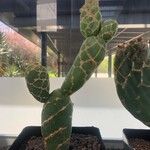
Opuntia zebrina
Pearbush · Pipestem prickly pear · Sweet prickly pear · Dillen's prickly pear
Care Guide
💧 Water
☀️ Light Full sun
The Erect Prickly Pear thrives in full, direct sunlight, reflecting the conditions of its native habitat. Those native areas are characterized by constant exposure to the sun. Insufficient light can limit its growth, and excessive light may cause scorching, but the plant is fairly tolerant of changing light levels.
🌡️ Temperature 20–37.8°C
Erect Prickly Pear does best in warm conditions and needs relatively high temperatures during the growing season to support growth and metabolic processes. It prefers plenty of sunlight, suitable moisture levels, and good air circulation. However, it can be damaged by very low temperatures and by overwatering. It is also important to keep conditions balanced and avoid temperatures that are too high or environments that are too dry.
💨 Humidity
🪴 Soil 6-7
🌱 Fertilizer
For Erect Prickly Pear, give light amounts of fertilizer once or twice a year during the growing season. Avoid fertilizing in winter and summer when the plant is dormant. Reduce feeding for repotted plants and wait a couple of months after repotting before applying fertilizer. Fertilizing helps support healthy growth and encourages blooms.
🪴 Pot & Repot
✂️ Pruning
🌿 Propagating
🐛 Diseases & pets
☠️ Toxicity
Characteristics
- Plant Type
- Succulent
- Life Cycle
- Perennial
- Genus
- Opuntia
- Family
- Cactaceae
- Hardiness Zone
- 9-11
- Mature Height
- 1.52 m to 3.05 m
- Mature Spread
- 49 cm to 76 cm
- Leaf Color
- Medium Sea Green
- Leaf Type
- Evergreen
- Flower Color
- Yellow
- Flower Size
- 5.08 cm to 6.35 cm
- Bloom Time
- Late spring, Early summer, Mid summer
- Planting Time
- Spring, Summer, Autumn
- Harvest Time
- Mid summer
- Native Area
- Colombia, Bahamas, Cuba, Mexico, Venezuela, Ecuador, Dominican Republic, Jamaica