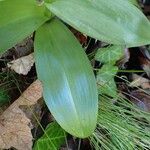
Orchis pallens
Pale-flowered Orchid · Pale orchid
Description
Source: leafsnapOrchis pallens, commonly known as the pale orchid, is a species of orchid native to Europe and Asia. This terrestrial plant can grow up to 30 cm tall and develops a single stem with several basal leaves. The oval-shaped leaves can reach up to 10 cm in length. The flowers of Orchis pallens are small, pale pink or white, and feature purple spots on the lip. They form dense clusters at the top of the stem and bloom from April to June. This plant thrives in moist soils found in shady areas such as woodlands, meadows, and grasslands. It can be found at altitudes ranging from sea level up to 2,000 meters. Orchis pallens has been utilized for medicinal purposes for centuries due to its anti-inflammatory properties. Unfortunately, it is now considered rare because of habitat loss driven by human activities like deforestation and urbanization. Conservation efforts are being undertaken by various organizations worldwide, including seed banks that store seeds for future use in restoration projects or research.
Care Guide
💧 Water Every 7 days
The pale-flowered orchid thrives in environments with consistent moisture and moderate humidity. For optimal growth, it needs to be watered weekly and planted in well-draining soil. This orchid is also adaptable to indoor humidity levels, making it ideal for growing in homes. Its adaptability enhances its resilience during the growing season.
How should I water my Pale-flowered orchid?
The way you water your Pale-flowered orchid depends on whether it is in an active growth phase or not. During active growth, you should water the soil and occasionally water the plant from above if it is warm, allowing it to absorb moisture through its leaves. However, in winter or cool and wet weather, stick to watering the soil only. You will know if your orchid needs more water if the roots and leaves become thin, dry, or discolored. On the other hand, if the orchid receives too much water, it will appear mushy and limp. It is important to grow the orchid in a pot with good drainage, using a potting mix with excellent drainage as well. During the growing season, water the plant multiple times per week, making sure that each watering drains quickly to avoid standing water. The amount of water needed depends on the size of the pot, with larger pots requiring less frequent watering and smaller pots needing a slightly more frequent schedule. For best results, use rainwater or distilled water that is close in temperature to the surrounding air.
What should I do if I give my Pale-flowered orchid too much or too little water?
To avoid killing your Pale-flowered orchid, it's important to not let its soil stay too wet for too long. While these plants need regular watering during active growth, they also require well-draining soil. Overwatering can lead to mushy texture and root rot, which can be addressed by pruning affected roots and repotting the orchid in a container with good drainage and fast-draining soil. However, excessive repotting can be detrimental to the Pale-flowered orchid, so it's crucial to find the right balance with watering. If the orchid starts to shrivel and feel dry, it's likely underwatered, and increasing the watering frequency is necessary.
How frequently should I water my Pale-flowered orchid?
To ensure the healthy growth of your Pale-flowered orchid during the active growth stage in spring and summer, water it once or twice per week. In hot and dry weather, increase watering to three times per week or more. In winter, watering requirements decrease significantly. For the coldest months, watering two to three times per month is sufficient. However, if you keep your orchid indoors during winter, take note that indoor environments can cause the soil to dry out faster. In this case, you may need to water more frequently. Use the fall season to gradually decrease watering from the summer rate to your reduced winter schedule.
What do I need to think about when watering my Pale-flowered orchid during different seasons and growth phases?
When planning the watering schedule for your Pale-flowered orchid, there are two important growth phases to consider. The first phase is called the active growth period, which occurs in spring and summer. During this time, it is necessary to water the plant multiple times per week. The second phase is the rest period, which occurs during winter for about two to three months. During this rest period, the Pale-flowered orchid requires less water and fertilization. It is recommended to water the plant only once or twice per month during this time. In the fall, you should gradually reduce the watering frequency from multiple times per week to once or twice per month in preparation for the winter period.
What's the best way to water my Pale-flowered orchid if I keep it inside?
The Pale-flowered orchid thrives in a relatively humid environment, which may not be attainable in most indoor locations. As a result, the plant and its soil may dry out more quickly indoors compared to outdoors. To address this issue, it is recommended to use a humidifier in the room where you grow your Pale-flowered orchid. Additionally, you may need to water the plant more frequently. However, while humidity is important for these orchids, it is equally crucial to have adequate air circulation to prevent excessive moisture build-up and related diseases. Including a fan in the growing room is therefore advised to maintain proper airflow.
☀️ Light Partial sun
The Provence orchid is native to habitats like forest understories and rocky areas, where it grows in natural shade. It prefers partial sun but can tolerate full sun or full shade, showing its adaptable and hardy nature.
What are the sunlight requirements for a Pale-flowered orchid?
The Pale-flowered orchid requires full exposure to the sun, thriving best with above 6 hours of sunlight, but it can also adapt to partial sun, receiving about 3-6 hours of sunlight. Originating from habitats characterized by plentiful light, its growth is positively affected by adequate sunlight exposure. Ensuring the right balance of light and shade is crucial for the plant's health, as both excessive and insufficient light can hinder its development.
How does artificial lighting support the growth of indoor Pale-flowered orchids?
For indoor Pale-flowered orchids, artificial lighting can be a vital solution when natural sunlight is insufficient, especially during winter or in less sunny spaces. LED lights are recommended for providing specific wavelengths needed for the plant's growth. Full sun plants require 30-50W/sq ft, partial sun plants need 20-30W/sq ft, and full shade plants need 10-20W/sq ft of artificial light. The light source should be placed 12-36 inches above the plant and turned on for 8-12 hours per day to mimic natural sunlight conditions.
What are the symptoms of inadequate lighting in Pale-flowered orchids?
Symptoms of inadequate lighting in Pale-flowered orchids include smaller new leaves, leggy or sparse growth, faster leaf drop, slower or halted new growth, and lighter-colored or yellow leaves indicating chlorosis. Excessive sunlight can cause sunscald, leaf curling, wilting, and leaf scorching, indicating the importance of finding a balanced light environment for the orchid.
What solutions can mitigate the effects of insufficient sunlight on Pale-flowered orchids?
To mitigate the effects of insufficient sunlight on Pale-flowered orchids, gradually increase their exposure to sunlight by moving them to sunnier locations each week until they achieve at least 6 hours of daily sunlight. Utilize a south-facing window or artificial lights for indoor plants, ensuring they receive ample light exposure. For outdoor plants, avoid sudden changes to prevent sunburn. Prune any obstructions or consider transplanting smaller plants to sunnier locations for better growth.
🌡️ Temperature 10–35°C
Provence orchid can tolerate a wide range of temperatures, but its distribution may still be restricted by different combinations of moisture and heat. It grows best in warm summer climates with sufficient rainfall or watering. Extended periods of cloudy, rainy weather or prolonged high temperatures increase the chance of the Provence orchid dying. In winter, adequate protection from cold can raise the plant's survival chances.
What is the ideal temperature range for growing a Pale-flowered orchid?
The Pale-flowered orchid, known botanically as Orchis pallens, thrives in cooler areas with an ideal temperature range between 41 to 77 °F (5 to 25 °C). To ensure the plant's growth and blooming, it's important to adjust growing conditions during colder or warmer seasons to maintain this temperature balance.
Does the Pale-flowered orchid require frost protection during winter?
The Pale-flowered orchid is highly cold-tolerant and does not require additional frost protection measures during the winter months. To help the plant through winter and early spring, it is advisable to water it generously before the first freeze in autumn. This step ensures the soil remains moist and enters a frozen state, preventing drought and water scarcity.
What should I do if the temperature falls below -25°C?
Although the Pale-flowered orchid is extremely cold-tolerant, if the winter temperature drops below -25°C, it may affect sprouting in spring. There might be a decrease in sprouting or even no sprouting at all. The solution is to remove any parts of the plant that have failed to sprout in spring.
How does high temperature affect the Pale-flowered orchid, and what are the solutions?
The Pale-flowered orchid is not tolerant to high temperatures; growth will cease, and the plant becomes more susceptible to rot if the temperature exceeds 25°C. To mitigate high temperature effects, trim away sunburned and dried-up parts. Relocate the plant to a shaded area during midday and afternoon sun or use a shade cloth. Ensure to water the plant in the morning and evening to keep the soil moist.
💨 Humidity
🪴 Soil 6-7
🌱 Fertilizer
The best time to fertilize a Provence orchid is in early spring, as it comes out of dormancy and begins active growth. Fertilizing supplies essential nutrients for healthy development. Although the Provence orchid has relatively low fertilizer requirements, fertilizing once a year can improve its survival and encourage better, longer-lasting flowers.
🪴 Pot & Repot
✂️ Pruning
To encourage growth and flowering, pale-flowered orchids should be pruned from early to late spring. Remove any damaged foliage and lightly trim the plant after it blooms to maintain its shape without excessive cutting. Regular thinning helps prevent disease and enhances blooming, promoting the orchid's overall health and beauty.
🌿 Propagating
🐛 Diseases & pets
☠️ Toxicity
Characteristics
- Plant Type
- Herb
- Life Cycle
- Perennial
- Genus
- Orchis
- Family
- Orchidaceae
- Hardiness Zone
- 6-10
- Mature Height
- 20 cm to 40 cm
- Mature Spread
- 10 cm to 15 cm
- Leaf Color
- Green, Dark Green
- Leaf Type
- Deciduous
- Flower Color
- Yellow
- Flower Size
- 7.62 cm
- Bloom Time
- Early spring, Mid spring
- Planting Time
- Spring, Summer, Autumn
- Harvest Time
- Late spring, Early summer
- Native Area
- Russia, Turkey, Portugal, Italy, Spain, Switzerland, Montenegro, Bulgaria, Albania, Greece, Croatia, Slovenia, France