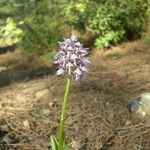
Orchis simia
Monkey Orchid · Naked hanging man · Man Orchid
Description
Source: leafsnapOrchis simia, commonly known as the Monkey Orchid, is a native orchid species of the Mediterranean region. This small plant typically reaches a height of 20-30 cm and produces a single stem adorned with several leaves. The flowers of the Monkey Orchid are especially noteworthy, as they uniquely resemble a monkey's face. The two large petals appear as ears, while another petal forms what looks like a nose. These flowers are usually pink or purple and bloom in late spring or early summer. The Monkey Orchid prefers environments with well-draining soil, thriving in rocky or grassy areas. It naturally grows in various parts of Europe, including Spain, Italy, Greece, Turkey, and Cyprus. Due to its unique appearance, the Monkey Orchid has become popular among collectors. Unfortunately, this popularity has led to over-collection, threatening the species in its natural habitats. Conservation efforts are now in place to protect Orchis simia from extinction. In summary, Orchis simia is a fascinating plant celebrated for its distinctive, monkey-like flowers that have captivated people worldwide.
Care Guide
💧 Water Every 7 days
The monkey orchid flourishes in humid, tropical climates where there is consistent moisture. It is sensitive to drought and requires weekly watering to stay healthy. Although primarily grown as an indoor decorative plant, the monkey orchid thrives best in conditions that mimic the moisture and humidity levels of its natural habitat.
How should I water my Monkey orchid most effectively?
The watering requirements for your Monkey orchid will depend on its growth phase. During active growth, water the soil and occasionally mist the leaves if it's warm. In winter or when the weather is cool or wet, stick to watering the soil. Signs that your orchid needs more water include dry roots, thin leaves, and discoloration. Too much water will make the orchid mushy and limp. Use a well-draining potting mix and grow your orchid in a pot. Water it multiple times a week during the growing season, making sure the water drains quickly. The size of the pot determines how frequently you water, with larger pots requiring less frequent watering. Rainwater or distilled water that matches the air temperature is best for your orchid.
What should I do if I give my Monkey orchid too much or too little water?
To keep your Monkey orchid healthy, it's important to avoid leaving it in overly moist soil. While these plants need frequent watering during active growth, they also require fast-draining soil. Overwatering can lead to mushiness and root rot, which can be addressed by cutting out any affected roots with sterile pruning shears. Afterward, repot the orchid in a container with good drainage, using a fast-draining potting mix. However, be mindful that excessive repotting may not be beneficial for the orchid. So, finding the right watering rate is crucial. If the orchid starts to shrivel and feel dry, it's a sign of underwatering. In this case, increase the watering frequency as the soil may be drying out faster than expected.
How frequently should I water my Monkey orchid?
To keep your Monkey orchid thriving during the active growth stage in spring and summer, water it once or twice per week. If it's hot and dry for extended periods, increase watering to three times per week or more. In the winter, continue watering your Monkey orchid, but not as much. Aim for two to three times per month to sustain it during the coldest months. Keep in mind that if you keep your orchid indoors during winter, the soil may dry out more quickly, so consider increasing the number of monthly waterings. Use the fall season to gradually decrease watering from multiple times per week to the reduced winter schedule.
What do I need to think about when watering my Monkey orchid at different times of the year, like when it's growing?
When planning the watering schedule for your Monkey orchid, it's important to consider two growth phases. The active growth period occurs in spring and summer, and requires watering the plant multiple times per week. On the other hand, during the rest period in winter, the Monkey orchid should experience reduced watering and fertilization for about two to three months. Watering the plant once or twice per month is sufficient during this time. To transition from the active growth period to the rest period, gradually reduce the watering frequency from multiple times per week to once or twice per month during the fall season.
If I grow my Monkey orchid indoors, how should I change the way I water it?
The Monkey orchid is a plant that thrives in a relatively humid environment. However, most indoor growing locations don't provide the desired level of air moisture, causing the plant and soil to dry out faster than outside. To counteract this, using a humidifier in the plant's room is recommended. Additionally, the Monkey orchid may need to be watered more often. It's important to note that while humidity is essential, proper air circulation is also required to prevent excess moisture and the diseases it can cause. To ensure this, a fan can be included in the room where the plant is grown.
☀️ Light Full sun
The monkey orchid requires plenty of sunlight to grow vigorously. It can cope with conditions that offer only moderate sun exposure. Its origins in sunny habitats have adapted it to tolerate abundant light. However, moderation is essential, because too much can cause withering, while too little can lead to poor health and reduced growth.
What are the sunlight requirements for Monkey Orchid?
Monkey Orchid needs ample sunlight to flourish, thriving best in full sun conditions, which means it requires more than 6 hours of sunlight daily. However, it can also tolerate partial sun, receiving about 3-6 hours of sunlight. It's essential to watch how sunlight moves through your garden to identify spots that offer the right balance of light and shade, ensuring the plant's well-being. Excessive exposure can be harmful, leading to symptoms like wilting or leaf scorch, while insufficient light can impair growth and health, making it crucial to moderate sunlight exposure.
How important is artificial lighting for indoor-grown Monkey Orchid?
For indoor Monkey Orchid plants, artificial lighting is crucial, especially when natural sunlight is not sufficient, such as in winter or less sunny locales. Adequate lighting promotes healthier and faster growth. LED lights are recommended due to their ability to provide specific wavelengths needed by the plants. The intensity required varies; full sun plants need 30-50W per square foot, partial sun plants need 20-30W per square foot, and full shade plants need 10-20W per square foot. The lights should be placed 12-36 inches above the plant and turned on for 8-12 hours per day to mimic natural daylight hours, ensuring optimal growth conditions.
What symptoms indicate insufficient light for Monkey Orchid grown indoors?
Monkey Orchid exhibits multiple symptoms when it gets insufficient light, including smaller new leaves compared to the older ones, leggy or sparse growth giving the plant a stretched-out appearance, quicker leaf drop to conserve resources, delayed or halted growth, and lighter-colored new leaves indicating a lack of chlorophyll. In extreme sunlight, conditions like chlorosis, sunscald, leaf curling, wilting, and leaf scorching can occur, each damaging the plant’s health and appearance. These symptoms help in identifying and addressing lighting issues to improve the plant's health.
What are the solutions for Monkey Orchid's lack of sunlight?
To combat insufficient sunlight for Monkey Orchid, gradually introduce the plant to sunnier spots, ensuring it eventually gets at least 6 hours of direct sunlight daily. Indoor plants benefit from being placed near south-facing windows or under grow lights for 8 hours a day. For outdoor plants, acclimate them to brighter conditions gradually to prevent sunburn. Pruning surrounding vegetation can help reduce shade on outdoor plants. If needed, transplant smaller plants during their dormant period to a location with better sunlight and drainage. Although parts of the plant damaged by low light may not recover, new growth should be healthier with improved lighting.
🌡️ Temperature 5–32.2°C
Monkey orchid is found in habitats with temperatures between 41 and 89.6 °F (5 to 32 °C). It prefers these moderate conditions, and adapting to cooler or warmer environments can be difficult. Regular monitoring during seasonal changes is necessary to maintain the optimal temperature range.
What is the native temperature range for Monkey Orchid?
The Monkey Orchid thrives in environments where temperatures range from 41 to 89.6 °F (5 to 32 °C). These moderate temperature conditions are essential for the plant's wellbeing, and adjusting to significantly cooler or warmer conditions might be challenging. It's important to regularly check the temperatures, especially during seasonal changes, to ensure they remain within this optimal range.
Does Monkey Orchid need special frost protection measures?
Monkey Orchid possesses strong cold resistance and typically does not require special frost protection measures during winter. Nonetheless, if temperatures are forecasted to drop below -25°C, it's crucial to provide cold protection. This can be done by covering the plant with insulating materials such as soil or straw. Additionally, watering the plant abundantly before the first freeze in autumn helps keep the soil moist and prevents drought and water scarcity during winter and early spring by ensuring the soil enters a frozen state.
How does Monkey Orchid react to low temperatures?
Monkey Orchid is cold-tolerant and fares best when temperatures remain above 5°C. During winter, it is advisable to keep the temperature above -20°C. If temperatures fall below -25°C, the plant might not show immediate damage during winter, but you might notice a decrease in sprouting or a complete lack of sprouting in spring. In such cases, it is recommended to remove any parts of the plant that have failed to sprout.
How should you care for Monkey Orchid in high temperatures?
During the summer, it's important to ensure that the temperature around the Monkey Orchid does not exceed 32°C. If temperatures get above 35°C, the orchid's leaves may become lighter in color, more prone to curling, susceptible to sunburn, and in severe cases, the entire plant may wilt and dry out. To protect the plant, trim away sunburned and dried parts. Then, move the plant to a spot that offers shade during midday and afternoon, or use a shade cloth. Watering the plant in the morning and evening can help keep the soil moist and further protect the plant from heat stress.
💨 Humidity
🪴 Soil 6-7
🌱 Fertilizer
The best time to fertilize a Monkey orchid is in early spring, as it comes out of dormancy and begins active growth. Fertilizing supplies essential nutrients for healthy development. Although the Monkey orchid needs relatively little fertilizer, applying it annually can improve its survival and encourage better, longer-lasting blooms.
🪴 Pot & Repot
✂️ Pruning
Pruning monkey orchids from early to late spring helps improve their health and appearance by removing dead leaves and spent flowers. This process encourages new growth, improves air circulation, and reduces the risk of disease. For the best care, refer to reputable horticultural sources for detailed guidelines.
🌿 Propagating
🐛 Diseases & pets
☠️ Toxicity
Characteristics
- Plant Type
- Herb
- Life Cycle
- Perennial
- Genus
- Orchis
- Family
- Orchidaceae
- Hardiness Zone
- 5-8
- Mature Height
- 15 cm to 30 cm
- Mature Spread
- 15 cm
- Leaf Color
- Green
- Leaf Type
- Deciduous
- Flower Color
- Pink, Purple
- Flower Size
- 1.02 cm to 1.52 cm
- Bloom Time
- Early spring, Mid spring
- Planting Time
- Spring, Summer, Autumn
- Harvest Time
- Late spring, Early summer