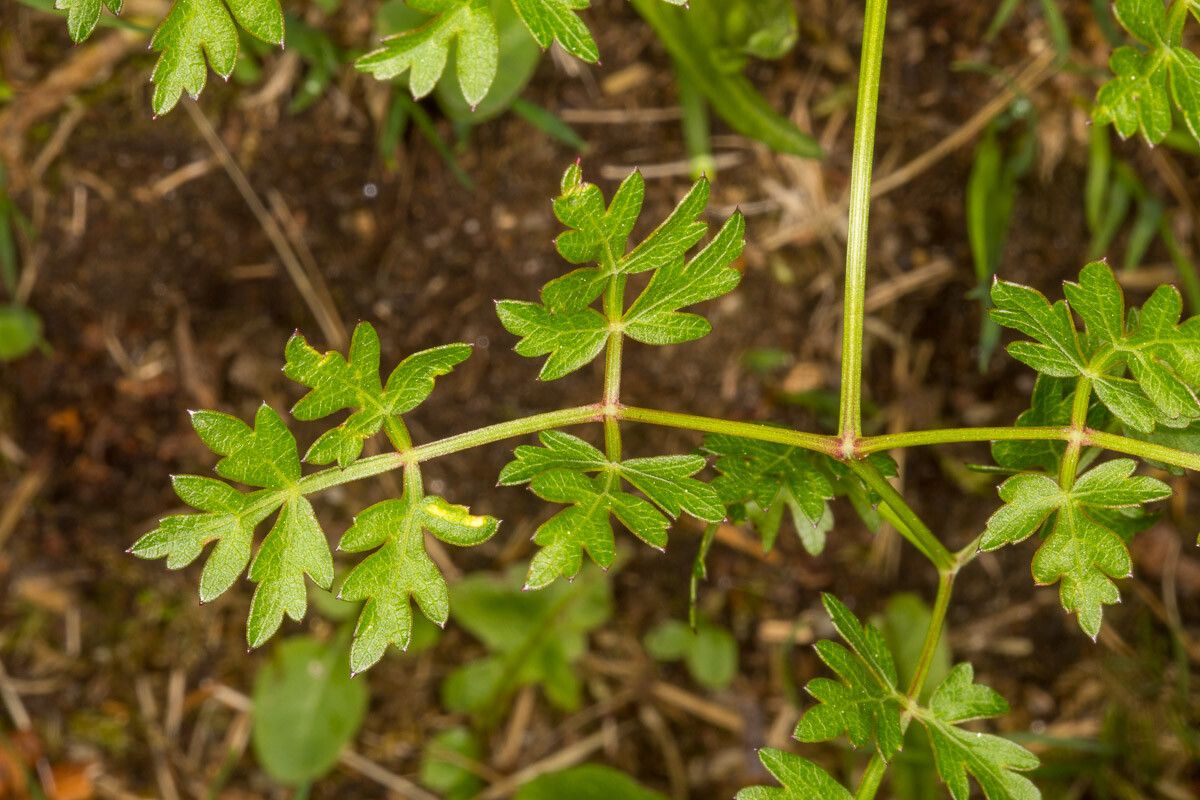
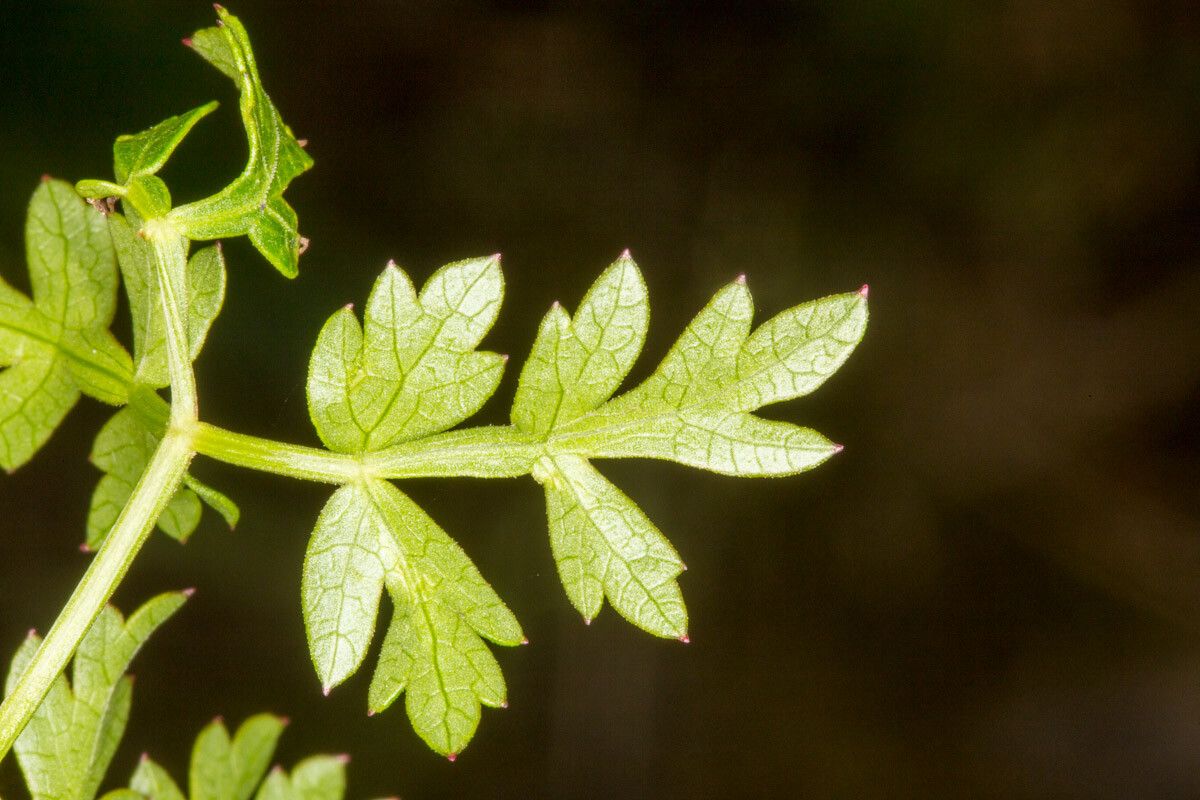
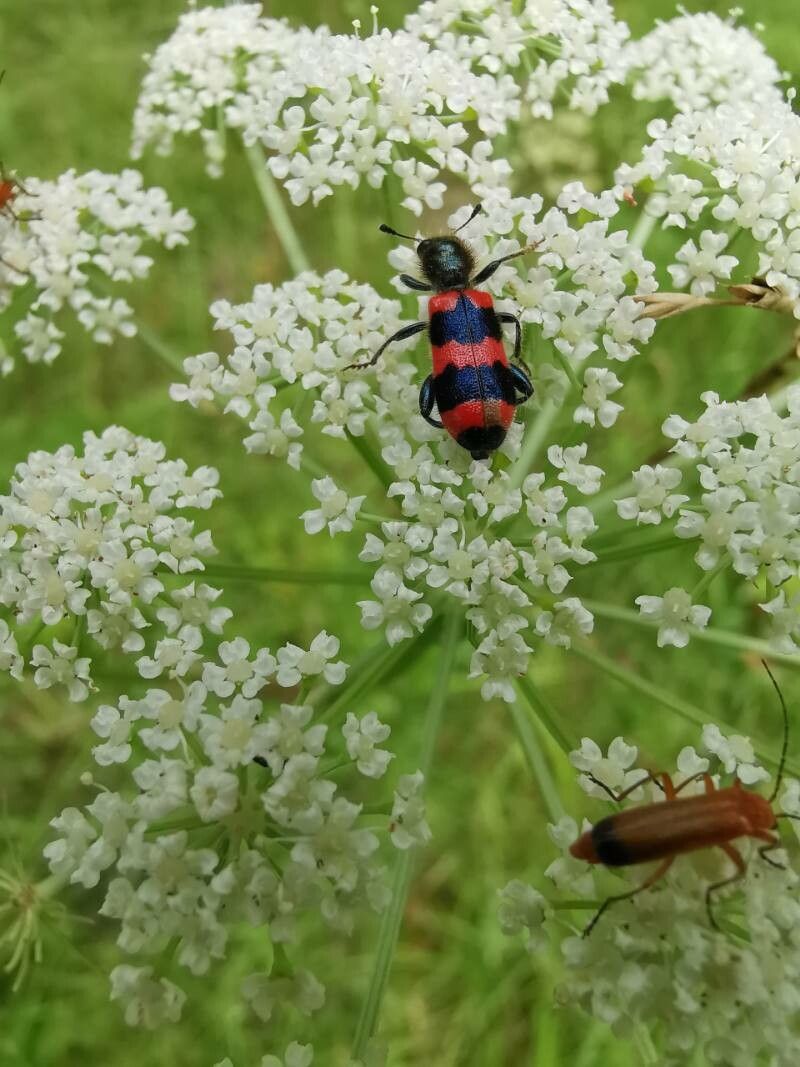
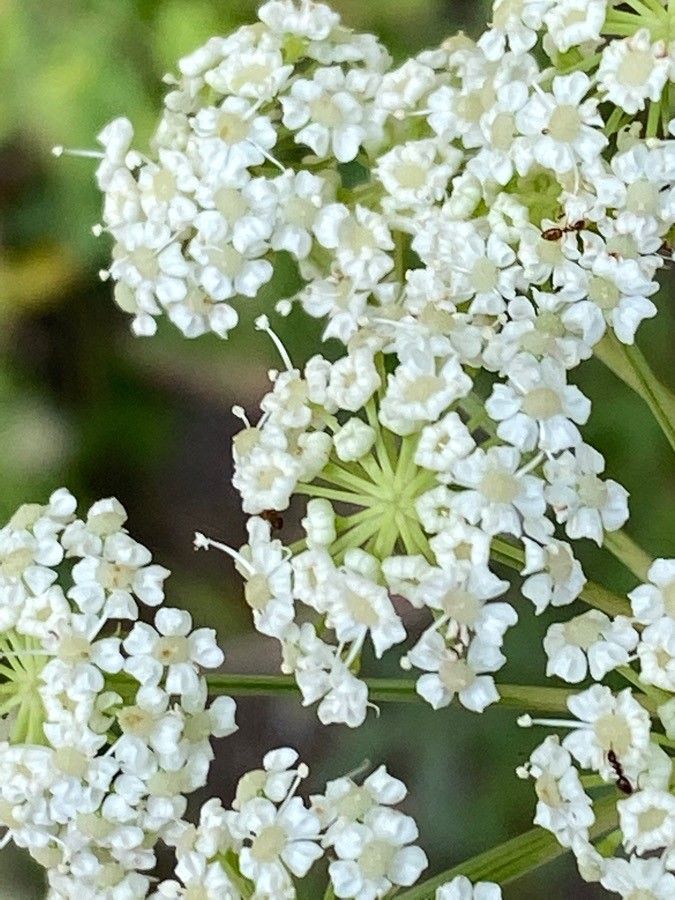
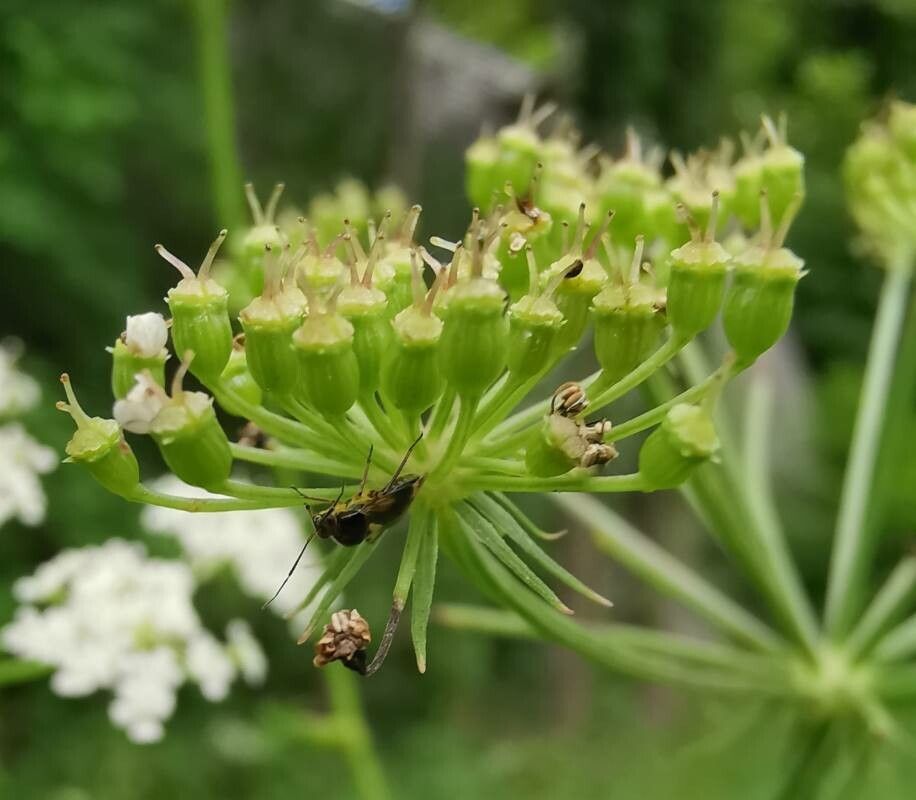
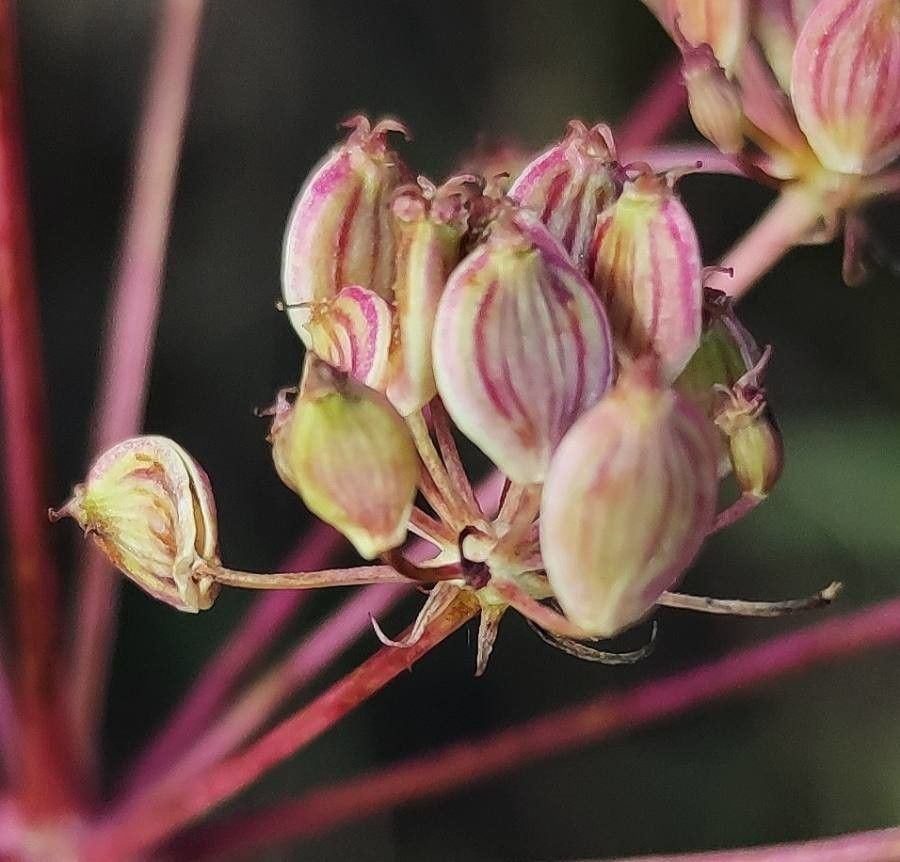
Oreoselinum nigrum, commonly known as black selinum or black lovage, is a perennial herbaceous plant belonging to the Apiaceae family. Native to Europe and Asia, it thrives in damp meadows, along riverbanks, and in other wet habitats. This plant can reach a height of up to 1.5 meters and features a thick, hollow stem. Its dark green leaves are divided into numerous small leaflets, giving them a feathery appearance. The flowers are small, white or pinkish, and arranged in an umbrella-like formation with five petals each. For centuries, Oreoselinum nigrum has been valued for its anti-inflammatory properties and used in traditional medicine. Its aromatic flavor, reminiscent of celery or parsley, also makes it a popular culinary herb. The plant prefers moist soil but can tolerate partial shade as well as full sun. It is relatively easy to grow from seed, though regular watering is necessary during the growing season. In summary, Oreoselinum nigrum is a fascinating plant with both medicinal and culinary applications, thriving in wet habitats across Europe and Asia.
Oreoselinum majus is fairly disease-resistant and generally not prone to illnesses. However, it can be vulnerable to pests and diseases present in its surroundings. These outbreaks are typically mild. In terms of care, the plant requires moderate maintenance. It should be pruned regularly to preserve a neat appearance and support healthy growth. Fertilizing can also help encourage flowering. Oreoselinum majus is suitable for anyone with outdoor space, such as a garden or patio, and does not demand extensive care experience. It may need more attention when grown indoors.
How to keep Oreoselinum Nigrum.
Light
Oreoselinum majus comes from bright, open habitats and does best in full sun. It can withstand partial sun but favors direct sunlight for optimal growth. This plant, which may be annual or biennial, is noted for its sun-loving character.
Temperature
Oreoselinum majus can tolerate a wide range of temperatures, but its distribution may still be restricted by various combinations of moisture and heat. It grows best in warm summer climates with adequate rainfall or irrigation. Extended periods of cloudy, rainy weather or prolonged high temperatures can increase the chance of Oreoselinum majus dying. In winter, protecting the plant from cold can improve its survival.
Fertilizer
Oreoselinum majus are considered heavy feeders in terms of nutrients. They require frequent, low-dose applications of nitrogen and potassium fertilizers and periodic applications of phosphorus, micronutrients, sulfur, and magnesium to sustain good growth and bright coloration. Continuous fertilization throughout the growing season is necessary to prevent deficiency symptoms and maintain optimal growth.
Botanical profile.
- Plant Type
- Herb
- Life Cycle
- Biennial
- Genus
- Oreoselinum
- Family
- Apiaceae
- Hardiness Zone
- 5-9
- Mature Height
- 0.61 m to 1.22 m
- Mature Spread
- 30 cm to 61 cm
- Leaf Color
- Dark Green, Forest Green
- Leaf Type
- Deciduous
- Flower Color
- White
- Flower Size
- 0.25 cm to 0.51 cm
- Bloom Time
- Early summer, Mid summer
- Planting Time
- Spring, Summer, Autumn
- Harvest Time
- Late summer, Early fall
Other names.