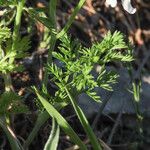
Orlaya grandiflora
Large-flower orlaya · White lace flower · Large-flowered Orlaya · Orlaya
Description
Source: leafsnapOrlaya grandiflora, commonly known as the white lace flower, is a delicate and beautiful annual plant belonging to the Apiaceae family. Native to Europe and Asia, it has also been introduced in other parts of the world as an ornamental plant. The plant can grow up to 60 cm tall and produces clusters of small white flowers that resemble lace. These flowers bloom from late spring to early autumn, attracting bees and other pollinators. The leaves of Orlaya grandiflora are finely divided into small segments, giving them a feathery appearance. The stems are slender yet sturdy enough to support the delicate flowers without drooping or breaking. This plant prefers full sun or partial shade and thrives in well-drained soil that is rich in organic matter. While it can tolerate drought conditions, it requires regular watering during prolonged dry spells. Orlaya grandiflora is an excellent choice for garden borders, rock gardens, or containers due to its attractive appearance and easy-to-grow nature. Additionally, its long-lasting blooms make it a great option for cut flower arrangements. Overall, Orlaya grandiflora is a charming addition to any garden. Its delicate beauty and easy-to-care-for nature make it an ideal choice for both novice and experienced gardeners looking for something new!
💡 The white laceflower is often mistaken for Queen Anne’s lace, but it is actually a distinct plant. Also known as Minoan lace, this plant boasts a long blooming season that starts in early summer and continues until the first frost in fall. Even when it isn’t flowering, the white laceflower remains quite appealing.
🌳 The white laceflower is an excellent addition to any garden as it repels pests while attracting birds, butterflies, and bees. This makes it ideal for informal wildflower and pollinator gardens. Gardeners often plant this striking flowering plant in garden beds alongside other ornamentals or use it along borders and walkways. It's particularly suitable for informal gardens because deer tend to avoid eating these beautiful plants.
Care Guide
💧 Water Every 7 days
White laceflower thrives with moderate watering, ideally once a week, and can withstand short dry spells. It needs well-draining soil to maintain proper hydration and prevent root rot, reflecting its adaptation from native meadows to outdoor environments.
What is the most effective way to water my White laceflower?
Watering White laceflower is simple, and you have several options for how to do it. You can use a garden hose with a spray nozzle, a watering can, or any other common watering tool. White laceflower is not too particular about the type of water it receives, so you can use rainwater, tap water, or filtered water. However, avoid watering from overhead as this can harm the leaves and flowers and potentially lead to disease. A drip irrigation system works well for White laceflower because it provides even and direct water to the soil. If you have a container-grown White laceflower, you can use similar watering techniques but with a cup, watering can, or tap to apply water directly to the soil.
If I give my White laceflower too much or too little water, what should I do?
To maintain the health of your White laceflower, it's important to address both underwatering and overwatering. If you notice your plant lacks moisture, increase your watering frequency. However, overwatering can be more problematic if not caught early. Overwatering can lead to diseases and the decline of your plant. To prevent this, choose a suitable location with ample sunlight to dry the soil and good drainage to avoid waterlogging. If your potted White laceflower is overwatered, consider repotting it. Ensure the new pot has better drainage and use loose soil when repotting.
How frequently should I water my White laceflower?
To keep your White laceflower healthy, it's important to water it regularly. In the spring, watering once a week should be sufficient. However, as the season progresses and temperatures rise, you may need to increase watering to two or three times a week. Be careful not to overwater, as that can harm the plant. Regardless of how often you water, make sure the soil remains moist but not overly wet. When it comes to potted White laceflowers, you'll need to water them more frequently. The soil in pots tends to dry out faster than ground soil due to increased heat. In most cases, aim for watering container-grown White laceflowers a few times per week, as opposed to just once per week for those planted in the ground.
How much water does my White laceflower require?
Determining the right amount of water for your White laceflower can be done in a few ways. Some gardeners prefer to gauge moisture levels by feeling the soil, and suggest watering until the top six inches are moist. Another approach is using a set measurement, such as around two gallons per week, adjusting for the weather and soil dryness. However, be cautious not to overwater if your plant requires less. When growing in a container, you should water until all soil layers are moist or until there is a slight trickle of excess water coming from the drainage holes.
How do I know if I'm giving enough water to my White laceflower?
Avoiding overwatering your White laceflower can be somewhat difficult. This is because these plants have deep roots that require weekly watering to keep the soil moist. However, White laceflowers are highly susceptible to root rot and may also develop browning if overwatered. Underwatering is less likely to be a problem, as these plants can survive without supplemental watering for a while. However, if you wait too long to water, the plant will likely start wilting and the leaves may become dry.
☀️ Light Full sun
White laceflower prefers steady sunlight during the day but can also manage with partially shaded light. Too much or too little sunlight can harm its growth; recreating the light conditions of its native habitat supports healthy development.
What are the sunlight requirements for White Laceflower (Orlaya grandiflora)?
White Laceflower (Orlaya grandiflora) thrives best when exposed to full sun, which means it needs more than 6 hours of sunlight daily. It can also adapt to partial sun conditions, requiring about 3-6 hours of sunlight. It's important to observe the movement of sunlight through your garden to find spots that offer a balance of light and shade, ensuring your plants grow happily.
How do I ensure my White Laceflower receives enough light indoors?
To make sure your White Laceflower gets sufficient light indoors, considering it prefers consistent exposure, you can use artificial lighting as a vital solution, especially when natural sunlight is lacking. LED lights are recommended because they can be tailored to provide specific wavelengths needed by plants. For full sun plants, aim for 30-50W/sq ft of artificial light; partial sun plants need 20-30W/sq ft, and full shade plants require 10-20W/sq ft. Position the light source 12-36 inches above the plant and mimic natural daylight hours, ensuring most plants get 8-12 hours of light per day.
What are the common symptoms of inadequate light in White Laceflower?
When White Laceflower doesn't receive enough light, especially indoors, it may show symptoms such as smaller new leaves, leggy or sparse growth, faster leaf drop, slower or no new growth, lighter-colored new leaves, chlorosis, sunscald, leaf curling, wilting, and leaf scorching. These signs indicate the plant is struggling due to insufficient light or overexposure to sunlight.
How can I address light-related issues for my White Laceflower?
To address light deficiencies for your White Laceflower, gradually move the plant to a sunnier spot each week until it gets at least 6 hours of direct sunlight if outdoors. For indoor plants, consider using artificial lighting if the plant is large. Keep a desk or ceiling lamp on for a minimum of 8 hours daily or invest in professional grow lights. Minimize obstructions by pruning trees or branches blocking sunlight and consider transplanting smaller plants to areas with more light. It's crucial to avoid sudden changes in light exposure to prevent sunburn. Note that parts of the plant that have been severely affected by insufficient light may not recover, but new growth should be healthy once light conditions improve.
🌡️ Temperature 0–37.8°C
White laceflower originates from areas with milder climates and does best in temperatures of 68 to 100.4 °F (20 to 38 ℃). In cooler seasons, take steps to provide additional warmth. When the season becomes warmer, make sure it is not exposed to temperatures above its preferred range.
What is the native climate preference for White Laceflower (Orlaya grandiflora)?
The White Laceflower, scientifically known as Orlaya grandiflora, is native to regions with milder climates, thriving best in temperatures ranging from 68 to 100.4 °F (20 to 38 °C). During the cooler seasons, it is important to take warming measures to ensure the plant does not get exposed to temperatures below its preferred range. Despite its strong cold resistance, in extreme cold where temperatures are expected to fall below -40°C, it's vital to provide protection, possibly by covering the plant with soil or straw. Also, before the first freeze in autumn, watering the plant abundantly to keep the soil moist is recommended. This precaution helps to prevent drought and water scarcity for the plant during winter and early spring.
How does White Laceflower respond to low temperatures, and what are the solutions?
White Laceflower is notably cold-tolerant, ideally thriving when the temperature remains above 20°C and always kept above 0°C during winter. Despite its resilience, if the temperature falls below -40°C, the plant may not show noticeable changes during winter; however, there could be a decrease in sprouting or even no sprouting at all during spring. The solution for the aftermath of extreme cold conditions involves removing any parts of the plant that have failed to sprout in spring, allowing for rejuvenation and new growth.
What are the effects of high temperatures on White Laceflower, and how can they be mitigated?
During the summer, it's critical to ensure that the White Laceflower remains under its upper-temperature threshold of 38°C. Exposure to temperatures above 43°C may lead the plant's leaves to lighten in color, become prone to curling, and susceptible to sunburn. In severe cases, the plant may wilt and dry out completely. To mitigate such high-temperature effects, it's advisable to trim away any sunburned or dried-up parts of the plant. Moving the plant to a location that provides shade during the midday and afternoon sun, or using a shade cloth, can be beneficial. Additionally, watering the plant in the morning and evening to keep the soil moist can help alleviate stress from excessive heat.
💨 Humidity
🪴 Soil 6-7
🌱 Fertilizer
Once most of the White laceflower's blooms have opened to full size, resume fertilizing. At about peak bloom, apply fertilizer every three to four weeks, weather permitting. Then, when the White laceflower begins producing fewer new blooms, stop fertilizing; there is no need to fertilize once the plant can no longer produce more blooms.
Why is it important to add fertilizer to my White laceflower plant?
Plants, including White laceflower, need nutrients to survive. Most gardeners, regardless of experience, know this. If White laceflower doesn't receive enough food, it will die out soon after the first pollination. To ensure its survival and produce large, beautiful flowers throughout the blooming season, it's crucial to provide the right type and amount of nutrients. Using fertilizer is particularly helpful for White laceflower's root system, which is thin and easily damaged. By fertilizing at planting, White laceflower can develop a strong root structure that offers stability and enhances flowering. Properly timed fertilization can also significantly extend White laceflower's flowering period.
When should I fertilize my White laceflower for the best results?
White laceflower experiences tremendous growth in the early part of the growing season, once the danger of the last frost has passed. It is advisable to fertilize White laceflower during this time, specifically during its planting phase, regardless of whether it is planted in the ground or in planters. This initial application will be the only dose of fertilizer until later in the year, when the blooms are in full force. Once the season is fully underway and White laceflower has opened most of its blooms to their full size, it is time to resume fertilizing. This should be done every three to four weeks, depending on the weather conditions, around the time when the blooms are at their peak output. However, once White laceflower starts producing fewer new blooms, it is best to stop fertilizing as there is no need to provide nutrients when the plant cannot produce additional blooms.
When is the best time to not fertilize my White laceflower?
Regular fertilizing is important for White laceflower, but it's crucial to apply it at the right time. There are certain situations where it's best to hold back on fertilizing. These situations can be climate-related or involve controllable factors. If something is wrong with the plant, the soil, or the climate, it's advisable to wait until things have improved and the plant has recovered. For example, if there are severe or unexpected weather changes like a sudden cold snap in the middle of summer, it's recommended to wait until it's warm again before fertilizing. Similarly, if the soil is too dry or compacted to absorb anything, applying fertilizer would send it straight to the roots without being diffused by the soil. During the hottest parts of the day when temperatures soar into the 90-degree Fahrenheit range, it's best not to apply fertilizer. This is because fertilizers can break down at different speeds depending on temperature, and it's important not to allow hot temperatures to break it down too quickly. Additionally, any pests or diseases should be treated and cleared up before re-fertilizing.
What kind of fertilizer does my White laceflower plant need?
Most types of White laceflower require the same balance of nutrients from fertilizer. It is recommended to use a fertilizer specifically formulated for high-yield blooming plants, with a higher level of phosphorus (indicated by a higher P number in its NPK number, such as 10-30-10). There are multiple fertilizer brands that sell a suitable fertilizer for blooming plants like White laceflower, which provide the necessary nutrients effortlessly. If you opt for a pre-mixed fertilizer, be sure to follow the package instructions to avoid over or under-fertilizing White laceflower, as both can negatively impact its growth and even cause wilting.
How can I feed my White laceflower plant?
Applying fertilizer to White laceflower can vary depending on the type of fertilizer you have. However, there are some general tips to follow. When first planting White laceflower, mix the recommended amount of fertilizer into the soil before planting and water it in. For pellet fertilizers, mix them into the top inch of soil around the outer edge of the plant and water them in well at first, then continue watering regularly. Other fertilizers can be mixed into a watering can and applied like regular watering. Aim to fertilize every three to four weeks, unless the packaging provides different instructions.
🪴 Pot & Repot
✂️ Pruning
The white laceflower is known for its delicate white blossoms and fern-like leaves. To maintain its health and appearance, prune the plant from early to late spring by trimming away any dead stems and shaping it to control its size. Regularly remove spent blooms to encourage continuous flowering, support robust growth, and prevent disease. This will enhance the overall health of the plant.
🌿 Propagating
🐛 Diseases & pets
☠️ Toxicity
Characteristics
- Plant Type
- Herb
- Life Cycle
- Annual, Biennial, Perennial
- Genus
- Orlaya
- Family
- Apiaceae
- Hardiness Zone
- 2-11
- Mature Height
- 61 cm to 76 cm
- Mature Spread
- 30 cm
- Leaf Color
- Green
- Leaf Type
- Deciduous
- Flower Color
- White
- Flower Size
- 7.62 cm to 11.43 cm
- Bloom Time
- Late spring, Early summer, Mid summer
- Planting Time
- Spring, Summer
- Harvest Time
- Mid summer
- Native Area
- Turkey, Austria, Czech Republic, Slovakia, Montenegro, Bulgaria, Greece, Croatia, Slovenia, Ukraine, Serbia, Uzbekistan, Russia, Hungary, Germany, Italy, Spain, Switzerland, Albania, Romania, Belgium, France