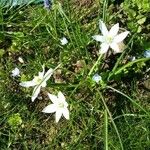
Ornithogalum umbellatum
Star of Bethlehem · Star-of-Bethlehem · Sleepydick · Garden star-of-Bethlehem · Nap-at-noon
Description
Source: leafsnapOrnithogalum umbellatum, the garden star-of-Bethlehem, grass lily, nap-at-noon, or eleven-o'clock lady, a species of the genus Ornithogalum, is a perennial bulbous flowering plant in the asparagus family (Asparagaceae). O. umbellatum is a relatively short plant, occurring in tufts of basal linear leaves, producing conspicuous white flowers, in a stellate pattern, in mid to late spring. The flowers open late in the day (hence some of its common names), but when closed have a green stripe on the outside. It is native throughout most of southern and central Europe, and north-western Africa. O. umbellatum is often grown as a garden ornamental, but in North America and other areas it has escaped cultivation and can be found in many areas, where it may become an invasive noxious weed. Parts of the plant are considered poisonous, but are used in some regional cuisines. Essences are also sold as patent remedies. O. umbellatum has been depicted in art by artists such as Leonardo da Vinci, and folklore has suggested it originally grew from fragments of the star of Bethlehem, hence its horticultural name.
🎭 Beauty in shared simplicity, innocence, purity, honesty, and hope
Care Guide
💧 Water Every week
The Garden Star-of-Bethlehem thrives in well-drained soil and prefers moderate moisture. To maintain its health, you should water it weekly, being careful to avoid waterlogging. As an herbaceous perennial, its water needs are influenced by rainfall, requiring less supplemental watering during rainy periods.
What should I do if I give my Garden star-of-bethlehem too much or too little water?
The Garden star-of-bethlehem is a delicate plant that should not be overwatered. Symptoms of overwatering include a mushy bulb, floppy stems, droopy flowers, and a yellowed stalk. Yellow leaves at the end of the blooming period are normal, but if they turn yellow before the flowers have bloomed, it's a sign of overwatering. Unfortunately, bulb rot cannot be reversed, but if caught early, the rotten portions of the bulb can be carefully removed and the soil should be replaced. Outdoor plants should be moved to a different location. Underwatering is less of an issue, but signs to look out for include no blooms, sagging stalks, and browning petals. If you've underwatered your Garden star-of-bethlehem, give it a good drink but be careful not to saturate the soil. Extended periods of water can lead to root rot and fungus, which can cause damage to the bulb such as spotted leaves and buds.
How frequently do I need to water my Garden star-of-bethlehem?
Garden star-of-bethlehem is a hardy plant that doesn't require excessive attention. It is best grown directly in the ground in the hottest and brightest area of your garden, although it can also be grown in a pot. Since it is a bulb plant, you must be careful not to overwater it while it is growing, as this can cause the bulb to rot. After planting, water the Garden star-of-bethlehem well once and then leave it be. This initial watering will stimulate its growth, and you should only water again when you start to see shoots appear. To ensure the best results, check the moisture of the soil after new leaves have grown. Stick your finger about 2-3 inches below the soil's surface to feel for moisture. If the soil is still wet, there is no need to water the plant. For potted plants, examine the water collection tray for any stagnant water and avoid watering if it is present. For a more accurate measurement of moisture, use a moisture sensor to assess the soil's moisture level about 2-3 inches deep. The reading should fall within the middle of the "moist" category. Generally, it is recommended to water your Garden star-of-bethlehem once per week.
How do I change how much I water my Garden star-of-bethlehem depending on the conditions?
The Garden star-of-bethlehem is a hardy plant that can withstand harsh conditions. When planting outdoors, you can rely on natural rainfall and minimal watering. Just make sure the soil has good drainage. However, when growing the Garden star-of-bethlehem in pots, you need to be cautious with watering to prevent bulb rot. Use well-drained soil and ensure there are drainage holes in the pots. During the plant's growing phase, water it about one inch per week to promote blooming. The amount of water needed also depends on the climate; in hot, dry climates, more frequent watering may be necessary. In humid climates, less water may be required. Always check the soil moisture level to avoid overwatering.
☀️ Light Partial sun
Star of Bethlehem does well in filtered light but can also cope with very bright or dim lighting. Native to open habitats, it converts sunlight into the energy needed for healthy growth. Excessive or insufficient light can impair its development, producing stress signs such as wilting or yellowing of the leaves.
What are the sunlight requirements for the Garden Star-of-Bethlehem?
The Garden Star-of-Bethlehem requires partial sun to full sun, meaning it needs about 3-6 hours of sunlight for partial sun and more than 6 hours for full sun or full shade. It’s important to observe how sunlight moves through your garden to find spots that offer the right balance of light and shade to ensure the plant’s health. Avoid placing your plant in conditions that deviate significantly from these requirements as it could lead to distress, including wilting or yellowing of leaves.
What are some essential care tips for the Garden Star-of-Bethlehem?
The Garden Star-of-Bethlehem thrives under filtered light but can adjust to significant luminosity or obscured light conditions, making it a versatile plant. Originating from open habitats, it requires sunlight to convert into energy for healthy growth. However, excessive or insufficient light can hinder its growth. For indoor plants struggling with natural sunlight availability, artificial lighting such as LED lights can be a solution. The recommended amount of artificial light varies based on the plant's sunlight needs; 30-50W/sq ft for full sun plants, 20-30W/sq ft for partial sun, and 10-20W/sq ft for full shade. Place the light source 12-36 inches above the plant and mimic natural daylight hours, adjusting for 8-12 hours of light per day.
What symptoms indicate inadequate light for the Garden Star-of-Bethlehem?
Symptoms of inadequate light for the Garden Star-of-Bethlehem may include smaller new leaves, leggy or sparse growth, faster leaf drop, slower or halted new growth, lighter-colored new leaves, chlorosis (leaves turning yellow), sunscald, leaf curling, wilting, and leaf scorching. These symptoms can arise from both insufficient and excessive light exposure, highlighting the importance of maintaining optimal light conditions to prevent stress and ensure healthy plant growth.
How can I manage light conditions for an indoor Garden Star-of-Bethlehem plant?
To optimize growth for an indoor Garden Star-of-Bethlehem plant, gradually move the plant to sunnier spots each week until it receives the desired 3-6 hours of direct sunlight daily. This gradual adaptation helps the plant adjust to changing light conditions without stress. If the plant is large or not easily movable, consider using artificial light. Keeping a desk or ceiling lamp on for at least 8 hours a day or investing in professional plant grow lights can provide the necessary light. It's crucial to provide adequate light to avoid symptoms of light deficiency, ensuring the plant remains healthy and vibrant.
What steps should I take for an outdoor Garden Star-of-Bethlehem struggling with light?
For outdoor Garden Star-of-Bethlehem plants struggling with light, gradually relocating plants to sunnier locations each week can help them adapt without the risk of sunburn. Sudden and drastic changes in light intensity should be avoided to prevent damage. It's important to note that parts of the plant affected by previous insufficient light may not recover fully. However, new growth should appear healthy once the plant receives adequate sunlight. This step-by-step adaptation is key to improving your plant’s exposure to sunlight and encouraging robust growth.
🌡️ Temperature 5–35°C
The star of Bethlehem, a temperate variety, does well across temperatures ranging from 41 to 95 ℉ (5 to 35 ℃). It is native to the cool mountainous areas of central and southern Europe. During warmer months the plant should be kept cool and well hydrated, while in cooler months it should be kept warm.
What temperatures are suitable for the garden star-of-bethlehem?
The garden star-of-bethlehem thrives in temperatures ranging from 41 to 95°F (5 to 35°C). Native to cool, mountainous regions of central and southern Europe, this plant is adaptable to a wide range of temperatures. During warmer months, it is crucial to keep the plant cool and well hydrated. Conversely, in cooler months, the plant should be kept warm. It possesses strong cold resistance, reducing the need for special frost protection measures in winter. Nonetheless, if winter temperatures are expected to drop below the plant's cold tolerance threshold, protective measures like covering the plant with soil or straw are advisable. Additionally, thoroughly watering the plant before the first autumn freeze to ensure the soil remains moist can help prevent drought and water scarcity during winter and early spring.
What should be done if the garden star-of-bethlehem experiences low temperatures?
The garden star-of-bethlehem is cold-tolerant and shows optimal growth when temperatures are above its minimum suitable growth temperature. To prevent damage during winter, ensure the temperature stays above its minimum tolerable growing temperature. If temperatures fall below its growth limit temperature, there might not be noticeable changes during the winter, but there could be a decrease in sprouting or even no sprouting at all come springtime. As a solution, after winter, remove any parts of the plant that have failed to sprout, allowing for healthier growth in the spring.
How should high temperatures be managed for the garden star-of-bethlehem?
During the summer, it's crucial to keep the garden star-of-bethlehem below its maximum suitable growth temperature. If temperatures exceed its maximum tolerable growth temperature, the plant's leaves may become lighter in color, curl, be prone to sunburn, and, in severe cases, the entire plant may wilt and dry up. To mitigate these effects, trim away any sunburned and dried-up parts of the plant. Relocate the plant to a spot that offers shade during the midday and afternoon, or use a shade cloth. Additionally, water the plant in the morning and evening to maintain soil moisture and protect it from the heat.
💨 Humidity
🪴 Soil 6-7
🌱 Fertilizer Every 100 days
One fertilizer application in spring generally suffices for Star of Bethlehem, but repeated feedings can optimize growth. Apply fertilizer every month to a month and a half. Fertilization improves the leaves’ appearance and function, maintaining even color and a healthy texture. It also promotes root development and nutrient uptake for the plant’s long-term health.
Why should I put fertilizer on my Garden star-of-bethlehem?
The Garden star-of-bethlehem relies on its leaves for structure, so it's important to fertilize them properly in order to maintain their appearance and function. Fertilization not only enhances leaf color and texture, but it also promotes root growth. By fertilizing, you not only keep your plant healthy in the present, but you also improve its ability to absorb nutrients from the soil in the long run.
When should I fertilize my Garden star-of-bethlehem plant?
If you grow your Garden star-of-bethlehem outdoors each year, you will see new growth in early spring. This is the signal to start fertilizing. Usually, one application of fertilizer in spring is enough for the plant. But if you want it to grow more, you can fertilize it multiple times in spring and early summer. In this case, you can feed the plant once every month to a month and a half.
When is the best time to not add fertilizer to my Garden star-of-bethlehem?
During late fall and winter, your Garden star-of-bethlehem will be dormant and won't grow. It's best to avoid fertilizing it during this time. In spring and summer, if you choose to fertilize, gradually reduce the amount as summer approaches because the growth rate slows down. It's never a good idea to fertilize when the weather is very hot or the soil is very dry as it can stress the plant and cause it to die early.
What kind of fertilizer does my Garden star-of-bethlehem plant need?
Choosing the best fertilizer for a Garden star-of-bethlehem is straightforward. A general-purpose garden fertilizer with equal amounts of nitrogen, phosphorus, and potassium (10-10-10 or similar ratio) will be effective. Avoid high nitrogen fertilizers. Granular slow-release fertilizers are best for Garden star-of-bethlehem and are easy to apply. Using organic soil amendment like compost can also be helpful.
How can I fertilize my Garden star-of-bethlehem?
To ensure the proper growth of your Garden star-of-bethlehem, wait for the first leaves to emerge in early spring before applying a granular slow-release fertilizer to the soil around the plant's base. You can repeat this process later in the season, if desired. When reapplying fertilizer, make sure to target the soil at the base rather than the plant itself. You may need to move some leaves aside to access the soil above the roots. It's a good idea to water the Garden star-of-bethlehem before and after fertilizing.
🪴 Pot & Repot Every 12 months
Repot the Star of Bethlehem in early spring. Choose a container that is broader than it is deep and has adequate drainage. Fill it with a loamy, well-draining potting mix amended with compost. Carefully remove old soil from the bulb and set it in the pot so the top of the bulb is level with the soil — i.e., planted as deep as the bulb's height. Water thoroughly after repotting and position the pot in a sunny spot. Do not overwater, as this can cause the bulb to rot.
✂️ Pruning
The Garden Star-of-Bethlehem is known for its white, star-shaped flowers and requires minimal pruning to thrive. The best time to prune is from early to late spring, as this allows for the removal of spent blooms, enhances air circulation, and prevents overcrowding. Light maintenance not only boosts the plant's vitality but also encourages more flowers. For detailed pruning techniques, consult horticultural sources.
🌿 Propagating
🐛 Diseases & pets
☠️ Toxicity
Characteristics
- Plant Type
- Herb
- Life Cycle
- Perennial
- Genus
- Ornithogalum
- Family
- Asparagaceae
- Hardiness Zone
- 4-9
- Mature Height
- 10 cm to 30 cm
- Mature Spread
- 10 cm to 15 cm
- Leaf Color
- Green
- Leaf Type
- Deciduous
- Flower Color
- White
- Flower Size
- 1.52 cm to 2.03 cm
- Bloom Time
- Mid spring, Late spring, Early summer
- Planting Time
- Spring
- Harvest Time
- Early summer, Mid summer
- Native Area
- Germany, Austria, Italy, Switzerland, Czech Republic, Slovakia, Netherlands, Poland, United Kingdom, Hungary, Croatia, Slovenia, Belgium, France