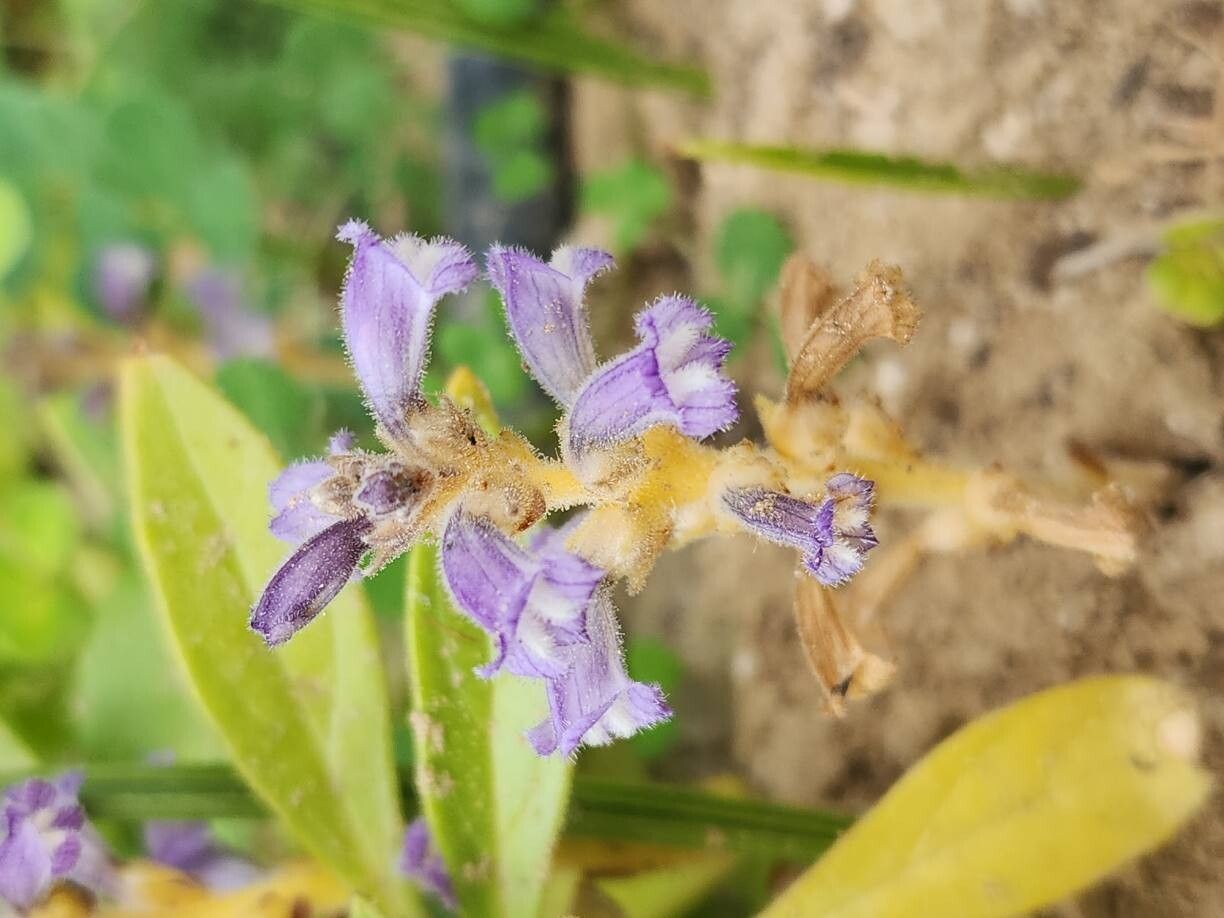
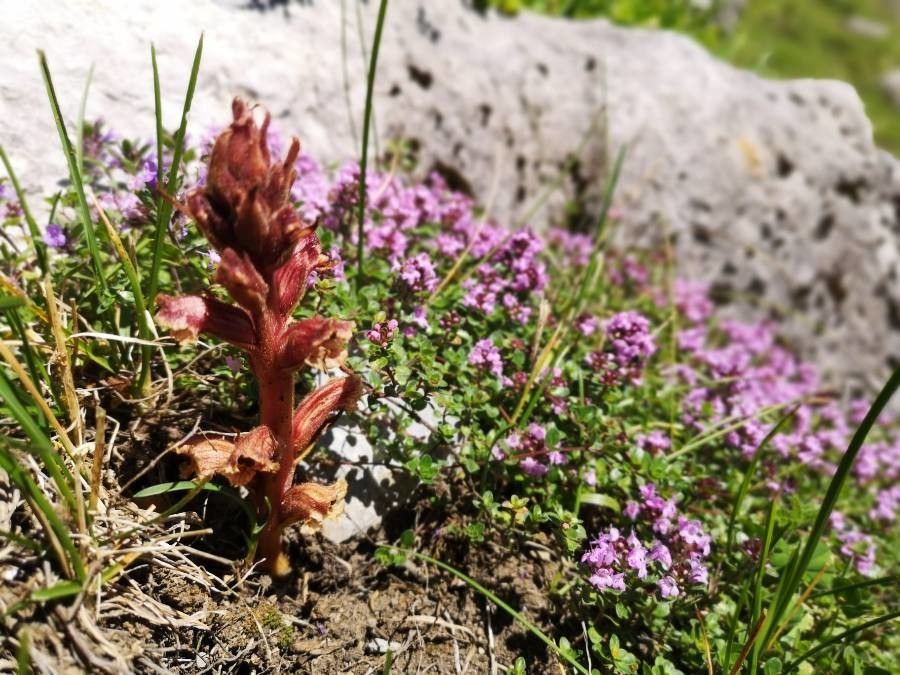
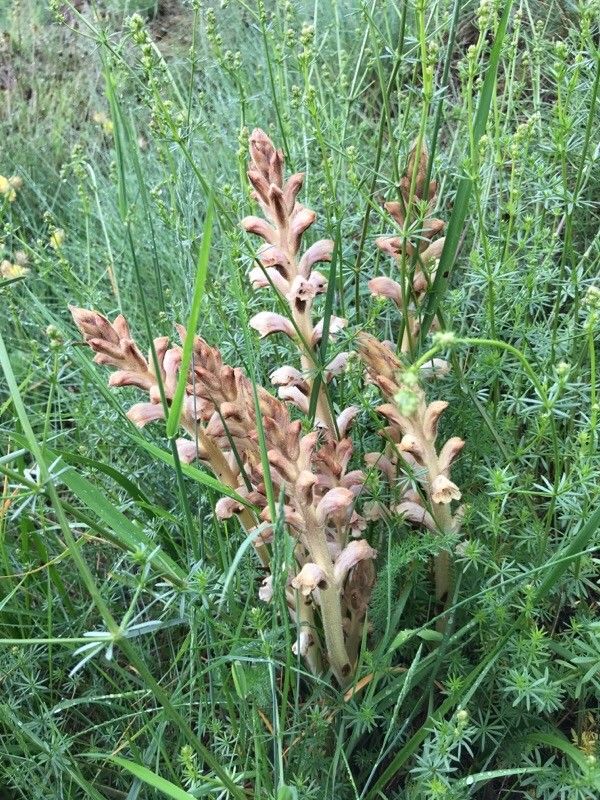
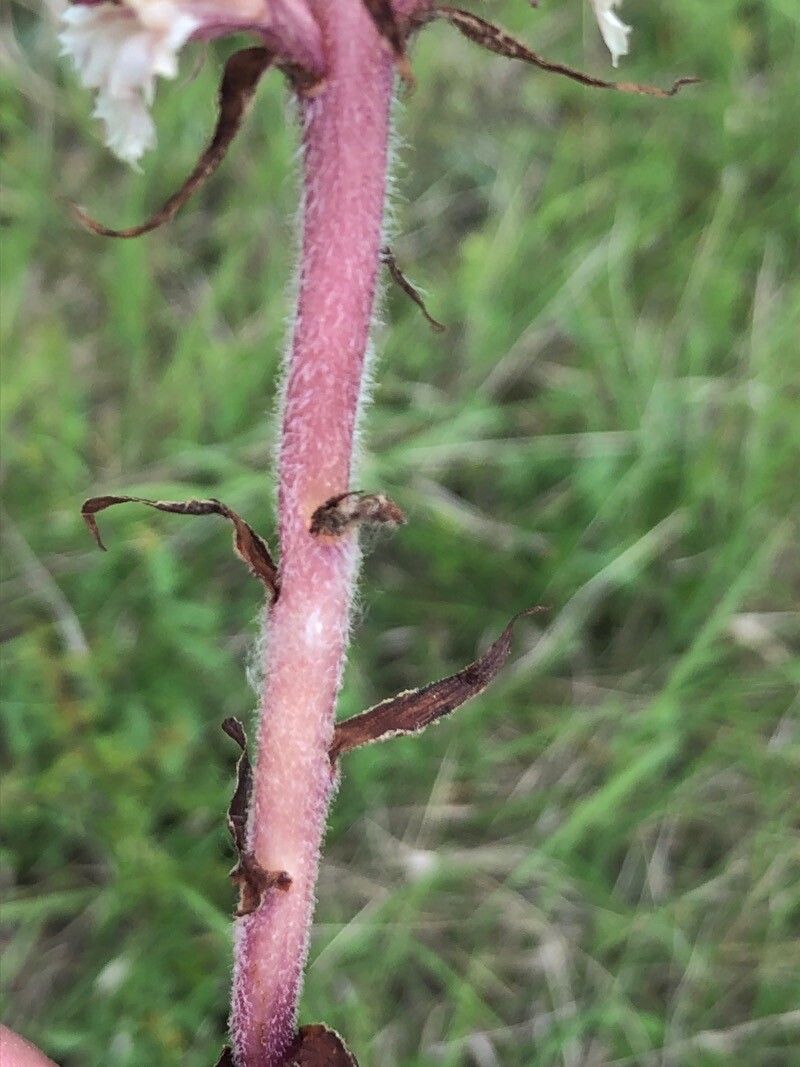
Orobanche cooperi is a species of broomrape known by the common name Cooper's broomrape desert broomrape, spike broomrape, and burroweed strangler. It is native to the desert regions of the southwestern United States and northern Mexico, where it is a parasite growing attached to the roots of other plants, usually members of the Asteraceae, such as Artemisia, Hymenoclea, Ambrosia and Encelia. Although not usually weedy, it has been found infesting agricultural cropland, including tomato fields in inland California. This plant arises from a thick root and a scaly, twisted stem base, and produces a thick, clumpy stem up to 40 centimeters tall. As a parasite taking its nutrients from a host plant, it lacks leaves and chlorophyll. It is dark purple in color and coated with glandular hairs. The inflorescence is an elongated array of several flowers. Each flower is tubular, purple and hairy, and up to about 3 centimeters long.
Desert broomrape has strong disease resistance and is generally unlikely to suffer from illnesses. It can, however, be vulnerable to pests and diseases present in its environment; such problems are typically mild. Care-wise, this plant needs moderate maintenance. Regular pruning is required to preserve its appearance and support healthy growth. Fertilizing can also encourage flowering. Desert broomrape is appropriate for anyone with outdoor space, like a garden or patio, and does not demand extensive care experience. It may need more attention when cultivated indoors.
How to keep Orobanche Cooperi.
Light
Desert broomrape is native to bright, open habitats where it does best in full sun. It can tolerate partial sun but favors direct sunlight for optimal growth. This annual or biennial plant is known for its sun-loving nature.
Temperature
Desert broomrape can tolerate a wide range of temperatures, but its distribution may still be restricted by different combinations of moisture and heat. It does best in warm summer conditions with sufficient rainfall or irrigation. Long stretches of cloudy, rainy weather, as well as extended high temperatures, can raise the likelihood of Desert broomrape dying. In winter, adequate protection from cold can increase the plant's survival rate.
Fertilizer
Desert broomrape responds well to regular, light applications of fertilizer to encourage healthy leaf development. Fertilize desert broomrape about once a month during the summer months. Nitrogen is essential for foliage, and providing nitrogen-rich sources helps desert broomrape thrive.
Botanical profile.
- Plant Type
- Herb
- Life Cycle
- Annual
- Genus
- Orobanche
- Family
- Orobanchaceae
- Hardiness Zone
- 7-10
- Mature Height
- 10 cm to 40 cm
- Mature Spread
- 5 cm to 15 cm
- Leaf Color
- Tan, Brown
- Leaf Type
- Deciduous
- Flower Color
- Yellow, Pink, Purple, Brown
- Flower Size
- 1.02 cm to 2.03 cm
- Bloom Time
- Mid spring, Late spring, Early summer
- Planting Time
- Spring
- Harvest Time
- Summer
- Native Area
- Mexico