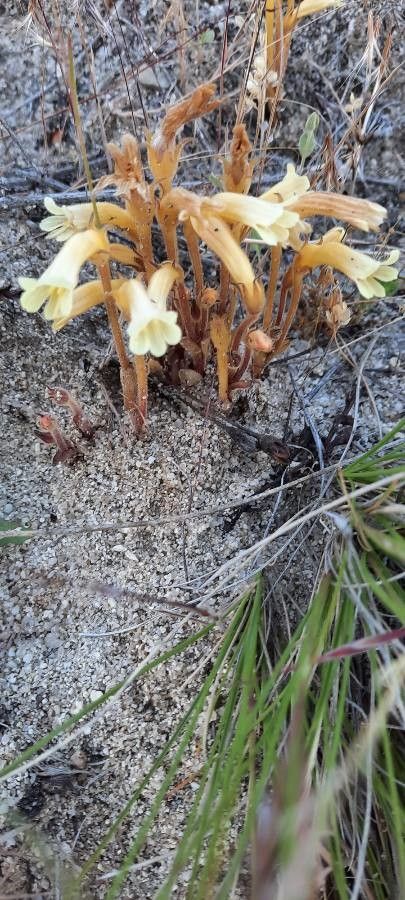
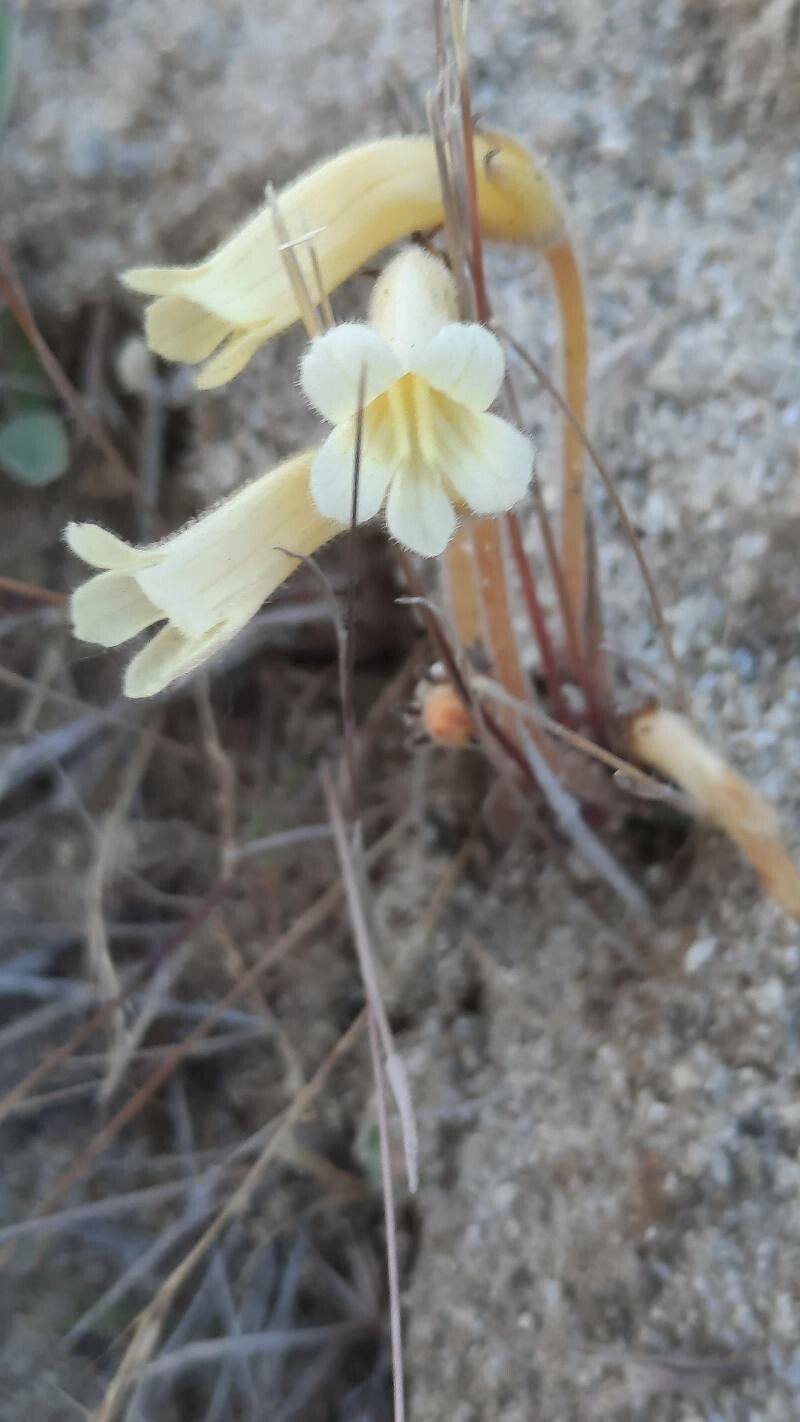
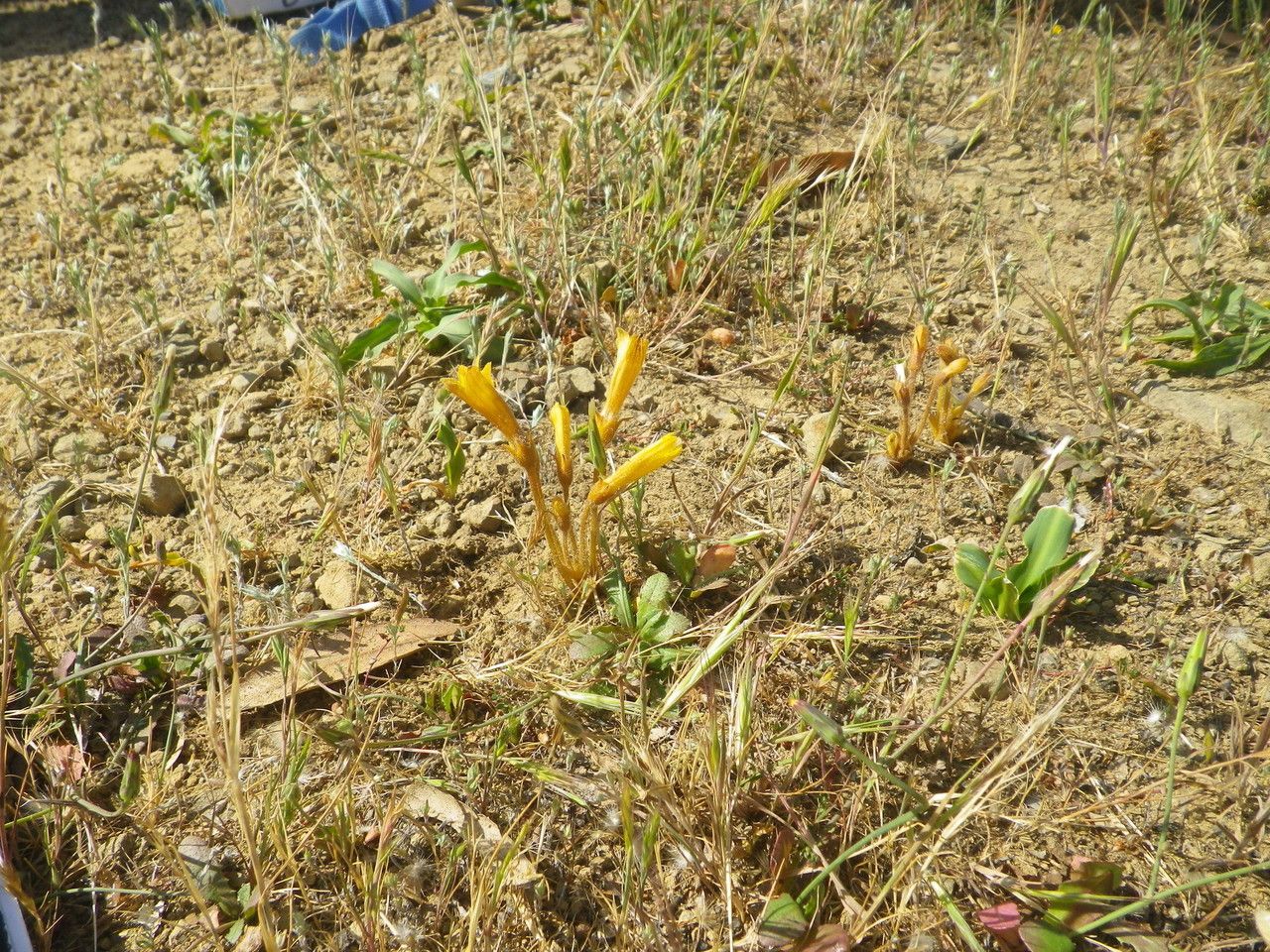
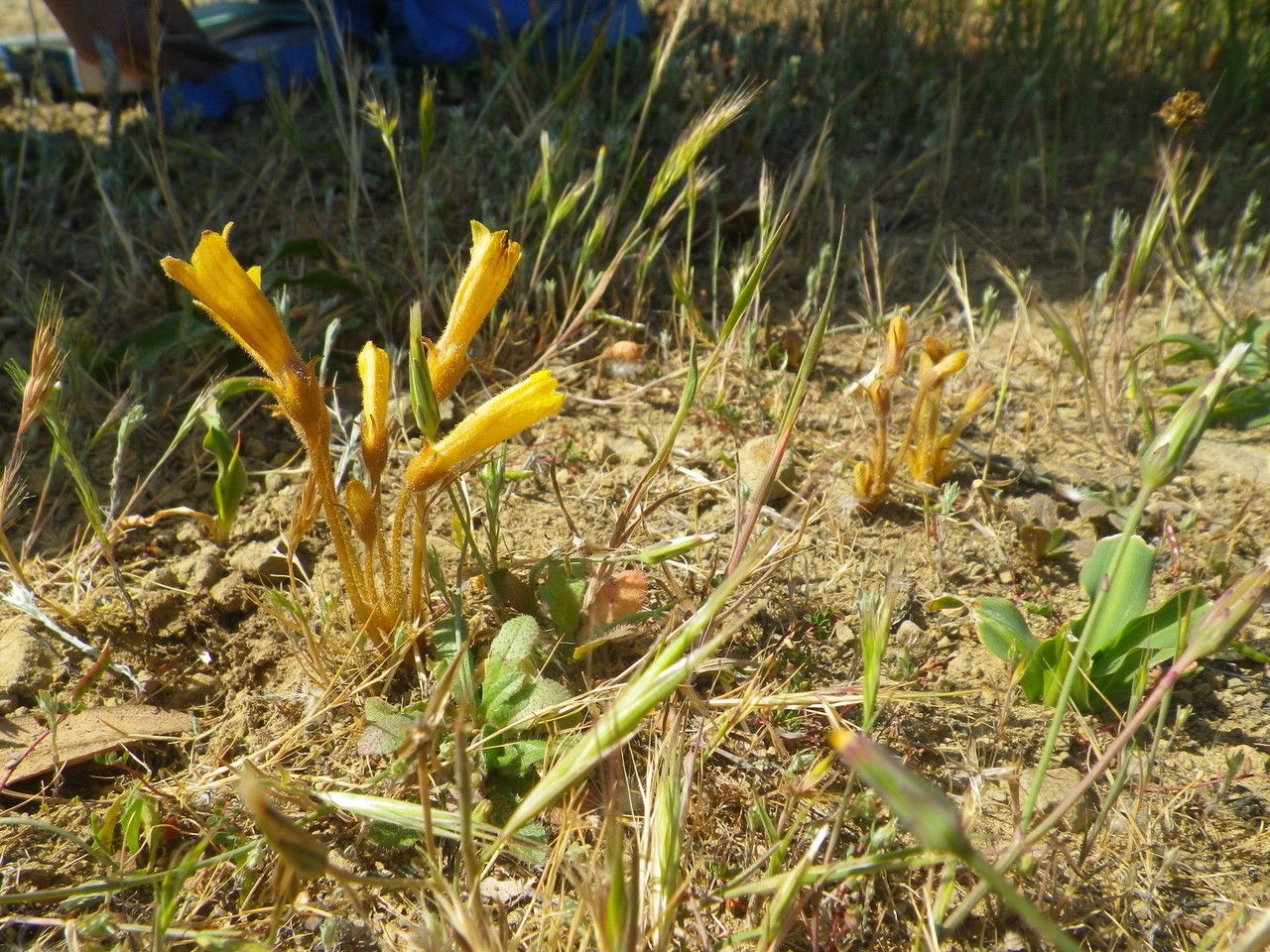
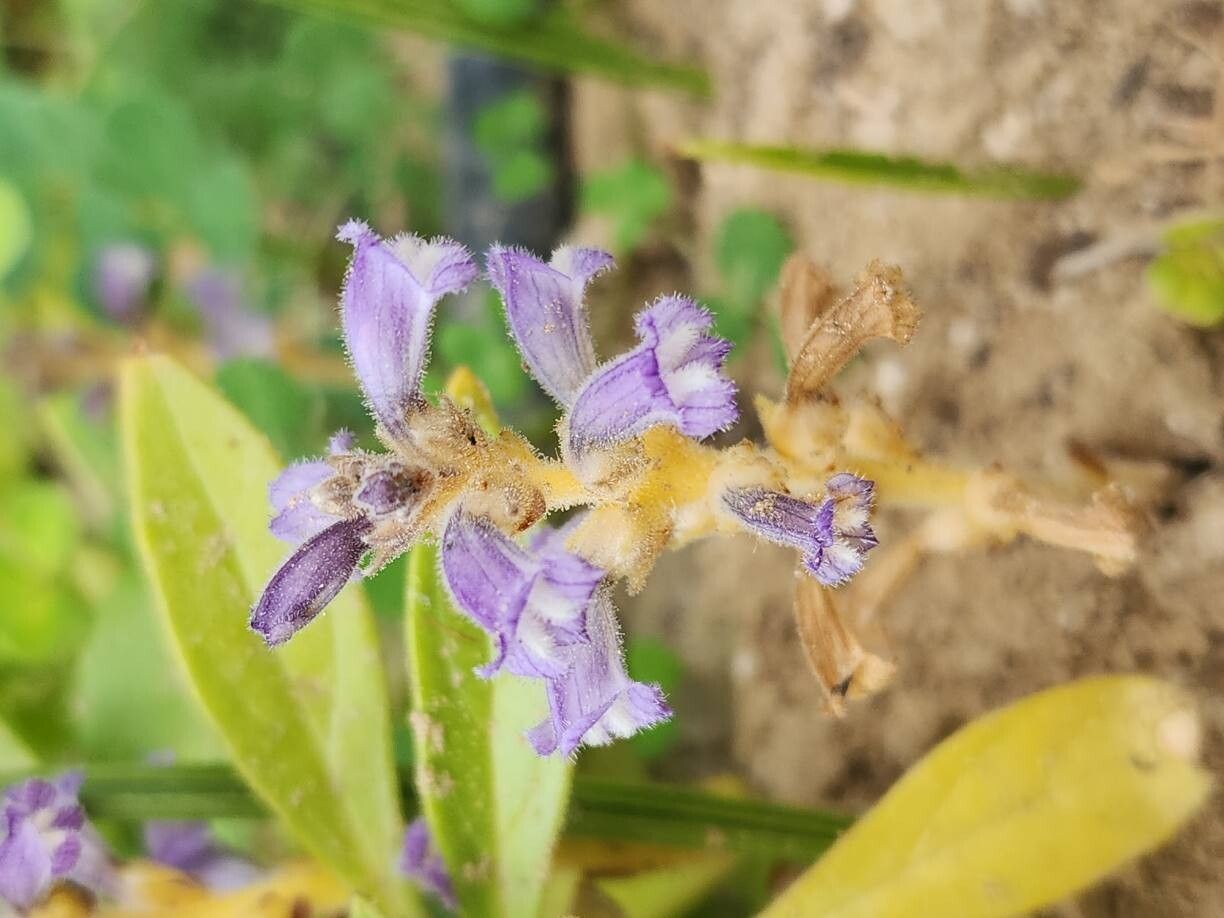
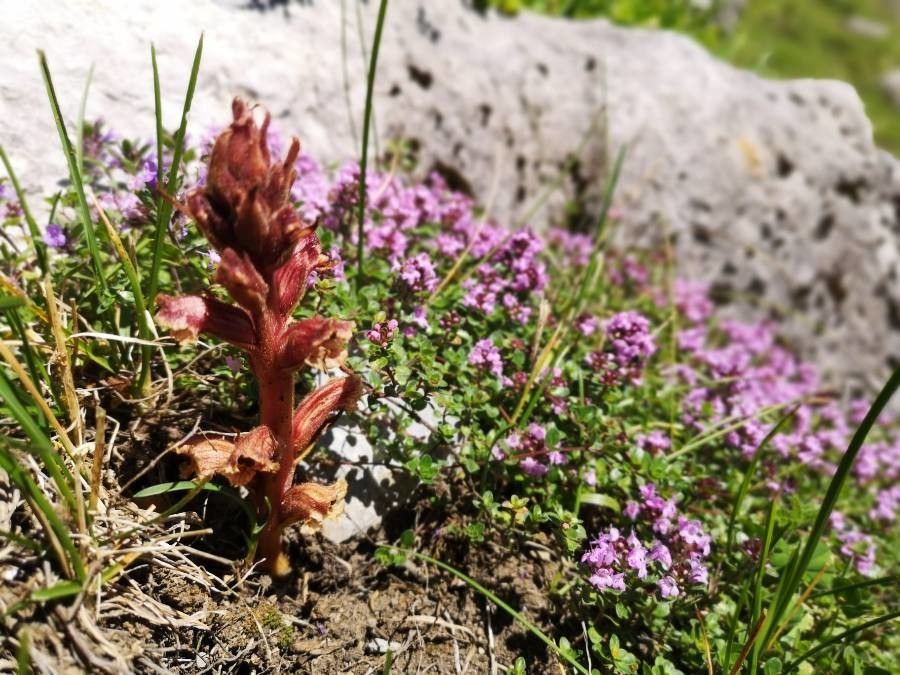
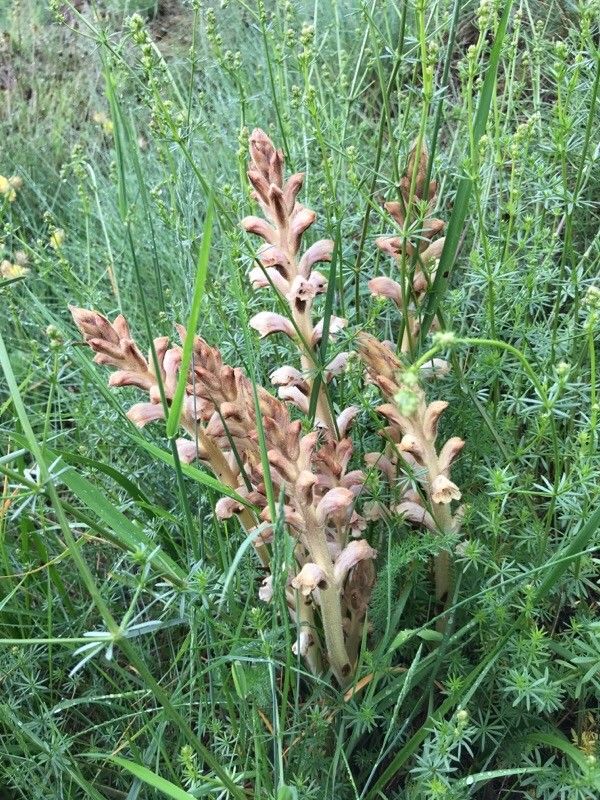
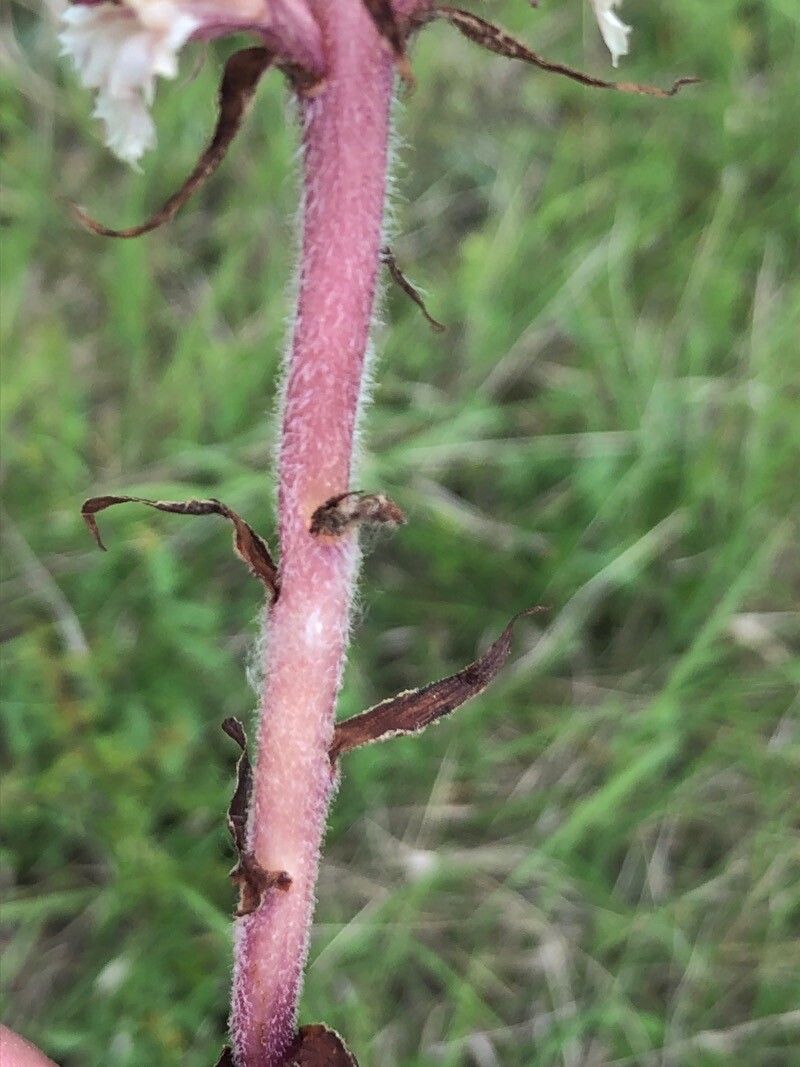
Orobanche fasciculata is a species of broomrape known by the common name clustered broomrape. It is native to much of western and central North America from Alaska to northern Mexico to the Great Lakes region, where it grows in many types of habitat. It is a parasite growing attached to the roots of other plants, usually members of the Asteraceae such as Artemisia; and other genera such as Eriodictyon and Eriogonum. This plant produces one or more stems from a bulbous root, growing erect to a maximum of about 20 centimeters in height. The stems, leaves and five-lobed flowers are covered by sticky hairs. As a parasite taking its nutrients from a host plant, it lacks chlorophyll as well as a water-storage system. It is variable in color, often yellowish or purple. The inflorescence is a raceme of up to 20 flowers, each on a pedicel up to 15 centimetres (5+7⁄8 in) long. Each flower has a calyx of hairy triangular sepals and a tubular corolla 1.5–3 cm (5⁄8–1+1⁄8 in) long. The flower is yellowish or purplish in color.
Clustered broomrape has strong resistance to disease and is generally not likely to develop illnesses. It can, however, be vulnerable to pests and diseases present in its surroundings. These infections are generally not severe. For care, the plant requires a moderate level of maintenance. It needs regular pruning to keep a tidy appearance and support healthy growth. Fertilizing can also encourage flowering. Clustered broomrape is suitable for anyone with outdoor space, such as a garden or patio, and does not demand extensive care experience. It may need more attention when kept indoors.
How to keep Orobanche Fasciculata.
Light
Clustered broomrape does best in places with uninterrupted sunlight, though it can persist in locations that receive less sunshine. Insufficient light may hinder its growth, while it can tolerate abundant light without being harmed.
Temperature
Clustered broomrape is typically cultivated in settings with temperatures between 68 and 100 °F (20 to 38 ℃). It favors a warm climate for optimal growth. Depending on the season, it may be necessary to adjust the temperature to meet its preferences.
Fertilizer
Clustered broomrape responds well to regular, dilute fertilizer applications to encourage healthy leaf development. You should fertilize Clustered broomrape about once a month during the summer. Nitrogen is important for foliage, and supplying nitrogen-rich sources helps Clustered broomrape thrive.
Botanical profile.
- Plant Type
- Herb
- Life Cycle
- Annual, Perennial
- Genus
- Orobanche
- Family
- Orobanchaceae
- Hardiness Zone
- 2-11
- Mature Height
- 5 cm to 20 cm
- Mature Spread
- 10 cm to 15 cm
- Leaf Color
- Tan, Brown
- Leaf Type
- Deciduous
- Flower Color
- Purple, Lavender
- Flower Size
- 2.54 cm
- Bloom Time
- Mid spring, Late spring, Early summer
- Planting Time
- Spring, Summer
- Harvest Time
- Summer
- Native Area
- Mexico
Other names.