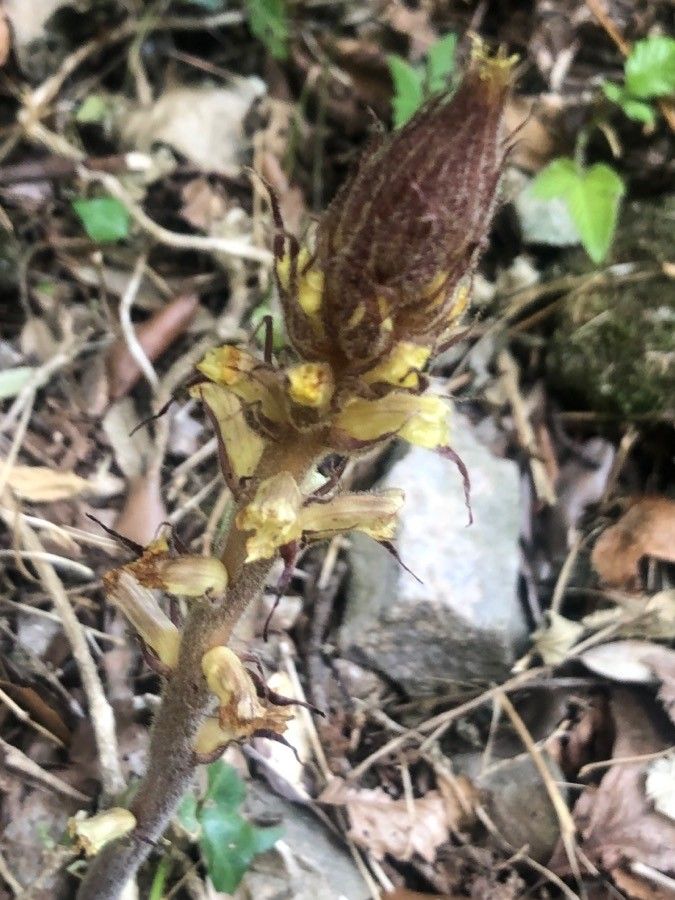
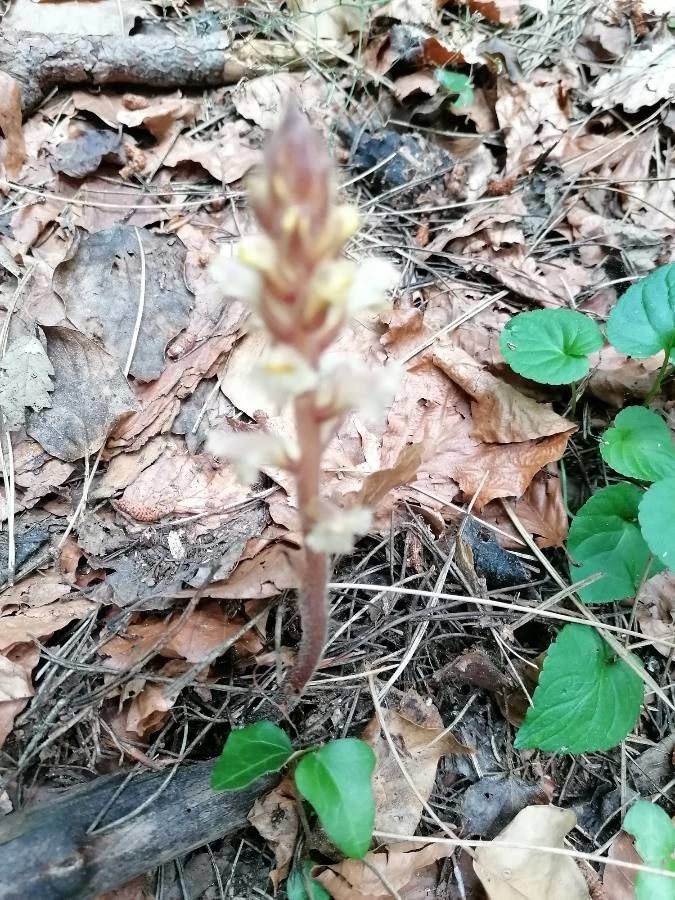
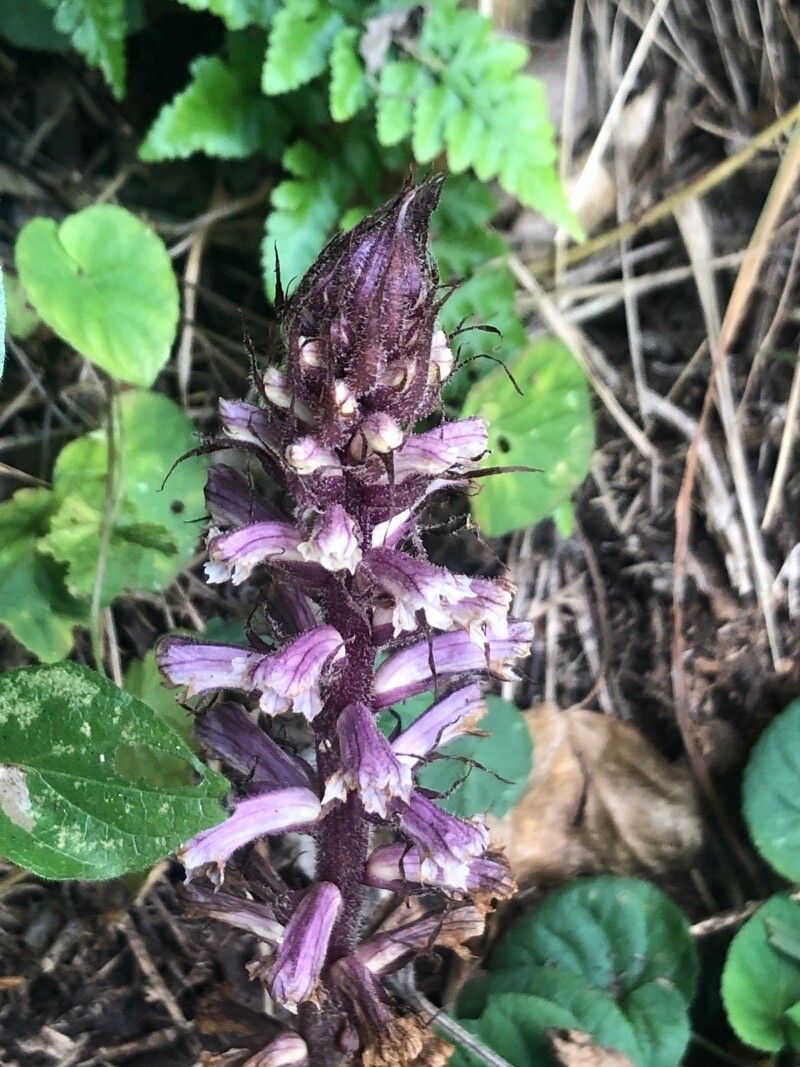
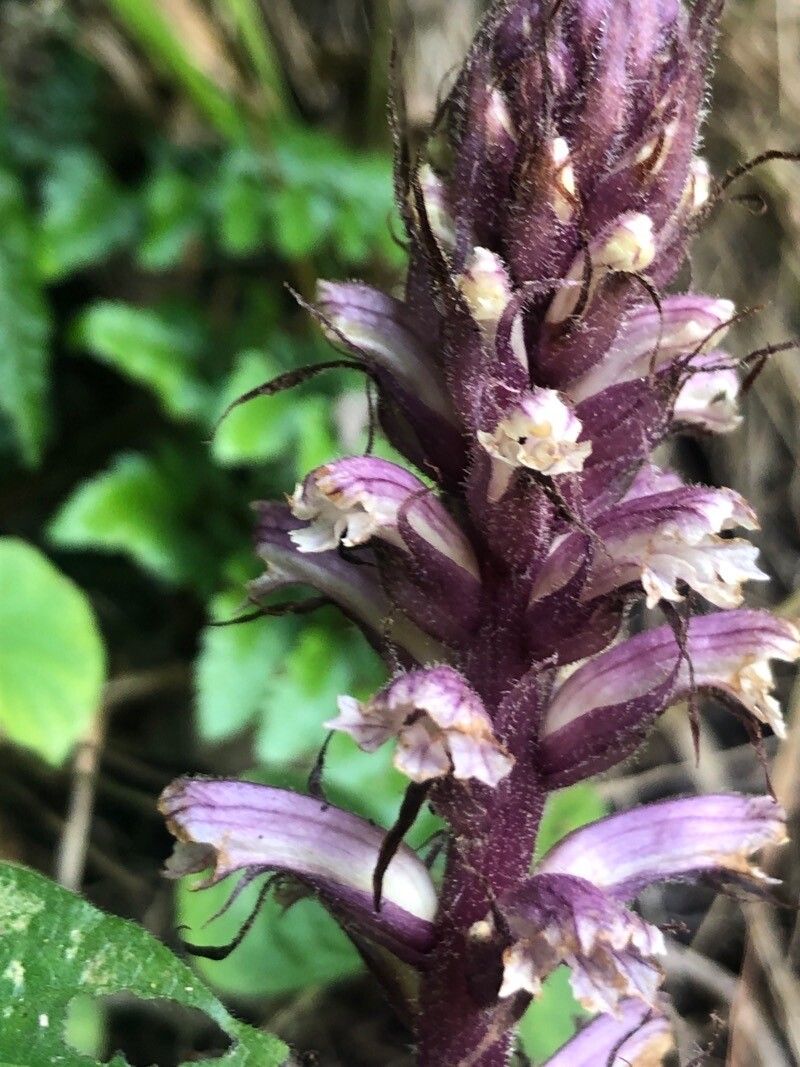
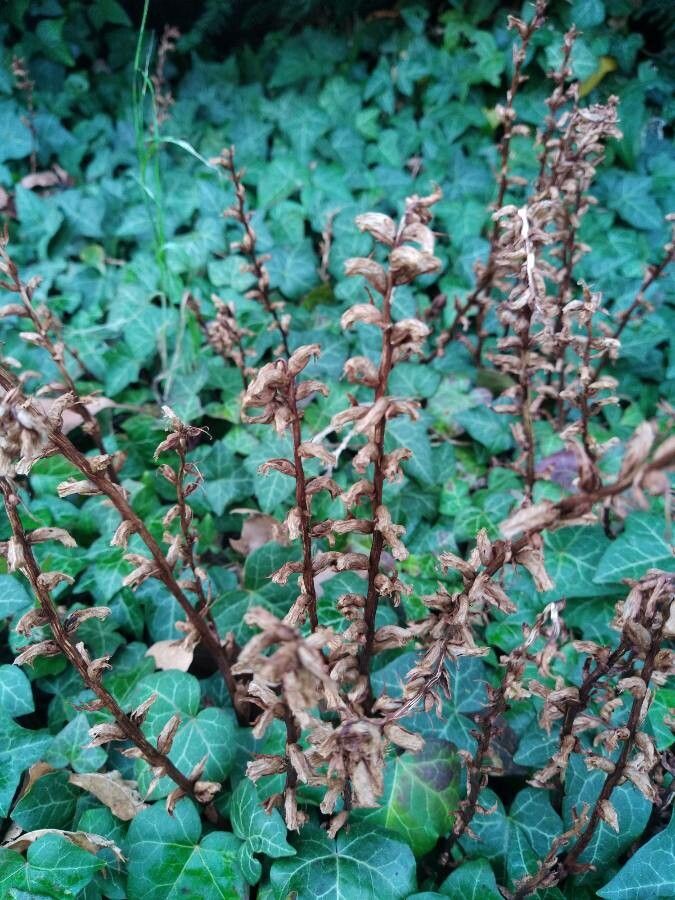
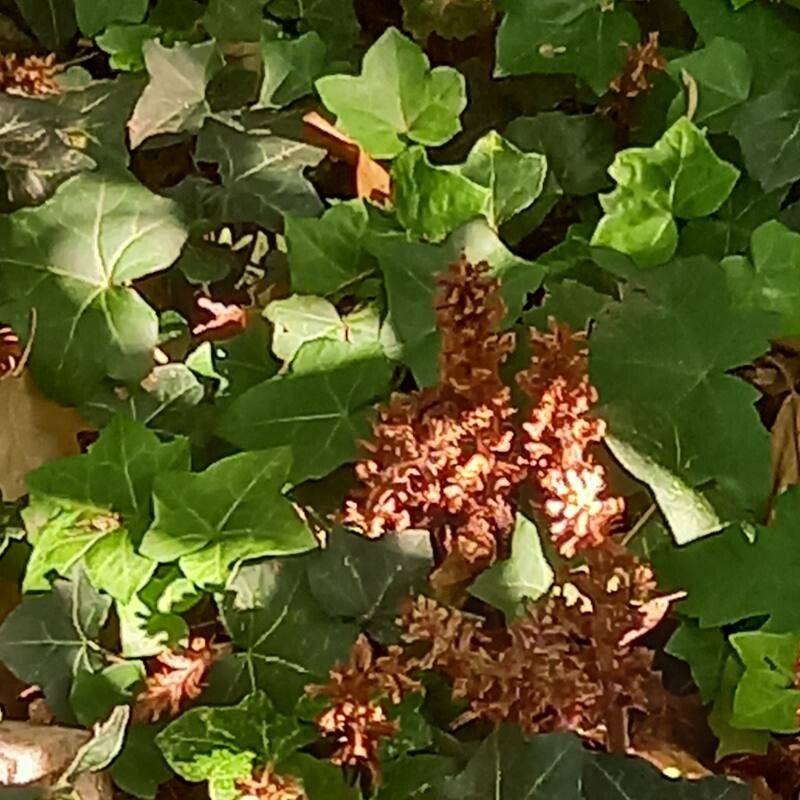
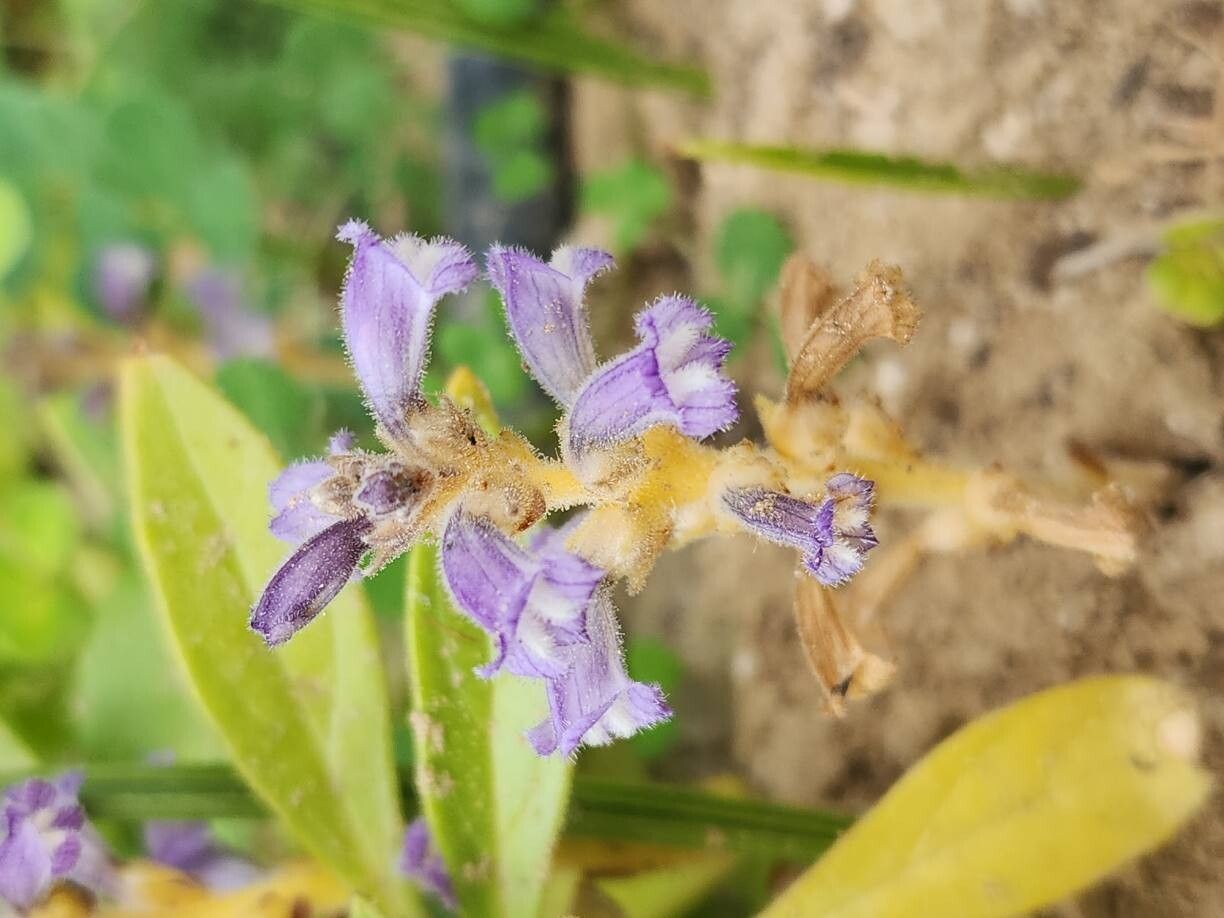
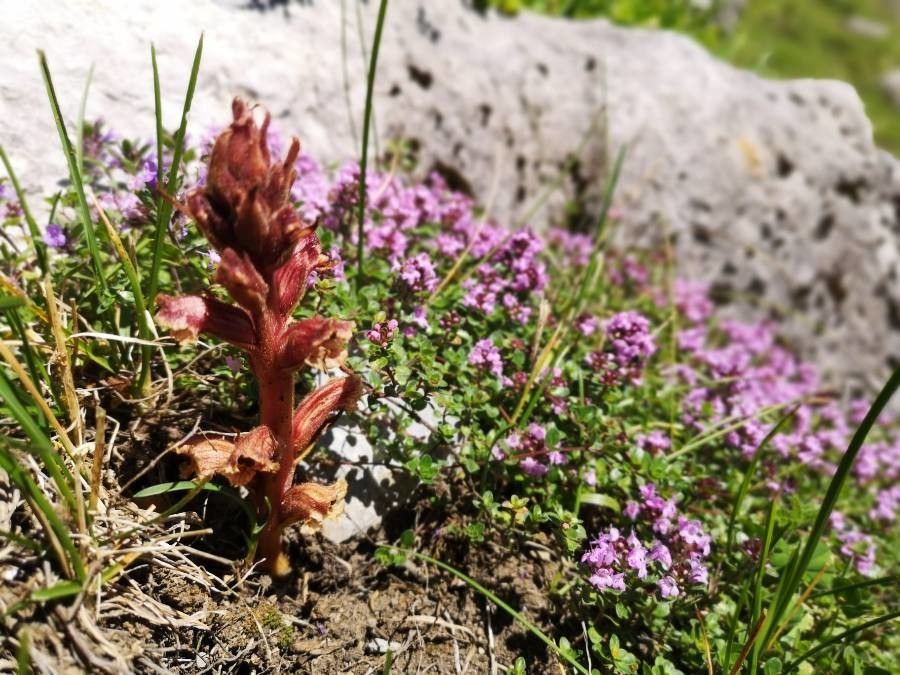
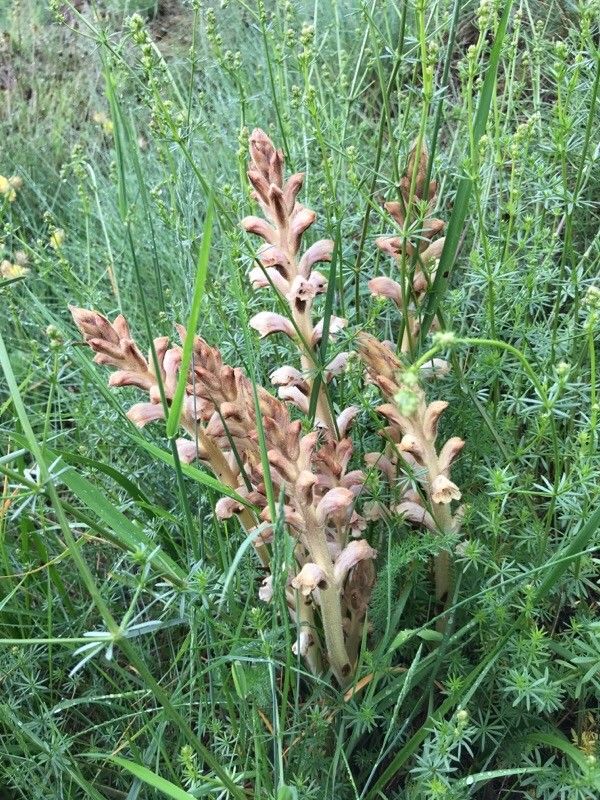
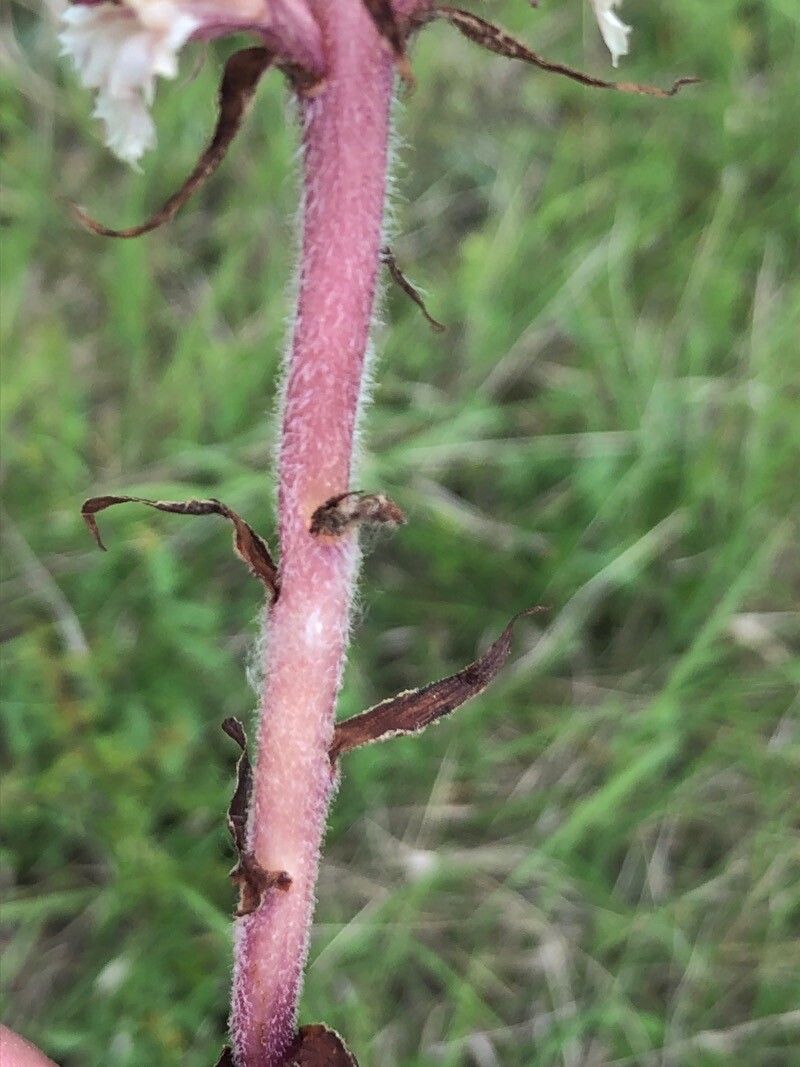
Orobanche hederae, commonly known as Ivy Broomrape, is a parasitic plant belonging to the Orobanchaceae family. Native to Europe and Western Asia, this plant thrives by attaching itself to the roots of ivy plants, as it lacks chlorophyll and depends entirely on its host for nutrients. The stem of Orobanche hederae stands erect, reaching a height of 10 to 30 centimeters. It features small, brownish scales along its length. The plant's flowers are pinkish-purple, tubular in shape, and typically appear in clusters at the top of the stem. Blooming from June to August, Orobanche hederae produces numerous seeds that can remain dormant for several years until they find a suitable host to attach to. Traditionally, Orobanche hederae has been used as an herbal remedy for various ailments, including respiratory problems, digestive issues, and skin conditions. However, due to its parasitic nature and the potential damage it can inflict on host plants if left unchecked, it is considered an invasive species in some regions. While Orobanche hederae is an intriguing species due to its unique characteristics, it should be carefully monitored if found near ivy or other susceptible host plants in your garden or natural environment.
Ivy broomrape has strong disease resistance and is generally not prone to illnesses. However, it can be susceptible to pests and diseases present in its surroundings. These infections are usually mild. In terms of care, this plant requires moderate maintenance. It should be pruned regularly to maintain a good appearance and healthy growth. Fertilizing can also help encourage flowering. Ivy broomrape is suitable for anyone with outdoor space, such as a garden or patio, and does not need much gardening experience. It may need more attention when grown indoors.
How to keep Orobanche Hederae.
Light
Ivy broomrape grows best when it receives sunlight all day, though it can persist in places that receive sunlight for only part of the day. It originates in open habitats where uninterrupted sunlight promotes its maximal growth. Excessive shading or a complete blockage of sunlight can lead to poor health and stunted growth.
Water
Ivy broomrape thrives in temperate climates and needs consistent moisture without becoming waterlogged. It is usually watered once a week and is typically grown outdoors because of its parasitic nature, which impacts both its own health and that of its host plant.
Temperature
Ivy broomrape is native to areas where temperatures range between 68 to 95 °F (20 to 35 ℃). It prefers these moderate to warm climates. In different seasons, you can make adjustments to recreate these conditions for optimal growth.
Fertilizer
Ivy broomrape responds well to regular, dilute fertilizer applications to encourage healthy leaf development. You should feed Ivy broomrape about once a month during the summer. Nitrogen is important for the foliage, and providing nitrogen-rich fertilizers helps Ivy broomrape prosper.
Pruning
Ivy broomrape is a parasitic plant known for its tubular flowers. To manage its growth and protect host plants, it requires careful pruning from early to late spring. For effective removal, cut the stems at ground level. Regular monitoring and pruning are essential to prevent its spread and maintain a healthier garden ecosystem.
Botanical profile.
- Plant Type
- Herb
- Life Cycle
- Annual
- Genus
- Orobanche
- Family
- Orobanchaceae
- Hardiness Zone
- 9
- Mature Height
- 61 cm
- Mature Spread
- 10 cm to 30 cm
- Leaf Color
- Tan, Brown
- Leaf Type
- Semi-evergreen
- Flower Color
- Tan, Brown
- Flower Size
- 1.02 cm to 2.29 cm
- Bloom Time
- Summer
- Planting Time
- Spring, Summer, Autumn
- Harvest Time
- Late summer, Early fall, Mid fall
- Native Area
- Turkey, Austria, Montenegro, Bulgaria, Greece, Croatia, Slovenia, Morocco, Serbia, Russia, Germany, Portugal, Italy, Spain, Switzerland, France, Albania, Ireland, United Kingdom, Hungary, Algeria, Belgium, Netherlands
Other names.
Reader questions.
How should I water my Ivy broomrape in the best way?
When it comes to watering Ivy broomrape, there are a few options. You can use a sprayer, a watering can, or any other commonly used watering tool. Fortunately, Ivy broomrape isn't too fussy about the type of water it receives. Rainwater, tap water, or filtered water all work fine. However, it's generally best to avoid watering from above as it can harm the plant's leaves and flowers and even lead to disease. Setting up a drip irrigation system is often the most effective method for watering Ivy broomrape. These systems ensure that water is distributed evenly and directly to the soil. If you have Ivy broomrape growing in a container, you can follow a similar watering approach but change the tools you use. A cup, watering can, or tap can be used to water the plant's soil directly.
Why should I add fertilizer to my Ivy broomrape?
Plants need nutrients to grow, but not all plants require additional fertilizers. Ivy broomrape, like other plants, needs nutrients to support growth and internal processes. The main nutrients that plants use, such as nitrogen, phosphorus, and potassium, play a role in various essential functions. In the case of foliage, nitrogen is particularly important. However, Ivy broomrape may struggle to obtain sufficient nitrogen from the soil, so some gardeners choose to provide supplemental nitrogen through feeding.
What are the sunlight requirements for Ivy broomrape?
Ivy broomrape thrives best in full sun conditions, requiring more than 6 hours of sunlight daily. However, it can also adapt to partial sun, receiving about 3-6 hours of sunlight a day. Ensuring it gets the right amount of sunlight is crucial for its growth and health. When planning your garden or indoor plant arrangement, watch how sunlight moves through the space to find spots that offer a good balance of light and shade suitable for Ivy broomrape, ensuring the plant's happiness and optimal growth.
What is the native climate for Ivy Broomrape?
Ivy Broomrape is native to regions where the climate is moderate to warm, with temperatures ranging between 68 to 95 °F (20 to 35 °C). It thrives in these conditions, and for optimal growth, efforts can be made to replicate these temperatures during different seasons.
What should I do if I give my Ivy broomrape too much water or too little water?
To remedy underwatering Ivy broomrape, simply water the plant more regularly when it lacks moisture. However, overwatering can be a more serious issue. If you don't notice it early, the excess water can cause diseases that lead to the decline and death of the plant. To prevent this, choose a location with ample sunlight to dry the soil and ensure good drainage to avoid waterlogging. If you overwater Ivy broomrape in a pot, consider changing it to a new one with better drainage. Repot the overwatered plant using loose soil and an efficient draining pot.
When should I fertilize my Ivy broomrape?
Ivy broomrape generally grows well. To give it a boost during active growth, apply fertilizer once a month. Fertilize Ivy broomrape only during spring and summer, not in fall and winter when it is less active. Start fertilizing when you see new growth. The fertilization schedule is the same for outdoor and indoor plants in containers. However, if your Ivy broomrape is in a container, you may not need to fertilize for the first one to two months. The potting soil already contains enough nutrients, so start fertilizing after your plant has been in the same soil for a while.
How can artificial lighting be used for indoor Ivy broomrape plants?
When natural sunlight is insufficient, particularly in winter or less sunny spaces, artificial lighting becomes essential for maintaining the health of indoor Ivy broomrape plants. LED lights are recommended for indoor plant lighting because they can be customized to provide specific wavelengths of light necessary for plant growth. For full sun plants, 30-50W per square foot is needed; partial sun plants require 20-30W per square foot, and full shade plants need 10-20W per square foot. The light source should be placed 12-36 inches above the plant to mimic natural sunlight and should be left on for 8-12 hours per day to replicate the natural length of daylight hours.
Does Ivy Broomrape have any cold tolerance?
Yes, Ivy Broomrape has some degree of cold tolerance. Generally, it does not require additional measures to protect it from the cold if the temperature is above 0°C. However, if temperatures are expected to drop below freezing, temporary cold protection measures are necessary. These can include wrapping the plant with plastic film, fabric, or other insulating materials. It's important to remove these protections once the temperature rises to avoid potential damage to the plant.
How often do I need to water my Ivy broomrape?
Ivy broomrape requires regular watering during the growing season. In spring, water the plant once per week. As the weather gets warmer, increase watering to two to three times per week. However, be cautious not to exceed this rate as it can be harmful to the plant. Additionally, ensure the soil remains moist but not wet, regardless of the watering frequency. If you're growing Ivy broomrape in a pot, increase watering frequency since pot soil tends to heat up and dry out quicker than ground soil. Generally, water a potted Ivy broomrape a few times per week compared to just once per week for an in-ground plant.
When is the best time to not fertilize my Ivy broomrape?
To ensure the health of your Ivy broomrape, refrain from fertilizing it if it is already unwell due to disease or insect pests. Similarly, avoid fertilizing a dehydrated plant as it will exacerbate the issue. It is best to only apply fertilizer to plants that are in good condition. When watering your Ivy broomrape, be cautious not to splash fertilizer onto its leaves or stem, as this can cause burn marks. If you need to use a fertilizer designed for foliage, make sure it is specifically intended for such application to prevent direct contact with the plant.
What are the key symptoms of light deficiency in Ivy broomrape?
Indoor Ivy broomrape suffering from inadequate light may exhibit symptoms such as small or lighter-colored new leaves, leggy or sparse growth, faster leaf drop, and slower or halted new growth. These conditions indicate a survival mode triggered by poor light conditions, resulting in delayed growth or a complete growth stop. These symptoms serve as early warnings that your Ivy broomrape needs more light to maintain its health and vigor.
How should Ivy Broomrape be cared for during low temperatures?
Ivy Broomrape has a moderate tolerance to low temperatures but thrives best when the temperature is above 20°C. During the winter, it should be kept above 0°C. If temperatures fall below -5°C, its leaves may droop, and in severe cases, they will wilt and fall off. If frost damage occurs, trim off the damaged parts. To protect against low temperatures, wrap the plant with non-woven fabric or cloth and construct a wind barrier.