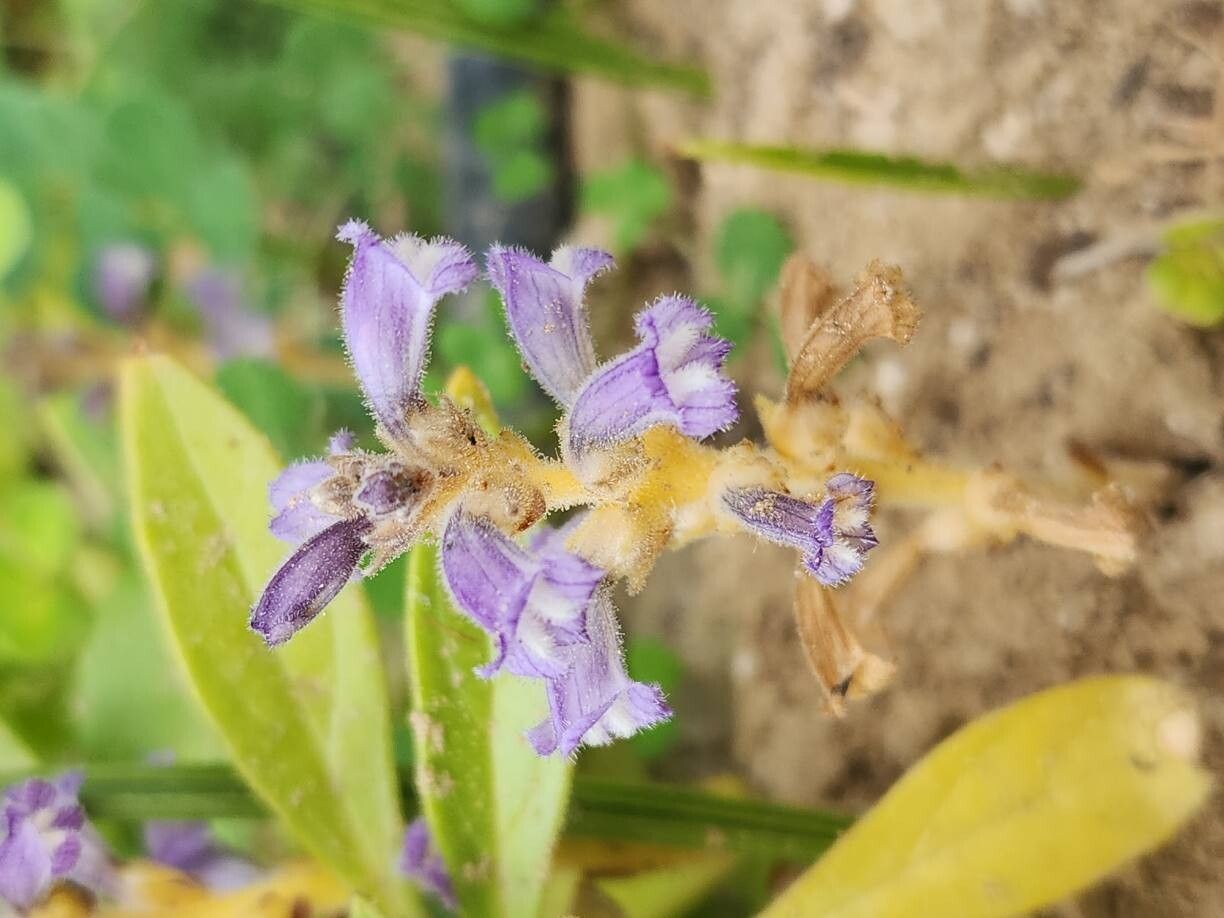
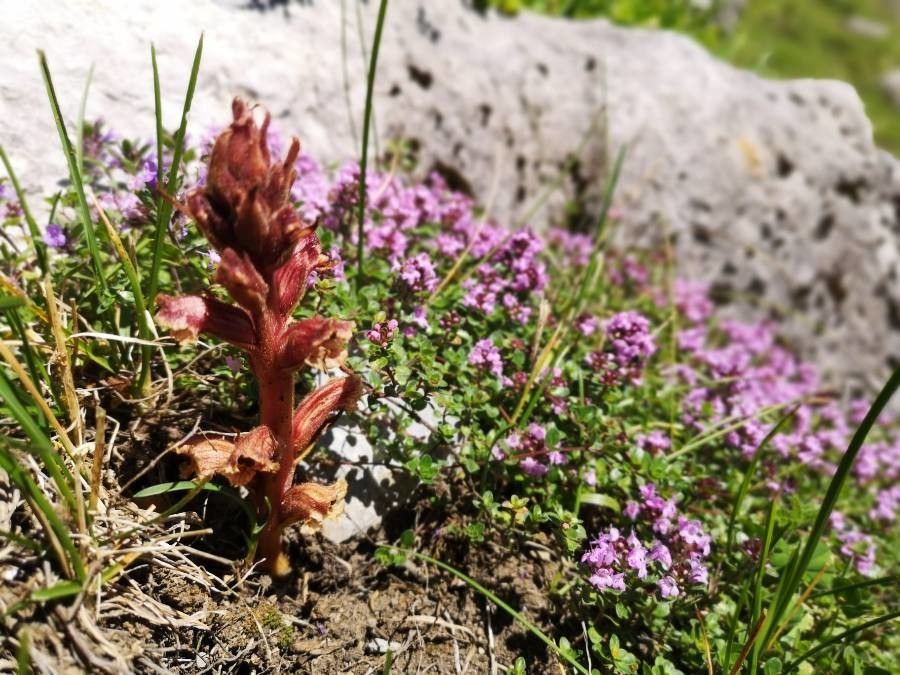
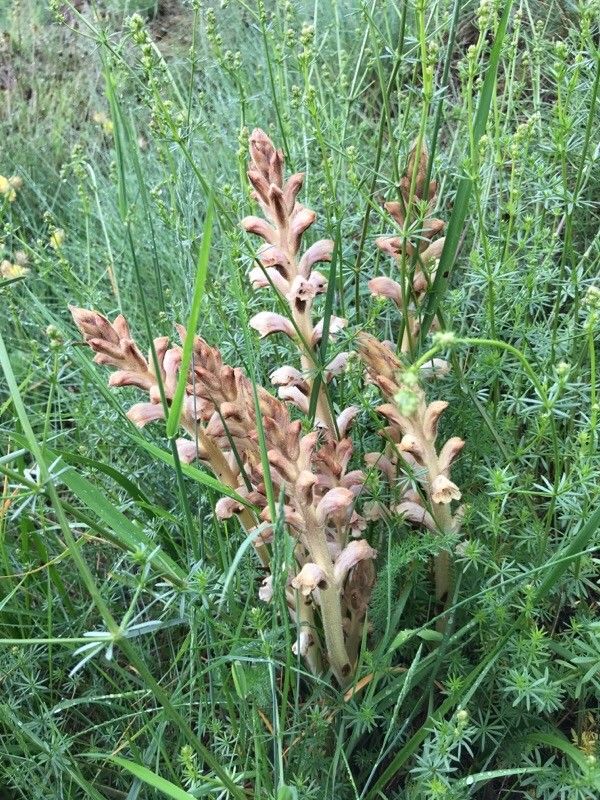
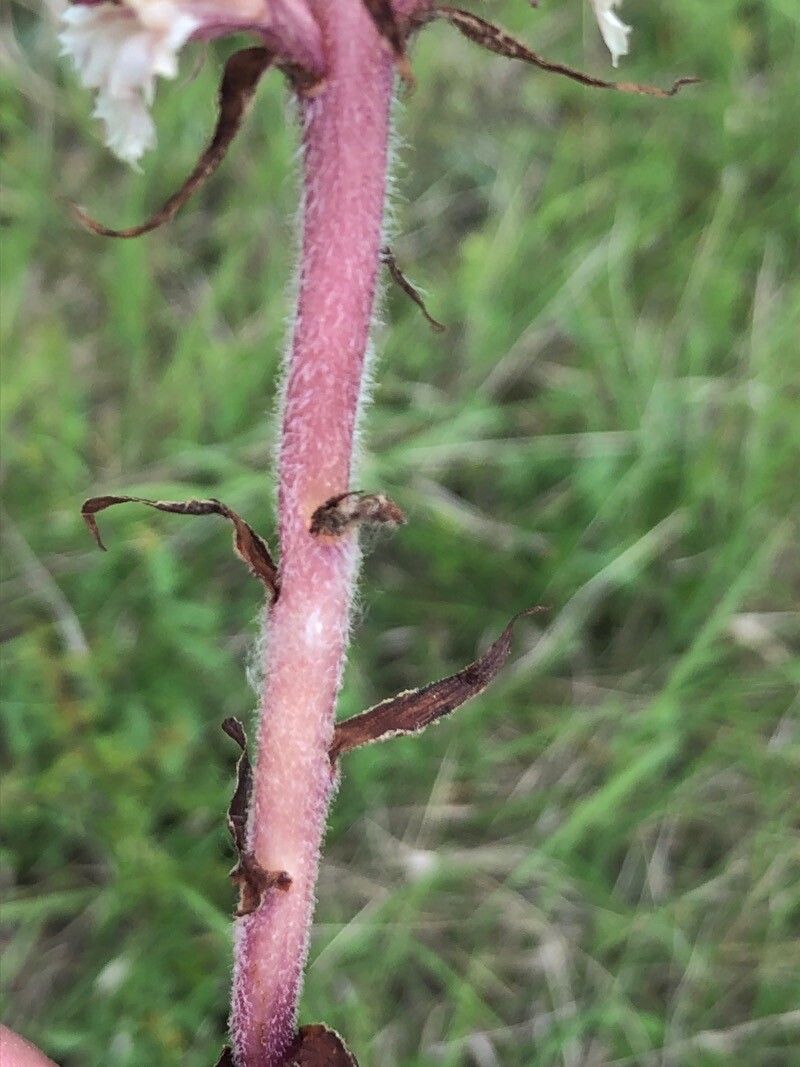
Orobanche ludoviciana, the Louisiana broomrape or prairie broom-rape, is a species of plant in the family Orobanchaceae. It was first described and named by Thomas Nuttall in 1818.This species is parasitic on neighboring plants via its roots; common host species include gumweed and wormwoods, though some other Asteraceae are also used. They grow from 1-3 dm often without branches. Leaves are scales and numerous. The inflorescences are many-flowered spikes that occupy a half to a third of the shoot. Flowers sessile or with small up to 15mm pedicels for the lower flowers. Calyx subtended by 1 or 2 bracts, which are bilabiate. Corolla is 1.5-2.5 cm and often a violet-like color. 2n=24, 48, 72, 96. It typically grows in sandy soil. It grows throughout the central plains of North America and northwest into British Columbia and Oregon. Found from June through August. Listed as endangered in Wisconsin and threatened in Illinois and Indiana.
Louisiana broomrape is fairly resistant to disease and typically not prone to illness. However, it can still be affected by pests and diseases present in its surroundings. These infections tend to be mild. For care, the plant needs moderate maintenance. Regular pruning is required to keep a neat appearance and support healthy growth. Fertilizing can also help encourage flowering. This plant is well suited to anyone with an outdoor area, such as a garden or patio, and does not demand extensive care experience. It may need more attention when grown indoors.
How to keep Orobanche Ludoviciana.
Light
Louisiana broomrape comes from habitats with dappled sunlight, like forest understories or rocky sites that offer natural shade. It thrives in partial sun but can also tolerate full sun.
Temperature
Louisiana broomrape can tolerate a wide range of temperatures, but its distribution can still be restricted by particular combinations of moisture and heat. It grows best in warm summer conditions with sufficient rainfall or watering. Extended periods of cloudy, rainy weather, as well as prolonged high temperatures, can raise the probability of Louisiana broomrape dying. In winter, protecting it from the cold can increase the plant's survival rate.
Fertilizer
Louisiana broomrape benefits from regular, diluted fertilizer applications to encourage healthy leaf growth. You should fertilize Louisiana broomrape about once a month during the summer. Nitrogen is essential for foliage, and providing nitrogen-rich sources helps Louisiana broomrape thrive.
Botanical profile.
- Plant Type
- Herb
- Life Cycle
- Annual
- Genus
- Orobanche
- Family
- Orobanchaceae
- Hardiness Zone
- 5-9
- Mature Height
- 8 cm to 30 cm
- Mature Spread
- 5 cm to 15 cm
- Leaf Color
- Tan
- Leaf Type
- Semi-evergreen
- Flower Color
- Purple, Lavender
- Flower Size
- 1.52 cm to 2.54 cm
- Bloom Time
- Late spring, Early summer, Mid summer
- Planting Time
- Spring, Summer, Autumn
- Harvest Time
- Mid summer, Late summer, Early fall
- Native Area
- Mexico