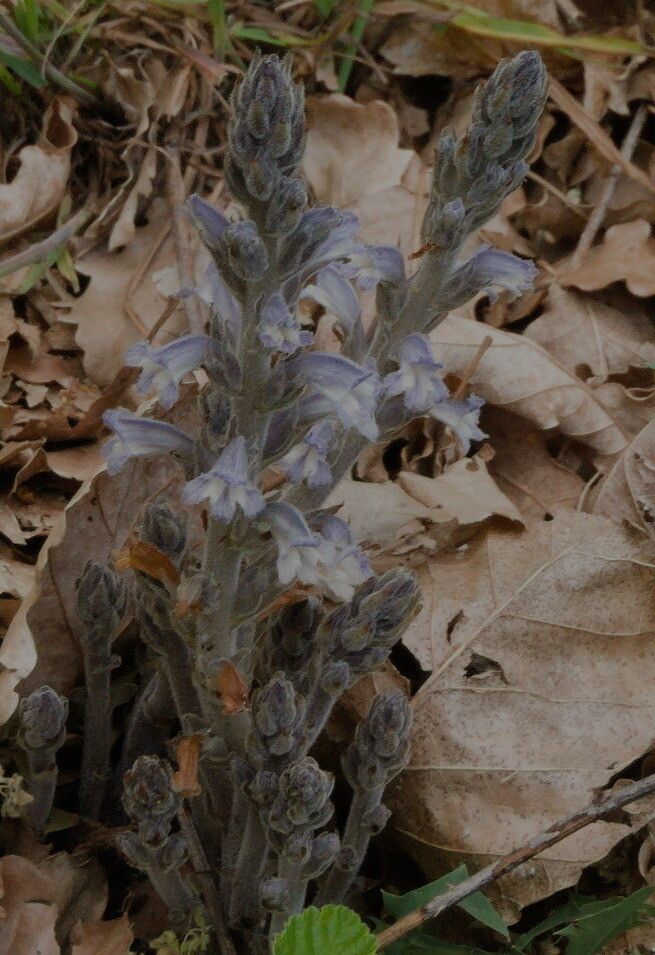
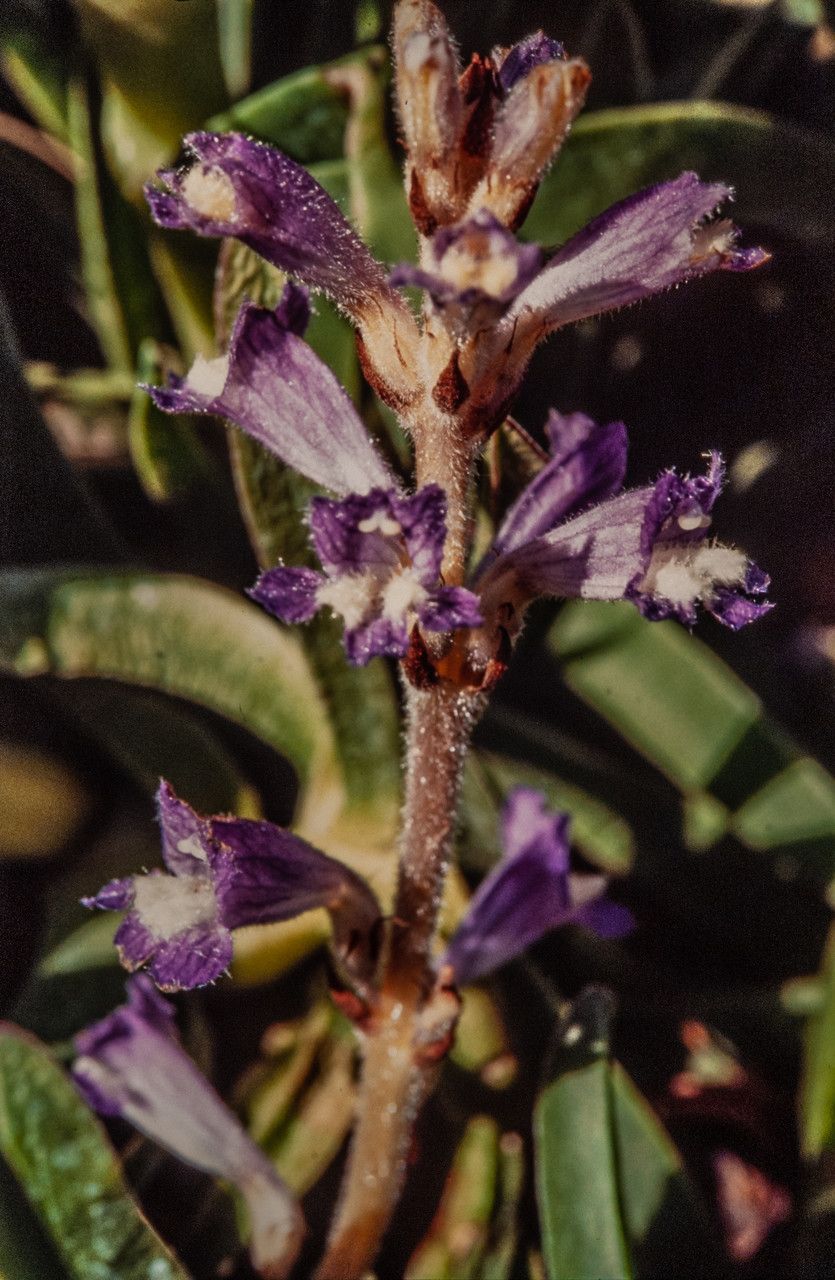
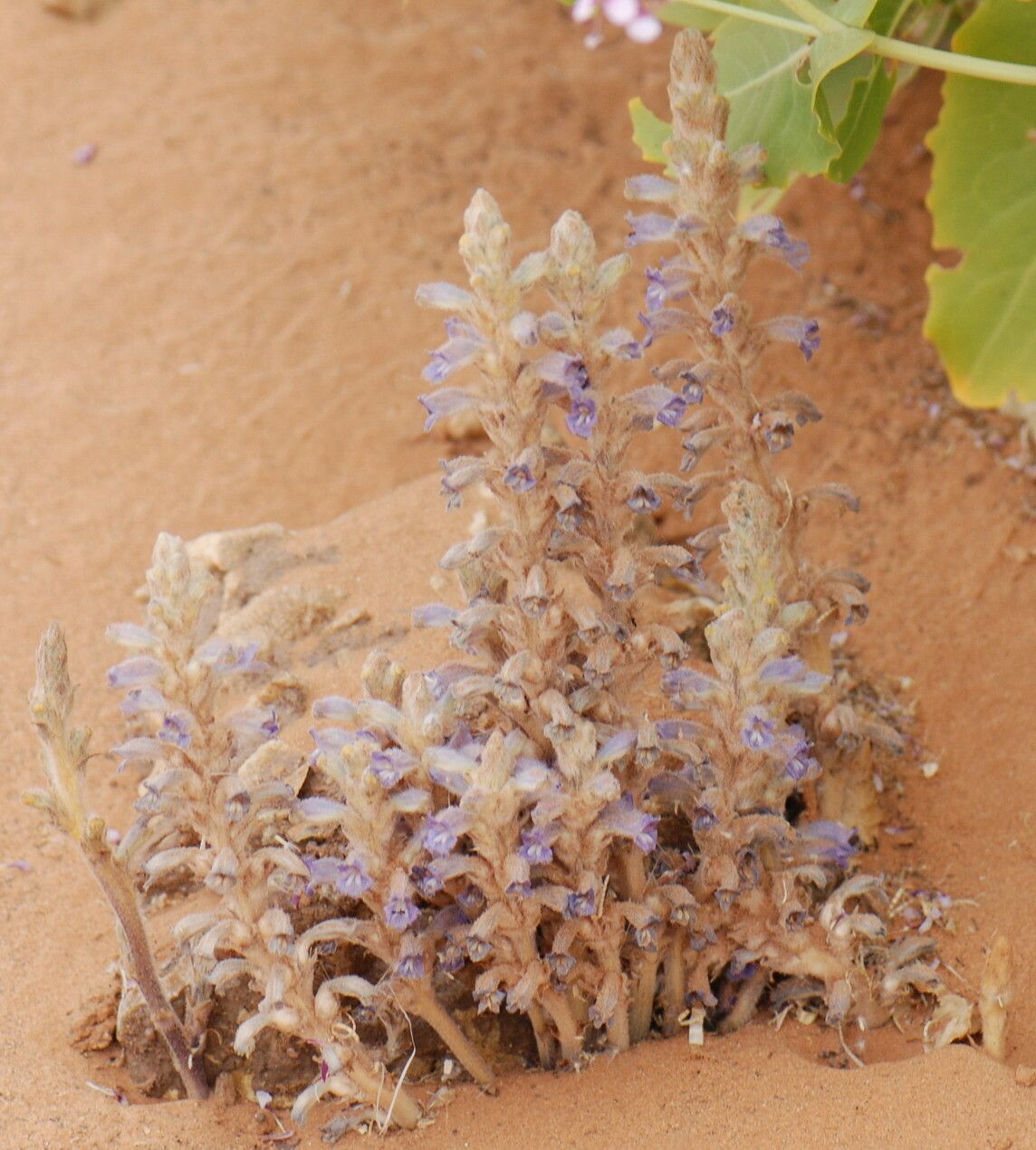
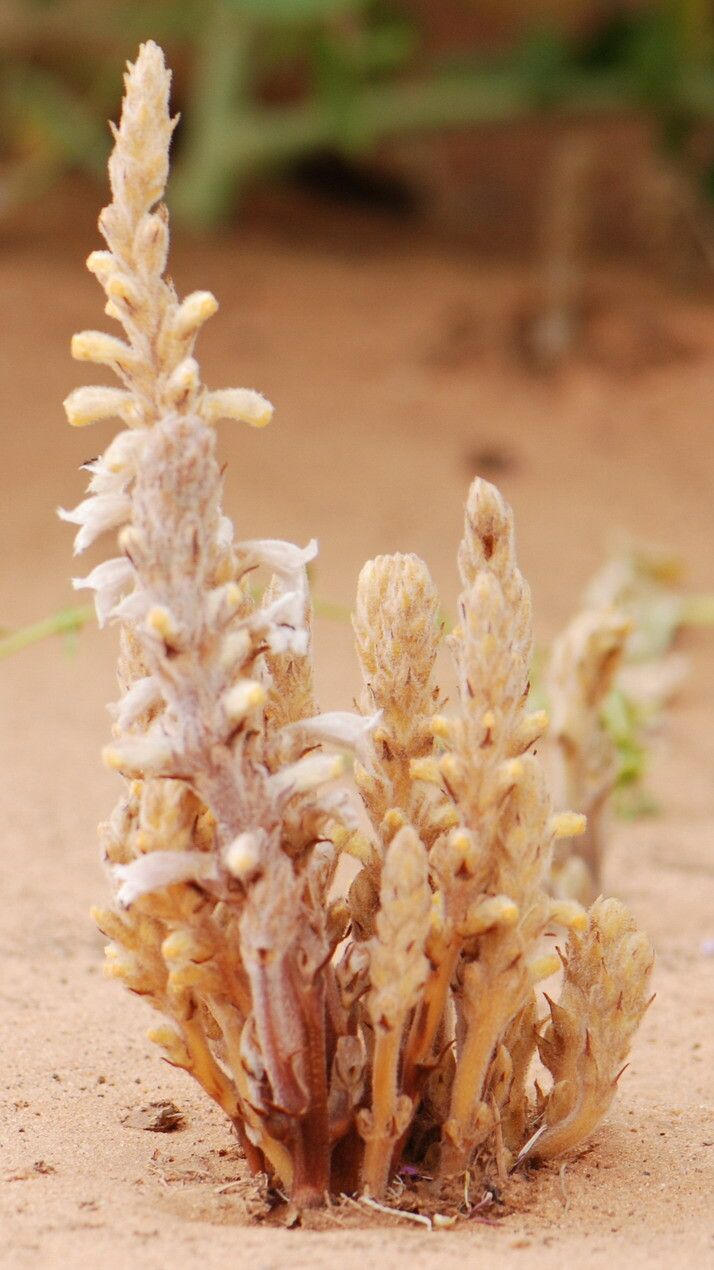
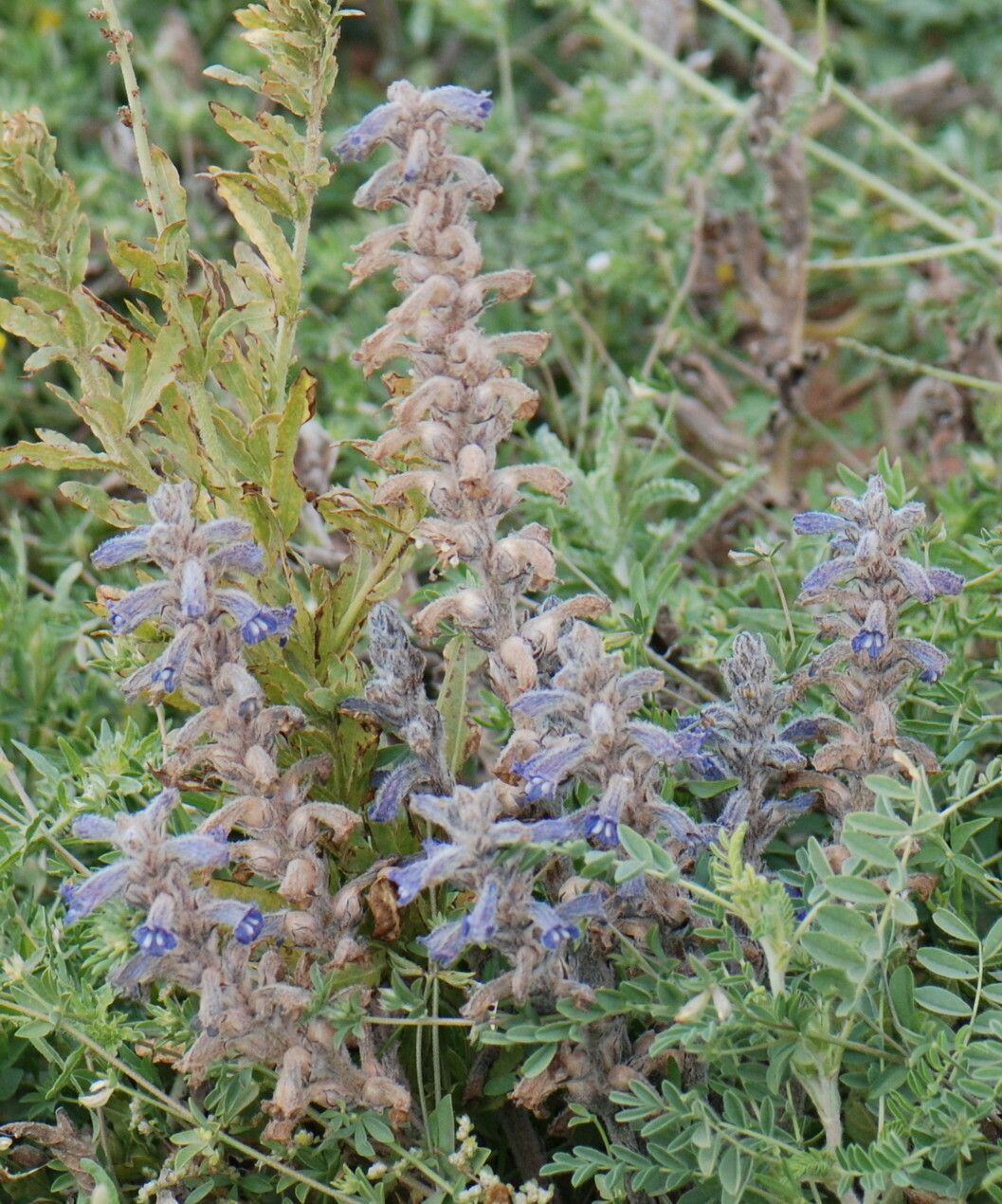
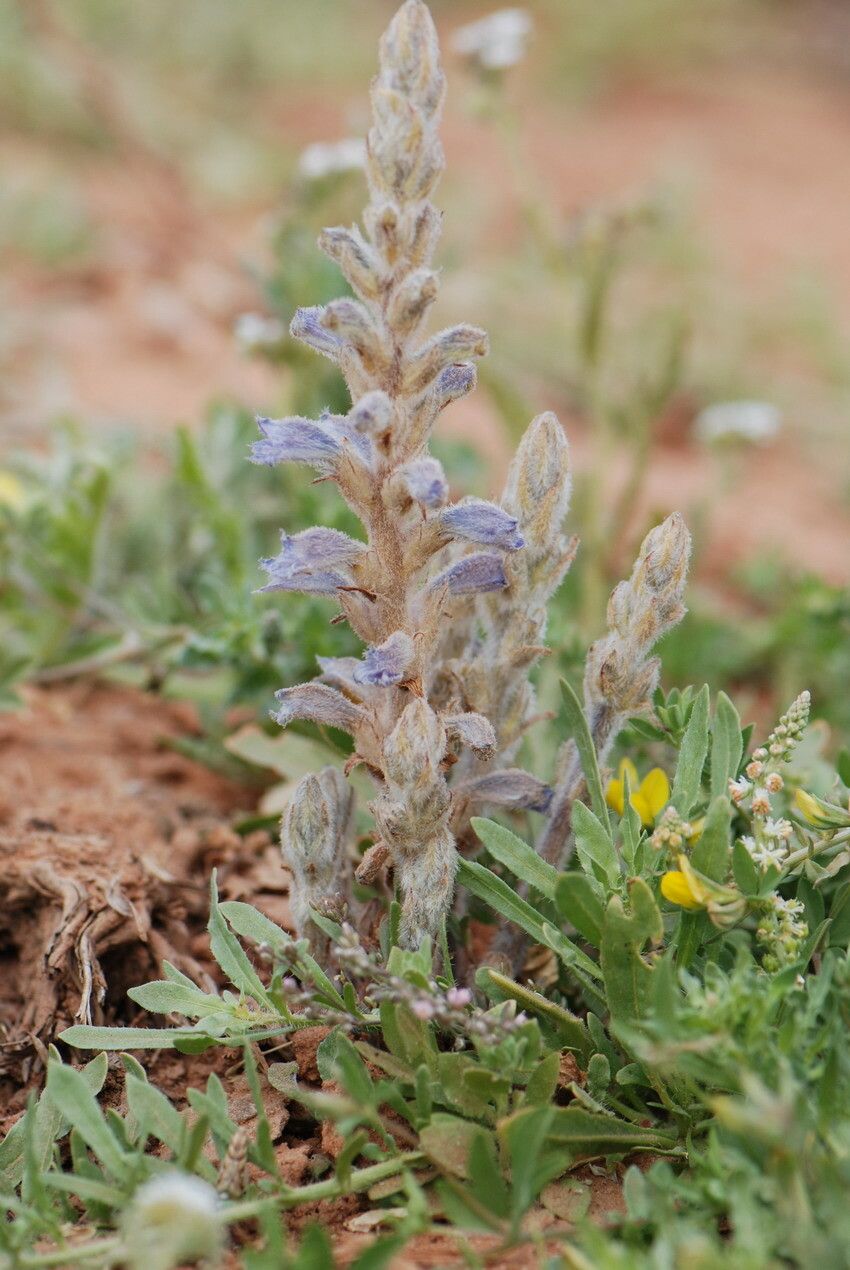
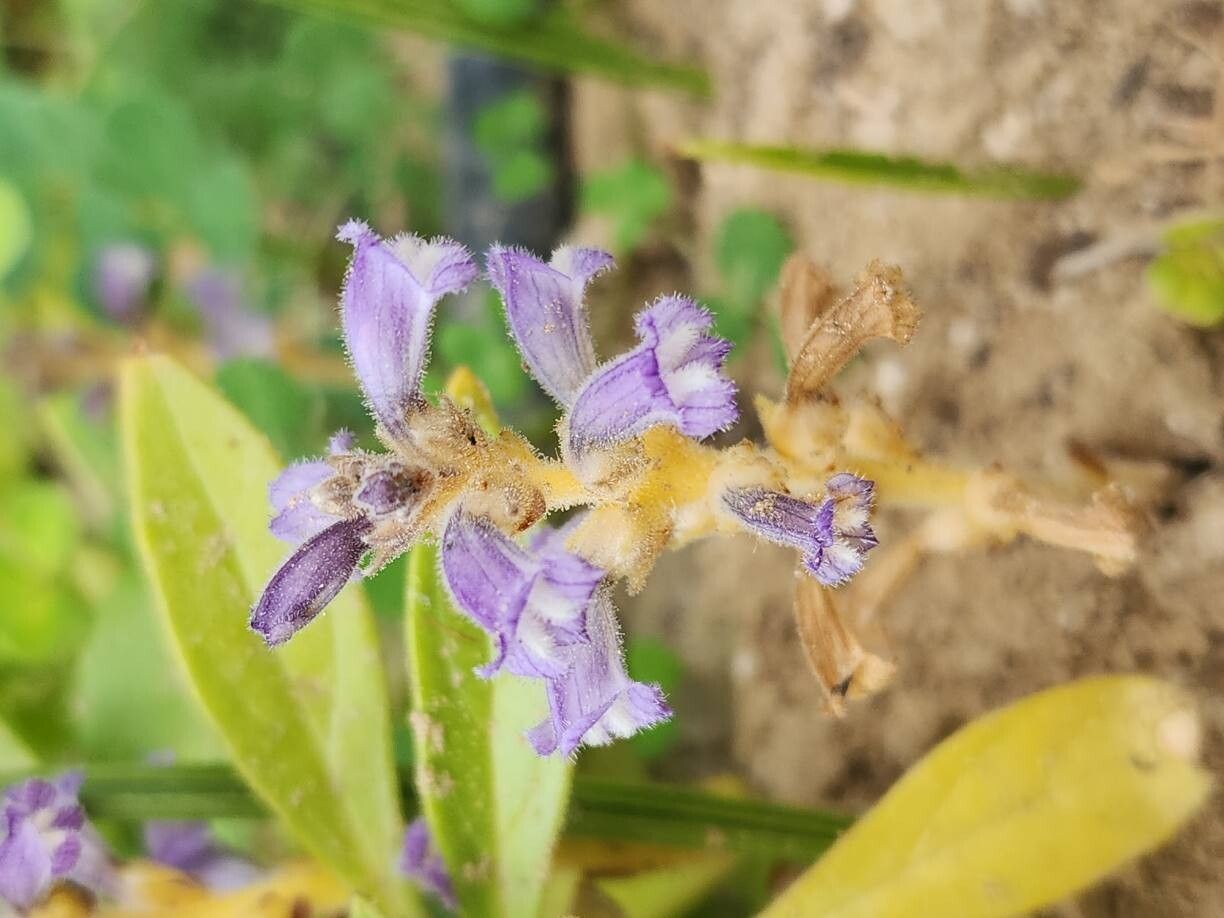
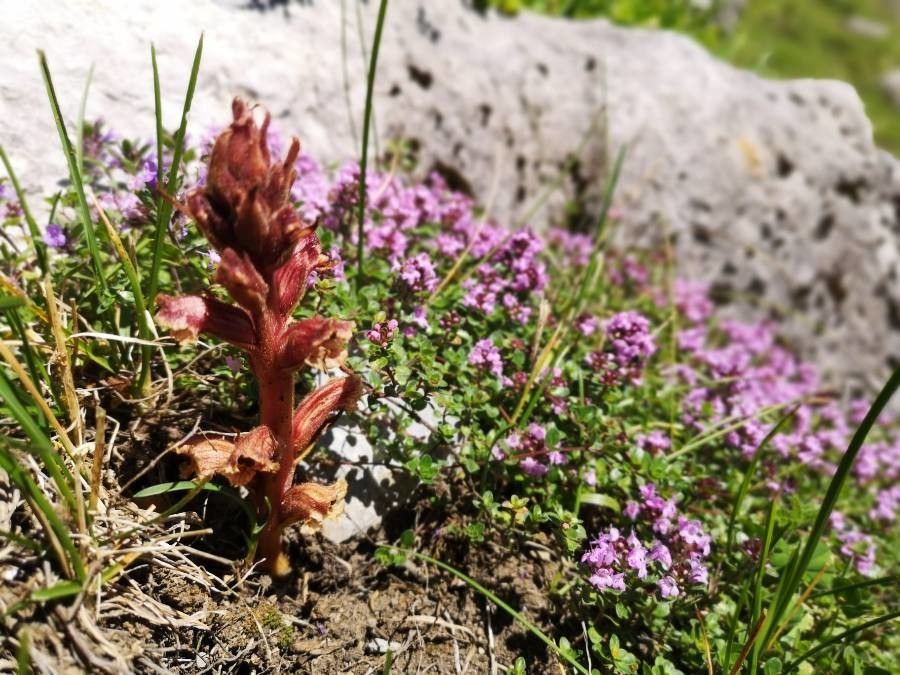
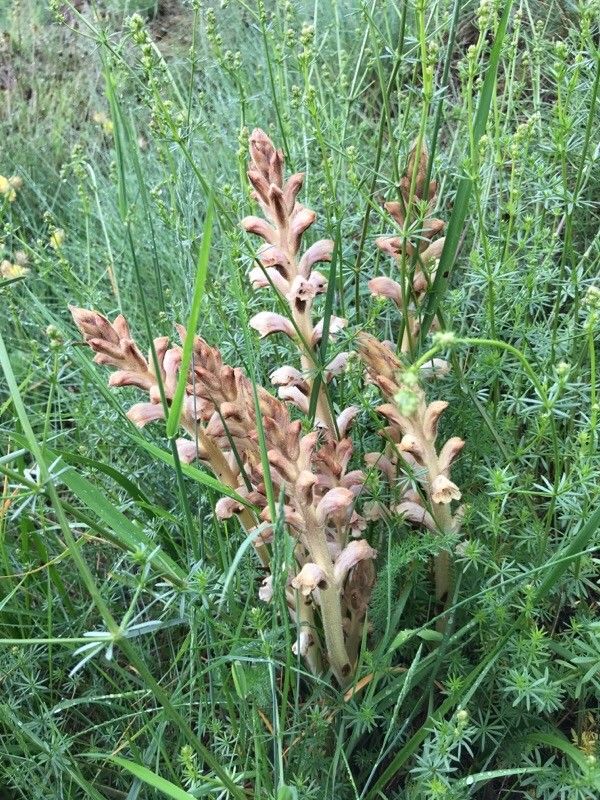
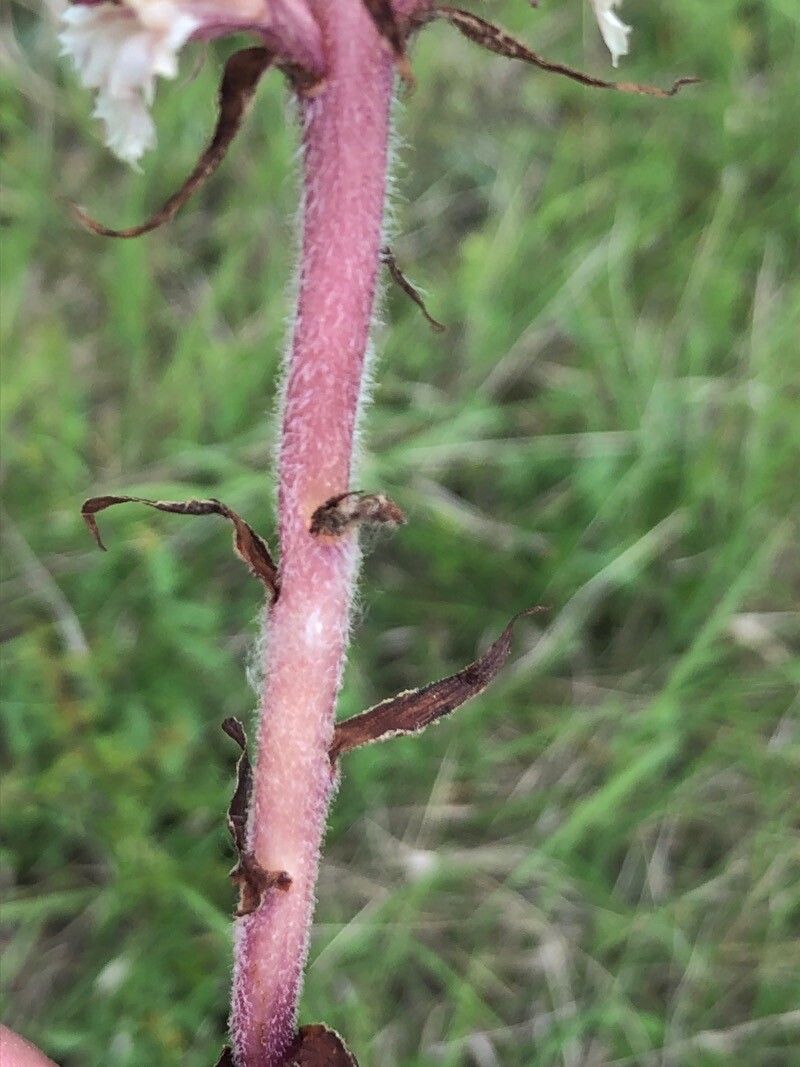
Orobanche ramosa is a species of broomrape known by the common names hemp broomrape and branched broomrape. It is native to Eurasia and North Africa, but it is known in many other places as an introduced species and sometimes a noxious weed.It is a pest in agricultural fields, infesting crops including tobacco, potato, and tomato.The plant produces many slender, erect stems from a thick root. The yellowish stems grow 10 to 60 centimeters tall and are coated in glandular hairs. The broomrape is parasitic on other plants, draining nutrients from their roots, and it lacks leaves and chlorophyll. The inflorescence bears several flowers, each in a yellowish calyx of sepals and with a tubular white and blue to purple corolla.
Branched broomrape is fairly disease-resistant and generally not prone to illness. That said, it can be affected by pests and diseases present in its surroundings. Such infections are usually mild. In terms of care, the plant requires moderate maintenance. It should be pruned regularly to preserve a good appearance and support healthy growth. Fertilizing can also help encourage flowering. Branched broomrape is suitable for anyone with outdoor space, such as a garden or patio, and does not demand extensive care experience. It may need more attention when grown indoors.
How to keep Orobanche Ramosa.
Light
Branched broomrape comes from bright, open habitats where it does best in full sunlight. It can tolerate partial shade but prefers direct sun for optimal growth. This plant, which may be annual or biennial, is recognized for its sun-loving habit.
Temperature
Branched broomrape can tolerate a wide range of temperatures, though its distribution may still be restricted by different combinations of moisture and heat. It does best in warm summer climates with sufficient rainfall or watering. Extended periods of cloudy, wet weather or prolonged high temperatures can raise the likelihood of Branched broomrape dying. In winter, protecting the plant from cold can boost its chances of survival.
Fertilizer
Branched broomrape responds well to light, frequent feedings of fertilizer to encourage healthy leaf development. You should feed Branched broomrape about once a month during the summer. Nitrogen is important for foliage, and adding nitrogen-rich fertilizer helps Branched broomrape thrive.
Botanical profile.
- Plant Type
- Herb
- Life Cycle
- Annual
- Genus
- Orobanche
- Family
- Orobanchaceae
- Hardiness Zone
- 4-12
- Mature Height
- 10 cm to 30 cm
- Leaf Color
- Green, Blue
- Leaf Type
- Deciduous
- Flower Color
- White, Purple, Blue
- Native Area
- Libya, Egypt, Turkey, Montenegro, Slovenia, Morocco, Croatia, Yemen, Belarus, Russia, Iraq, Oman, Portugal, France, Saudi Arabia, Tunisia, Mauritania, Cyprus, Bulgaria, Armenia, Greece, Ukraine, Lebanon, Serbia, Afghanistan, Syria, Italy, Kazakhstan, Spain, Iran, Azerbaijan, Algeria
Other names.