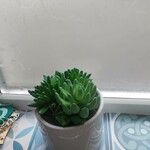
Orostachys japonica
Rock pine
Description
Source: leafsnapOrostachys japonica (Japanese:爪蓮華、昭和、秀女)also known as rock pine is a species of flowering plant in the family Crassulaceae. Native to East Asia. Its main habitat is on the surface of mountain rocks in Korea, Japan and China.
Care Guide
💧 Water Every 3 weeks
Rock pine is exceptionally drought-tolerant and thrives in arid environments. It requires watering only once every three weeks. This evergreen plant efficiently makes use of scarce rainfall, making it well-suited for outdoor growth in its native habitat.
☀️ Light Full sun
Native to dry regions, Rock pine does best in full sun; its natural habitat has strong sunlight and very little shade. It can also tolerate partial sun, providing some flexibility in its growth.
What is the required sun exposure for Rock Pine?
Rock Pine thrives best when exposed to full sun conditions, benefiting from above 6 hours of sunlight daily. It is native to arid regions where strong sunlight and minimal shade are prevalent. However, it can also adapt to partial sun environments, receiving about 3-6 hours of sunlight. Observing how sunlight moves through your garden will help in choosing spots that offer the perfect balance for your Rock Pine, ensuring their growth and happiness.
How can artificial lighting supplement sunlight for indoor Rock Pine plants?
For Rock Pine plants indoors where natural sunlight is insufficient, especially in winter or less sunny spaces, artificial lighting can be an essential growth supplement. LED lights are recommended because they can be tailored to provide specific light wavelengths needed by the plants. For full sun plants, 30-50W/sq ft of artificial light is necessary, while partial sun plants need 20-30W/sq ft. The artificial light source should be positioned 12-36 inches above the plant to mimic natural sunlight, with 8-12 hours of light per day depending on the plant species requirements.
What are common symptoms of light deficiency in Rock Pine?
Common symptoms of light deficiency in Rock Pine include smaller new leaves compared to older ones, leggy or sparse growth with longer spaces between leaves or stems, faster leaf drop to conserve resources, slower or halted growth, and lighter-colored new leaves or irregular color patterns indicating a lack of chlorophyll. Conditions like chlorosis, where leaves lose their green color and turn yellow, sunscald, leaf curling, wilting, and leaf scorching due to excessive sunlight, can also affect the plant's ability to photosynthesize and maintain overall health.
What are solutions to counteract light deficiency symptoms in Rock Pine?
To counteract light deficiency in Rock Pine, gradually increase sunlight exposure by moving plants to sunnier locations each week until they receive at least 6 hours of direct sunlight daily. For indoor plants, consider using artificial lighting, such as desk or ceiling lamps, for at least 8 hours daily or invest in professional plant grow lights. Outdoors, ensure to adapt plants gradually to avoid sunburn. Minimizing obstructions, like pruning trees that block sunlight, and transplanting smaller plants during their dormant period to sunnier locations with good drainage, are effective solutions. Note that while affected parts may not recover, new growth will be healthy after increasing light exposure.
🌡️ Temperature 5–35°C
Although Rock pine can tolerate some heat, it mainly thrives and grows in the cooler seasons and becomes dormant in summer. In hot summer conditions, providing shade is necessary to avoid scorching from intense sunlight. Watering should be reduced or stopped during the hottest period to prevent root rot. Rock pine shows vigorous growth in winter and spring. As long as temperatures do not drop too low, it will continue to grow steadily.
What are the ideal growing conditions for Rock Pine?
Rock Pine, or Orostachys japonica, thrives in warm environments and needs high temperatures during its growing season to support growth and metabolism. This plant loves to bask in ample sunlight, and it requires the right moisture levels and good air circulation to stay healthy. Despite its love for warmth, Rock Pine is vulnerable to damage from extremely low temperatures and overwatering. It's crucial to find a balance in its care by avoiding overly hot conditions and making sure not to let the soil dry out completely. As temperatures drop, especially below 20°C, the plant slows its growth, indicating a need to reduce or stop watering to prevent potential root rot. During winter, when it goes dormant and temperatures fall below 5°C, it's best to move it indoors, preferably near a south-facing window, to ensure it gets enough sunlight. If natural light is insufficient, supplemental lighting can be considered. Outdoor plants should have watering halted in cold temperatures, and protective measures like a temporary greenhouse or wrapping with plastic film or fabric can provide insulation against the cold.
How do you care for Rock Pine in low temperatures?
In low temperatures, particularly below 20°C, Rock Pine's growth slows, signaling a need for less water to avoid root rot. When the temperature drops below 5°C, moving the plant indoors becomes essential to keep it warm. It should be placed near a south-facing window to maximize sunlight exposure; if this isn't enough, additional artificial lighting might be needed. If temperatures plunge below 1°C, the plant may show signs of weakness, wilting, and be at risk for root rot. After mild frost exposure, symptoms might not appear immediately, but after about a week, the plant could start to wither. Solutions for frost and cold damage include trimming the frostbitten areas and inspecting the roots for rot. If the roots are rotten, they should be cut off, and the plant might need to be propagated through cuttings. Prompt relocation to a warmer spot and ensuring sufficient light are necessary steps for recovery.
How should Rock Pine be cared for during high temperatures?
During the high temperatures of summer, it's crucial to ensure Rock Pine remains in conditions below 41°C. Exceeding 45°C can halt the plant's growth, leading to water loss, wilting, and increased susceptibility to sunburn. The immediate steps in care include removing the sunburned and decayed parts of the plant. Provide protection from the intense afternoon sunlight until the plant begins to recover and resume growth. If root rot has set in, watering should be stopped completely until new roots start forming. Implementing these measures helps in safeguarding the plant against the stress of high temperatures and assists in its recovery and continued growth.
💨 Humidity
🪴 Soil 0-0
🌱 Fertilizer
For Rock pine, light applications of fertilizer once or twice a year during the growing season are adequate. Do not fertilize in winter or in summer when the plant is dormant. Reduce fertilizer for repotted plants and wait a couple of months after repotting before fertilizing again. Fertilizing promotes healthy growth and encourages blooming.
🪴 Pot & Repot Every 3 years
✂️ Pruning
To help large succulent plants, such as rock pine, maintain their shape, they should be pruned in the spring and autumn. During these times, remove any redundant or overly dense branches. For propagation, cut the leaves during these same seasons. Use a knife to make clean cuts and apply sulfur powder to the wounds before planting. Keep the soil for cuttings slightly moist.
🌿 Propagating
🐛 Diseases & pets
☠️ Toxicity
The Chinese Dunce Cap is generally not toxic.
Characteristics
- Plant Type
- Succulent
- Life Cycle
- Perennial, Biennial
- Genus
- Orostachys
- Family
- Crassulaceae
- Hardiness Zone
- 5-9
- Mature Height
- 10 cm
- Mature Spread
- 10 cm
- Leaf Color
- Green, Red
- Leaf Type
- Semi-evergreen
- Flower Color
- White
- Flower Size
- 2.03 cm to 5.08 cm
- Bloom Time
- Late summer, Early fall
- Planting Time
- Spring, Summer, Autumn
- Harvest Time
- Early fall, Mid fall
- Native Area
- Koppen, Japan, South Korea, China